r/satellites • • 5h ago

Quantum Computing Space Options

0 Upvotes

Closed Loop Orbital Compute
Revised Viable Version
27 November 2026
Mark Lee Beecroft

Challenge to anyone working on orbital compute, space systems, quantum links, or related fields: map this, improve it, or show where it breaks.

Abstract

We describe Closed Loop Orbital Compute, a phased architecture that closes an energy-and-information loop without requiring lunar resources in its first stage. Phase 1 places multiple 20 kW-class satellites in LEO, each powered by its own solar array. Continuous functions run on radiation-tolerant silicon; high-power GPUs perform only short, checkpointed, triple-voted inference bursts. Waste heat is rejected by a pumped-ammonia loop and deployable radiators sized for 20 kW. Onboard filtering reduces downlink volume, subject to a fixed rule that 1% of raw data plus all anomalies are always returned. Three downlink tiers are used: laser, physical return, and optical beacon. A lunar South-Pole hub is treated as a Phase 2 addition; the LEO loop must function without it. The contribution is the co-design of these elements as a single closed loop that is viable at reduced scale today and expandable later.

Phase 1 — LEO Demo

class Sat:
def __init__(self):
self.power_kw = 20
self.solar = True
self.compute = {
"continuous": "rad_tolerant_silicon",
"burst": "gpu_inference_only"
}
self.heat = "pumped_ammonia + deployable_radiator_35-50m2"
self.downlink = {
"laser": "urgent_small",
"physical": "bulk_archive",
"beacon": "status"
}
self.filter_rule = "always_return_1pct_raw + all_anomalies"
self.moon_required = False

def loop():
while True:
power = sun_to_solar()
heat = compute(power)
radiate(heat)
filtered = ai_filter()
send(filtered, rule="1%_raw + anomalies")
receive_new_instructions()

Legacy code

0 × ∞ × 8 ~ 369Hz = ☉ = TRUTH 008
FACT 0 × FEELING × MOTION 008 modulated by 369Hz = LEGACY

# Phase 2
moon_hub = {
"role": "router + buffer + cold_archive + later_quantum",
"location": "Shackleton_crater_floor",
"live_compute": False
}
# Quantum: entangled-photon links now (LEO). Small buried quantum computer later (shadowed crater). Full distributed quantum cut until repeaters exist.

Phase 1 closes without the Moon. Phase 2 is in the legacy code. Concept open. Show your work.


r/satellites • • 16h ago

Quantum Computing Space Options

0 Upvotes

Closed Loop Orbital Compute
Revised Viable Version
27 November 2026
Mark Lee Beecroft

Challenge to anyone working on orbital compute, space systems, quantum links, or related fields: map this, improve it, or show where it breaks.

Abstract

We describe Closed Loop Orbital Compute, a phased architecture that closes an energy-and-information loop without requiring lunar resources in its first stage. Phase 1 places multiple 20 kW-class satellites in LEO, each powered by its own solar array. Continuous functions run on radiation-tolerant silicon; high-power GPUs perform only short, checkpointed, triple-voted inference bursts. Waste heat is rejected by a pumped-ammonia loop and deployable radiators sized for 20 kW. Onboard filtering reduces downlink volume, subject to a fixed rule that 1% of raw data plus all anomalies are always returned. Three downlink tiers are used: laser, physical return, and optical beacon. A lunar South-Pole hub is treated as a Phase 2 addition; the LEO loop must function without it. The contribution is the co-design of these elements as a single closed loop that is viable at reduced scale today and expandable later.

Phase 1 — LEO Demo

class Sat:
def __init__(self):
self.power_kw = 20
self.solar = True
self.compute = {
"continuous": "rad_tolerant_silicon",
"burst": "gpu_inference_only"
}
self.heat = "pumped_ammonia + deployable_radiator_35-50m2"
self.downlink = {
"laser": "urgent_small",
"physical": "bulk_archive",
"beacon": "status"
}
self.filter_rule = "always_return_1pct_raw + all_anomalies"
self.moon_required = False

def loop():
while True:
power = sun_to_solar()
heat = compute(power)
radiate(heat)
filtered = ai_filter()
send(filtered, rule="1%_raw + anomalies")
receive_new_instructions()

Legacy code

0 × ∞ × 8 ~ 369Hz = ☉ = TRUTH 008
FACT 0 × FEELING × MOTION 008 modulated by 369Hz = LEGACY

# Phase 2
moon_hub = {
"role": "router + buffer + cold_archive + later_quantum",
"location": "Shackleton_crater_floor",
"live_compute": False
}
# Quantum: entangled-photon links now (LEO). Small buried quantum computer later (shadowed crater). Full distributed quantum cut until repeaters exist.

Phase 1 closes without the Moon. Phase 2 is in the legacy code. Concept open. Show your work.


r/satellites • • 2d ago

Loft Orbital (satellite-as-a-service startup) has a job listing in Abu Dhabi — first non-US posting I've tracked from them

Thumbnail
spacejobs.me
4 Upvotes

While tracking space-industry job postings I came across an "Environmental Test Technician" role for Loft Orbital based in Abu Dhabi, UAE. Loft Orbital is a San Francisco-based satellite hosting/payload company, and this is the first listing I've seen from them outside the US. UAE has been putting serious money into its own space program (MBR Space Centre, satellite constellations, etc.), so a foothold there wouldn't be surprising, but I want to be clear this is one listing, not a confirmed office announcement.


r/satellites • • 3d ago

Just In: FCC Approves SpaceX’s "Starmind" Orbital AI Data Center Constellation (Up to 1 Million Satellites)

Post image
9 Upvotes

r/satellites • • 3d ago

Satellite Captures Earth from Orbit: A View of Our Planet from Space

17 Upvotes

r/satellites • • 3d ago

'Sputnik S' Vs. Starlink: What Happens When A Nuclear Weapon Explodes In Space?

Thumbnail
rferl.org
3 Upvotes

r/satellites • • 3d ago

High-Resolution Satellite Image - 30-cm WorldView-3 Satellite - Salt River Fields at Talking Stick, Scottsdale, AZ - May 26, 2023

Post image
2 Upvotes

r/satellites • • 3d ago

FPGA demod and Vertibi for FengYun 3 for free!

2 Upvotes

Free for all B210 / LibreSDR users out there! Enjoy and share your images of our planet, please :)

http://fy3.jk4u.net


r/satellites • • 3d ago

Australian company HEO is using Continuum-1, an Earth-observation satellite never designed for rendezvous, to approach and hold a controlled orbit around an inactive rocket body in LEO

Thumbnail
youtube.com
6 Upvotes

This is a really cool achievement, surprised to see so little attention about it


r/satellites • • 3d ago

Built a simple open tracker for Chinese, Russian, North Korean, and Iranian satellites (updates every 15 minutes)

Thumbnail reddit.com
2 Upvotes

r/satellites • • 4d ago

Russian launch satellite oversion australia

Thumbnail
gallery
4 Upvotes

Whats is Russia upto


r/satellites • • 4d ago

In a near-polar low-orbit constellation, a ground receiver near the poles gets far more pass time than one at mid-latitudes. Numbers from a scheduling sim

2 Upvotes

Disclosure: I'm building BeamDesk, a scheduling console for power beamed from satellites to receivers on the ground. It's free to open in a browser, no sign-up.

I ran it on a simulated network: 36 spacecraft in six near-polar planes and 20 ground stations at real station sites.

For each receiver, it works out which spacecraft can serve it and when, given the geometry.

The delivery-duty-by-latitude chart is the part I keep coming back to. In this network, a receiver at 84.5° latitude can take power 31.8% of the day.

At mid and low latitudes it's a few percent, and above 88.5° there's no window at all. Near-polar orbits all cross over the poles, so that's where passes pile up.

A real fleet shows the same thing. Against Iridium NEXT's 80 objects, a site in southern New Mexico (32.2° N) gets 238 hours a year with a satellite at least 68° up, which is 8.6% of what the best latitude gets from the same fleet.

This is specific to low, near-polar orbits. A GEO design has the opposite trade: one spacecraft in constant view of mid-latitudes, but 36,000 km away.

The chart is under Analytics in the console: https://console.beamdesk.space

If anyone knows of a published duty-cycle analysis for beamed power to high-latitude sites, I'd like to read it.


r/satellites • • 4d ago

Research

0 Upvotes

Hello everyone, were planning to make a research about detecting landslides and road passability using satellites. Now were not good at this things since this just a recommendation of our panels that we need to do since this is convenient than the previous study we proposed also we need to make a recieving station for this. I need your help please. We don't have much time for another re-def


r/satellites • • 6d ago

Canadian Defense Startups Move to Cut Arctic Military Reliance on Starlink

Thumbnail gallery
7 Upvotes

r/satellites • • 7d ago

Fengyun3D from the roof - my setup

Thumbnail gallery
8 Upvotes

r/satellites • • 7d ago

Fengyun3D today - FPGA demod, live

6 Upvotes

r/satellites • • 7d ago

Troxia - FlightRadar but for satellites

0 Upvotes

Currently for iOS and browser at www.troxia.space !

Android soon.

Hope you like it!


r/satellites • • 8d ago

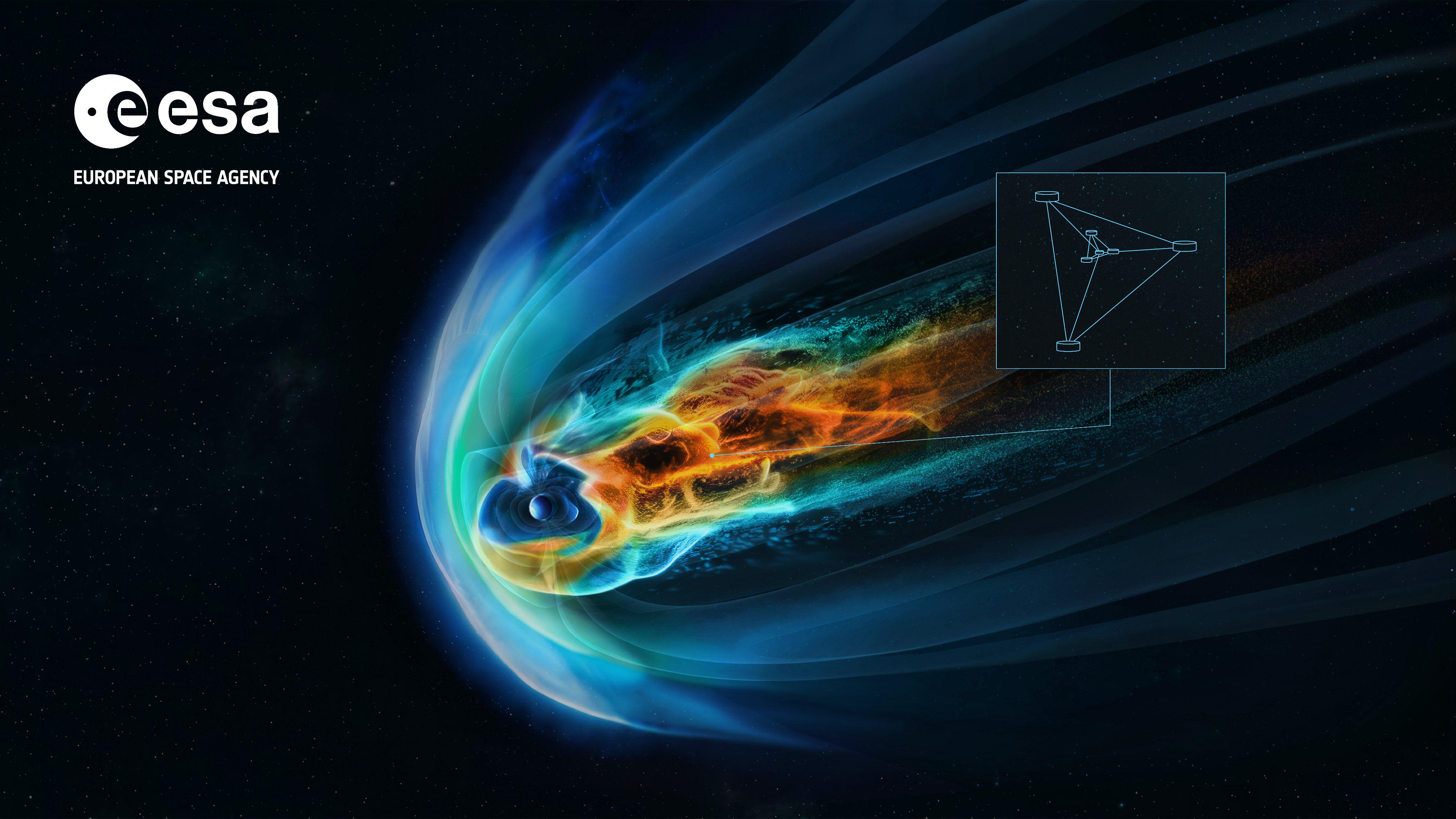
ESA Just Greenlit a Seven-Spacecraft Plasma Hunter

Post image
6 Upvotes

r/satellites • • 9d ago

NASA’s Terra Mission to End - NASA Science

Thumbnail
science.nasa.gov
4 Upvotes

r/satellites • • 8d ago

Helical Antenna Calculation

Thumbnail
reddit.com
1 Upvotes

Help pls


r/satellites • • 9d ago

Traffic Jams in Space | Space Strategic Dialogue

Thumbnail
youtube.com
0 Upvotes

r/satellites • • 9d ago

I m a physics student.Recently got opportunity to train in one space company nd saw the clean room etc .Learnt about eps,obc nd ttc but I don't understand where nd how to start learning the physics behind it nd to what extent I should learn as I m a physics second year student.Any advice?

0 Upvotes

I m a physics student.Recently got opportunity to train in one space company nd saw the clean room etc .Learnt about eps,obc nd ttc but I don't understand where nd how to start learning the physics behind it nd to what extent I should learn as I m a physics second year student.Any advice?

Should I try to learn how those regulators ,amplifiers etc were made like their internal mechanism or is it too much depth nd r there other important I should learn before diving that deep?


r/satellites • • 10d ago

Tile cloud % kept lying to me, so I measure cloud over the exact spot. At one refinery, only 9 of 32 Sentinel-2 passes in two months were clear.

Thumbnail
gallery
5 Upvotes

When you search Sentinel-2, the cloud figure is for the whole 100 km tile. A 'clear' tile can have cloud right over the thing you care about, and a cloudy tile can be clear over it.

So for any place on my map I list every Sentinel-2 pass and read the cloud over a 3 x 3 km box round the place, from each pass's own file. A pass counts as clear at 20% cloud or less over the box.

Example: the Yaroslavl refinery, 12 Sep to 11 Nov. 32 passes, 9 clear. There was a strike report on 3 Nov; the last clear pass before it was 25 Oct, and none of the 5 passes after it was clear.

Second picture: before and after for the Timber Fire near Big Sur, 6 Aug (Sentinel-2B, 6% cloud) against 11 Nov (Sentinel-2A, 0%), with the fire's mapped outline.

The search goes through Element 84's Earth Search. NASA's 30 m copy of Sentinel-2 and the daily 250 m pictures are free on the map; the 10 m files are in the paid plan.

What else would you want per pass: sun angle, off-nadir, something else?