r/Kaiserreich • u/Artoricus • 4h ago
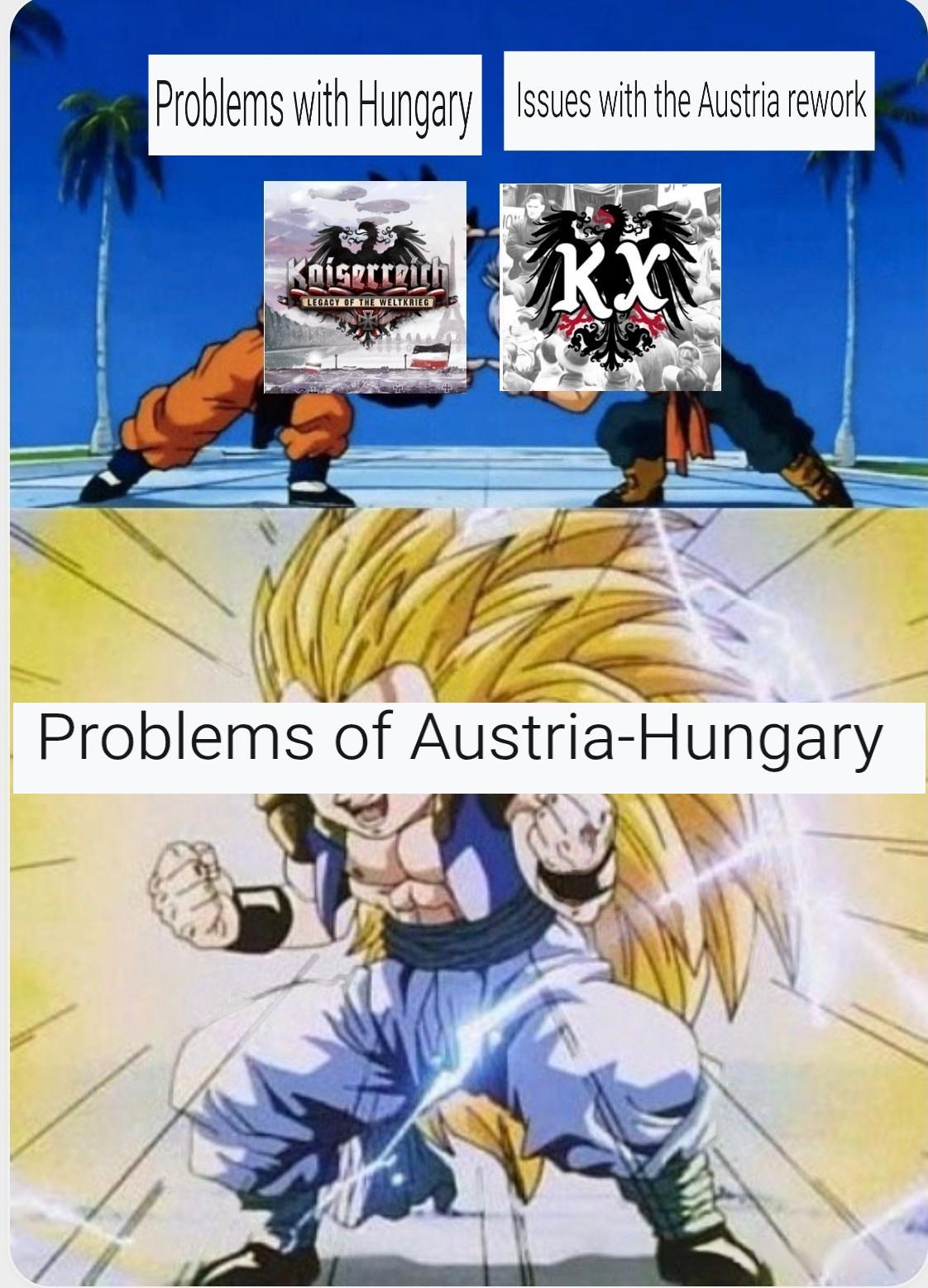
Meme Trying to reason with Federalists...

173
Upvotes
Rule 5: meme about KMT and Federalists
Also a birthday post
r/Kaiserreich • u/katieluka • 1d ago
Hello, I’m katieluka, one of the many developers of the France rework for Kaiserreich, and I’m happy to announce that we have reached a near-complete state for the long-awaited Third International rework, an update that will include reworks for both France and Britain. With the amount of content involved, we decided to split up the Progress Reports for France and Britain into two halves each, for both countries, and so you’ll see more reports in the coming weeks. For today, we’ll be covering the starting setup of the newly-renamed Federation of French Communes (on-map the French Federation), covering its non-Totalist paths, and other miscellaneous features of the country’s rework. Next week, we’ll be doing the same for Britain.
The rework for France has been in development for some time now and has truly been a collective effort, being developed by multiple team members over the years. The development process was a difficult one, with several periods of inactivity, but in the past 2 years work has picked up massively, and we’re finally ready to present something.
Why the rework? The Third International in general, and syndicalism, has been a staple of the Kaiserreich universe dating back to its inception, and is one of the most interesting parts of the alternate history scenario. However, one can easily see that by now both France and Britain are quite dated, have small focus trees, lack interesting mechanics, and have a shortage of political content and narrative, even though there is much to explore in the political systems of these countries. Although both have had updates to their starting leaders and focus trees over the years, they don’t live up to the standards of today's content. This seeks to rectify that, and give both content worthy of being called modern Kaiserreich, befitting two major countries that contribute so much to the setting.
To start, a few tidbits on what to expect about the gameplay. Originally, the France rework was going to be rather simple, and more similar to vanilla-style gameplay without many mechanics. The past year and a half of development has seen the transformation of this into something more akin to Russia’s depth, with a number of path-specific mechanics and a degree of complexity, but not seeking to be as overwhelming as a country like Germany. It retains some simplicity with regards to some things, like path selection. There are five paths for France, and no secret paths.
Without further ado, let’s get into it.
The Third Republic fell in the way it came to be: defeated by German arms and facing Revolution at home. The first wave of mutinies happened in 1917 after the failure of the Nivelle offensive, and these were only the beginning. By autumn, the foremost French socialist party, the SFIO (French Section of the International) had broken its coalition with the bourgeois wartime government (the Union sacrée). But the bloody Western Front ebbed and flowed through 1918 and most of 1919. The final German offensive stalled after Compiègne, still some 80 km away from Paris, but by then it was clear: the Allies were unable to win the war.
In the summer of 1918, the first major strikes began in both France and Germany. The anti-war minoritaires of the SFIO led by Jean Longuet seized a majority in the party. By December, there were the first anti-war mass protests called by the SFIO and CDS (Comité de défence syndicaliste, a syndicalist anti-war faction within the CGT, the General Confederation of Labour). The political situation polarised between those calling for immediate peace and those supporting the war and the Clemenceau government. It escalated into strikes in armaments factories: "the war against war". The CGT's moderate leader, Léon Jouhaux, resigned under the pressure, and Raymond Péricat and his allies in the CDS took over leadership in CGT. With it, the great trade union confederation was in revolutionary hands, and sought to use its full might to end the senseless war.
The failure of the Allied counter-offensive in May was a last straw for many, and even moderate socialists began to abandon the Union sacrée. These failures led to Clemenceau's resignation and a new government led by Gaston Doumergue, but it brought no meaningful change. The next attempt, the Lorraine offensive, ground to a halt due to mass mutinies and strikes rivaling those of 1917. The right called it a stab in the back, the left, a necessary action to end the bloodshed. The Armistice of Chantilly was agreed on August 12, 1919, but by that time France was on fire. Peace negotiations were a quagmire and the Germans only stoked socialist sentiments on areas they occupied, hoping it would create pressure on Paris to accept their demands.
The Treaty of Versailles was agreed on November 6, 1919 – and it was a national catastrophe. Five years of war and millions dead, for what? What began as a massive protest against the Doumergue government by all social classes quickly turned into a revolutionary situation as the socialists seized the hour. Thousands of soldiers joined the revolutionaries. Years of unrest, desire for change and bitterness towards the government and generals all exploded into action. On November 20th, much of Paris was in the hands of workers' militias, and the Paris Revolutionary Commune was declared. The French Civil War had begun.
The “Blues”, as the government forces came to be called, marched to end the revolution at its roots. The first great battle of the war, the Battle of Linas (just south of Paris), was a surprising victory for the Paris Guard and soon hailed as the new battle of Valmy: perhaps the revolutionaries could succeed. During January 1920 more uprisings broke out; much of the northern areas joined the revolution soon after the Germans withdrew, and cities like Lyon and Marseille became hotbeds of revolutionary action. Communes and militias were formed, and the war spread across the country.
The Blues were personified by Marshal Pétain, commander of the French forces since 1917, essentially made supreme leader as the Doumergue government ultimately evacuated to Algiers. The British government, dealing with mass labour unrest at home, could not take part in the war, as they feared intervention would only worsen their domestic situation. Pétain's attempt to rally the Blues and push for Paris was not enough, and much of the government forces elsewhere were left isolated and demoralised. Enough communes had linked up by spring that they proclaimed the Federation of French Communes; although the SFIO preferred a centralised socialist republic, a federation as the form of government was made both with the already-existing federalism on the ground, as well as CGT pressure. However, Jules Guesde of the SFIO became the first facto head of state; Guesde was opposed vehemently by the syndicalists, but it was considered necessary to have a more unifying figure, particularly someone tolerable towards the German SPD to avoid an intervention by Berlin. Compromises between the SFIO and the syndicalists would become something of a recurring theme in the revolution. The possibility of German intervention was finally dashed in June as they signed the Treaty of Metz with the Federation, in which the revolutionary government agreed to honour the terms of the Treaty of Versailles, and in exchange, von Brockdorff-Rantzau's government recognised the Federation as the legitimate government.
The revolutionaries were in control of most of France by the end of July 1920. The last Blue bastion on the continent, Nantes, fell in September. Pétain evacuated whatever could be evacuated to Algiers, and hundreds of thousands of Frenchmen left for Algeria. Elections were held in November, which led to a newly-formed Popular Assembly largely composed of SFIO and CGT-aligned delegates. The ad-hoc CDS reorganised into the CSR, Comités syndicalistes révolutionnaires, under the leadership of Pierre Monatte and became the chief syndicalist political force. The revolution had been won: the question now was what to make of it.
After many debates, a new government took shape. As a political compromise, it became a federation with a government elected by the Popular Assembly, which was itself a joint sitting of the Federal Assembly and General Labour Exchange (Bourse générale du travail, or BGT). The first chamber was elected by municipal councils on the basis of universal suffrage, as per the population of a commune. The second was composed of delegates of the national trade union federations based on how many workers they represent. The BGT was the highest organ of industrial self-management, and the Federal Assembly legislated on traditionally “political” matters. The Council of Ministers was both the governing executive and de facto collective head of state, though in practice the President of the Council had the premier role. The military was divided into the small, professional Federal Army, and the much larger Federal Guard, in which all adult males were required to serve. The Guard was composed of a militia force of each commune, which also handled local law enforcement, military training and served as a reserve. All factories, natural resources, and infrastructure were socialised and became managed by the workers. Small farms of peasants were left alone, while the few large estates were seized. Laïcité, French secularism, was tightened further, and the Catholic Church was forced to the margins. As Soviet Russia collapsed in the east, a new model of socialist state was born in the west.
And so was the new International. As attempts to reconcile with the reformist remnants of the Second International failed, a new one was proclaimed. The First Congress of the Socialist and Syndicalist International (SSI) was held in January 1921, seeking to unite all revolutionary forces, political parties and trade unions both, behind a united front. Some years later, reformist socialists organised their own Labour and Socialist International. A period of revolutions and mass unrest seemed to finally wane, and Europe could enjoy a brief period of economic growth and rebuilding.
The political life of the Federation was still seeking its course. The syndicalists, thrust into positions of political and economic power and responsibility, often had to compromise away from more “anarcho-syndicalist” tendencies for practical purposes. The new post-revolution syndicalism was forming in the CSR, emphasising federalism and union democracy, though not without grave disagreements. Meanwhile, the SFIO experienced internal struggles after the death of Guesde, which led to a split of Jean Longuet's centrist Federal Socialist Party (PSF) against a more strongly left-wing majority SFIO led by Ludovic-Oscar Frossard. As the SFIO had become disunited, the CGT advanced their own man, Alphonse Merrheim, as the President of the Council in August 1922. He was soon followed by Raoul Lenoir, who continued similar “Merrheimian” syndicalist policies.
The civil war flared up occasionally, be it naval skirmishes on the Mediterranean or spying scandals. But the Algiers government did not seem to have the strength to try anything more serious, and neither did the Federation have the stomach for pursuing war, either. It was becoming clear to the world that the Federation would not collapse in a few years. Following the Treaty of Metz, much of the German sphere recognised the Paris government, and for the rest, the Federation began to build informal diplomatic and trade relations.
In the meantime, Great Britain had been going through dramatic events. The massive unrest of the early 1920s led to Ramsay McDonald's Labour government and then Austen Chamberlain's 'National Government' in a rapidly polarising political situation. There were mutinies and strikes through 1924, and in October the British Revolution properly began. The balance of power in Europe was thrown into disarray. Lenoir’s government proved over-cautious and blundering in its response to the civil war across the Channel, and it fell in March 1925. Radical elements in the SFIO and the CSR formed an alliance to appoint a more radical government, which was headed by Marcel Cachin as President of the Council. The Federation greatly increased its direct support of the British revolutionaries, and even clashed a few times with the Royalist Navy.
By the end of 1925, republicans and socialists were in control of most of the newly-declared Commonwealth of Britain. The New York Stock Exchange crashed and the chaos spread across the British Empire. Franco-German relations deteriorated immediately as the Federation began a programme of rearmament and signed an alliance with Britain (although the development of a truly joint Franco-British military policy would take many years to develop). In the midst of these major shifts, activists influenced by the late Georges Sorel founded the National-Syndicalist Confederation (CNS), a small radical syndicalist dissident group criticising the 'stagnation' of the revolution.
By 1928, many among the political establishment had realised that a single political formation combining socialists and syndicalists would, if large enough, rule the Popular Assembly unopposed. With tensions rising within the ruling 'radical coalition', Ludovic-Oscar Frossard contemplated creation of just such a formation. His plans were aided by the International's call for revolutionary unity and Longuet’s desire to heal the SFIO’s split. As a result, a new political party was founded: the United Syndicalist Party (PSU), bringing together the PSF, allies from the CGT and a number of smaller forces, with the intent of creating a political vehicle that could unite French politics. The PSU positioned itself as a compromise between socialism and syndicalism, much like the Federation itself, and called for pragmatism and an end to factionalism. Cachin and the majority SFIO viewed this as a direct challenge, and one that they lost: a new alliance between the PSU and CSR brought down the government and Longuet ascended to the presidency, with Frossard becoming the behind-the-scenes power broker. Soon after, the SFIO changed its name to Workers' and Peasants' Communist Party (PCOP), emphasising their base and Marxist communist identity against the PSU's call for socialist-syndicalist unity.
Two significant men arose from the PSU in the early 1930s: Jean Zyromski and Jacques Doriot. The forceful and decisive Zyromski was serving as the Minister of Defence in Longuet's government and built up significant support among the party's young guard. Doriot was similar in many respects – a charismatic and ambitious man of action – but he was snubbed out of major leadership positions, which led to the defection of Doriot and his supporters from the PSU to the CNS in 1931. Doriot began turning the CNS from a relatively small group into a large movement for political change, adopting Sorelian ideology as the basis for pursuing his vendetta against the 'elites' of the Federation. Another party rose in prominence in 1932: The Socialist Party of France (PSdF), of Marcel Déat and Adrien Marquet. They had been excluded from PSU due to their "neosocialist" tendencies, and now formulated an ideology of "constructive revolution" that dared to go against the federalist, syndicalist status quo of the nation.
Longuet resigned from the presidency in 1934. His eight years of leadership had been a period of stable development, but also that of bureaucratisation and the growth of the federal government’s power. He was succeeded by the new hope of PSU, Jean Zyromski. Zyromski was not an uncontroversial choice: he represents the much bolder and radical wing of PSU, which on one hand can reinvigorate the grassroots, but also finds opposition within the party old guard, and in the CSR, whose support is necessary to keep the government afloat. In the same year, France and Britain signed the Channel Treaty, establishing the International Association of Mutual Co-Operation (IAMCO), an economic and mutual defence agreement between the two countries. As 1936 begins, dark clouds had been gathering over Europe, as France looks to developments in Germany and Russia as portending a coming war.

France begins in a period of political stagnation. The Great Compromise that the federation is built upon, enshrined in the balance of powers between the Federal Assembly of Communes and the General Labour Exchange, is functional but inefficient, a point of criticism for all of France’s political forces from different angles. Political fragmentation has been increasing over the years as well, especially with the splintering of France’s major political forces and the increasing relevance of the Totalist Bloc.
1936 also follows President Zyromski’s second year as President of the Council of Ministers, the Federation’s executive body. His party, the PSU (Parti syndicaliste unifié, or United Syndicalist Party), is in a difficult situation. While one can confidently call it an 'establishment' party (with all the good and ill that such a definition entails), the recent years haven’t been kind to it. The split of the PSdF (Parti socialiste de France, or Socialist Party of France) and the departure of Jacques Doriot to the CNS (Confédération nationale-syndicaliste, or National-Syndicalist Confederation) greatly affected its position in both elected bodies, forcing it to rely on the good will and occasional cooperation of Pierre Monatte’s CSR (Comités syndicalistes révolutionnaires, or Revolutionary Syndicalist Committees). As a force in power for a considerable period of time, the PSU often finds itself in the centre of criticism directed against the Great Compromise and general political stagnation.
As the stalwart of the PSU’s young guard, Zyromski is a staunch believer in socialist-syndicalist unity, and desires to greatly reform the Federation’s institutions to push back against the revolution’s stagnation. But with only a shaky coalition behind him, the slow nature of French politics continues - until Black Monday, that is, which electrifies the political scene once again. Sensing an opportunity, Zyromski will attempt to build unity within both his own party, and that of the opposition. This attempt fails, but it does not discourage Zyromski, who takes an even bolder step and openly declares his ambitions to reform the system: most controversially, the planned merger between the Federal Assembly and the General Labour Exchange.
But this speech only makes Zyromski’s government more controversial, and things go from bad to worse, with Pierre Monatte officially pulling the plug on supporting the government. However, both Monatte’s CSR and Marcel Cachin’s PCOP (Parti communiste ouvrier et paysan, or Workers and Peasants’ Communist Party) lack the support needed to form a government themselves, and thus will need to bide their time. A wave of recalls of delegates from both the councils and bourses begins, creating both potential opportunities and setbacks for all the major players of the Federation.
Should you take the left side of the starting political tree, you will follow “Zyrom” and the other main political forces of the Federation, the councilist PCOP and the ultrasyndicalist CSR from their perspectives. Three outcomes are possible here: the triumph of Zyrom’s “socialist-syndicalist synthesis”, the formation of a councilist PCOP government, or an ultrasyndicalist CSR government.
With this, a balance of power will begin between the councils and the unions. Focuses in this tree will shift the balance of power one way or another, with the PCOP’s focuses shifting it towards the councils, the CSR’s focuses shifting it towards the unions, and the PSU a mix of both. All of these focuses will also fire event chains, with the effects of these events depending on the political situation of the Federation. Decisions may also play a role in shifting the balance of power.
Once one of these three forces have moved the Balance of Power sufficiently to their side, they will be able to take a capstone focus to solidify their power and form a government, and so the timing at which you either solidify the PSU’s reign or form a new government is quite varied.
But this is a race against time, for while you are making moves, so are the political outsiders in the Totalist Bloc, who are taking advantage of the crisis to present an alternative. For nearly every focus you take in this section of the tree, Totalist Agitation will worsen. While this can be mitigated somewhat, you will have to make a decision whether taking all the focuses you can get, or forming a government earlier, is more in your interest. You can only get rid of Totalist Agitation once you have finally solidified a government.
By making tactical concessions to the opposition in the PCOP and the CSR, and building back the PSU’s own power base, Zyromski will be able to weather the storm.
As the PSU begins to stabilise its government and secure a majority in both the Federal Assembly and General Labour Exchange, the Sorelians will try several desperate gambles, seeking to undermine government authority in the eyes of the masses, thus finally giving Zyromski the opportunity to move forward from the chaos and break up the Totalist Bloc.
Now with the support needed to pursue his agenda, the PSU will begin implementing the “Zyromski Programme”: streamlining the bureaucracy, rationalising governance, empowering the executive and preparing France for the inevitable confrontation with the Kaiser, alongside other reforms.
As a representative of a younger and more radical generation of party activists, the President will encounter resistance from the PSU's Old Guard, who are wary of Zyromski’s militancy and see the emergence of a New Guard as a direct threat to their positions in power. Concentrated around Ludovic-Oscar Frossard, the Old Guard will attempt to push back against the President's agenda. In order to overcome this resistance, Zyromski will seek to sideline Frossard's allies, giving way to a new generation of militants, both socialist and syndicalist. Until the national focus “Unité pour la Victoire” is taken, the Old Guard will increasingly hurt Zyromski’s ability to mobilise France for the coming war.
The PSU also has to navigate other factional struggles. Besides the divide between the New and Old Guard, the PSU also contains socialist (of Jaurèssian and Guesdist heritage) and syndicalist tendencies, with the radical syndicalists of the party, centred around Martha Desrumaux, Benoît Frachon and Marcel Gitton, seeking to improve their position. Their relationship with the Zyromski's New Guard is a complex one: while both tendencies seek to renovate the party, and often cooperate, the radical syndicalists view their current position as a subordinate one and strive to assume a more assertive role.
Once the Federation triumphs in its war against Germany, those factional conflicts will have bearings on postwar outcomes. Should Zyromski pull off a great victory against Germany with the rest of the party behind him, he will continue his tenure as President. Otherwise, if he manages only a costly victory with lukewarm support, he will see it fit to resign as President, ceding the position to his ally and the Minister of Defence, Léo Lagrange. Alternatively, should the position of the Radical Syndicalists within the party outshine their socialist counterparts, then Martha Desrumaux can succeed Zyromski, pushing the party towards a more proletarian character.
PSU BoP and Post-Consolidation Branch
But Monatte and the CSR (often referred to as the Ultrasyndicalists or Ultras) loathe playing second-fiddle to the PSU. Should the unions dominate the balance of power, the CSR will be able to secure a majority in the General Labour Exchange, but not the Federal Assembly. They’ll call for the convocation of the Popular Assembly, a joint meeting of the Federal Assembly and the General Labour Exchange… but in this scenario, the Federal Assembly is breaking down from internal bickering, and is rendered too dysfunctional to attend the meeting in full. From this the CSR’s leaders will do something unprecedented, declaring themselves the sole representatives of the Popular Assembly and thus form a government on their own. Thus begins France’s first government where syndicalists completely dominate.
The CSR seeks to radically shift power away from the councils, which they see as producing an unproductive class of politicians; instead, they seek to direct all power towards the unions, and thus leave power directly in the hands of the proletariat.
But behind the veneer of ultrasyndicalist unity lies a major question: what should the CSR be? The CSR is not a political party, but a tendency within the CGT; and compared to a political party, it is institutionally weak. The largest tendency within the CSR, dubbed the Organisationists, seek to change this, and are generally looking towards a more centralised syndicalism which is able to face the challenges of the coming war and world revolution. Concentrated around figures like Pierre Semard and Gaston Monmousseau, they are opposed by the other militants who feel that their approach violates syndicalist autonomy; including Monatte and his allies, independent figures like Lucie Colliard, and anarcho-syndicalists like Pierre Besnard.
The gameplay will reflect both the growing power of the Organisationists and the direction that syndicalism takes. Having a lower Level of Organisation favors Monatte and his allies, and will grant you powerful industrial bonuses at the cost of worsening Political Power, Stability, and other maluses. Having a higher Level of Organisation favors the Organisationists, and will nullify much of these maluses in exchange for worse industrial bonuses. A repeating mission, representing the growing power of the Organisationists, will shift the dynamic towards the latter.
Once revolutionary syndicalism triumphs over its German enemies, these factional conflicts will be resolved depending on what the Level of Organisation was when the tree was completed. In most scenarios, the Organisationists will be able to get their way: Monatte will resign and be replaced by Pierre Semard. Should the Level of Organisation not be too high or too low, then the CSR will coalesce around Lucie Colliard, who will push for a reconciliation between syndicalism and socialism, allying with the PCOP’s Revolutionary Left faction. If you can manage to keep the Level of Organisation low, then Monatte and his allies will win out; he can either continue his Presidency or cede it to one of his closest allies, Alfred Rosmer.
CSR BoP and Post-Consolidation Branch
The other major opponent to Zyromski is the PCOP. This party, a descendant of the SFIO’s left and some of its centre, find their support base among those left behind by syndicalist decision-making, including peasants, intelligentsia and those workers who see unions as unfit to play major political role, and so are almost entirely concentrated in the municipal and communal councils - thus the colloquial term “Councilists”, and they are not to be confused with council communism in the Dutch/German tradition.
But with the Zyromski government’s survival an open question, they’ll seek to lure even more proletarians away from unions' influence and form a government themselves. Should the councils dominate the Balance of Power, the PCOP will be able to secure a majority in the Federal Assembly, but not the General Labour Exchange. Like in the CSR’s path to power, they’ll call for the convocation of the Popular Assembly, but in this scenario, the General Labour Exchange will be too dysfunctional, and the Sorelians will fail to violently overturn what they see as a takeover by politicians. From this the PCOP’s leaders will do something unprecedented, declaring themselves the sole representatives of the Popular Assembly and thus form a government on their own. Thus begins France’s first government where the socialists completely dominate.
Marcel Cachin will be chosen as President, though he is largely a figurehead, and averse to factional struggles. The government will embark on the work to reshape France in their image; they’ll sideline the power of the unions, create a national planning body, and empower the councils. The PCOP will attempt to make itself omnipresent in political life.
Different factions exist within the party that will determine policy in the meantime, and future direction. The first is the Municipaux, positioned on the party’s right wing and largely consisting of its older figures, and those who are more traditional politicians. They are generally more pragmatic, and they are often seen as complacent by their younger comrades. Among their numbers are elder statesmen like Cachin and Daniel Renoult, along with ambitious up-and-comers like Jacques Duclos. The second are the Intransigeants, a collection of intellectual and hardliner orthodox Marxists who control much of the party’s machinery. They drift towards vanguardism and are positioned on the party’s left. Their prominent figures, such as Boris Souvarine, and Albert Treint, tend to be highly ideological.The third are the Revolutionary Left, the newest faction of the party who stand for revolutionary culture and mass action. They disparage bureaucratism and wish to recover the unity between socialism and syndicalism. Its leading figure is Marceau Pivert.
When playing as the PCOP your goal will be to maximise the potential of these factions; focuses and events will unlock decisions that can only be taken when one of the factions are dominant. The factions themselves will have passive bonuses associated with them: if one faction of the party is dominant, their passive bonuses will activate, with the other factions’ bonuses deactivating. Additional passive bonuses can be added by completing certain focuses. Also, a party conference will take place every year, its effects depending on how close the factions are to each other in strength, so it may be best to balance all the factions the best you can.
After the defeat of Germany, Marcel Cachin will retire from the Presidency, though still dedicating the rest of his political career to the party. Depending on which faction is dominant over the party, the first postwar party congress will determine the new President and thus entrench that faction’s influence. If the Municipaux is dominant, Daniel Renoult will become the new President, completing the party’s dominance over the political scene and absorbing the socialists of the PSU. If the Intransigeants are dominant, Albert Treint will become the new President, leading to tighter discipline in the party. If the Revolutionary Left is dominant, Marceau Pivert will become the new President, and will seek to reconcile the rift between the revolutionary socialists of the party and the syndicalists of the CSR. Lastly, here’s an example of an event and a focus for the path, respectively.
PCOP BoP and Post-Consolidation Branch
And that’s it for today. Next week, we will begin covering British content, and the week after that, we will wrap up the France progress report with info on the Totalists, and France’s other mechanics and focus branches. See you next time!
r/Kaiserreich • u/emwe • 1d ago
This is a small release, mainly providing compatibility with yesterday's release of Hearts of Iron IV patch 1.20.1. It also contains a handful of minor fixes. Nothing crucial has changed, and it is fully savegame compatible.
- The KR4 team
Tweaked portraits
Caucasus & Middle East
Miscellaneous
South America
Eastern / Southeast Europe & Central Asia
Central / Northern Europe
South America
Caucasus & Middle East
We hope you enjoy playing Kaiserreich as much as we did making it!
- The KR4 Team: Alpinia, Amber, Andrey, Angel, Anthony OliveOil, Arvidus, AwsomeGuy49, Blackfalcon501, Carmain, Cassrabbit, Cazadorian, Chiang Kai-shrek, Chiron29, ClawedAsh, Cody, D0H-A, Deliberus, Deutero, DidSomethingOnce, Eherne, El Daddy, falling_robin, Fedex, FestivePuppet, Flamefang, Frill Shark, Georgy, Goose, Gre, Hamfast, Hazo, Hexcron, Ido, Igor050301, JazzyHugh, jerv, Jonny BL, Kano, katieluka, kergely, Klyntar King, Krčo, Kwendish, lehmannmo, marimari, Matoro, Mikha, MrMano, ~mw~ // miwaco., Nightsay, Noot, Pelmen, PPsyrius, Rnk, Sasha, Sheep, Shiroe, Sonja, Sonny O'Cad, SuperGreenBeans, tan_mi.ya, The Alpha Dog, The Don Golian, The Irredentista, The Italian Jojo, Toaster, Vidyaország, VladimirLemon, yacchan~, and Zimbabwe Salt Co.
r/Kaiserreich • u/Artoricus • 4h ago
Rule 5: meme about KMT and Federalists
Also a birthday post
r/Kaiserreich • u/BluBolshevik • 8h ago

I’ve seen maps floating around like these and as the title would suggest was just wondering if there was a Kaiserreich version out there somewhere
r/Kaiserreich • u/Respwn_546 • 4h ago

r/Kaiserreich • u/GreatFan2 • 11h ago
be in mood of '36 with these posters adorning your office.
r/Kaiserreich • u/Galliter • 6h ago
Ultrasyndicalists support unions and Communists support councils, but don't they both give voting power to the workers? How are they different functionally? Hope it's not a controversial topic in socialist theory
r/Kaiserreich • u/maks1701 • 7h ago

Starting off with social democratic or socdem->soc con paths
Soc dem Belarus receives the following buffs from all its political spirits summed up:
Daily pp gain: +0.17
Monthly pop: +140%
(Not including the +30% you obtain if all 75pp industrialization decisions are done)
Construction speed +20%
ST +15
WS +10
Consumer goods 10%
(electing soc con in 1943 doesnt influence any spirits as far as im aware)
Soc dem also has a choice to decide its aproach regarding the BUND
Negotation takes -50pp but rewards you with:
+10% pp gain
consumer goods -15%
St -5
Factory output of +8%
The leash focus
Initially starting as "bundist split" evolves into "New bund Leadership" with following:
+20% pp gain -> +15% pp gain
consumer goods -10% -> -15%
-8 -> -5 stability
Factory output of +8%
Democratic belarus can also benefit from small pact national spirit
giving you
Resource Gain Efficiency: +5.00%
Infrastructure construction speed: +7.50%
Civilian Factory construction speed: +7.50%
Railway construction speed: +7.50%
Auth dem or Pat aut belarus receives the following buffs
(Technically pat aut belarus can restore elections so soc con aswell)
Daily pp gain: +0.17
ST +10
WS +15
Army Experience Gain: +0.08 daily
Division Organisation: +5.0%
consumer goods -15%
Construction Speed: +5.00%
Production Efficiency growth: +10.00%
Daily Command Power Gain Multiplier: +15%
Maximum Command Power Increase Multiplier: +25%
Monthly pop: +30% if all 75pp decisions are completed
Natpop
Daily pp gain: +0.2
ST +15
WS +15
Army Experience Gain: +0.08 daily
Division Organisation: +5.0%
Daily Command Power Gain Multiplier: +15%
Maximum Command Power Increase Multiplier: +25%
+10% bonus for attacking and defending against specifically the RUS tag (Russia)
+5% bonus for atack and defense on cored states.
Belarus can also be a subject to
Mittleeuropa national spirit (benefits depend on reforms passed in mittleeuropa)
Germany financing ostwall a 10% bonus for construction speed forts
German work experience 5% bonus for research speed
-5% political power gain for EEDC (optional)
Author note
I actually made this for personal use more specifically, for playing a multiplayer game with friends as Ukraine, Poland, and Belarus. I decided to check which Belarusian path has the most to offer in terms of buffs, and my friend told me to post it on Reddit.
So here I am! I'm not sure if this is something I should continue, though I wouldn't mind doing so. However, it would certainly require more people to cover larger and, more importantly, newer tags, since White Ruthenia is quite old and small. Regardless of that though i hope my work is useful for at least one person that is not me.
Have a nice day yall
Feel free to ask questions about White Ruthenia
r/Kaiserreich • u/JamescomersForgoPass • 19h ago

r/Kaiserreich • u/Ok_Dig1483 • 1h ago
(I meant to write this up like 2 months ago, but…)
Firstly, just wanted to say I very much appreciate the Kaiserreich dev team for their excellent work. The Third Internationale rework is looking really good. The Commune of France name definitely has to go, but I don’t think “French Federation” was the best choice. It’s too bland and ambiguous sounding for the main socialist country. I understand it’s a colloquialism for “Federation of French Communes,” but shortening the name to French Federation makes it sound like some boring old vaguely libertarian republic. Federation is a nebulous term that any ideology can use, and people just don’t associate it with socialism.
If I could choose, I think French Social Republic would be a better name. “La République sociale” has been the lowest common denominator of the French left since 1848, all the way through to the 1871 Paris Commune and so forth. Karl Marx wrote about the Social Republic in relation to the Paris Commune. It has a long French republican and socialist pedigree, so I believe “French Social Republic” is the best name for France.
Even the devs have acknowledged that French Social Republic is probably the most historically accurate name to use.
One reason given for why it isn’t being used is that Sand France uses the name French Republic, and having both of them use the term “Republic” would be too confusing. This cuts both ways, using the name French Federation and having multiple “(blank) Federation” countries would be too confusing, cause their ideologies couldn’t be further from each other.
Also, we have historical precedent for rival governments both using the term “republic,” in the inspiration for France’s situation: China.
Both “Republic of China” and “People’s Republic of China,” used the term “Republic” while being ideological enemies. Despite the Nationalists being delegitimised for being corrupt and doing so poorly in the war, the Communists kept the term Republic, even when the Republic of China stayed alive in Taiwan.
If we use this inspiration for France’s situation, Socialist France would be French Social Republic and Sand France would be the Algiers Government which still claims the title of French Republic.
In-lore, realistically both governments would claim to be the true successor to the Republic, the socialists wouldn’t want to concede the ownership of the republican tradition to a rival government they deem illegitimate. Keeping the Republican title is politically useful for the new government for legitimacy purposes.
The devs have mentioned that the connotations with the Salo Republic weren’t the main reason for not using Social Republic, which I agree with, the Social Republic name wouldn’t be tainted cause the Salo Republic wouldn’t exist in the KRTL.
There is also other options like:
“French Democratic Social Republic” (abbreviated to FDSR)
French Socialist Republic
French People’s Republic
French Worker Republic
French Socialist Federation
the full name “Federation of French Communes”
Communard France (like Soviet Russia)
or just call it “France.”
Anyways, the devs are basically finished with the rework, and it seems that federalism is probably too important to the rework to take it out of France’s name, but I just thought I’d mention this stuff regardless.
r/Kaiserreich • u/arsikphonegreat • 10h ago

This is my first ever world conquest after 2700+ hours in this game. After tens of millions of deaths, the world is now one, led by China, which 20 years ago was united by the Federalist faction. I wonder how such a federation can even exist though... would probably fall apart in 12 days
r/Kaiserreich • u/Tinker_Gearwind • 3h ago
How would he and the Soviet Union conduct themselves in a world with other Western industrial socialist powers and a German Empire?
r/Kaiserreich • u/Lockbarr • 9h ago

My ego wants to believe France is garbage considering Spain and Italy are also syndie and can somewhat hold the line. Italy actually occupied a good chunk of Illyria and held Zagreb until French incompetence came into play. I started the 2WK around mid 1940 and had the Balkans on my side. My army might definitely be on the smaller side but I'm fielding 40W infantry and 20W tank divs. Idk what the meta is anymore for division templates but despite that I can still somewhat hold the line and pushed deep into Ukraine.
r/Kaiserreich • u/Artoricus • 1d ago

Rule 5: socialist meme
r/Kaiserreich • u/Dependent-Evening165 • 18h ago

Rule 5: I have no Idea what could have possibly done this. The only Mods that I use that affect Troop Models are the "KR DLC model add-ons". Maybe it's base game KR bug?
r/Kaiserreich • u/SeasoningSergeant • 3h ago

r5: I collapsed Petain as HIF Ottomans, which allowed Frank to gobble up the coast and core it into Big Liberia
(don't worry, I finally ended Frank's reign of terror after he tried invading my faction member Mali)
r/Kaiserreich • u/papapyro • 11h ago
"Whatever Happened to the Popular Front?" requires you to, as socialist Russia, have every country in Europe be socialist, and then also either take over the 3I by conquering you fellow socialists, or else peacefully take it over by using the "Claim Leadership" button in the faction screen. Does anyone have any advice on whether it's better to get this achievement peacefully or by conquering the 3I?

Doing it peacefully seems difficult, since the other 3I members have influence from war score from the 2WK whereas I do not (because I had my own faction initially). Should I maybe try to declare war on Japan or the Ottomans or someone and rack up war score that way to take over? Though I worry that that won't be enough, and/or that those wars will also just give the other 3I members a bunch of influence too...


On the other hand, I worry that, if I try to do it by warring the 3I, the USSA will join them (they're not yet in—I think technically the 2ACW is still ongoing; there was a ceasefire at the Rockies and then it restarted) and then I'll have a war that drags on for years and which I don't want to subject myself or my laptop to.

Any advice on how to do this in the least painful way is appreciated!
r/Kaiserreich • u/oscar_s_r • 9h ago
Play LKMT and Anqing is capital when it loses Wuhu, not Anqing which is making it difficult to win. Is this as intended?
r/Kaiserreich • u/Dependent-Evening165 • 5m ago

Rule 5: Title
r/Kaiserreich • u/Chemical-Response547 • 21m ago
I wanted the dominion to win during my game but the commies took it. They’ve declared on Burma and out of spite I want to make them lose. What happened to India afterwards?
r/Kaiserreich • u/Dependent-Evening165 • 1d ago

Rule 5:Title
r/Kaiserreich • u/Rinerino • 1d ago

What will it be buddy?