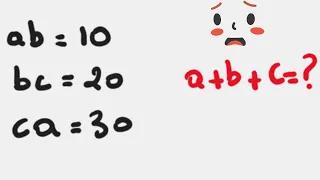
r/CasualMath • u/NoGuard2499 • 21h ago
Find Radius R ?

4
Upvotes
r/CasualMath • u/digtechteacher • 8h ago
Your friends have, on average, more friends than you do! This is counter-intuitive because friendship is a mutual relationship, so you would expect people to have more-or-less the same number of friends as their friends.
It turns out that a few very well connected people push the average higher. Such people appear whenever you're considering anyone's list of friends. Their number of friends has a disproportionate effect on the average number of friends that our friends have.
Example

Let's see if the paradox applies in Figure 1 above. We will assume that each of the friends represented that are outside of this network (dashed nodes and edges) has 2 friends of their own.
Only Priya bucked the trend. She is a very well connected person (a hub, or node with disproportionately many connections).
This is observed in many domains and you'll be glad to know that your enemies are likely to have more enemies than you do (See this paper on the enmity paradox).
Beneficial application of the paradox
Christakis and Fowler (2010) found that you can monitor a flu outbreak (H1N1) by exploiting this paradox: Keep an eye on friends of your random sample of people (Harvard students in their case). The result? The epidemic was detected ~14 days earlier in the friends group than in the randomly selected group.
I learnt about this in the recently published book, Big Math: The Hidden Codes that Run our World by Steven Strogatz and Alex Townsend. If you wish to read a little more detail about this paradox, take a look at my longer write-up about it.
r/CasualMath • u/Ballsfuckendeep • 3h ago
r/CasualMath • u/UnitCube • 4h ago
Here is an intuitive proof of the power rule. This proof is not original, although i did think of it myself.
r/CasualMath • u/Parallel_thougts • 15h ago
If you want just the puzzle and not the video: how many uniformly random reals numbers between 0 and 1 would you have to sample (on average) before their sum exceeds 1?
r/CasualMath • u/Dana-Adams • 16h ago
each letter stands for a different digit, the same letter is always the same digit, and no number starts with zero. all ten digits get used exactly once.

CRACK + CODE = ANSWER

there is exactly one solution, i checked it with a solver. pen and paper is enough though, the first three letters fall out pretty fast if you look at the left side of the sum.

full disclosure, i'm building a site called mind teasers and i use ai tools to help build it. it's a daily ten minute workout for ages 13 and up, with mental math, memory, puzzles and deduction, and you climb ranks as you go. it's here if you like this kind of thing: https://mindteasers.co

i'll post the full solution in the comments tomorrow, but go ahead and share yours.