r/ChristopherNolan • • Oct 25 '26

General Discussion Nolan’s next film [DISCUSSION THREAD]

Post image
188 Upvotes

Hi there,

Now The Odyssey is on physical media/streaming, there have been more posts regarding ideas for Nolan’s next film.

They’re good posts and ideas that contribute appropriately but we [the mod team] feel like they’d be best suited to a pinned discussion thread like what we have with The Odyssey and film rankings currently.

Make sure to keep discussions civilised and appropriate and follow the subreddit rules.

Thanks for noticing this and feel free to share any ideas in the comments below!


r/ChristopherNolan • • Jul 15 '26

The Odyssey The Odyssey [Discussion Thread] [SPOILERS] Spoiler

247 Upvotes

Welcome to The Odyssey Discussion Thread to discuss all things about Christopher Nolan's newest film!

Let's please keep discussions civil. Spoilers are welcome here, so proceed with caution.

Trailer 1 / Trailer 2 / Countdown Trailer

odysseymovie.com


r/ChristopherNolan • • 23h ago

The Odyssey Now that a good amount of time has passed since the movie is released. Where does it rank on your list in Nolan's films

Post image
294 Upvotes

I think #4 spot is perfect because the film is grand in scale but not as much as interstellar, it's unique in concept and its execution but not as unique as inception and its emotional narrative is very good but not as strong as his other works like TDK and interstellar..

It blended mythic scale and groundedness too..

So I think it might be #4 OR around in most of your list I'm guessing..

It's also released in digital so some of you guys may have re-watched this and found something new!

Curious to hear ur thoughts!


r/ChristopherNolan • • 15h ago

Tenet How much would tenet have grossed if there was no Covid pandemic?

Post image
60 Upvotes

r/ChristopherNolan • • 12h ago

The Odyssey The Odyssey and Throne of Blood Spoiler

Post image
29 Upvotes

As an avid fanboy of everything Kurosawa, I was struck with delight when this scene unfolded before my very eyes on the AMC Lincoln Square Theatre IMAX screen. Curious to know if anyone else noticed this connection.

I’ve drawn a connective thread in the 2026 film, The Odyssey, to Akira Kurosawa’s 1957 film, Throne of Blood.

Lone kings/war generals are pierced by the arrows of their disloyal subjects and the very soldiers they went to war with. Yet despite being impaled by multiple arrows and spears, Odysseus and Washizu display a heroic strength and determination that exist beyond the grasp of mere mortals and the disloyal forces that oppose them.

Homage or coincidence?


r/ChristopherNolan • • 1d ago

The Odyssey Is Nolan’s The Odyssey really about PTSD and coming home or is it about how myth turns villains into heroes?

16 Upvotes

Most discussions around The Odyssey focus on the grounded visuals, the Bronze Age realism, or the obvious themes of war trauma and PTSD. While all of that is on the surface, I think the actual core of Nolan’s script is hidden in how he swaps the roles of hero and villain—and shows how myth is born in the human mind to process unbearable guilt.

Here is how the whole puzzle fits together:

1. The Unreliable Narrator, the Lotus, and the "Broken Vase" Effect
Odysseus isn’t just lying to an audience—he’s creating these myths inside his own head. As the numbing effect of the lotus begins to wear off (or as he cuts back on it), his suppressed memories start flooding back: the guilt over Sinon, the horrors of Troy, and the realization that he has a family to return to. Because his ego can’t digest the raw, ugly truth of what he did, his mind translates those returning memories into myth. Every chapter works like a kid who broke a vase and blames it on a ghost: he remembers everything, except his psyche edits out the parts that make him look cowardly or cruel, blaming everything on "gods" and "monsters." That’s how myths are born—horrible things done by regular people get turned into monsters, and people with power get turned into gods so the story becomes bearable to live with and pass on.

2. Pride Over Everything
Odysseus’s defining trait isn't heroism—it’s hubris. He plucks the bowstring before hunting even at the cost of losing his prey, and he warns his enemies before the final slaughter just for the sake of a grand gesture. Even his return home feels less like pure love for his family and more like an obsession with closing his own psychological loop and facing the ghosts he can no longer numb away.

3. The Arcs as Stages of Guilt and Dehumanization

  • Polyphemus is a direct mirror of Troy: Disguising themselves as sheep and violating the "Law of Zeus" (guest-friendship) reflects the Trojan Horse—an unforgivable act of sacrilege that haunts his own conscience.
  • The rest of the journey (Circe, the Lotus island, the lost men) represents stages of reflection on his guilt: It’s his mind processing how violating the Law of Zeus led to the total dehumanization of his army. In reality, they were likely just looting cities and slaughtering innocent people as ruthless raiders ("Sea Peoples"), and turning men into animals or monsters in his head is how he copes with what they actually became.

4. The Hidden Key: Odysseus and Antinous (Robert Pattinson) are Doubles
Almost nobody talks about how meticulously Nolan mirrors Odysseus and Antinous:

  • They even share similar trinkets/tokens and visual cues.
  • They both betrayed the exact same man—Sinon, leading to his death (Antinous rigged the draft and abandoned Sinon's father; Odysseus stayed silent and used Sinon as a pawn in Troy).
  • They both violated the Law of Zeus by entering someone else's home under false pretenses of peace to destroy it from within.

Nolan deliberately flips the hero and the villain: there is no moral gap between the "great king" Odysseus and the "scumbag" Antinous. The only difference is that Odysseus gets a glorious legend to cover his tracks.

5. The Ending
When he says "Odysseus is dead," it works on two levels: for Telemachus, the mythic hero dies; for Odysseus himself, the scumbag dies so a new man can finally walk away from power. And that final line before the credits—about how "our mistakes will be forgotten" once civilization rises again—is Nolan’s ultimate jab at arrogant, self-righteous men like Odysseus. Songs and legends will always erase their crimes and turn destroyers into heroes, ensuring humanity repeats the exact same mistakes.

(English isn't my first language, so I used a translation tool to help structure my thoughts clearly.)


r/ChristopherNolan • • 2d ago

Tenet We live in a twilight world

450 Upvotes

r/ChristopherNolan • • 1d ago

The Odyssey The Odyssey Mastered What Your Story's Missing

Thumbnail youtu.be
2 Upvotes

This is a video I made on Christopher Nolan's writing of the Odyssey Movie! Nolan pulled off some insanely special writing for this film, and I explore all that in the video. Hope you enjoy!


r/ChristopherNolan • • 1d ago

The Dark Knight Trilogy Batman Begins (2005): Fumetti, Regia, Cinema Anni '70 e Stoicismo

1 Upvotes

​

Batman Begins (2005): Fumetti, Regia, Cinema Anni '70 e Stoicismo

Introduzione: Tono e Atmosfera

Ciao a tutti, è un vero piacere vedervi. Mettetevi comodi per un istante, perché oggi voglio parlarvi di un film che significa moltissimo per me: Batman Begins di Christopher Nolan, uscito nel 2005.

Contesto Storico e l'Arrivo di Christopher Nolan

Vedete, per apprezzare davvero ciò che accadde nel 2005, bisogna ricordare a che punto si trovasse la saga all'epoca. Nel 1997 avevamo avuto Batman & Robin — un film che era, diciamo così, decisamente sopra le righe. A tratti persino pacchiano, a dire il vero. La Warner Bros. si rese conto di essere finita in un vicolo cieco, così già verso la fine del 2003 decise di fare tabula rasa e di ripartire completamente da zero con un reboot dell'intera saga.

E chi decisero di chiamare? Un giovane regista britannico di nome Christopher Nolan. Ora, Chris era già celebre per la sua capacità di giocare con il tempo e di utilizzare un brillante montaggio alternato — un talento che si intravedeva già chiaramente in Memento. Poi, gli studios videro di cosa era capace con attori del calibro di Al Pacino e Robin Williams in Insomnia.

Questo li convinse definitivamente. Diedero a Chris carta bianca — la totale libertà creativa — per reinventare il Cavaliere Oscuro. Nolan accettò di buon grado l'incarico, unì le forze con David S. Goyer per scrivere il soggetto e la sceneggiatura e, insieme, costruirono questa straordinaria prima ora di film. Perché la cosa meravigliosa di questa pellicola — e non molte persone la apprezzano fino in fondo — è la pazienza. Non si vede nemmeno il protagonista indossare il costume di Batman per un'ora intera! Chris dedica tutta la prima metà del film a forgiare l'uomo dietro la maschera.

Cast e Colonna Sonora

Parliamo del cast... semplicemente straordinario. C'è Christian Bale, che si ritrova a dover interpretare tre uomini completamente diversi all'interno dello stesso film: il giovane traumatizzato e spezzato dal dolore, il miliardario playboy viziato e spericolato, e la terrificante creatura della notte.

E guardate da chi è circondato. C'è Gary Oldman nei panni di Jim Gordon, che sembra letteralmente uscito dalle pagine dei fumetti. C'è Morgan Freeman nel ruolo di Lucius Fox — classe pura, un carisma naturale e senza sforzo. Cillian Murphy nei panni dello Spaventapasseri, capace di farvi venire davvero i brividi. E, naturalmente, un vecchio attore londinese dal cuore cockney a interpretare Alfred... direi che se l'è cavata piuttosto bene, tutto sommato.

E poi la musica! Hans Zimmer e James Newton Howard. Proprio come la colonna sonora di Michael Giacchino in The Batman, questa musica ti entra letteralmente sotto pelle. Non si limita ad accompagnare le immagini: ti proietta direttamente dentro la mente di Bruce Wayne.

Le Ispirazioni Fumettistiche

Ora, proprio come ho fatto quando abbiamo parlato di The Batman, diamo uno sguardo ai fumetti. Perché Christopher Nolan e David S. Goyer hanno fatto i compiti a casa per bene e hanno attinto ai migliori classici di sempre:

Batman: L'uomo che cade (The Man Who Falls): È la vera spina dorsale della prima ora. Il giovane Bruce che precipita nel pozzo, i pipistrelli che gli sciamano intorno e poi il suo viaggio attorno al mondo per apprendere da diversi maestri — incluso un cacciatore di taglie di nome Henri Ducard, che Chris ha sapientemente fuso con Ra's al Ghul.

Batman: Anno Uno (Year One): Il capolavoro di Frank Miller è ovunque in questo film. Il degrado e il vapore dei Narrows, i poliziotti corrotti come il detective Flass, la prima goffa uscita notturna di Bruce con un semplice passamontagna... e quella sequenza geniale all'Arkham Asylum in cui aziona un dispositivo ad ultrasuoni nello stivale per richiamare uno stormo di pipistrelli e fuggire dalla polizia. Persino il finale sul tetto con la carta da gioco del Joker arriva direttamente da Anno Uno.

Il Lungo Halloween e Cavaliere Maledetto (The Long Halloween & Haunted Knight): Dalle opere di Jeph Loeb e Tim Sale hanno ripreso la figura imponente del boss mafioso Carmine Falcone, la tossina della paura dello Spaventapasseri e quella battuta memorabile: "Il dottor Crane non c'è al momento, ma se vuole fissare un appuntamento...". Semplicemente brillante.

Struttura Drammaturgica: I Quattro Atti e i Quattro Villain

Un altro aspetto affascinante della sceneggiatura è che questo film è strutturato esattamente in quattro atti, e ogni atto corrisponde a un diverso antagonista:

Bruce Wayne stesso (che nel primo atto deve combattere contro i propri demoni interiori)

Carmine Falcone

Lo Spaventapasseri (Jonathan Crane)

Ra's al Ghul

Devo dare merito al canale YouTube Just Right, che per primo mi ha aperto gli occhi su questa geniale costruzione in quattro atti: ha un senso drammaturgico perfetto, perché ogni singolo atto si apre con una caduta (Fall) e si chiude con una risalita (Rise), rispecchiando il ciclo continuo che governa l'intero film.

Atto I – La caduta e la risalita di Bruce Wayne: Tutto inizia con una caduta fisica: il giovane Bruce che precipita nel pozzo oscuro, scatenando il suo trauma profondo e la sua fobia per i pipistrelli. È proprio quella paura a farlo andare nel panico a teatro anni dopo, spingendo i suoi genitori a uscire prima nel vicolo dove vengono uccisi da Joe Chill. Da quel momento Bruce porta sulle spalle un senso di colpa schiacciante, vivendo per anni intrappolato nel dolore e nel rancore verso Chill. Persino dopo la morte di Joe Chill, Bruce continua a sentirsi personalmente responsabile della fine dei suoi genitori. Così parte verso l'Oriente, in Cina, cercando giustizia e un modo per incanalare la sua rabbia in una vera causa contro la criminalità. Dopo aver affrontato l'addestramento, sconfitto la Setta delle Ombre e ridotto in cenere il loro tempio tra le montagne, Bruce fa finalmente ritorno a Gotham. Scende di nuovo in quella stessa caverna dove era nato il suo incubo — e stavolta, circondato dai pipistrelli, vince la sua paura e risorge.

Atto II – La caduta e la risalita contro Carmine Falcone: Il secondo atto si ricollega direttamente al primo. La caduta avviene quando Bruce Wayne, subito dopo l'omicidio di Joe Chill, viene sbattuto fuori dal locale di Falcone dai suoi buttafuori, finendo disteso sul cemento freddo. La risalita arriva quando Bruce torna a Gotham dopo l'addestramento con la Setta delle Ombre, assume l'identità di Batman, sgomina gli sgherri di Falcone al porto e lega il boss mafioso a un potente riflettore: nel cielo si staglia così sia la prima silhouette simbolica del Bat-Segnale, sia la figura stessa di Batman appollaiato come un gargoyle sull'aguglia del tribunale a dominare l'intera Gotham dall'alto.

Atto III – La caduta e la risalita contro lo Spaventapasseri: Il terzo atto è interamente dedicato allo scontro con lo Spaventapasseri. Qui la caduta è drammatica e letterale: Jonathan Crane dà fuoco a Batman e lo scaraventa di sotto dalla finestra nel cuore dei Narrows. La risalita avviene in modo paradossale e potentissimo proprio durante una discesa: dopo aver sconfitto lo Spaventapasseri, Batman apre il mantello nella tromba delle scale centrale dell'Arkham Asylum, circondato da uno stormo di pipistrelli che turbinano intorno a lui mentre plana verso la salvezza.

Atto IV – La caduta e la risalita contro Ra's al Ghul: Il quarto e ultimo atto appartiene a Ra's al Ghul. Qui la caduta coincide con la distruzione in fiamme di Wayne Manor e con la discesa nella tromba dell'ascensore di Bruce Wayne e Alfred. È proprio lì dentro, tra le macerie fumanti, che Alfred pronuncia la celebre domanda: "Perché cadiamo, signore? Per imparare a rialzarci." Bruce risorge letteralmente dalle ceneri della sua villa come una fenice. La risalita definitiva si compie nello scontro finale sulla monorotaia: Batman dispiega le ali del mantello e si staglia in volo nel cielo notturno mentre Ra's al Ghul precipita verso la fine. Subito dopo, Jim Gordon apre il tettuccio della Batmobile, guarda verso l'alto e saluta Batman con un sospiro di profondo sollievo mentre il Cavaliere Oscuro volteggia davanti a lui.

Regia, Fotografia e Citazioni Cinematografiche

Parliamo ora dell'impatto visivo del film, perché Christopher Nolan, David S. Goyer e il loro straordinario direttore della fotografia Wally Pfister hanno creato qualcosa di davvero speciale. Nolan ha ancorato la sua Gotham City e l'intero universo narrativo a uno stile verosimile e il più realistico possibile entro i confini di un cinecomic. Certo, non spinge il realismo crudo fino ai livelli di The Batman di Matt Reeves, ma rispetto ai toni sopra le righe e pacchiani di Batman & Robin rappresenta una svolta totale verso la realtà.

Prima ancora di iniziare le riprese, Chris riunì l'intera troupe per proiettare Blade Runner di Ridley Scott, dicendo a tutti: "È così che faremo Batman". Presero quell'estetica marcia, decadente e bagnata dalla pioggia della Los Angeles del 2019 e la riversarono nelle strade di Gotham — specialmente nei Narrows, fondendo gli imponenti grattacieli art déco con il vapore, le ombre e le tonalità seppia.

E se osserviamo attentamente, emergono altre grandi influenze cinematografiche:

Il Corvo (The Crow): Pensate al campo totale di Gotham City avvolta e soffocata dalla tossina della paura di Jonathan Crane — riprende esattamente l'energia visiva di Detroit che brucia durante la Notte del Diavolo ne Il Corvo. Persino i senzatetto che si scaldano attorno ai bidoni metallici infuocati nei Narrows richiamano sia Blade Runner sia la decadenza urbana de Il Corvo.

La New Hollywood degli anni '70: Nolan ha guardato dritto al grande cinema americano degli anni Settanta. Prendete l'inseguimento mozzafiato in cui la Batmobile sfreccia sotto la monorotaia: è ispirato direttamente a Il braccio violento della legge (The French Connection), quando Gene Hackman insegue la metropolitana sopraelevata per le strade di New York. Oppure pensate a quel momento silenzioso e intenso in cui Bruce getta il revolver nel fiume dopo aver tentato di uccidere Joe Chill — un chiaro richiamo a Il maratoneta (Marathon Man). E in generale, l'intero respiro urbano e crudo del film trasuda lo spirito della New Hollywood, incluso Taxi Driver di Martin Scorsese.

Altri rimandi visivi e registici: Guardate le riprese panoramiche e i campi totali dei ghiacciai durante l'addestramento di Bruce: richiamano subito i paesaggi ghiacciati di Insomnia dello stesso Nolan, ma anche il thriller Il senso di Smilla per la neve. Quando poi la monorotaia crolla dai suoi piloni d'acciaio e si disintegra contro la base della Wayne Tower, è evidente il richiamo alla celebre caduta del treno nel capolavoro Il ponte sul fiume Kwai di David Lean — lo stesso regista di Lawrence d'Arabia. E se osservate le inquadrature durante l'inseguimento della Batmobile — inquadrature dal basso sulla macchina, rasoterra e velocissime — molte di esse sono praticamente identiche ai leggendari inseguimenti automobilistici di Ronin con Robert De Niro.

Paralleli con Spider-Man e Spider-Man 2 di Sam Raimi

Ci sono inoltre alcune somiglianze notevoli con altri cinecomic fondamentali di quell'epoca — in particolare Spider-Man e Spider-Man 2 di Sam Raimi.

Pensate al finale del primo Spider-Man: dopo quel bacio malinconico al funerale di Norman Osborn, Peter Parker rinuncia all'amore di Mary Jane perché sa che la sua doppia vita la metterebbe costantemente in pericolo. Vediamo esattamente lo stesso sacrificio specchiato alla fine di Batman Begins: dopo che Rachel bacia Bruce Wayne, fa un passo indietro e gli dice che finché Gotham avrà bisogno di Batman, loro due non potranno mai stare insieme.

E poi guardate il climax finale — quella monorotaia inesorabile che sfreccia verso la Wayne Tower con i comandi distrutti, mentre Batman e Ra's al Ghul combattono all'interno. Quella corsa fuori controllo richiama esattamente la tensione e l'energia cinetica di Spider-Man 2, quando Peter affronta il Dottor Octopus a bordo della metropolitana impazzita.

Ora, sarò sincero con voi — non sono uno che usa mezzi termini — il montaggio nei combattimenti corpo a corpo è un po' troppo frenetico: batti ciglio e ti perdi un pugno. Tuttavia, Nolan compensa ampiamente con la magia degli effetti pratici reali. La Tumbler che salta da un tetto all'altro? Tutto vero. E il modo in cui inquadra Batman nell'oscurità al porto, come una creatura uscita da un film horror... semplicemente magnifico.

La Filosofia: Lo Stoicismo

Ma voglio dirvi qual è il vero motivo per cui questo film mi resta dentro così a lungo. È un'opera profonda e stratificata, perché è intrisa di Stoicismo.

Se avete mai letto Marco Aurelio o Seneca, Batman Begins è praticamente un manuale di filosofia stoica trasposto sullo schermo. Quando Bruce perde i suoi genitori, è divorato dal dolore e dalla rabbia. Costruisce così una vera e propria fortezza di dolore, forgiando la propria temperanza e il proprio autocontrollo attorno al duro addestramento con la Setta delle Ombre. All'inizio vorrebbe impugnare una pistola e sparare a Joe Chill, perché non ha ancora imparato a dominare sé stesso.

Come gli dice il personaggio di Liam Neeson: "Il ricordo dei tuoi cari è come veleno nelle tue vene." Bruce comprende di dover diventare più forte e di dover incanalare quella sofferenza in una causa superiore, una crociata contro il crimine.

E amo il fatto che voglia essere qualcosa di più di un semplice uomo in carne e ossa. Vuole diventare una leggenda. Una leggenda vivente, immortale. Mi ricorda i giganti della storia reale come Nelson Mandela — un'autentica leggenda vivente che ha sacrificato tutto per i propri ideali, come la libertà per tutti gli uomini.

Chiusura: Il Tetto di Gotham e il Tema dell'Adolescenza

Quando Batman Begins volge al termine, ritroviamo Jim Gordon e Batman sul tetto della centrale di polizia. Gordon gli mostra la carta del Joker, esattamente come nel finale di Batman: Anno Uno, in cui Gordon parla al lettore di questa nuova minaccia sull'orizzonte di Gotham. Subito dopo, Batman si tuffa nel vuoto, planando direttamente verso la telecamera e verso lo spettatore, prima che lo schermo piombi nel nero e partano i titoli di coda — una chiusura visivamente identica al finale del primo Spider-Man, in cui l'Uomo Ragno dondola con la ragnatela diritto verso lo spettatore prima dello stacco sul nero.

In definitiva, Batman Begins è un film che parla profondamente di adolescenza — perché quando siamo giovani commettiamo molti errori, cadiamo e impariamo a rialzarci. Come diceva un saggio maggiordomo nel film: "Perché cadiamo, signore? Per imparare a rialzarci."

Che lo guardiate da appassionati di fumetti o da amanti delle grandi storie ricche di significato, questo film resiste meravigliosamente alla prova del tempo. Fatemi sapere nei commenti cosa ne pensate. Abbiate cura di voi, e ci vediamo alla prossima.


r/ChristopherNolan • • 2d ago

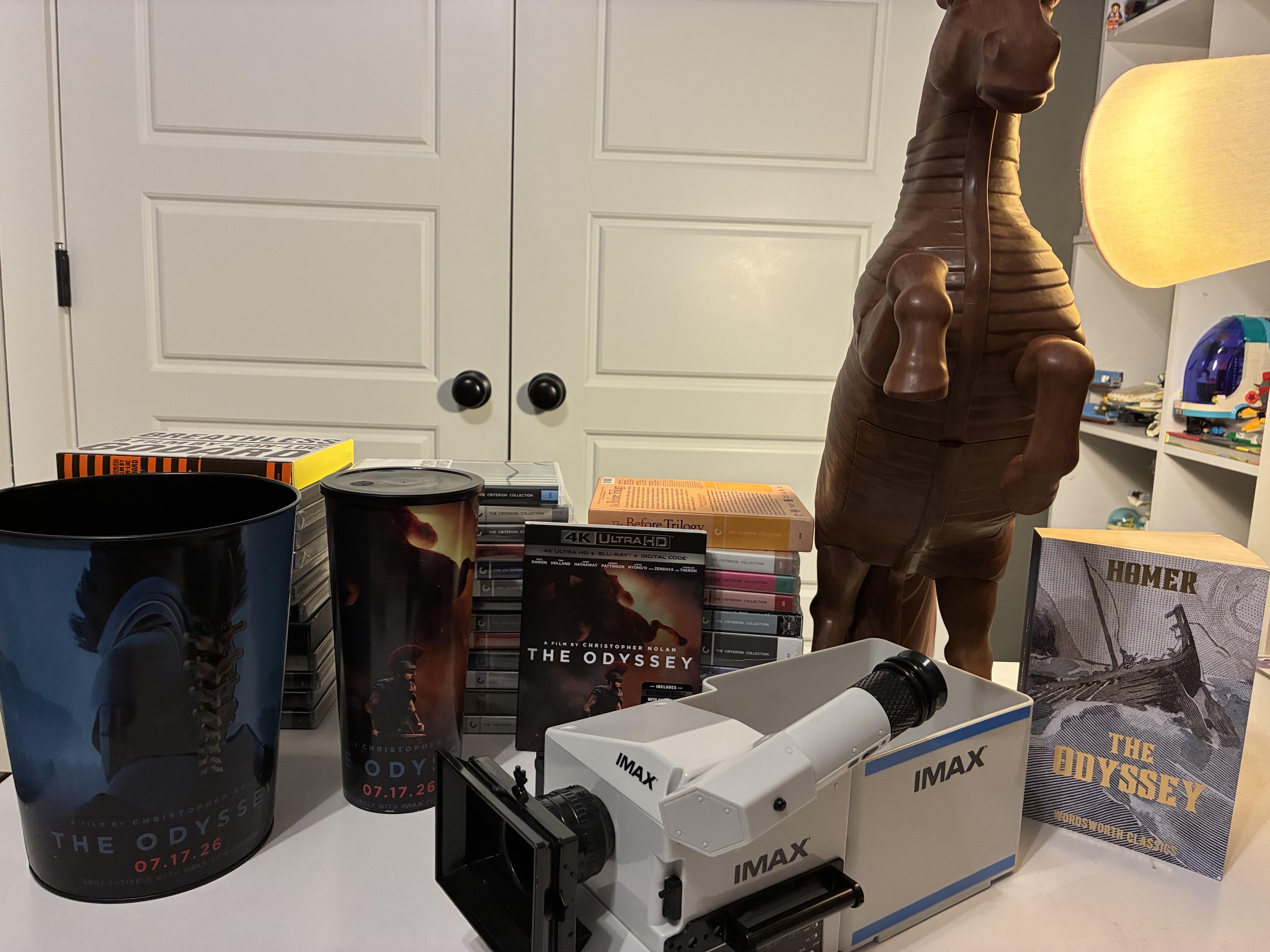
The Odyssey My Oddysey Merch Collection

Post image
103 Upvotes

r/ChristopherNolan • • 1d ago

Interstellar Interstellar Review (Hot Take)

0 Upvotes

I really wanted to love Interstellar more than I did. There is so much about it that I think is incredible: the visuals, Hans Zimmer's score, the ambition of the science-fiction concepts, and the sheer scale of what Nolan is trying to do. But I found myself constantly being pulled out of the film by the writing.

My biggest issue is that the dialogue can be really on-the-nose and melodramatic. Characters constantly explain exactly what the film wants you to feel or understand, especially when it comes to love, sacrifice and humanity. The whole “love transcends dimensions” idea is interesting as a thematic concept, but I don't think the film handles it subtly enough. By the end, it almost becomes “the power of love is literally the solution”, which is a little too much for me.

I also struggled with the character writing. Murph becoming a scientist and eventually working on essentially the exact same problem that her father couldn't solve feels almost too perfectly constructed. I understand the narrative purpose, and the eventual payoff is emotional, but it sometimes feels like the screenplay is forcing everything into place rather than letting the characters naturally arrive there.

Anne Hathaway's performance also didn't completely work for me. I understand what Amelia Brand is supposed to represent and why she's so emotionally intense, but some of her scenes felt overly theatrical. The same goes to a lesser extent for the older Murph. There are moments where the performances and dialogue feel like they're playing “BIG MOVIE EMOTION” rather than people actually talking to each other.

And then there's the “love” explanation. I actually don't dislike the idea that love is the emotional force connecting the characters across time and space. I just think the film sometimes blurs the line between love as a human intuition or thematic idea and love as an almost literal physical force. I found that a little too sentimental.

That said, I think the film's greatest strength is that even when I don't buy some of the writing, I still buy into the experience of watching it. The docking sequence, the black hole, the tesseract, the sound design, the score, the sense of scale. Nolan is incredibly good at making abstract scientific ideas feel visceral and cinematic.

I also really liked the stuff with Dr. Mann. His decision to falsify his data because he couldn't face dying alone makes him one of the more psychologically interesting characters in the film. And what's especially tragic is that if he had simply told Cooper and the others the truth, they probably would have tried to take him with them. His desperation creates the very situation that ultimately destroys him.

Ultimately, Interstellar is a film where I admire the filmmaking more than I love the writing. It's ambitious, visually extraordinary and genuinely moving at times, but I think it reaches for profundity so aggressively that it occasionally becomes melodramatic and overly convenient.


r/ChristopherNolan • • 2d ago

The Odyssey My Odyssey Collection

Post image
63 Upvotes

r/ChristopherNolan • • 2d ago

The Odyssey Me watching the odyssey hearing the cyclops’ scream

60 Upvotes

Probably most terrifying sound of a larger creature in any movie ever. They pulled it off. I wonder what editing and tricks went into making this scream. I feel like I can almost hear a roar at one point in the scream of the full scene. Anyone got any Info?


r/ChristopherNolan • • 3d ago

General Fanart Some Nolan Art (Oppenhimer and Odyssey

Thumbnail gallery
47 Upvotes

First was made weeks ago, but the other two were made more recently

NO AI!!!!!!! ALL HAND MADE BY MEEEE!!!! (god, why do I have to say that)


r/ChristopherNolan • • 3d ago Bravo

The Odyssey Hidden lesson in The Odyssey

269 Upvotes

r/ChristopherNolan • • 3d ago

The Dark Knight Trilogy Chris directing Heath Ledger on the set of The Dark Knight

Post image
251 Upvotes

r/ChristopherNolan • • 3d ago

The Prestige The Prestige x Hit The Wall

4 Upvotes

I hope you like my new edit. There are spoilers in the edit, if for some reason you haven’t seen the film.


r/ChristopherNolan • • 3d ago

Humor Inception 2 hit my local pharmacy

27 Upvotes

Just watched the ending. Still dont know if Cobb was dreaming in Inception Reloaded.


r/ChristopherNolan • • 4d ago

The Odyssey My Chris Nolan Movie Shelf

Thumbnail gallery
151 Upvotes

I’ve been working on a personal project to create a dedicated Christopher Nolan display. Rather than simply collecting his movies on Blu-ray and 4K, I wanted to create something that celebrates his filmography and commitment to physical film.
The IMAX film cells
The top shelf features three authentic theatrical 15/70 IMAX film cells, individually housed in 4×4-inch magnetic acrylic frames and illuminated from behind.
● Oppenheimer: Oppenheimer wearing protective goggles during the Trinity test sequence.
● Interstellar: Gargantua, the black hole.
● The Dark Knight: Batman riding the Batpod with an explosion behind him.
I spent a considerable amount of time selecting these particular frames because I wanted each one to capture the visual identity of its respective film.
The arrangement is intentional, transitioning from the cool tones of Oppenheimer to the darkness of Interstellar and finally the warm, fiery tones of The Dark Knight. All three frames also feature a prominent source of light within their compositions, making them particularly striking when backlit.
The Odyssey and the interchangeable display
I’ve also incorporated an approximately one-foot-long IMAX film strip from The Odyssey into the project.
One of the unique features of this setup is its interchangeability. I can alternate between displaying the three individual IMAX film cells and the longer Odyssey film strip using the same illuminated shelf.
This allows me to showcase different pieces of my collection without overcrowding the display or permanently committing to one arrangement.
The Odyssey strip is particularly meaningful given that the movie was shot entirely using IMAX film cameras.

The physical media collection

The bottom shelf contains all 13 of Nolan’s feature films, arranged chronologically from Following (1998) to The Odyssey (2026). Most are in 4K UHD, with his earlier films on Blu-ray.

With the recent addition of The Odyssey, I’ve finally completed his feature filmography.
The movie mementos

Alongside the movies are three recognizable objects from Nolan’s films:
● A 3D-printed TARS model from Interstellar.
● A miniature Tumbler from The Dark Knight trilogy.
● A metal spinning top from Inception.
I deliberately limited the number of mementos to preserve the minimalist aesthetic.
The design philosophy
My philosophy throughout this project has been that less is more. I wanted the shelf to feel like a miniature cinema exhibition rather than a conventional merchandise display.

The illuminated film cells serve as the centerpiece, while the Blu-rays and mementos complement them below. The interchangeable design also allows the display to evolve as my IMAX film collection grows.

What I particularly appreciate about this project is that it brings together two forms of physical media: the actual film used to theatrically exhibit these movies and the discs that allow me to experience them at home.

Ultimately, this is as much a tribute to the medium of cinema as it is to Christopher Nolan himself.
Would love to hear what fellow Nolan fans, IMAX enthusiasts, and physical media collectors think of the setup!


r/ChristopherNolan • • 2d ago

Interstellar Cooper died in Interstellar

0 Upvotes

SPOILER ALERT

PS: Posted this in another subreddit. People didn't like it there. So reposting it here.

There are 2 probable cases where cooper died and rest of the movie is just a dying dream + flashback(Mann said when he is dying he will see faces of people whoever he loved the most)

  1. In the opening scene we see cooper flying an aircraft(where he says I need power up and someone on radio saying shutting it down cooper and suddenly cooper hits his back to the seat),then it cuts to him waking up from sleep and his daughter saying I thought you were the ghost. So even this case has 2 cases:

1)Cooper died long ago when his children were still kids and remaining movie is just a dream.

2) The aircraft he was flying had striking similarity with the one used in Endurance mission. Plus,he was wearing black colored gear. At the end of movie,we see him leaving cooper station in search of Amelia and he was wearing black colored suit and that aircraft which had similarity to Endurance mission. So,it could be he left cooper station in search of Amelia,faced some problem,and it was TARS who took control of ship(voice was similar) but maybe he survived or he died.

2. Another case: He fell into Gargantua but he didn't survive. Whatever happens after is just coping rumination(that he survived and saw black hole from inside and saved everyone on earth,and got to see his daughter for last time), everyone on earth might have died. Brand is the only one alive.


r/ChristopherNolan • • 3d ago

General Discussion If you got to date any one of Nolan’s characters, who would you date and why?

9 Upvotes

I’d personally say Finch (Batman Begins, not Insomnia, thankfully) because he cares about justice, Gotham (and its people) and also remains (assumably) single throughout Batman Begins


r/ChristopherNolan • • 4d ago

Humor Coming out to find your wife after playing GTA VI.

583 Upvotes

Source: @Filmfiend via FB


r/ChristopherNolan • • 3d ago

General Discussion Which is the Best Christopher Nolan Movie From the 2010s?

12 Upvotes

After talking about the Nolan movies from the 2000s, I think it’s time to discuss his filmography in the 2010s. And I’m curious to see the results.


r/ChristopherNolan • • 4d ago

The Odyssey The award season has officially started for Ludwig!

Post image
249 Upvotes