r/EdwardII • u/HoneybeeXYZ • 10h ago
Art and Artifacts Dubbing of Philip the Tall and Charles the Fair presided over by their father King Philip IV

4
Upvotes
r/EdwardII • u/AnantaPurima • Apr 21 '26

(Apologies for how long this ended up being, lol)
Ok. Imagine for a moment that you are in Isabella of France's position in 1325. Your husband is effectively in thrall to an individual whom you believe, rightly or wrongly, to have endangered your life by convincing your husband to abandon you at Tynemouth Priory three years ago. This person has subsequently systematically curtailed your access to your husband, preventing you from exercising the intercessory role that forms the backbone of your influence as queen. He has convinced your husband that you are now a political liability, given the onset of the War of St Sardos, which had nothing to do with you and which you could not have prevented. Your husband has subsequently slashed your annual income and confiscated your lands, thereby further vitiating your position as queen by preventing you from dispensing patronage through appointments on those lands. Having been sent to France to negotiate a peace settlement, you are now finally free of the presence of this individual and have a chance to once again exert political agency. However, you face a dilemma: how do you make the most of this period of respite from a truly intolerable situation? Is it not worth exploiting it for leverage?
You table the question for now. Your husband will inevitably have to come to France to perform homage to your brother as his feudal suzerain for his lands in Gascony and Ponthieu. He Who Must Not Be Named will almost certainly not risk coming alongside him, not with Contrariant exiles still lurking on the continent, ready to pounce at any chance for revenge. Hopefully, then, you will have the chance to talk to your husband without that man interposing himself between you two, and you will be able to get through to him. Then you receive the news. Your husband, clearly having been prevailed upon at the last minute, has cancelled. He has instead decided to enfeoff your eldest son as Duke of Aquitaine and Count of Ponthieu and Montreuil, and to have him perform homage in his stead. Any chance of catching him without That Man is now scuppered.
This is now the situation you face. Let's assume you are an intelligent and historically literate political operator. From your perspective, as Isabella, does amassing a mercenary force for the express purpose of invading your adopted homeland, forcing your husband to abdicate and enthroning your eldest son, with you presiding as Queen Mother, look like a viable or appealing avenue to regaining political influence?
Reader, no. That is, to put it charitably, completely batshit insane. And the fact that it is completely batshit insane is blindingly obvious to you, assuming you are not completely historically illiterate. Which, as a highly educated fille de France, I would certainly hope you were not.
For the time being, let's put aside the entire can of worms that is attempting to depose a King of England, something that has never been successfully done before by your time. What I want to focus on is something far, far more elementary. That something is this:
BECOMING A QUEEN MOTHER IN PLANTAGENET ENGLAND WAS NOT A REALISTIC OR VIABLE WAY OF REGAINING POLITICAL INFLUENCE.
"B-but what about Blanche of Castile? Eleonor of Aquitaine?" I hear you cry. Right. Yes. I'm getting to that. Let's start with Blanche, because she was a genuinely impressive figure who exercised extraordinary power as regent for her son, Louis IX, and remained a trusted and influential advisor even after he attained his majority. Blanche was Isabella's great-great-grandmother, so she was certainly aware of her and her achievements. The spanner in the wrench is that... well, Blanche of Castile was Queen Regent of France, and, despite many subsequent efforts to the contrary in the 14th and 15th centuries, France and England were two different countries with very different political cultures. The position of regency, as a distinct vocation for Capetian queens-consort, simply did not exist in England. Blanche's regency had been institutionally legitimised through her late husband Louis VIII's will. The most recent precedent for an English monarch acceding to the throne before their majority was Henry III in 1216, and then, the political nation had chosen William Marshal, the Earl of Pembroke, as regent, pointedly excluding his mother, Isabella of Angoulême. For Isabella to have imagined a quasi-Capetian role of queen-regency for herself, she would have needed to believe she could successfully import an entirely foreign political culture to England, push through the constitutional innovations necessary to make such a position even intelligible, and to think that the baronage would, I dunno, accept this flagrant violation of established precedent. I, at least, do not see how Isabella could have thought this was any sort of winning strategy.
Ok, what about Eleanor of Aquitaine? Well, Eleanor's position was qualitatively different from Isabella's, or any other Plantagenet queen consort, really, being the Duchess of Aquitaine in her own right and thus being, individually, an indispensable lynchpin of the whole Angevin edifice. Eleanor's political prominence after Henry II's death did not come from her being a queen mother; it came from her status as a ruler in her own right, with her own independent political base, and from the fact that her son, Richard I, was physically absent from his realms on crusade for substantial portions of his reign, which required her, as a said lynchpin of their empire, to actively maintain and defend it when it was vulnerable. None of this applied to Isabella, and so Eleanor's example hardly provided a viable blueprint for her to follow.
Given that we have dispensed with these two points, let us look at what the remaining field looks like for queen dowagers/mothers in post-conquest England. How did their political prospects fare as a result of their transition into the role? Let's take a look. Apart from Eleonor, we have five cases relevant for our purposes here:
When we think about what the prospect of queen-motherhood would have looked like to Isabella in a specifically English context, it is necessary to keep these precedents in mind, because this is what it would have looked like. Isabella had seen her aunt Marguerite's trajectory up close. The ceiling for what she could have hoped for from queen motherhood was what Eleonor of Provence received, which was essentially analogous to what Isabella herself received after 1330. Being a queen mother in England was not being a key stateswoman or an essential element of government. It was mulling about on your estate, looking for ways to pass the time.
So, reader, once again, I ask you. Put yourself in Isabella's shoes in 1325. After the political marginalisation you have experienced over the previous few years, does this seriously look, to you, like something to aspire to to regain your influence? No. It doesn't. But do you know what does look like a viable, if desperate, route to regaining influence, however? Adopting an aggressive posture as a pressure tactic to force your husband to temporarily exile his hated favourite, as he has done previously under baronial pressure in 1321, and exploiting his absence to repair your working political partnership enough to permanently freeze out the individual separating you two, and then ensuring he is dealt with. This was almost certainly Isabella's original plan.
What changed things was the fact that Edward's support base simply evaporated with astonishing rapidity, and soon, within months, both Edward II and Hugh le Despenser were in the custody of Isabella and her supporters. It is here that I think opportunistic vindictiveness prevailed over prudence, and Hugh le Despenser was subject to his grotesque execution. Let me be clear, though, I definitely think Isabella and Mortimer wanted Despenser dead from the start, but I think their original plan almost certainly would have been for Isabella to rebuild a working political partnership and make Edward understand her perspective before formally proceeding against him in Parliament. I think Hereford was a reaction to him more or less unexpectedly falling in their hands and them being unable to restrain themselves in the moment. For Roger de Mortimer of Wigmore, in particular, the strategic calculus would have immediately shifted. He had been loyal to Edward for years before the Despenser War in Glamorgan, and I believe Isabella's original plan served his interests too. His primary goal was institutional rehabilitation, and this would not necessarily have been impossible under Edward II, particularly without the Despensers in his ear. This, of course, completely changed with Hereford. He had just presided over a second Blacklow Hill; in fact, something markedly worse than Blacklow Hill, and he would have known that, had Edward II been restored to any semblance of power, a fate like Thomas of Lancaster's, or indeed, one far worse, would be inevitable for him. He simply could not tolerate Edward remaining in any position of power. Regardless of whatever the original plan was, it was inevitable that Roger would now be pushing for deposition. This was likely the discussion occurring over the holidays amongst Isabella and Roger's camp at Wallingford Castle.
This, I think, is borne out by Isabella's subsequent conduct. She was not constructing some grand Blanche of Castile-style regency for herself. Her actions are exactly what we would expect from a queen consort who had been shut out of exerting political influence through the channels of patronage and intercession, who took desperate measures to remove the individual undermining her position, only to be forced to improvise a position for herself after the internal momentum of events made her original goal impossible.
Mark Omrod, in his magisterial biography of Edward III, rather notably describes 1326-1330 as Isabella's "artificially extended period as consort," which I think is right on the money. It's notable that she allocated to herself, on the very day of her son's coronation, an absurdly large dower of £13,000, a sum that put her in possession of most of the revenues from the royal demesne and thus, inevitably, at the centre of patronage networks a queen mother would have ordinarily had little part in. She also repeatedly prevaricated in assigning Philippa of Hainault her dower lands and delayed her coronation for two years straight. These are not the actions of someone owning queen-motherhood. These are the actions of someone whose sense of identity was deeply bound up in her political function as a queen consort, and who was deeply psychologically unprepared to surrender this role after the circumstances she had engineered to reclaim that role spiralled out of control and made it impossible for her.
I don't see how, or why, Isabella could have wanted Edward II deposed in 1325. I don't see how her reaction to his actual deposition could have been anything more than a reluctant acknowledgement of its necessity to preserve the principals of her faction after what had happened at Hereford. I feel it does a disservice to her to say otherwise.
r/EdwardII
•
u/Appropriate-Calm4822
•
Feb 26 '26

Finally we can publish the interview we did with Kathryn Warner over a month ago! We had some issues with the audio which we couldn't solve so instead we decided to transcribe the whole thing and post it in written format.
There will be 8 parts to this interview, published at a pace of one a day.
Without further ado we're kicking things off with the arguably most hated man of the 14th century in England, Hugh Despenser the Younger.
1. Could Hugh Despenser the Younger have been coercive in his relationship with Edward II?
The relationship between Edward II and Hugh Despenser the Younger has fascinated me for twenty-odd years now, and even now I occasionally feel like I get new insights into it. I’d really like to know what was going on between them. I do sometimes wonder if it was some kind of domination / submission kind of relationship perhaps in some respects. They’d known each other for most of their lives, since they were children or at the very least adolescent. Edward had never shown Hugh the slightest affection until Hugh became his chamberlain when he was already thirty years old, even though Edward had been close to both Hugh’s father and his wife, Eleanor de Clare. Suddenly he becomes besotted with Hugh the younger who basically becomes his co-ruler. How did that happen? How did Hugh work his way into that position?
I do feel like Hugh was a very talented manipulator. I think he turned himself into the person that Edward wanted, and needed in his life, whether he was actually like that or not, whether he liked men at all. I kind of wonder if he was basically heterosexual… ‘the king can give me power and wealth and land’… Even 700 years later, I don’t want to accuse people of abuse or coercion because that would be quite a serious allegation, even for people who have been dead for so many centuries.
Looking at Edward’s position by about 1324/25 what strikes me is that he had become alienated from almost his entire family, with the exception of his younger children, who were due to their age not entirely relevant yet, and of course Hugh Despenser the Younger and his wife Eleanor de Clare. He’d become estranged from his wife Isabella, his son Edward, his two half-brothers Edmund and Thomas, his cousin Henry of Lancaster, his other cousin the earl of Richmond who had always been close to him and just suddenly disappeared from his inner circle. He’d always been close to his other niece Margaret, Gaveston’s widow, and suddenly he shuts her off too, sending her to a nunnery in Lincolnshire. Even his own sister, Mary, the nun in Amesbury who he’d always been close to, they had often visited each other. She, too, vanishes entirely from his life. In Edward’s chamber accounts from the 1320’s there are no more mentions of her at all, not even when Edward was in that part of England he didn’t go to visit her or invite her to court or even send her a letter. It means to me that he had become estranged and alienated from his entire family and that strikes me as kind of sinister, to be honest. I wonder if that had been done deliberately.
I’ve also often wondered if Isabella’s actions in 1325/26 were trying to shake some sense into Edward, like she didn’t particularly want to depose him, she just wanted to get him away from Despenser, from that whole manipulative fantasy world that had perhaps been created around him. When you actually read Isabella’s letters or the speech as recorded by Vita Edwardi Secundi she says that she will go back to Edward as long as he sends Despenser away. In a letter to the Archbishop of Canterbury she says that she wants to go back to Edward but she can’t because she’s frightened of Despenser. So I think somehow Despenser might have manipulated and also coerced Edward into this position of estrangement and alienation without Edward even being fully aware of what was happening to him.
2. Do we have any extant letters from Isabella where she specifies clearly that Hugh is the problem, or could it also be his wife Eleanor that she is referring to? Could there be some ambivalence here?
In a speech of hers which she made to the French court and is recorded by the Vita, the one where she refers to the third person in her marriage as a pharisee she does not name Hugh Despenser. It might even be Eleanor de Clare she refers to. It is quite ambivalent. But then two months after that, on the 5 February 1326 Isabella sends a letter to Walter Reynolds, Archbishop of Canterbury and in this letter she does state directly that she’s frightened of Hugh Despenser and cannot go back to Edward as she’s frightened of what Hugh might do to her, and because she doesn’t think that Edward will protect her from him.
Isabella calls Hugh her ‘evilwisher’. In this letter she refers to Edward as ‘our very dear and very sweet lord and friend’ which I have never seen before in any other medieval context, that is so unconventional. If Isabella just wanted to be conventionally polite she would have just written ‘my very dear lord’. But calling him her very dear and very sweet lord and friend, to me that really speaks to her feelings, that she was deeply distressed about what had happened to her marriage, and blamed Despenser for it and wanted him gone. She wanted her life back, with Edward and her marriage and her position – and of course her wealth, lands and status obviously. This letter is also very personal, it’s not just about her status as a queen, it’s about her status as Edward’s wife and companion.
3. Do you have any thoughts about Hugh’s personality?
One sad thing about Hugh is that none of his household accounts survive, they’ve all just vanished. The good thing is that a lot of his letters have survived. He was very prone to sending long letters to John Inge, sheriff of Glamorgan that were very bossy, and very hectoring and actually very threatening, like: ‘Do this, go over there, do that, no not like that you idiot, like this! If you don’t do it properly I will have you hanged.’ That kind of stuff. So you do get this very strong sense of his personality in these letters of how he could be frankly very scary. This sheriff of Glamorgan was a quite a highly born nobleman, he was a highly experienced politician, sheriff and soldier, and he was terrified of Hugh. And he had every reason to be terrified, as he eventually lost his office and was imprisoned by Hugh in London, along with all his council. The last surviving letter addressed to the sheriff by Hugh contains the line (as remembered by Kathryn during the interview): ‘We trust you more the more you serve us, but we are very worried about having some reason for which we might be prepared to harm you.’
One chronicler states that even great English nobles were frightened of Hugh Despenser the Younger. He does strike me as someone who has no boundaries and no limits and is utterly ruthless and ambitious. On the positive side, his letters show that he had this very witty and sarcastic sense of humor, and also that he was incredibly articulate. You can see in his choice of vocabulary and the way he expressed himself that he was very clever. I think about his father and grandfather… his grandfather was the justiciar of England which is kind of equivalent today to the office of prime minister. The Despenser men were very intelligent and capable. Hugh and his father, I feel, used their intelligence to the wrong end. They could have been remembered as great men, not as disgraced and executed traitors.
A lot of letters to Hugh survive as well. This is because he kept the drafts of his own letters, and the ones he received in his own wardrobe in the Tower of London. What’s really fascinating is that you can see even men of much higher rank to Hugh, such as the earl of Surrey, or Edward’s half-brother the earl of Kent addressed Hugh in this incredibly deferential manner, which he didn’t reciprocate at all. He had no respect for authority and that was very unusual for the time.
4. What did Eleanor and Edward see in Hugh?
I’ve always seen Eleanor as Hugh’s ally and supporter in basically everything. Hugh must have been someone who could be very charming, the kind of person who could make other feel like they were the only person in the world. Possibly he was someone who had a wealth of interest in stories he could tell and very good at making people laugh. When they were staying in a village in Hampshire in March or April 1325 they played practical jokes on each other. He could seem quite funny and likeable, whatever he was really like inside. I think he must have been really good at hiding his true ambition and his wild, limitless nature. Otherwise the English nobles who had known him his whole life wouldn’t have appointed him as Edward’s chamberlain in 1318 if they’d had any idea what he’d do next and how dangerous he’d become. He must have been very good at keeping himself hidden and just presenting a charming and lovely exterior.
I think the modern attitude that Gaveston was really flamboyant and charismatic and Hugh was this grey figure who didn’t have much of a personality is entirely untrue. I mean, to hold Edward’s interest for so many years he must have had something about him.
Stay tuned for part two tomorrow!
The Hugh Despenser the Younger illustration is made by the artist Mark Satchwill.
Links to other parts here:
Kathryn Warner interview - part 2: Kathryn's work & research
Kathryn Warner interview - part 3: Family Life
Kathryn Warner interview - part 4: Thoughts about Medieval Society
Kathryn Warner interview - part 5: Edward II and Isabella
Kathryn Warner interview - part 6: Thomas, Earl of Lancaster
Kathryn Warner interview - part 7: Myths and pop culture
Kathryn Warner interview - part 8: The Survival Theory
r/EdwardII • u/HoneybeeXYZ • 10h ago
r/EdwardII • u/SpecificDramatic4796 • 14h ago

r/EdwardII • u/HoneybeeXYZ • 18h ago

Kathryn Warner writes:
Her body was taken in solemn procession to Westminster Abbey, where she was buried with her son Alfonso's heart; the queen's own heart was given to the Dominicans of London, and her viscera were buried at Lincoln Cathedral. Six-year-old Edward of Caernarfon can barely have known his mother: she had spent more than three years of his childhood outside England, and in the fifteen months since her return had spent little time with her son.
Image: Eleanor of Castile's effigy at Lincoln Cathedral, wikicommons.
r/EdwardII • u/HoneybeeXYZ • 14h ago
r/EdwardII • u/HoneybeeXYZ • 1d ago

First, I hate that clickbait thumbnail. The video does not in any way argue that Renaissance artists faked anything. What it does lay out is the Hockney-Falco thesis, which argues that the giant leap from the Edward II era to the early Renaissance did not only come about because of advances in science, paint and understandings of perspective, though those things helped.
Hockney, who is one of my favorite artists, thought that artists began uses tracing tools such as the Camera Obscura to create their work and to teach themselves better techniques.
Why is this important? You'll notice that many of the artistic works we use to illustrate posts on this sub come from a few decades or more after Edward's reign. Why? Because they are so much more visually arresting. It's also a continual frustration that we have so few contemporary images of our amazing cast of characters.
This also dovetails with a video I posted a while back by John Green, wherein he argues that 1340 was the "last normal year" in human history. Advances in art, science and the social upheaval and trauma of the Black Death changed everything.
Hockney in no way thought that the use of manual tools diminished the skill of the artists. He argued those tools liberated them and taught them new techniques and perspectives. That has relevance to our AI-slop filled world in the sense that a tool is only worth it if its end product advances art and expression.
I confess I have a strong Hockney bias, as I love the man and his work (RIP), but I do think his theory has merit.
Also, the guy who made that video has some sort of social media app he promotes. I am not taking a position on its value as I know nothing about it. Seems cool on the surface but who knows?
r/EdwardII • u/HoneybeeXYZ • 2d ago
r/EdwardII • u/HoneybeeXYZ • 2d ago

r/EdwardII • u/HoneybeeXYZ • 3d ago
Repost because I made a typo in the title!
r/EdwardII • u/HoneybeeXYZ • 3d ago
Ah yes, villainy is the eyes of the beholder, isn’t it? One person’s villain is another’s hero, especially in brutal times.
r/EdwardII • u/Charles318Hill • 4d ago

Popular history often treats Edward II's January 1327 deposition as a neat parliamentary vote in London, glossing over the raw coercion documented in the contemporary chronicles.
While Parliament met at Westminster in January 1327 to rubber-stamp the Articles of Deposition drafted by Bishop John Stratford, Edward II was locked inside Kenilworth Castle under the custody of Henry of Lancaster. According to Geoffrey le Baker's chronicle and the Lanercost Chronicle, a parliamentary delegation led by Bishops John Stratford and Adam Orleton traveled to Kenilworth on January 20, 1327, to force the king's consent. Dressed in a plain black gown, Edward fainted during the confrontation before agreeing to surrender the crown to his fourteen-year-old son, Edward III—only after Orleton warned that refusing would mean Parliament passing the throne outside the royal bloodline altogether.
Days later, the royal steward Sir William Trussell formally renounced homage on behalf of the realm and snapped his staff of office in half, ending Edward's reign.
Do you think the 1327 delegation genuinely intended to disinherit Edward III, or was Orleton's threat pure political theater?
r/EdwardII • u/Green_tiger_7263 • 4d ago
r/EdwardII • u/HoneybeeXYZ • 4d ago
r/EdwardII • u/Charles318Hill • 5d ago

Pop history usually frames Isabella of France's 1326 invasion as a romantic rebellion led by Roger Mortimer, glossing over the hard financial logistics of how an exiled queen actually hired an invasion fleet.
Isabella had zero access to the English Exchequer, and her brother Charles IV of France cut off her open support under papal pressure. To raise cash and ships in Hainaut, she negotiated a marriage contract between her thirteen-year-old son, the future Edward III, and Philippa of Hainaut, using the bride's dowry upfront to pay Count William of Hainaut for mercenaries, transports, and supplies. Contemporary chronicles like Jean le Bel and the Chronicon Lanercost record that she landed at Orwell on September 24 with roughly 1,500 Hainauter and German troops, immediately outmaneuvering Edward II's coastal levies because his own unpaid captains refused to fight.
She didn't overthrow a king with speeches; she out-financed him before her ships even touched the sand.
How much credit does William of Hainaut deserve for bankrolling the entire regime change?
r/EdwardII • u/HoneybeeXYZ • 5d ago

This would have been far sweeter than our American apple pies, but it still looks good.
r/EdwardII • u/HoneybeeXYZ • 5d ago

Edward II & Piers weren't above being obnoxious, but he wasn't even at Edward's wedding and it appears that barring a probably exaggerated incident at his coronation, both of them showed Isabella and Piers's wife Margaret the proper respect that you would if you were married to a girl too young for true marriage.
Of course, thanks to one historian I won't name here, the myth that Edward II cruelly snatched away Isabella's children actually started in our era.
About the Completely Bogus Story That Edward II Gave Piers Gaveston His Wife's Wedding Jewels
r/EdwardII • u/Charles318Hill • 6d ago

When torrential rains wiped out the European harvests in 1315, livestock prices across England skyrocketed overnight. Under pressure from Parliament, Edward II issued a royal ordinance in March 1315 fixing strict maximum prices on oxen, pigs, sheep, geese, and chickens across the kingdom.
The physical reality of supply and demand hit immediately. According to the contemporary Vita Edwardi Secundi and chronicler John of Trokelowe, farmers and merchants simply refused to bring livestock or grain to market at a guaranteed loss. Towns went completely dry, black-market prices surged past the old rates, and even the royal household struggled to buy provisions while traveling through the countryside. By early 1316, the Crown had to quietly repeal the entire ordinance because enforcing the price caps was starving the population faster than the weather.
It is one of the cleanest primary-source examples of medieval logistics colliding head-on with royal legislation.
Are there any other medieval economic decrees that backfired this fast in the chronicles?
r/EdwardII • u/HoneybeeXYZ • 7d ago

Joan of Acre, the high-spirited older sister of Edward II, created a scandal when she eloped with her household squire, Ralph de Monthermer. She already had four children by her first husband, the famous de Clares, and she had four more with her dashing second husband.
Because they were not as wealthy as their older siblings, they don't appear in the record as often.
They were:
Mary de Monthermer (October 1297 - c. 1371) - Married the Earl of Fife and had a daughter
Joan de Monthermer (1299 - unknown) - Became a nun at Amesbury, where her Aunt Mary, also a nun, and half-niece Joan Gaveston lived.
Thomas de Monthermer, 2nd Baron Monthermer (4 October 1301 – 24 June 134) Inherited his father's title, and his daughter married into the Montagu family that was prominent during Edward III's reign.
Edward de Monthermer (1304–1340) - Spent his life in the service of his wealthy older sister Elizabeth and was buried beside his mother Joan.
Since their stepmother Isabel ran the households of Eleanor of Woodstock & Joan of the Tower, Edward II & Isabella's daughters, it is likely these children were raised alongside them. Since Isabel was Hugh Despenser the Younger's sister, there's a good chance that John of Eltham, Edward II and Isabella's younger son, as well as the many Despenser-de Clare kids, were in the mix. They all probably knew and socialized with each other.
Source: Kathryn Warner's Blog
Image: the de Monthermer arms, wiki commons
r/EdwardII • u/HoneybeeXYZ • 8d ago

According to Edward's surviving chamber account: "The 20th day of November, paid to 10 fishermen of the said Thorn [near Doncaster] who fished in the king's presence and took great pike, great eels, and a large number of other fish, by the hands of Sir Johan Lesturmy, 20 shillings."
So, I have questions. We don't know exactly when this royal fishing excursion happened and whether it was also on November 20th. It seems Sir Johan Lesturmy was sent to give payment, and thus it could be that the fishing took place earlier.
Also, are we to believe that Edward II just stood there and watched these men fish? Nobody suggested he give the angling a go himself? Because he seems like the kind of guy who would want to help reel in that great pike. And he also seems like the kind of guy who would king-splain to the fisherman about how they might better do their jobs. Earnestly and sincerely so, with the best of intentions.
Maybe the hapless clerk was just writing down what he heard and didn't want to make his king sound weird.
In any case, I hope Edward enjoyed the seafood feast that no doubt happened as a result of this fishing trip.
Source: Kathryn Warner's Blog.
Image: Early xivth century depiction of fishermen in a small boat, using a drift-net (British Library, Royal Mss. 2 B VII, folio 73).
r/EdwardII • u/HoneybeeXYZ • 9d ago

r/EdwardII • u/Charles318Hill • 9d ago
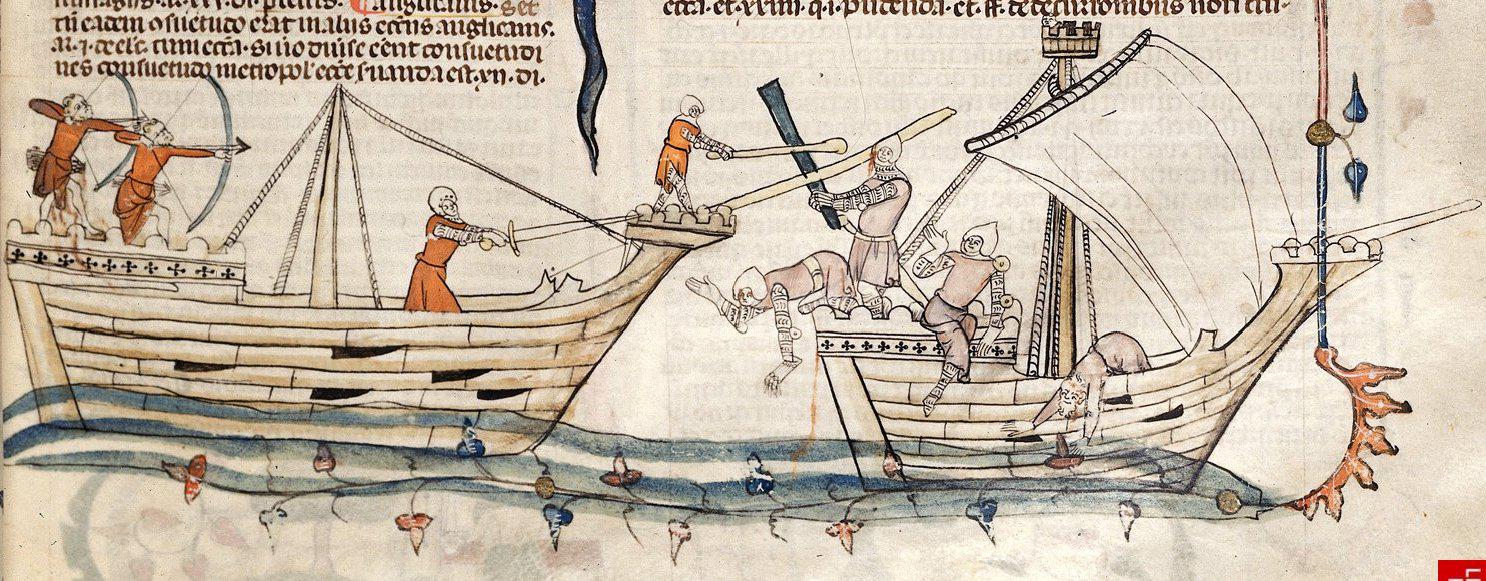
In August 1321, armed barons surrounded London in matching green-and-yellow liveries and forced King Edward II to banish his favorite, Hugh Despenser the Younger, from England forever. Hugh's aging father boarded a ship and retired quietly to Bordeaux to wait out the political storm. Hugh the Younger had other ideas. Instead of slinking off into French exile, he stepped onto the deck of an armed warship in the Strait of Dover, teamed up with the toughest privateers on the English coast, and spent the autumn of 1321 terrorizing the English Channel; earning himself an unforgettable nickname from a contemporary chronicler who called him a "sea-monster."
Hugh was an inland Welsh Marcher lord who didn't know a bowline from a rudder, so he partnered with a man who did: Robert Batail of Winchelsea, a seasoned Baron of the Cinque Ports and one of the sharpest naval commanders in England. Together with a pack of veteran Kent and Sussex shipmasters, Hugh and Batail turned the Narrow Seas between Dover and Calais into a private hunting ground.
Their biggest prize came off the sands of Sandwich. Out of the Channel mist loomed two massive Genoese merchant carracks, towering Mediterranean "dromonds" built like floating castles and packed to the gunwales with luxury Italian cloth, rare Eastern spices, and chests of silver bullion. Hugh's low-slung cogs swarmed the heavy merchantmen, grappled their hulls, and swarmed over the rails with swords and crossbows. After a brutal deck fight that left Genoese sailors dead in the scuppers, Hugh's men stripped the holds clean and hauled a king's ransom in contraband back toward their coastal anchorages.
Emboldened by the Sandwich haul, Hugh and Batail grew even bolder. At the end of September 1321, while technically an outlaw under sentence of death if he set foot on English soil, Hugh sailed his flotilla straight into Southampton Water. Over September 30 and October 1, his crews raided the port of Southampton itself, seizing cargo and shaking down coastal shipping right under the noses of local authorities who had no fleet strong enough to stop him.
Even wilder was what happened after dark. Hugh wasn't just raiding ships; he was running a shadow war room from the sea. While royal heralds officially proclaimed him banished, King Edward II repeatedly rode down to the Kentish coast at Queenborough and the Isle of Thanet, and later near Portchester. Under cover of night, small boats slipped out of the surf onto the shingle beaches, bringing Hugh ashore to meet the King in person, plan the winter military campaign against the barons, and row back out to his fleet before dawn.
When Edward II's army finally crushed the Marcher rebellion in early 1322 and cancelled Hugh's exile, Hugh stepped off his flagship and marched straight back into Westminster as the most powerful man in England. With a few strokes of the royal pen, he handed out blanket pardons to Robert Batail and his Cinque Ports captains, turning a gang of Channel pirates into honored naval officers overnight.
The only people who never forgot the autumn of 1321 were the merchants of Genoa. Furious over the butchered crews and stolen carracks off Sandwich, Genoa slapped trade embargoes on English wool and hounded the English Crown for compensation for fifteen years; creating the exact diplomatic pipeline that later brought papal notary Manuele Fieschi (author of the famous letter claiming Edward II survived Berkeley Castle) directly into the English royal court.
Primary Sources: Vita Edwardi Secundi; Calendar of Patent Rolls (1321–1324); Calendar of Close Rolls (1321–1322); The National Archives SC 8/17/833 (Southampton Raid Petition); Rotuli Parliamentorum (1321 & 1326); Anglo-Genoese Diplomatic & Compensation Rolls (Edward II–Edward III).
r/EdwardII • u/HoneybeeXYZ • 9d ago

Oh Edward, you really did like to be mothered!
r/EdwardII • u/Appropriate-Calm4822 • 9d ago

This is a good, simple non-AI video lasting only 1:33 mins. which nicely points out what's wrong with the way Hollywood insists on portraying medieval towns. Make it make sense. It's so dumb.
r/EdwardII • u/Charles318Hill • 10d ago
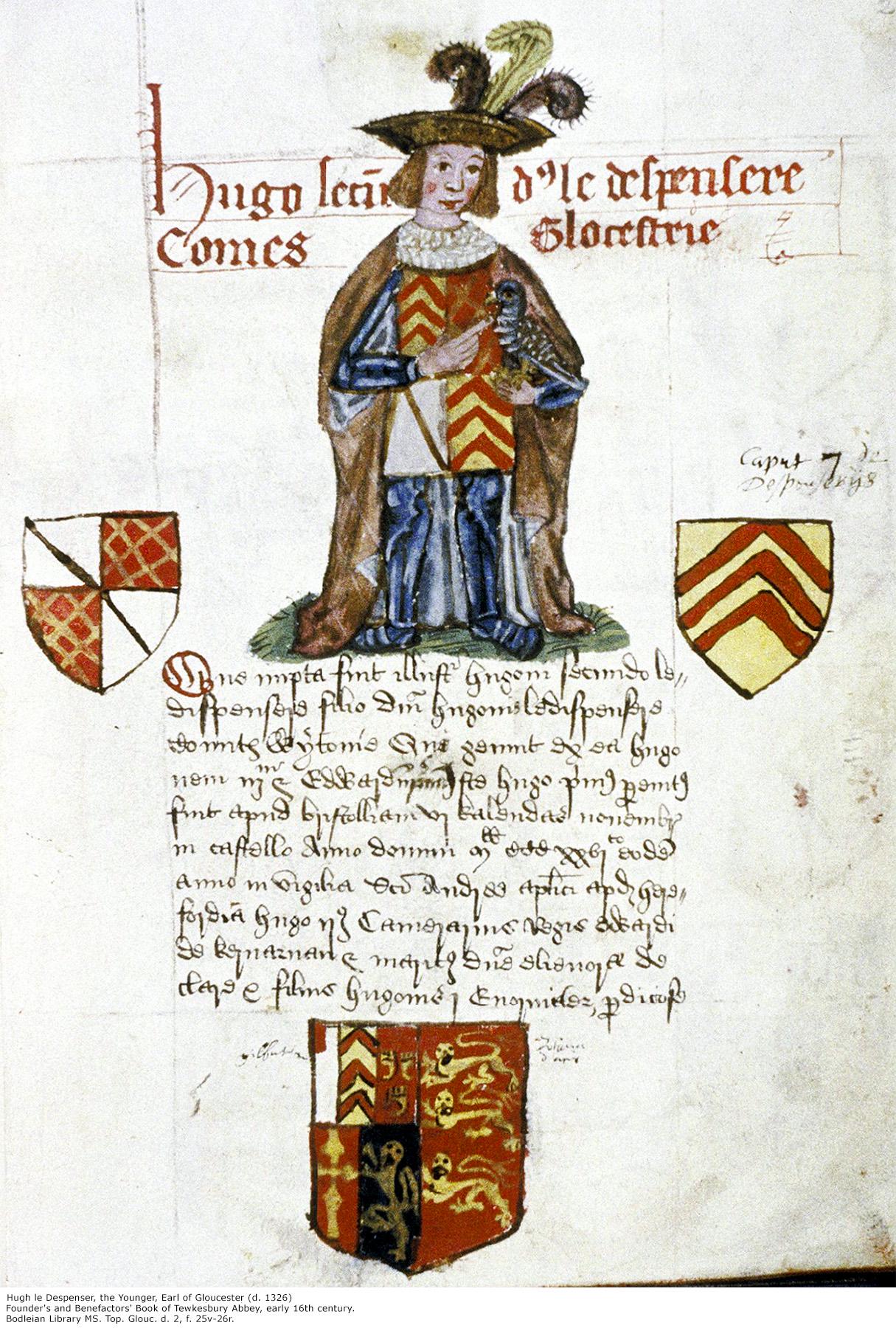
Most people remember Hugh Despenser the Younger for grabbing Welsh marches or meeting his brutal end at Hereford in November 1326, but his "exile" in the late summer of 1321 is one of the wildest logistical scams of Edward II's reign.
When the barons forced Parliament to banish both Despensers in August 1321, Hugh the Elder actually crossed over to Bordeaux. Hugh the Younger never left English waters. Instead, Edward II quietly placed his favorite under the protection of the Cinque Ports mariners, including Winchelsea admiral Robert Batail, and let him operate out of the Channel with a fleet of armed ships.
Contemporary chroniclers didn't mince words about what happened next. The Vita Edwardi Secundi and Flores Historiarum describe Hugh turning the Strait of Dover into a personal protection racket, calling him a "sea monster" lying in wait for merchantmen until "no ship got through unharmed." Off Sandwich, his fleet intercepted and looted two massive merchant ships carrying luxury cargo, while the King's own Chancery records show Edward secretly meeting and coordinating with his "exiled" favorite along the Kent coast and at Portchester, all before officially recalling him after Boroughbridge in March 1322.
Most royals use exile to lay low and write letters begging for a pardon. Hugh used his to run a maritime syndicate with the King's tacit backing.
For anyone who has dug into the 1321–1322 Chancery rolls: how much of the loot from those Channel raids do you think went straight into funding Edward's spring campaign against the barons?