r/Filmmakers • u/ExotiquePlayboy • 10h ago
Discussion Wait I thought $5k was a lot
207
Upvotes
r/Filmmakers • u/C47man • Jun 09 '25
Thank you all for participating in the poll! Here are the results. To accurately gauge everyone's collective acceptance vs rejection for each, I've tallied the total votes among all choices as pro/anti for each category. So for example, a vote for 'no changes' would be a -1 to Gen AI, AI Tools, AI Comms, and AI Discussion. A vote for 'Ban GenAI + AI Tools' would be a +1 to GenAI and AI Tools, and a -1 to AI Comms and AI Discussion, etc. So here are the results for each category of AI. Keep in mind that a higher number indicates a stronger group decision to ban the content:
From the results it is clear that sub overwhelmingly approve a complete ban on all generative AI. However, people are more or less fine with allowing discussion of AI, and are fairly mixed on the topic of AI Tools and Communication. So here is the new rule for all things AI:
-------
Rule 6. You may not post work containing Generative AI elements (Midjourney, Neo, Dall-E, etc.). You may use and demonstrate the use of AI assisted tools (ie magic masking, upscalers, audio cleanup etc.) so long as they are used in service of human-generated artwork. AI Communication, like post bodies or comments composed using ChatGPT are allowed only in very reasonable cases, such as the need for someone to translate their thoughts into another language. Abuse of AI assisted communication will result in the removal of the offending post/comment.
r/Filmmakers • u/C47man • Dec 03 '17
Below I have collected answers and guidance for some of the sub's most common topics and questions. This is all content I have personally written either specifically for this post or in comments to other posters in the past. This is however not a me-show! If anybody thinks a section should be added, edited, or otherwise revised then message the moderators! Specifically, I could use help in writing a section for audio gear, as I am a camera/lighting nerd.
Topics Covered In This Post:
1. Should I Pursue Filmmaking / Should I Go To Film School?
2. What Camera Should I Buy?
3. What Lens Should I Buy?
4. How Do I Learn Lighting?
5. What Editing Program Should I Use?
This is a very complex topic, so it will rely heavily on you as a person. Find below a guide to help you identify what you need to think about and consider when making this decision.
Alright, real talk. If you want to make movies, you'll at least have a few ideas kicking around in your head. Successful creatives like writers and directors have an internal compunction to create something. They get ideas that stick in the head and compel them to translate them into the real world. Do you want to make films, or do you want to be seen as a filmmaker? Those are two extremely different things, and you need to be honest with yourself about which category you fall into. If you like the idea of being called a filmmaker, but you don't actually have any interest in making films, then now is the time to jump ship. I have many friends from film school who were just into it because they didn't want "real jobs", and they liked the idea of working on flashy movies. They made some cool projects, but they didn't have that internal drive to create. They saw filmmaking as a task, not an opportunity. None of them have achieved anything of note and most of them are out of the industry now with college debt but no relevant degree. If, when you walk onto a set you are overwhelmed with excitement and anxiety, then you'll be fine. If you walk onto a set and feel foreboding and anxiety, it's probably not right for you. Filmmaking should be fun. If it isn't, you'll never make it.
Are you planning on a film production program, or a film studies program? A studies program isn't meant to give you the tools or experience necessary to actually make films from a craft-standpoint. It is meant to give you the analytical and critical skills necessary to dissect films and understand what works and what doesn't. A would-be director or DP will benefit from a program that mixes these two, with an emphasis on production.
Does your prospective school have a film club? The school I went to had a filmmakers' club where we would all go out and make movies every semester. If your school has a similar club then I highly recommend jumping into it. I made 4 films for my classes, and shot 8 films. In the filmmaker club at my school I was able to shoot 20 films. It vastly increased my experience and I was able to get a lot of the growing pains of learning a craft out of the way while still in school.
How are your classes? Are they challenging and insightful? Are you memorizing dates, names, and ideas, or are you talking about philosophies, formative experiences, cultural influences, and milestone achievements? You're paying a huge sum of money, more than you'll make for a decade or so after graduation, so you better be getting something out of it.
Film school is always a risky prospect. You have three decisive advantages from attending school:
Those three items are the only advantages of film school. It doesn't matter if you get to use fancy cameras in class or anything like that, because I guarantee you that for the price of your tuition you could've rented that gear and made your own stuff. The downsides, as you may have guessed, are:
Seriously. Film school is insanely expensive, especially for an industry where you really don't make any exceptional money until you get established (and that can take a decade or more).
So there's a few things you need to sort out:
Don't worry about lacking experience or a degree. It is easy to break into the industry if you have two qualities:
In LA we often bring unpaid interns onto set to get them experience and possibly hire them in the future. Those two categories are what they are judged on. If they have to be told twice how to do something, that's a bad sign. If they approach the work with disdain, that's also a bad sign. I can name a few people who walked in out of the blue, asked for a job, and became professional filmmakers within a year. One kid was 18 years old and had just driven to LA from his home to learn filmmaking because he couldn't afford college. Last I saw he has a successful YouTube channel with nature documentaries on it and knows his way around most camera and grip equipment. He succeeded because he smiled and joked with everyone he met, and because once you taught him something he was good to go. Those are the qualities that will take you far in life (and I'm not just talking about film).
So how do you break in?
Cold Calling
Rental House
Filmmaking Groups
Film Festivals
Alright, enough talking! You need to decide now if you're still going to be a filmmaker or if you're going to instead major in something safer (like business). It's a tough decision, we get it, but you're an adult now and this is what that means. You're in command of your destiny, and you can't trust anyone but yourself to make that decision for you.
Once you decide, own it. If you choose film, then take everything I said above into consideration. There's one essential thing you need to do though: create. Go outside right fucking now and make a movie. Use your phone. That iphone or galaxy s7 or whatever has better video quality than the crap I used in film school. Don't sweat the gear or the mistakes. Don't compare yourself to others. Just make something, and watch it. See what you like and what you don't like, and adjust on your next project! Now is the time for you to do this, to learn what it feels like to make a movie.
The answer depends mostly on your budget and your intended use. You'll also want to become familiar with some basic camera terms because it will allow you to efficiently evaluate the merits of one option vs another. Find below a basic list of terms you should become familiar with when making your first (or second, or third!) camera purchase:
This list will be changing as new models emerge, but for now here is a short list of the cameras to look at when getting started:
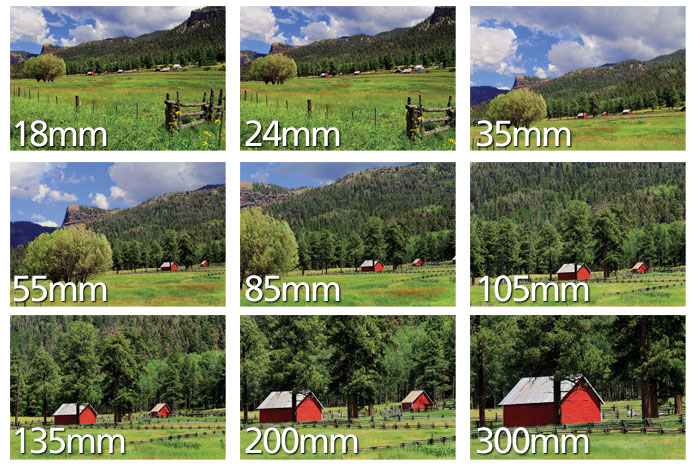
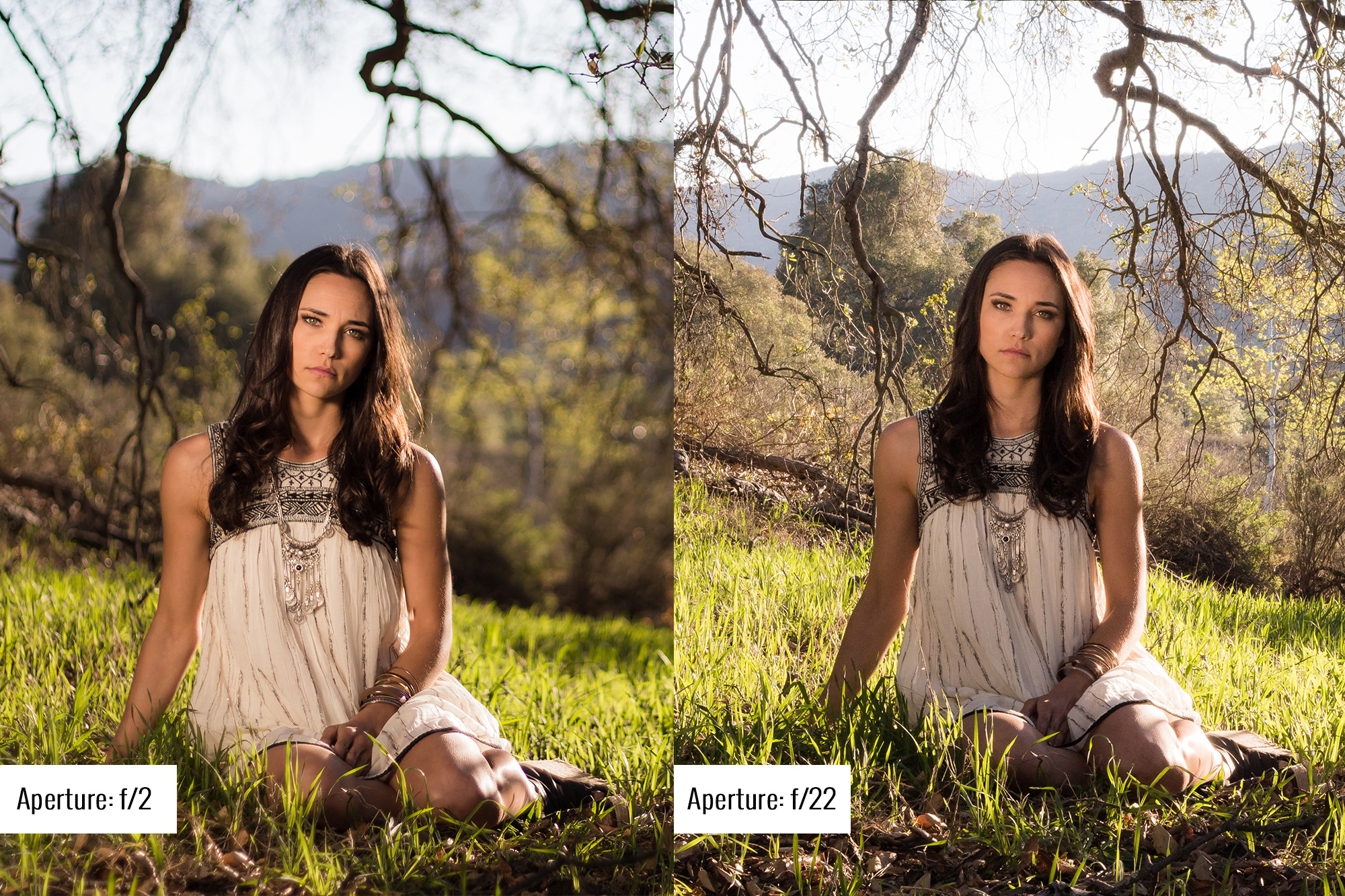
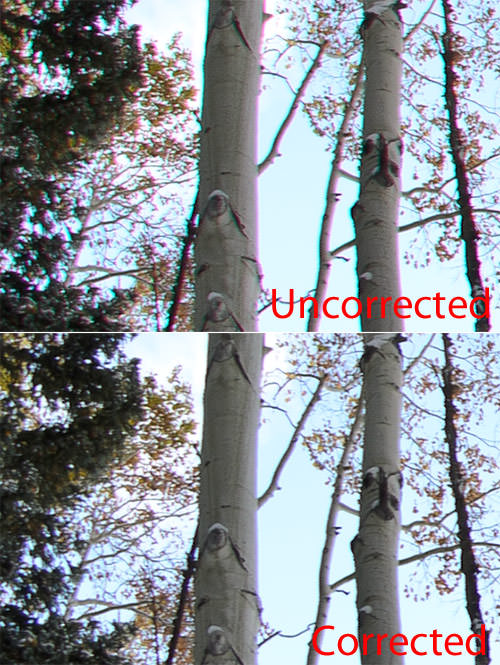
Much like with deciding on a camera, lens choice is all about your budget and your needs. Below are the relevant specs to use as points of comparison for lenses.
This is all about speed vs quality vs budget. A zoom lens is a lens whose *focal length can be changed by turning a ring on the lens barrel. A prime lens has a fixed focal length. Primes tend to be cheaper, faster, and sharper. However, buying a full set of primes can be more expensive than buying a zoom lens that would cover the same focal length range. Using primes on set in fast-paced environments can slow you down prohibitively. You'll often see news, documentary, and event cameras using zooms instead of primes. Some zoom lenses are as high-quality as prime lenses, and some people refer to them as 'variable prime' lenses. This is mostly a marketing tool and has no hard basis in science though. As you might expect, these high quality zooms tend to be very expensive.
Below are the most popular lenses for 'cinematic' filming at low budgets:
Lenses below these average prices are mostly a crapshoot in terms of quality vs $, and you'll likely be best off using your camera's kit lens until you can afford to move up to one of the lenses or lens series listed above.
Alright, so you're biting off a big chunk here if you've never done lighting before. But it is doable and (most importantly) fun!
First off, fuck three-point lighting. So many people misunderstand what that system is supposed to teach you, so let's just skip it entirely. Light has three properties. They are:
Alright, so there are your three properties of light. Now, how do you light a thing? Easy! Put light where you want it, and take it away from where you don't want it! Shut up! I know you just said "I don't know where I want it", so I'm going to stop you right there. Yes you do. I know you do because you can look at a picture and know if the lighting is good or not. You can recognize good lighting. Everybody can. The difference between knowing good lighting and making good lighting is simply in the execution.
Do an experiment. Get a lightbulb. Tungsten if you're oldschool, LED if you're new school, or CFL if you like mercury gas. plug it into something portable and movable, and have a friend, girlfriend, boyfriend, neighbor, creepy-but-realistic doll, etc. sit down in a chair. Turn off all the lights in the room and move that bare bulb around your victim subject's head. Note how the light falling on them changes as the light bulb moves around them. This is lighting, done live! Get yourself some diffusion. Either buy some overpriced or make some of your own (wax paper, regular paper, translucent shower curtains, white undershirts, etc.). Try softening the light, and see how that affects the subject's head. If you practice around with this enough you'll get an idea for how light looks when it comes from various directions. Three point lighting (well, all lighting) works on this fundamental basis, but so many 'how to light' tutorials skip over it. Start at the bottom and work your way up!
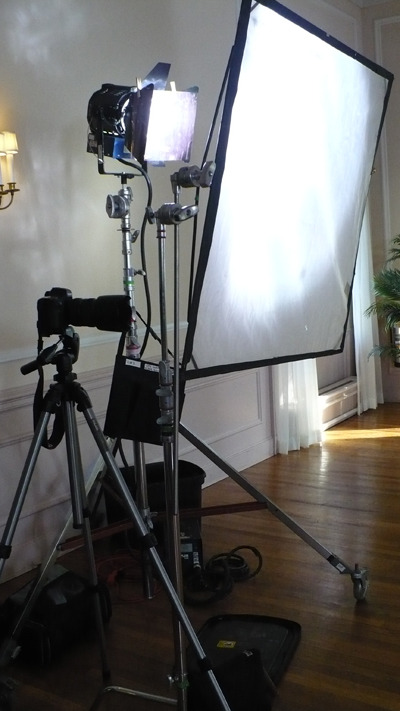
Ok, so cool. Now you know how light works, and sort of where to put it to make a person look a certain way. Now you can get creative by combining multiple lights. A very common look is to use soft light to primarily illuminate a person (the 'key) while using a harder (but sometimes still somewhat soft) light to do an edge or rim light. Here's a shot from a sweet movie that uses a soft key light, a good amount of ambient ('errywhere) light, and a hard backlight. Here they are lit ambiently, but still have an edge light coming from behind them and to the right. You can tell by the quality of the light that this edge was probably very soft. We can go on for hours, but if you just watch movies and look at shadows, bright spots, etc. you'll be able to pick out lighting locations and qualities fairly easily since you've been practicing with your light bulb!
Honestly, your greenscreen will depend more on your technical abilities in After Effects (or whichever program) than it will on your lighting. I'm a DP and I'm admitting that. A good key-guy (Keyist? Keyer?) can pull something clean out of a mediocre-ly lit greenscreen (like the ones in your example) but a bad key-guy will still struggle with a perfectly lit one. I can't help you much here, as I am only a mediocre key-guy, but I can at least give you advice on how to light for it!
Here's what you're looking for when lighting a greenscreen:
OK! So now you know sort of how to light a green screen and how to light a person. So now, what lights do you need? Well, really, you just need any lights. If you're on a budget, don't be afraid to get some work lights from home depot or picking up some off brand stuff on craigslist. By far the most important influence on the quality of your images will be where and how you use the lights rather than what types or brands of lights you are using. I cannot stress this enough. How you use it will blow what you use out of the water. Get as many different types of lights as you can for the money you have. That way you can do lots of sources, which can make for more intricate or nuanced lighting setups. I know you still want some hard recommendations, so I'll tell you this: Get china balls (china lanterns. Paper lanterns whatever the fuck we're supposed to call these now). They are wonderful soft lights, and if you need a hard light you can just take the lantern off and shine with the bare bulb! For bulbs, grab some 200W and 500W globes. You can check B&H, Barbizon, Amazon, and probably lots of other places for these. Make sure you grab some high quality socket-and-wire sets too. You can find them at the same places. For brighter lights, like I said home depot construction lights are nice. You can also by PAR lamps relatively cheap. Try grabbing a few Par Cans. They're super useful and stupidly cheap. Don't forget to budget for some light stands as well, and maybe C-clamps and the like for rigging to things. I don't know what on earth you're shooting so it is hard to give you a grip list, but I'm sure you can figure that kind of stuff out without too much of a hassle.
Great question! There are several popular editing programs available for use.
Your choices are essentially limited to Davinci Resolve (Non-Studio) and Hitfilm Express. My personal recommendation is Davinci Resolve. This is the industry standard color-grading software (and its editing features have been developed so well that its actually becoming the industry standard editing program as well), and you will have free access to many of its powerful tools. The Studio version costs a few hundred dollars and unlocks multiple features (like noise reduction) without forcing you to learn a new program.
r/Filmmakers • u/EndFoxys • 20h ago

I'm currently choosing the official poster for my upcoming short film, The Blank Canvas (La tela vuota), and I'd love to get some unbiased feedback.
Without knowing anything about the story, which of these four posters immediately catches your attention and makes you want to know more about the film?
I'm also curious to hear what kind of film you would expect based on your favorite poster alone, lmao.
r/Filmmakers • u/Interesting-Body4360 • 3h ago

r/Filmmakers • u/Dogeisdank • 19h ago
Recently saw that the Sony FX3 was able to shoot in open gate with the help of the community using vibe coding. If you’re not familiar with the camera it can only shoot video in 16:9. Why does this matter? It’s insane that a feature like this is either purposefully hidden by Sony to make you purchase their higher end cameras, or shows that they don’t know the capabilities of their own cameras.
r/Filmmakers • u/Advitiya_01 • 4h ago

A short film about the things we carry, the lives we get caught up in and the little moments that make us feel alive again.
r/Filmmakers • u/AssumptiveMushroom • 9h ago
Can anyone give me any insight into the film industry in florida? Is there consistent work for crew in Florida? Is there a working industry in either Tampa, Orlando, Or Miami? Anyone from these places that can speak to the viability of large productions? I'm a Prop Master and Production designer looking to relocate and florida has piqued my interest. Can anyone speak to the industry there? What is the Union presence there?
r/Filmmakers • u/the_vaelryn • 10h ago
Hey! I'm a designer, and outside of design, I really love films. I run a small studio where I create branding and websites for creatives.
I've been thinking about making websites for filmmakers, so I'd love to work with two filmmakers on their websites.
Would be nice to connect with some filmmakers here. Drop me a message!
r/Filmmakers • u/DevelopmentBrave5418 • 12h ago
ActionVFX's VFX for Filmmakers course is 40% off until midnight tonight. They have some other courses on title design and on-set VFX Supervision too.
r/Filmmakers • u/Blaowood • 4h ago

Testing the Nikon ZR with these shots in Meiji Jingū, Tokyo. Messing with the grading to push the image to have some filmic quality to it, not an attempt to replicate a specific film stock.
r/Filmmakers • u/sdestrippy • 4h ago

I shot this film on a Canon 60d many many years ago. Fell out of post production until a year ago. When I decided to finish the film. I used alot of roto to the right look with 8bit footage shot by shot after VFX. VFX was done with nuke and after effects. Also a lot of other tricks to up the quality of the film.
It was done with friends and family with little to no budget. Let me know what you guys think.
r/Filmmakers • u/Kind_Taro_9674 • 18h ago
Almost two years ago, in December 2024, I had absolutely no experience flying drones. At the time, I didn't realize how much I would get into it.
I started with the DJI Mavic 3 Pro, followed by the Mini 4 Pro, eventually upgraded to the Mini 5 Pro, got my Canadian Advanced Drone Pilot Certificate, discovered FPV with the Avata 2, and recently entered the world of traditional FPV with the iFlight Nazgul Evoque F6.
There were countless early mornings, freezing winter days, long drives, missed sunsets, unexpected weather changes, technical problems, crashes, hours and terabytes of footage, a lost drone and probably way too many hours spent editing footage and experimenting with camera movements.
But there were also some incredible moments. Watching Montreal disappear into the morning fog, capturing spectacular sunsets, exploring waterfalls, flying around industrial landscapes, watching massive ships navigate through locks, and discovering completely new perspectives of places I had passed by for years.
Coming from a VFX background, I couldn't resist experimenting with photogrammetry, precise waypoint flights, hyperlapses, day-to-night transitions and combining aerial footage with computer-generated imagery.
One thing that has changed over these two years is that I now look at weather, light, clouds and familiar locations completely differently. I almost always have a drone with me because you never know when something beautiful is going to happen.
Going through two years of footage for this edit made me realize how much I've learned, but also how much there is still to learn, especially with FPV.
Here are some of my favorite moments from the past two years.
Hope you enjoy watching them as much as I enjoyed capturing them.
r/Filmmakers • u/LavishnessFar7021 • 17h ago
This is a thing that I've been thinking of for a while. For context, I am a big fan of the avant garde (Lynch, Brakhage, Maya Deren, all that). A while ago my film teacher told me to draft ideas on sample films I can apply to film school with, I wrote countless draft ideas that i created from the heart, but they all got rejected for being too weird or not making sense, and my film teacher ultimately just gave me a story to write a script to and work on. My issue right now is the dilemma of if the film school is only interested in my technique and not my individual voice, and I hypothetically DO get in on this sample film that does not have any of my own voice in the story, is it still worth going to a film school that would theoretically not even help me nurture my own individual style?
r/Filmmakers • u/NextDoor_Arcade • 10h ago
On our next film, I'm working on scenes that include our characters walking through a village and the woods. In these shots, I have a plan to use a shoulder rig for medium shots and a gimbal for wider/moving shots. We will also use sticks for close ups. But I haven't been able to find examples of both of these kinds of shots used in one scene before. To give an example:
Characters walks through woods (Gimbal)
Characters talk while walking (Gimbal)
Characters stop to talk with each other (Shoulder)
Over the shoulder shots of each other (Shoulder)
Slow truck/pan around characters while they talk (Gimbal)
Close ups on the characters faces (Sticks)
Return to walking, camera sitting behind them (Shoulder)
Like I said, I haven't seen many examples of those two types of movements put together, but we're planning on the majority being used with a shoulder rig. Our camera dept might get us a gimbal to borrow, so wanted to see if the styles of each shot looks good to others?
It's a comedy, so if it throws off the vibe of it all, I totally would get it.
r/Filmmakers • u/modelpedestrian • 1d ago
I’m sorry if this is has been asked multiple times. But there are many obvious candidates (Citizen Kane, for example). But I’m interested in films that have personally impacted those who work in the industry. What movie irrevocably fueled your passion. If you feel comfortable—why? I’m trying to broaden my appreciation and references.
Thank you!
r/Filmmakers • u/D_anto_an • 15h ago
TL;DR: Looking for editing feedback on my experimental short film. It's an unpaid, no-budget project by a first-time filmmaker, so I can't offer payment, but I'm happy to return the favor!
I have no studies, skills or prior experience in filmmaking, not established ones at least, but I always felt an ardent connection with image-making (the making of it implies movement, dynamism, so that became moving-images-making for me), and so I started working on a short film about an alien (the story involves a human becoming an alien on another planet, which leaves him rejected by his native planet when he returns, so I wanted to invoke this double "alienship") called "alien i am, not through virtue of my arrival". I seek people that already have some experience (preferably in non-traditional filmmaking --abstract themes, collages rather than linear story-telling-- and time to give me some advice on the draft. The film is finished montage wise and the soundtrack is partially done. I worked on filming, editing/producing and on the soundtrack too. What I need specifically are remarks, pieces of advice editing wise, or constructive criticism on it. If someone is up for inspecting it a little bit, I'll send the draft in a private message through a YouTube link.
r/Filmmakers • u/Libanza-Films • 16h ago
Disclosure: I'm with Libanza Films, a production house in Dhaka. We were the local production partner on this one, and I thought some of you might enjoy the behind-the-scenes story.

Last August, we worked with Raging Nation Films (USA) on the Bangladesh section of "We Gonna Dance", a global track by RedOne. Bangladeshi singer Tasfee is the co-singer on the song. The director, J'Tasha, flew in from Los Angeles, and we handled on-the-ground production from start to finish.

What "local production" meant on this shoot

What I'd tell other producers
Working with a Hollywood team and a global artist alongside a local crew was a great experience. The local talent matched the visiting team's standard. Tashin's camerawork and the Eagle dancers' performance were two highlights the director mentioned.
If you're planning a shoot in Bangladesh, whether a music video, commercial, or documentary, I'm happy to answer questions about crew, sets, locations, permits, or timelines in the comments.
r/Filmmakers • u/TheRealFilmGeek • 1d ago
TL;DR: After a major creative falling out with a former friend and filmmaking partner, I finally reached out to apologise for my part in the conflict. He responded warmly, acknowledged that he valued our friendship and confirmed there was no bad blood. However, despite leaving the door open to reconnect, he didn’t reciprocate the invitation. I think I’ve finally received closure, even if it wasn’t necessarily the outcome a part of me hoped for.
I’ve previously posted about a falling out I had with a former friend and creative collaborator.
We used to spend almost every Sunday together developing ideas, writing scripts and trying to make films. Eventually, disagreements over creative ownership, directing responsibilities and financial matters led to a pretty significant breakdown in our friendship.
Neither of us ever really apologised, and my occasional attempts to reach out over the years were met with fairly cold responses.
With the year coming to an end, I decided I didn’t want to continue carrying the emotional weight of something that happened so long ago. I’ve lost friendships before and regretted leaving things unresolved.
I sent him a message acknowledging my part in the fallout, apologising for some of the things I said and how I handled the situation. I told him I genuinely valued our friendship and creative partnership, that I wasn’t reaching out with any expectations, and that the door was always open on my end.
His response was considerably warmer than I expected.
He thanked me for reaching out, expressed appreciation for my apology, acknowledged that he genuinely valued our friendship and said he never wanted things to play out the way they did. He confirmed there was no bad blood from his end and wished me all the best.
However, he didn’t apologise for his own part in the situation, nor did he acknowledge the invitation to reconnect.
I get the impression that he’s happy to make peace with the past but isn’t particularly interested in rebuilding the friendship or working together again, at least for now.
It’s a bittersweet outcome. I’m relieved that there’s no animosity between us, but I would be lying if I said a small part of me wasn’t hoping for something more.
What I miss most isn’t necessarily the projects themselves. It’s having someone to create with, someone who shared that excitement of sitting down every week and trying to make something meaningful.
I won’t be reaching out again. I’ve said my piece, taken responsibility for my actions and left the door open. Anything beyond that is entirely up to him.
Perhaps some creative partnerships are meant to exist only within a particular chapter of your life, regardless of how much they meant to you.
For those who have experienced something similar, how did you come to terms with losing a creative partnership? Did you eventually find that same creative chemistry with someone else? Did your former collaborator ever unexpectedly come back into your life years later?
I’d be interested to hear how others navigated the difference between making peace with someone and actually having them back in your life.
r/Filmmakers • u/Expensive-Cow4518 • 18h ago
I'm an 18yo aspiring director and cinematographer from India looking for a good short film script to produce. If you are a screenwriter with some short film scripts that need to be produced, please don't hesitate to DM me.
Genres: Character Study, Drama/ Psychological Drama, Experimental & Avant-Garde, Surrealism, Poetic & Essay Film, Arthouse horror
I'm Looking For stories set in India, possibly in Uttar Pradesh or Bihar or places that look like it, because those are closest to my location, great plus point if it’s set in the winter with foggy climate.
Some trailers which will give you an idea of the feeling or images I want to create:
https://youtu.be/Hyag7lR8CPA?si=ay_YpkU8wCoEu7CG
https://youtu.be/SoufrpPMC2s?si=GnzzgxWqinVokDj3
https://youtu.be/ZhtevBH9Yvg?si=2ERaxhcbUYg4wtME
https://youtu.be/7H5JHGEM0_E?si=35vdnsljqGeNwpMn
https://youtu.be/MAmKq-Nwq6s?si=4ZrVOq-1T-qYNNHO
I prefer naturalism more in terms of the story, doesnt need to have dramatic tension necessarily. As there would be most possibly non actors, I want to have lesser dialogues, more visual.
Should be producable in low budget like 1k Usd/ 1 Lakh Inr. And length of upto 5-15mins max.
Once again, I'm open to everything, so don't hesitate to hit me up. Thanks
r/Filmmakers • u/Acceptable-State771 • 10h ago
r/Filmmakers • u/GamingArth • 1d ago

Hello filmmakers! Our poster for our puppet noir short, Deadly Indecency, was very well received, so now we would like to present the trailer of the film! Hope you all enjoy it!