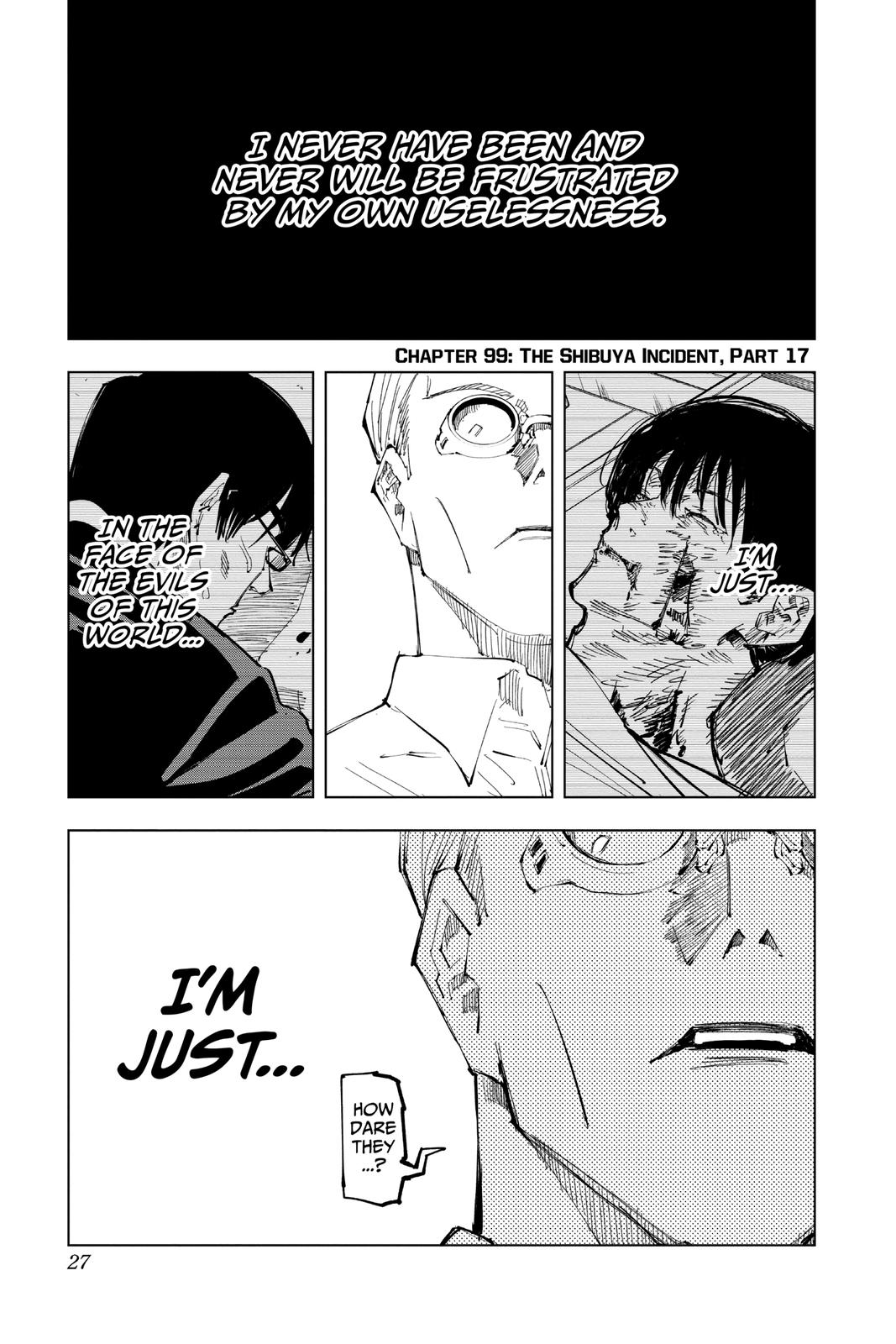
Perhaps the most overlooked part of an already overlooked character, Ratio's Extension Technique, Collapse, is actually not only underrated as far as its isolated effectiveness in combat goes, but also undervalued in what it implies about Nanami's strength profile as a sorcerer. Let's dive right in.
There may be a few image reuses in this one, pardon me but some points need two-page references, making them hard to cross-cite
How does Collapse function?
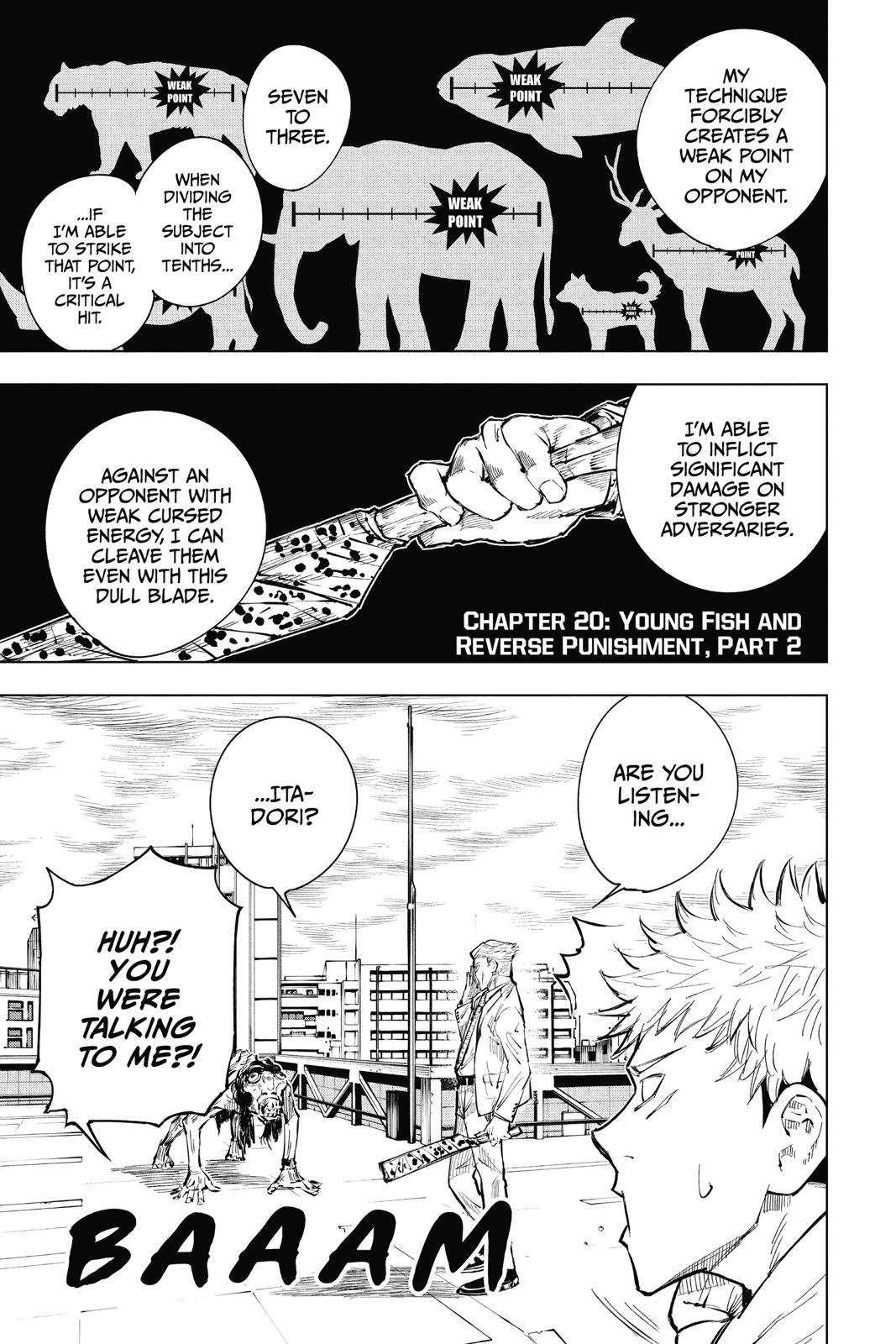
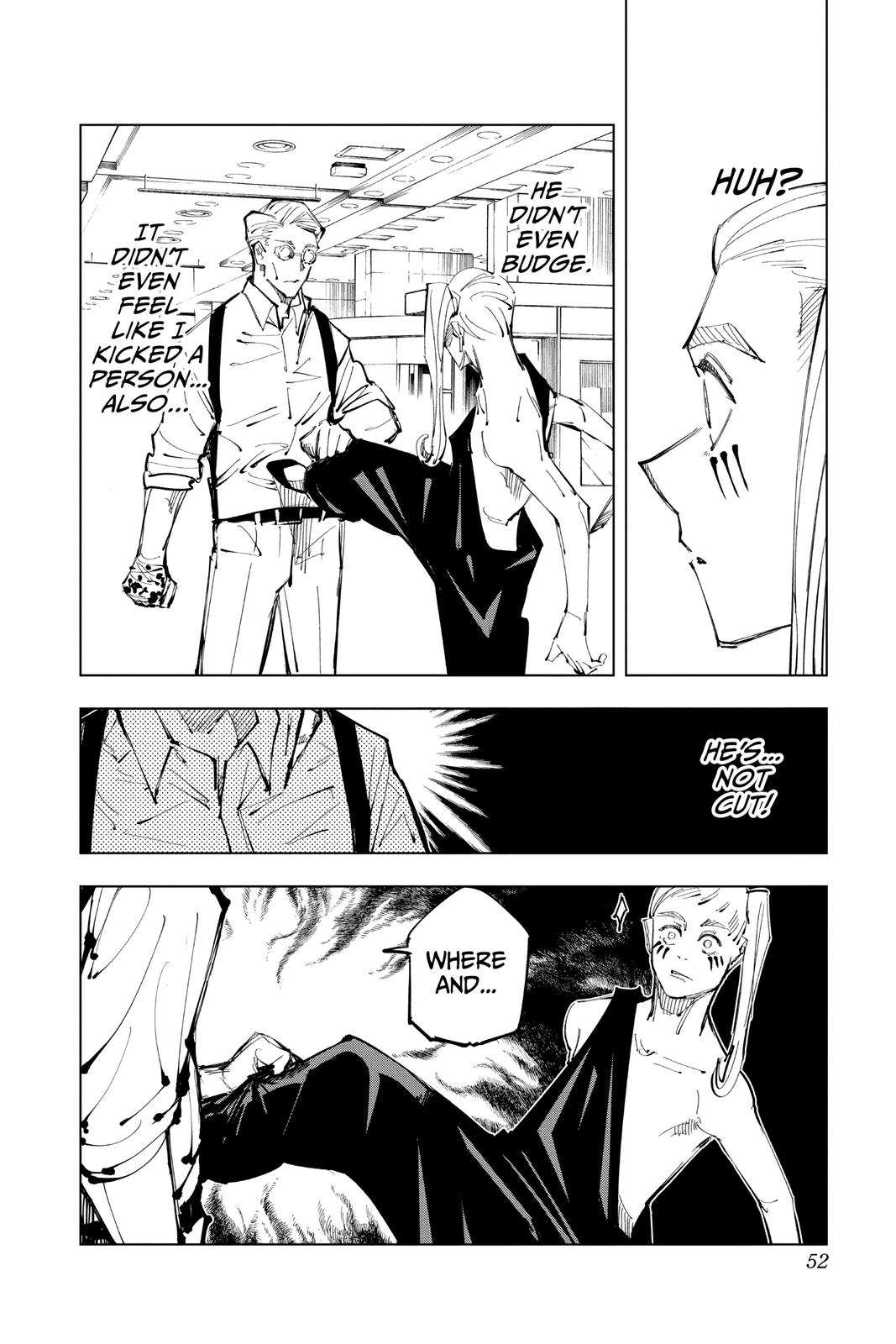
The logical starting point would be to explain how Collapse actually works. The first (and sadly only) time we see Collapse in action is in Chapter 23/Episode 11, towards the end of Nanami's fight with Mahito in the sewers. Collapse was chosen as the big "finishing move" by Nanami once it was clear he couldn't conventionally exorcise Mahito. While Revealing His Hand, Nanami describes it as basically just an application of Ratio on a wider, inanimate area.
Img. 1 (Ch. 23)
But is this really all there is to Collapse? The simple answer is no... pretty explicitly.
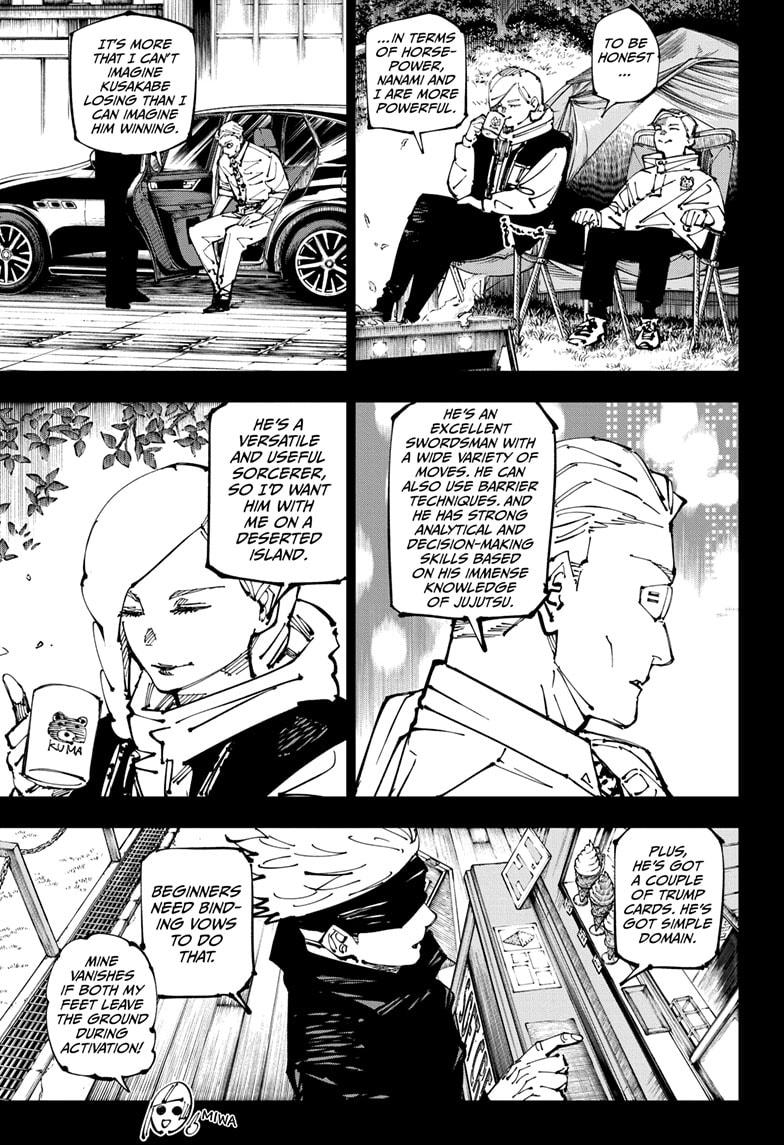
Img. 2 (Jujutsu Kaisen Fanbook)
As we can see, Collapse doesn't just target a wide area and create debris, but it ripples out cursed energy, and through it actively weaponizes said created debris for Nanami.
I don't blame anyone for thinking otherwise, as until very recently I also thought it worked the same way despite having a specific focus in scaling Nanami. Credits to u/Inner-Illustrator408 for showing me the fanbook quote.
One might argue that the manga takes precedent over the fanbook. While I don't even agree with that pretense to begin with, as the fanbook is more or less explicit author commentary, the thing is the manga makes the same point, it just flew past most of us to highlight the battle of quick wits that became of the fight once it was past conventional means. As we know, fight choreography is among JJK's strongest points.
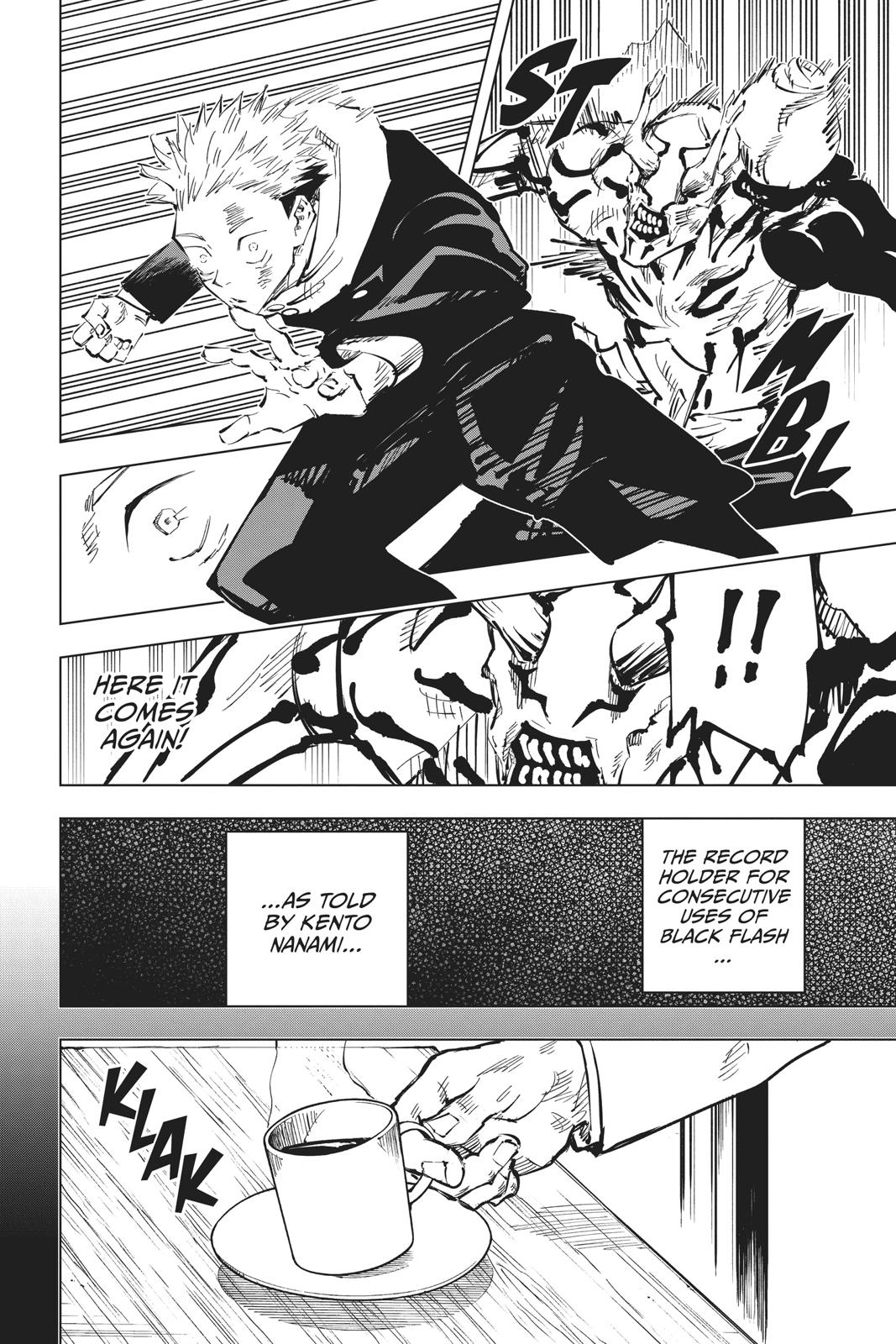
Img. 3 (Ch. 23)
As we can see in the top-left corner, Mahito actually makes the exact same comment as the fanbook. Despite Nanami having "revealed his hand", he is in awe at the strength (What power!), but caught off guard by the "streak of cursed energy" ([...] And what was that streak of cursed energy?).
This is far more explicitly the case in the anime, where we can see the debris reinforced, suspended mid-air for seconds at a time, and taking its time to fall on Mahito. While a lot of people (me included) don't like to use additional anime scenes, I think it's fair game when it comes to clearing up details that happen the same way as in the manga, just without the inherent uncertainty of a static-image medium like manga.
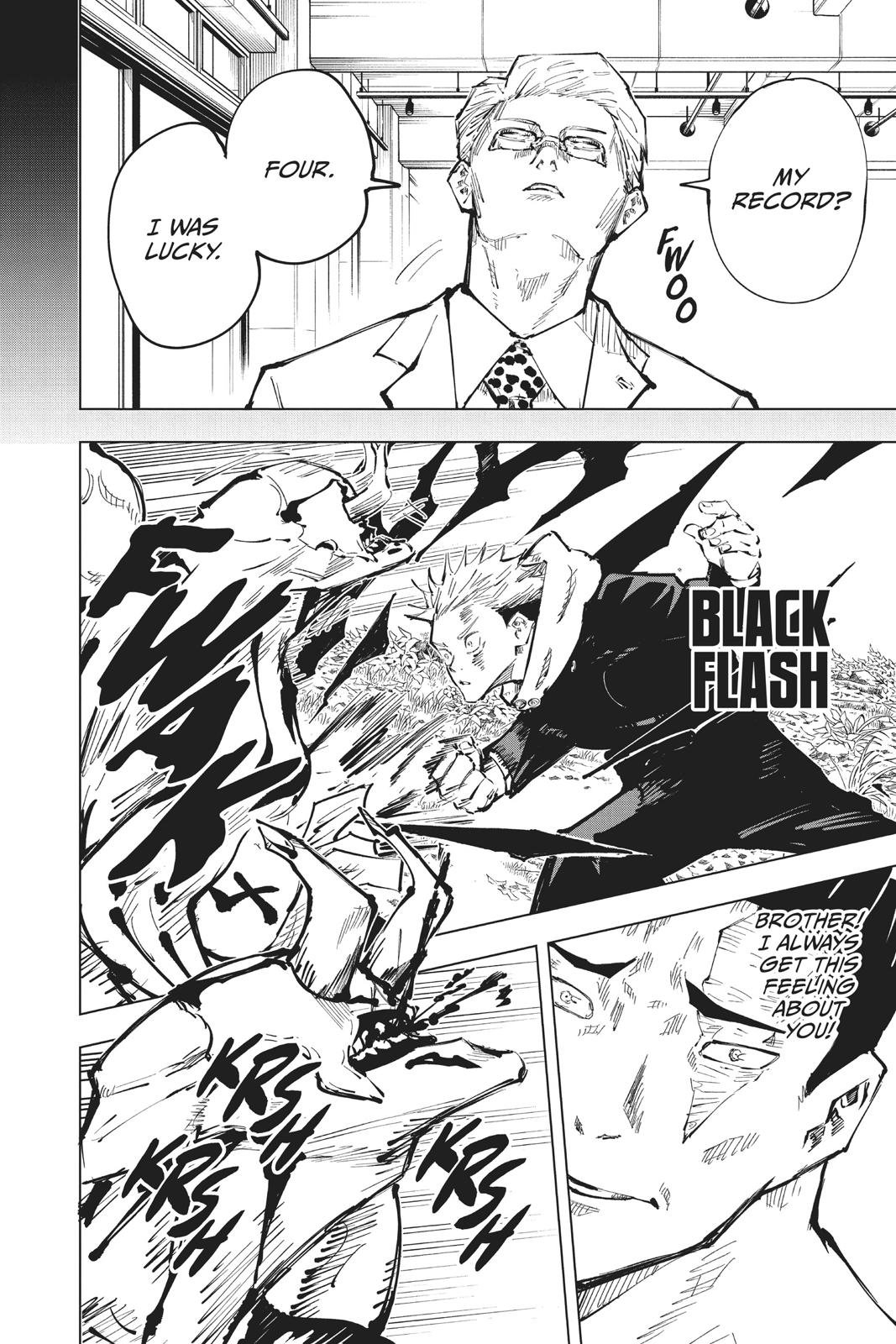
We can also visually see that the debris is reinforced in the manga, as there's a constant shine and brush aura around the rocks, which is no longer there when it's falling. This is the exact effect that was illustrated as blue CE reinforcement in the anime, that likewise starts to lose color intensity as soon as it begins to fall.
Img. 4 (Ch. 23)
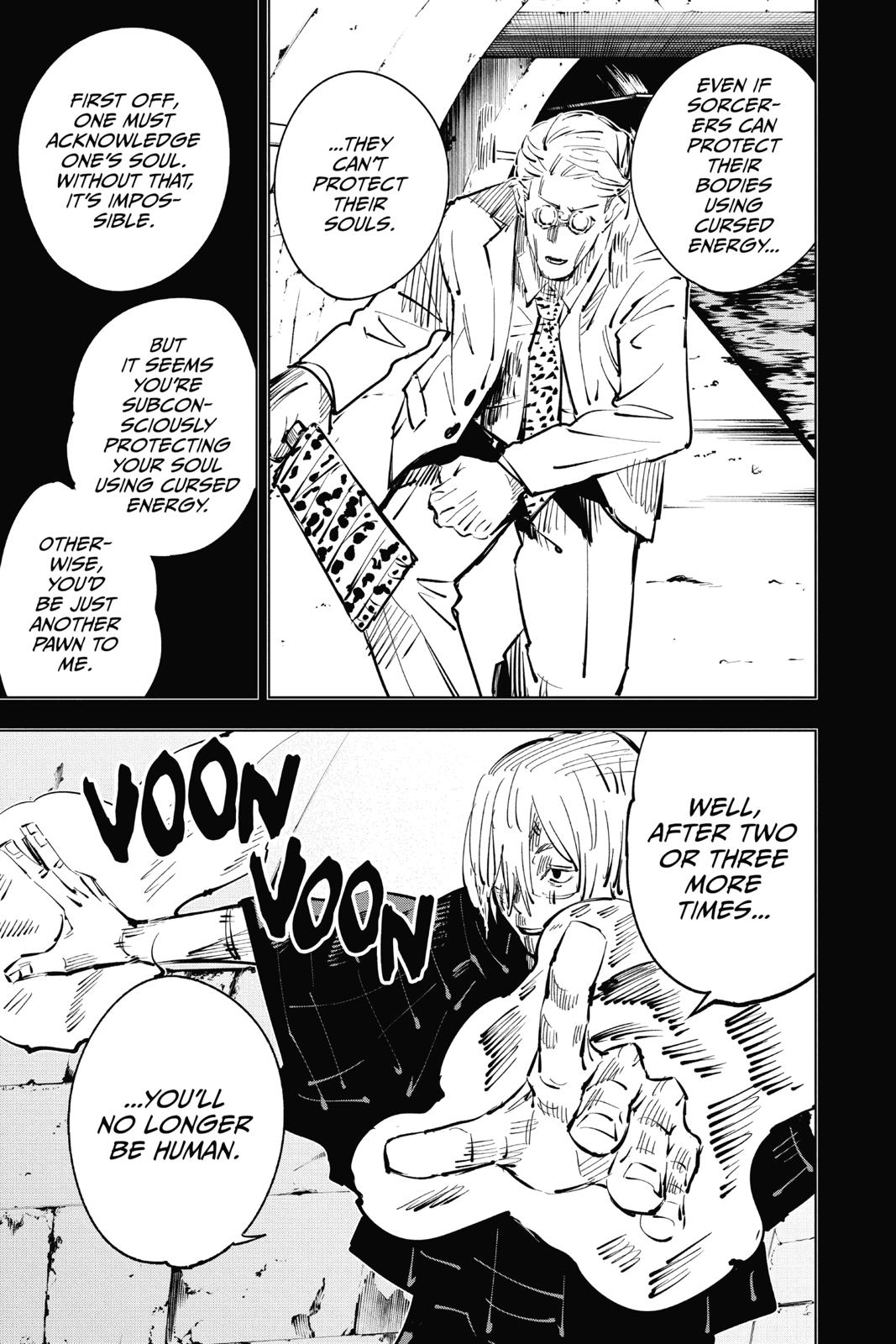
So, why would Nanami do this? Quite simple, to confuse Mahito, who was an infant without much knowledge of sorcery. After all, he was the first one we saw using the Revealing Binding Vow, and telling Yuji that it can be used to mislead your adversaries too. It makes sense that we'd have a scene of him using it that way.
Img. 5 (Ch. 20)
The gamble of not revealing the whole technique (thus not getting the maximal increase), pays off for Nanami, as we can see Mahito thinks he's being careless and trapping them both under the same rubble ("He doesn't care if he gets hit while doing it..."), but in fact Nanami was just withholding his plan of suspending debris, incapacitating Mahito, withdrawing, and only then letting the debris crush him.
One last important detail: Collapse is also not very taxing on Nanami, as we can see he can keep everything suspended and not only keep moving and fighting but effortlessly hit off other Ratios in the meantime.
Img. 6 (Ch. 23)
What does this tell us about Nanami?
Two things of note:
Strength
I think by far the most important discovery from Collapse is that it's a direct result of Nanami'sAP, andnotadded DC. While one could've already made the case for this, it becomes all the more clear when accounting for the new discoveries of this post.
The straightforward case to make is the narrative intent & character comments. "[Immense] power" and "Streak of cursed energy", are two different variables Mahito makes note of, one something he can immediately feel and the other something he senses later. As such, the force generated from the application of Collapse for the purpose of destruction can be assumed to be entirely from Nanami's punch, with the outward streak of CE specifically meant to serve the purpose of manipulating debris instead of adding force. There's also the earthquake comment.
Img. 7 (Ch. 23)
You have to remember that this is very early on in the series, and Grade 1s were powerhouses not just as in-verse absolutes at the time, but also relative to the powerscale the user was witnessing. I don't think there needs to be made a case here that Gege's intentions with it were to make us think "Whoa, Nanami can punch as hard as an earthquake!" instead of "Whoa, Nanami can compromise the structural integrity of a sewer wall, to the degree where the rest of the city starts sloping down as if tectonic plates shifted!", especially given that this doesn't seem to have any bearings besides the shakeup on the ground above.
But I think the more compelling argument would be the new understanding of where this Ratio struck. As Nanami himself states in Img. 1, he can pick any point of a target to draw an axis on, granted as long as it splits into a consistent 7/3 Ratio. This, paired with the effect that we saw on the wall (a circle taken out and made debris out of), means that instead of a comically large Ratio on the entire wall, it's far more likely that Nanami targeted a section specifically to draw debris out of, without compromising the entire structural integrity of the area (which would trap him in there as well).
What this would essentially mean in practice, is that Nanami Ratioed and rippled out cursed energy throughout a section of the wall, which was destroyed and suspended immediately, but the force that Mahito mentions, whose effect was felt as an earthquake, is simply the force of his punch. Its range may have been amplified due to the initial weak point, but as we should (hopefully) all know by now, Ratio weakens the critical point instead of making Nanami stronger, given that it was felt as far as above ground, and the critical point was relatively small, not compromising the rest of the wall, sewer system or earth ground structurally, Ratio here can be assumed to be a modest increase in effectiveness, above marginal but below moderate, and far from the deciding factor.
Strength calcs
This isn't my forte so I won't be giving it its own section, but I feel like its worth mentioning regardless. If you want an idea for where people numerically scale that, I have found this and this. u/Inner-Illustrator408, who I trust with calcs more than myself, uses this. Take whichever you want as you will, as I said, it's not my field of study.
Skill
This is more of an interesting find/narrative upscale rather than a quantifiable, effective upscale, but it does help certify other points regarding other aspects of Nanami scaling. Nanami's control of CE in external objects is actually one of the best feats of CE Manipulation we have seen in the series. Whenever external objects interact with CE, they are either reinforced, or small-scale manipulations inherently tied to a technique, like Crow Manipulation, Puppet Manipulation, or Strawdoll. Nanami, however, has no such application to his technique; all Ratio does is allow him to strike the weak point and dump his own CE. The actual control & suspension are just raw CE manipulation, akin to how Yorozu controls her Constructed Bug Armor.
Img. 8 (Ch. 218)
Now while I'm not arguing that Nanami has Yorozu-level CEM, as Yorozu can dynamically control something solid along the outline of her own body as if it were still fluid, it is still a very impressive feat on its own considering their disparity in strength levels. We haven't really seen anyone else do anything similar, let alone being that free to move while holding up boulders of immense weight. This is a very strong supporting argument for Nanami's impressive CEM, alongside his subconscious defense of the soul, high stats even for his grade, and his all-time record of Black Flash (which regardless of his self-doubt, is skill, not luck).
So, what is it useful for?
I won't get into this an awful lot, as my main intention was to scale what Collapse is rather than how it comes into play. So feel free to skip or skim, I'll mostly be spitballing here.
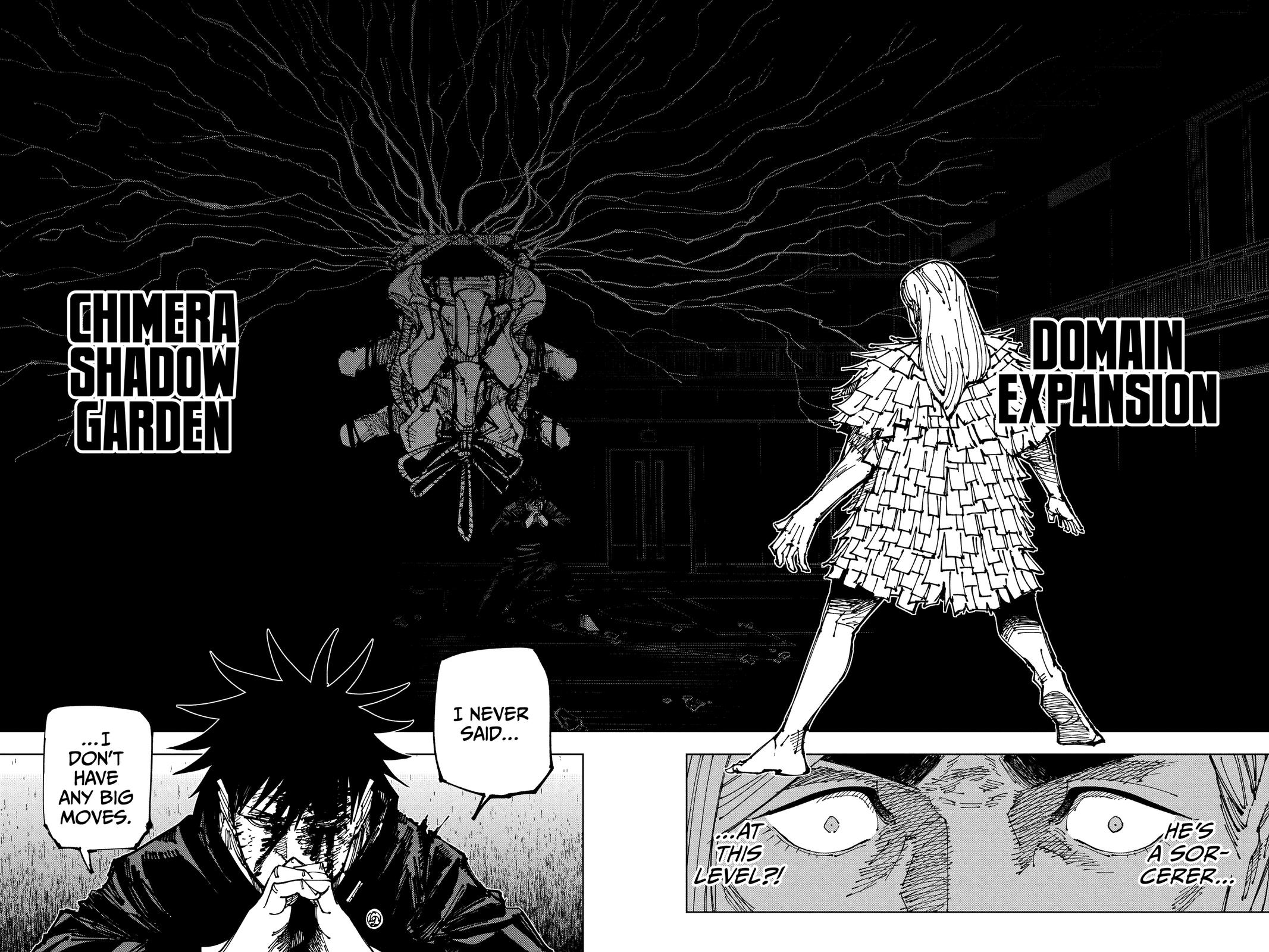
Regardless, I still feel like it needs some sort of mention, because I'm starting to feel like ignoring Collapse may be a big part of why Nanami is so undervalued compared to the rest of his weight class. His advantage still lies in having a strong physical edge and unforgiving precise AP, but completely discarding part of his arsenal, especially it being his "big move" as Big Meg puts it, it can often feel as if he's left behind, y'know? Like despite it not being their biggest advantage/defining combat characteristic (I suppose besides one-trick woman), how would you scale Mei Mei, Megumi, Naoya and Kusakabe if they didn't have Bird Strike, Chimera Shadow Garden, Stacking and... whatever the fuck this is? They'd rightfully drop a lot, no?
Collapse, especially applied over an even larger area, can be Nanami's deciding factor in a lot of fights within his rank. In matchups where you'd think he'd have no answer due to being spaced out, trapped, outsped or outskilled in H2H, it can allow him to make the footing uneven to a degree he knows his way around but his opponent doesn't, to free himself, or to set up suspended debris as a trap or to be the one spacing out instead of being spaced out, as I doubt you'd want to pass by an area where debris is being suspended. One very useful, potentially fight saving, application, for example, would be against weak barriers or large-scale items like Reggie's house.
For someone with Nanami's temperament and intelligence, it is a criminally underrated, insanely useful move. It can also, interestingly, be a downside, as using it against Todo would guarantee him a good few free dodges and possibly even a sucker-punch if the rocks are not depleted of CE fast enough, but I don't see why he'd use it against Todo.
IMO, people underestimate how long the average JJK fight tends to last. I'm making this post more as an demonstration of how long fights can be by using examples from the Shibuya arc, since that arc had a lot of timestamps alongside events.
Yuji vs Ko-Guy lasted 11 minutes
The fight started at 9:03Mahito notes Ko-Guy's defeat at 9:14
Jogo and Choso are able to use hit and run tactics against Gojo for around 20 minutes
Went from some time after 8:50 PM to 9:15 PM
Mei Mei fought these curse users for at least 36 minutes
Gojo was sealed some time before 9:26 PM(This moment also happens while Yuji is already outside)Mei Mei has him on his last legs at 10:02
Nobara vs Haruta is at least 4 minutes long
They first encounter each other at 9:40Nanami finds Ijichi at 9:44(which we know happened before he fought Haruta)
The Dagon fight is less than 31 minutes, but the amount of time is not small(read third image for this point's caption for more info)
The fight starts at 10:20 PMMegumi is running from Toji at 10:51(The Shoko scene happens at the same time as Megumi's)This is a timeline for the Shibuya incident. The Dagon fight stretches through two time periods, and Megumi vs Toji just starts when in the 10:46 time period
Jogo vs Sukuna is around 6 minutes
The time is 11:01 before they encounter the curse usersBefore they are even able to fight, Sukuna vs Jogo explodes out of the building.Fight ends at 11:07(Also when Maho gets summoned)
Sukuna vs Mahoraga is around 7 minutes
At 11:14 Sukuna's finished with Maho
Yuji vs Mahito was 20 minutes long, maybe 17 minutes if you don't regard the Nobara panel as valid but by that point they were already fighting.
At 11:19 they're already fightingAt 11:36 Mahito is defeated
The point of this post is to show that unless a fight is an absolute wash like Haruta vs Nobara, they tend to take quite a few minutes, with fights as easy as Yuji no hitting Ko-guy taking over 10 minutes, and Sukuna toying with Jogo being over 5. Just take these times into consideration when discussing how quickly people can finish fights.The point of this post is to show that unless a fight is an absolute wash like Haruta vs Nobara, they tend to take quite a few minutes, with fights as easy as Yuji no hitting Ko-guy taking over 10 minutes, and Sukuna toying with Jogo being over 5. Just take these times into consideration when discussing how quickly people can finish fights.
Every single time the Gojo vs. Sukuna debate resurfaces, one quote from Chapter 236 gets dropped like a trump card to end the conversation: "I don't think I would have won even if he didn't have Megumi's Ten Shadows." On paper, it reads like a flat-out confession of inferiority—as if Gojo himself stepped into the afterlife just to confirm he never stood a chance. That single line has carried the entire debate on its back. The problem is, Gojo never actually said it that way.
In the original Japanese release of Chapter 236, Gojo’s exact words to Geto are 「十種の影法術がなかったとしても 勝てたかどうかわからないな」 (Tōshu no kagebōjutsu ga nakatta to shitemo, kateta ka dō ka wakaranai na). Translated faithfully without distorting the tone, it means: "Even without the Ten Shadows, I don't know whether or not I could have won." The entire weight of the sentence rests on kateta ka dō ka wakaranai. Kateta is the potential past tense of winning (could have won), and ka dō ka translates directly to "whether or not." In Japanese, that grammatical structure exists specifically to express a neutral, 50/50 uncertainty—not a quiet admission of defeat.
If Gege Akutami had actually intended for Gojo to concede the matchup, the line would have been written as 「勝てなかったと思う」 (katenakatta to omou — "I think I wouldn't have won"). Gege deliberately avoided both omou (think) and katenakatta (couldn't win), opting instead for wakaranai (I don't know). There is a world of difference between saying "I would have lost" and saying "I honestly don't know how it would have gone." One closes the door; the other leaves it wide open.
That distinction only becomes clearer when you read the very next sentences in the same scene. Gojo laments that he couldn't reach Sukuna and points out that Sukuna couldn't afford to go all-out because he had to keep his remaining trump cards in reserve for the rest of Jujutsu High waiting in line. Because Sukuna spent the fight playing conservatively around Mahoraga's adaptation rather than unleashing everything he was holding back, Gojo was simply stating a basic truth: you cannot claim a guaranteed victory against an opponent who never showed his full hand. Viz’s translation flattened a nuanced, honest admission of uncertainty into a defeatist surrender—and the fanbase has been arguing over a phantom quote ever since.
She tells, very blatantly, that she can predict the way Naoya will move. You dodn't necessarily need to run faster than someone to dodge their charge if you see them coming.
I want to make this an actual debate although it wont be that much of a debate after this but:
Shikigamis and That one cursed spirit Ui ui and mei mei fought in shibuya isnt allowed. Also it has to be a complete domain so megumi is not allowed neither.
So this is pretty simple, naoya states that he can with his speed now crush maki's ribs. Maki then punches this naoya such that he comes to a dead spot, which means that the force maki attributed must've been equal to the force naoya had.
This means that technically, each single punch from maki would produce the force to shatter someone ribs of equal durability to her. That's a pretty large AP and Durability gap tbh
People say ‘Toji’s only feat is killing a teenager who hadn’t slept for 3 days’ as if that wasn’t Toji’s plan, Gojo wasn't just out partying for 3 days Toji purposefully tired out Gojo for that purpose. I think when scaling Toji people should count this as a BIQ feat. What do yall think?