r/LinguisticMaps • u/Diligent-Option-6597 • 45m ago
Asia The languages of Iran

13
Upvotes
r/LinguisticMaps • u/Boeing-B-47stratojet • 13h ago

r/LinguisticMaps • u/TheMapper100 • 1d ago

I made this map of the main regional varieties of Brazilian Portuguese and the subdialects within them. Large capitalized labels are dialects. Smaller labels are subdialects, with the dialect they belong to written underneath.
Sources
• Dialect areas: the dialect map used on Portuguese Wikipedia, available on Wikimedia Commons as Portugueselanguagedialects-Brazil.
• Subdialects and some boundaries: u/RN_Renato's map of Brazilian dialects and subdialects.
• Country borders: Natural Earth. State borders: Code for America.
Notes
• Borders between dialects are simplified and approximate. In reality, speech changes gradually from one area to the next.
• City-based varieties such as Recife, Carioca and Paulistano are drawn larger than their actual metro areas so they stay visible at this scale.
• Classifications of Brazilian dialects vary between authors, so other maps may draw these areas differently. For academic data, see the Atlas Linguístico do Brasil (ALiB).
r/LinguisticMaps • u/TheMapper100 • 1d ago

I redrew and translated a Portuguese-language map showing the Tupian-based lingua francas (línguas gerais) used in Brazil between the 16th and 18th centuries, along with the areas where Tupian languages were spoken from the 16th century to today.
In colonial usage, a “general language” was an Indigenous language adopted as a common language for missions, trade and administration. Guarani, Quechua and Tupi were the Amerindian languages considered “general languages” at the time. The map shows four Tupian-based lingua francas:
These four are not all of the same kind. Old Tupi and Colonial Guarani were native Indigenous languages that settlers and missionaries adopted as lingua francas. The Paulista and Amazonian general languages formed within colonial society and became the mother tongue of many people, especially mamelucos (people of mixed Portuguese and Indigenous descent). That’s why, in Aryon Rodrigues’s narrower model, only these two count as true línguas gerais. Recent work by Thomas Finbow challenges part of this picture, arguing that the change from “língua brasílica” in 17th-century Jesuit texts to “língua geral” in the 18th century reflects a shift in how the language was used, not in its structure.
Method: Redrawn and translated from “Linguas tupi.jpg”, a public-domain map uploaded to the Portuguese Wikipedia by user Epalitot on 13 October 2008. I georeferenced it to Natural Earth borders and traced the areas in vector form. I relabeled “Paraguayan Guarani” as “Colonial Guarani” and added time periods to the legend, which the original didn’t specify. Some dashed outlines, such as those in the interior of the Northeast, are unlabeled in the original. Albers equal-area projection.
Further reading:
r/LinguisticMaps • u/Diligent-Option-6597 • 1d ago

r/LinguisticMaps • u/StoneColdCrazzzy • 2d ago
r/LinguisticMaps • u/e9967780 • 2d ago

r/LinguisticMaps
•
u/No-Commercial483
•
4d ago
Hi everyone,
Two months ago I shared my language map here. Now that most of the world’s languages are on the map, I’m working with the other contributors on adding dialects. I’ve also added 3 new games for you to try :)
r/LinguisticMaps • u/fries-eggpanvol8647 • 6d ago

r/LinguisticMaps • u/HovercraftFar • 7d ago

Linguistic situation in Guinea-Bissau
| # | Ethnic group on the map | Language (English name) | Language family | Subgroup / branch |
|---|---|---|---|---|
| 1 | Banhuns | Bainouk / Banyun | Niger-Congo | Atlantic → Nyun → Bainounk |
| 2 | Manjacas / Papéis do Norte | Manjak (Mandjak) / Northern Papel varieties | Niger-Congo | Atlantic → Bak → Manjaku-Papel |
| 3 | Mandingas | Mandinka | Mande (often included in Niger-Congo) | Western Mande → Manding |
| 4 | Mancanhas / Brames | Mankanya (Mancagne) | Niger-Congo | Atlantic → Bak → Manjaku-Papel |
| 5 | Papéis | Papel (Pepel) | Niger-Congo | Atlantic → Bak → Manjaku-Papel |
| 6 | Balantas | Balanta | Niger-Congo | Atlantic → Bak → Balanta |
| 7 | Biafadas | Biafada (Beafada) | Niger-Congo | Atlantic → Jaad |
| 8 | Baiotes | Bayot | Niger-Congo | Atlantic → Bak → Jola-related |
| 9 | Felupes | Jola-Felupe (Ejamat) | Niger-Congo | Atlantic → Bak → Jola |
| 10 | Nalus | Nalu | Niger-Congo (placement debated) | Atlantic-associated → Naluic |
| 11 | Bijagós | Bijogo / Bidyogo varieties | Niger-Congo | Atlantic → Bijogo |
| 12 | Grupo Fula e assimilados | Fula (Pulaar / Pular) | Niger-Congo | Atlantic → Fula-Sereer |
| 13 | Diversos | Various unspecified languages | Multiple possible branches | Not identifiable from the map |
r/LinguisticMaps • u/e9967780 • 8d ago

r/LinguisticMaps • u/e9967780 • 8d ago

r/LinguisticMaps • u/fries-eggpanvol8647 • 8d ago

r/LinguisticMaps • u/karetynka • 8d ago

r/LinguisticMaps • u/ZaBlancJake • 9d ago

r/LinguisticMaps • u/fuchsely • 10d ago

r/LinguisticMaps • u/lurebozorg • 14d ago

I took the sentence "We killed their warriors" and looked at the noun phrase "their warriors" to find languages that follow this suffix-stacking order when the noun phrase is used as a direct object:
NOUN + PLURAL + POSSESSIVE + ACCUSATIVE/OBJECT_MARKER
My goal was to find languages around the world that stack these grammatical elements in this particular order and highlight where this pattern is found as the official language of each country.
Note*: **Mongolian, **Hungarian, & **Quechua do not follow the exact same sequence, but have similar suffix-stacking patterns, so they are highlighted in a light red color.*
-------------
English: We killed their warriors
Amharic: Täwaggīwoččachäwən gädäln
Literal: täwaggī (warrior) + wočč (plural) + achäw (their) + ən (accusative/object marker)
Persian: Jangjuyaneshuno koshtim
Literal: jangju (warrior) + yan (plural) + eshun (possessive) + o (accusative/object marker)
Turkish: Savaşçılarını öldürdük
Literal: savaşçı (warrior) + lar (plural) + ı (possessive) + n (buffer) + ı (accusative/object marker)
Azerbaijani: Döyüşçülərini öldürdük
Literal: döyüşçü (warrior) + lər (plural) + i (possessive) + n (buffer) + i (accusative/object marker)
Uzbek: Jangchilarini o'ldirdik
Literal: jangchi (warrior) + lar (plural) + i (possessive) + ni (accusative/object marker)
Kazakh: Jauyngerlerin öltirdik
Literal: jauynger (warrior) + ler (plural) + i (possessive) + n (accusative/object marker)
Kyrgyz: Jookerlerin öltürdük
Literal: jooker (warrior) + ler (plural) + i (possessive) + n (accusative/object marker)
Turkmen: Söweşijilerini öldürdik
Literal: söweşiji (fighter/warrior) + ler (plural) + i (possessive) + ni (accusative/object marker)
**Mongolian: Daichdyg ni alsan
Literal: daich (warrior) + id (plural) + yg (accusative/object marker) + ni (possessive)
**Hungarian: Megöltük a harcosaikat
Literal: harcos (warrior) + a (possessive) + i (plural) + k (plural possessor) + at (accusative/object marker)
**Quechua: Paykunaq awqallinkunata wañuchirqanchik
Literal: awqalli (warrior) + n (possessive) + kuna (plural) + ta (accusative/object marker)
r/LinguisticMaps • u/TheMapper100 • 14d ago

Most common mother tongue in each Angolan municipality, according to the 2024 census. Dark shades mean an absolute majority (over 50%); light shades mean a plurality.
This is an English translation of a map by Petnog on Wikimedia Commons: https://commons.wikimedia.org/wiki/File:Mapa_Angola_2024_-_Idiomas.png. I only translated the title, legend and footer; the data and design are theirs.
r/LinguisticMaps • u/Master-Article-6131 • 15d ago
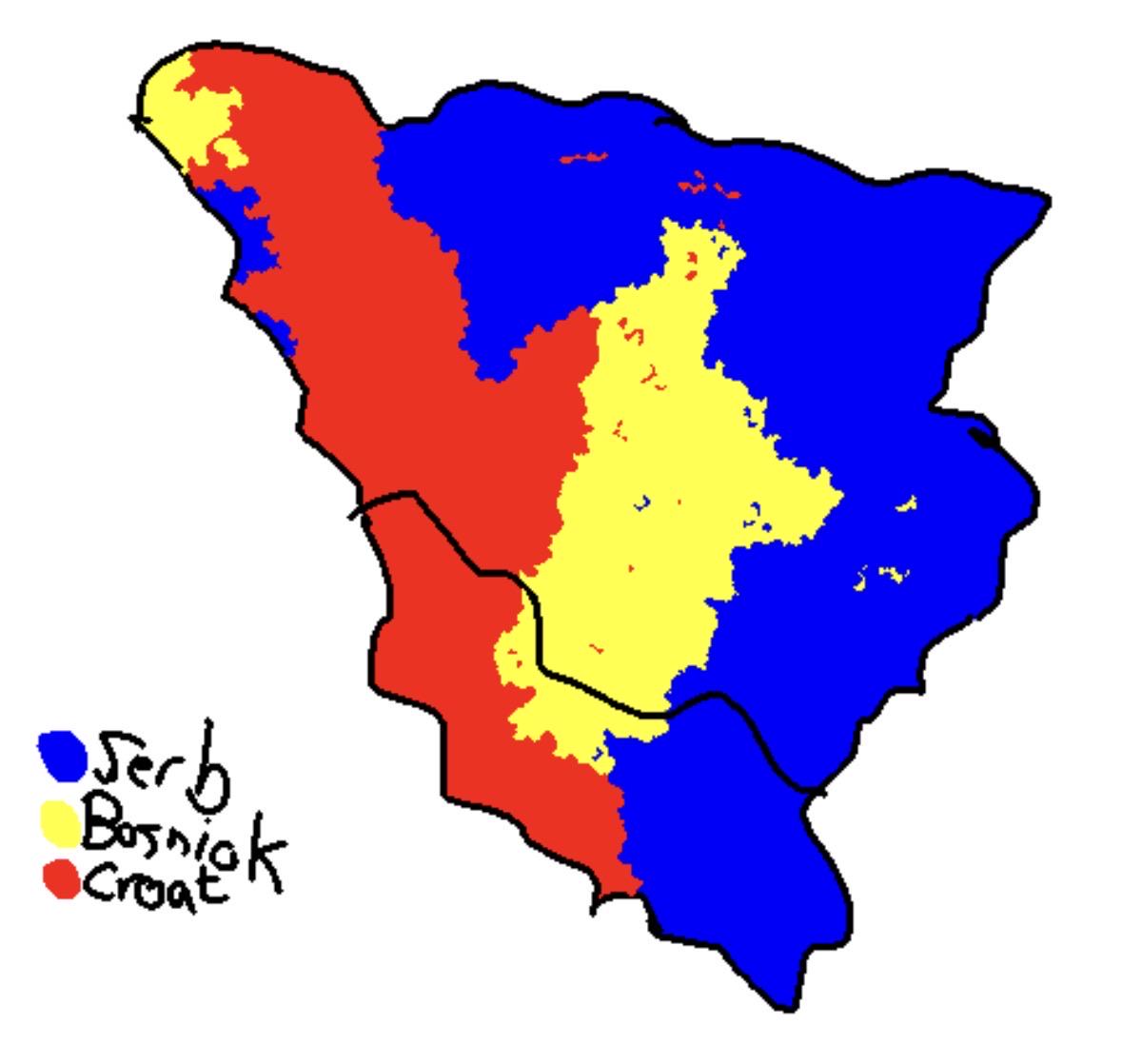
had some research to do this
r/LinguisticMaps • u/Reasonable_Art5575 • 16d ago

r/LinguisticMaps • u/StoneColdCrazzzy • 16d ago


