This post is mouse care simplified, for beginners! It is not very specific, and it does not cover everything, so please do not rely on just this post when educating yourself on mouse care!
This has been written and discussed by moderators of the subreddit. If you have questions or concerns, please comment to let us know! It will be updated regularly to ensure it is factual.
1. Mice are social!
Females always need other female companions. It is recommended to have at least 3, but 2 is okay.
After 6 mice in one cage, it is often they will start to split up and become territorial against the opposing group. It is suggested to keep your colony under 6 unless you have much knowledge and experience, OR if your mice are littermates.
Males can not be housed with other males ever! If you want them to have cage mates, neutering (very risky) and placing with females or leaving intact and bonding with ASFs (African Soft Furs) is beneficial and recommended. Otherwise, they can thrive in solitude.
In mouse communities, many users go by tank size rather than listing dimensions. We will do both!
10g/20x10 inches is no longer suggested for mice.
20g/30x12 inches is suitable for 2-4 females or 1 male, but it's highly suggested to aim for 40g or larger.
40g long/36x12 inches is suitable for 2-5 females or 1 male
40g breeder/36x18 inches is occasionally suitable for 2-6 females or 1 male
Over 40g is not always suitable for any amount of mice since many mice do better in environments with less open space. Bigger is only better with thorough clutter and certain colony sizes.
Any amount of mice may thrive in larger enclosures than suggested above. However, it is critical that the larger the enclosure is, the more clutter provided, otherwise the mice willnever thrive.
Wood enclosures are suggested against since urine will effect its quality and smell over time.
Mesh flooring is dangerous due to the chance of toes/tails getting caught, the mesh cutting their skin, and risking bumplefoot. Mesh should also be avoided in wheels.
Though they climb, mice don't need very much height, and multi-story enclosures do not provide them with the proper space they need. Floor space is more important than height.
Cages with lots of attachments and rooms do not provide proper space for mice. They are also extremely difficult to clean, fall apart easily, and struggle to hold proper bedding amount and safe wheels.
Mice need to be able to create burrows, so while the minimum is 6 inches, we suggest at least 8" of bedding. However, many owners prefer having 10-12" deep!
Bedding must be majority safe wood shavings or hemp. Paper substrate does not absorb ammonia well and can cause several health issues when used alone or as majority of substrate.
(Dust/scent free for all) Aspen, kiln dried pine, and hemp do well as the main substrate and may be more sturdy mixed with a small portion of hay or paper bedding.
Clutter is arguably one of the most important aspects of a mouses cage. No matter the size, if the cage lacks clutter, it is not suitable.
Toilet paper rolls, cardboard boxes, tea light and soap dish ceramics, rodent hideouts, branches, logs, cork bark, cardboard egg cartons, and much more can be used as clutter in the cage.
From a birds eye view, you should be able to see little to no bedding. While it may seem too cluttered to a human, it's perfect for mice!
The larger an enclosure, the more crucial clutter is.
Mice flourish with climbing opportunities and will always take advantage of them.
Ropes, bird ladders, hanging toys, rope nets, shower curtain rings, and bird perches are a few climbing options you can provide.
Fabric hammocks are used commonly, but pose a threat when chewed on and loose strings get tangled around limbs. Minimal use of fabric is suggested for this reason.
An upright, solid wheel of 9 inches in diameter or larger must be provided at all times. 2 or more are suggested for groups of girls.
Spinning saucer disks or hamster balls/cars are UNSAFE and should never be provided, no matter how much you think your mouse may enjoy it (fun≠safe)
Proper wheel brands may include Niteangel, Silent Spinner Exotic Nutrition, Oxbow, Wodent, Bucstate, and Trixie (but there are many more besides these!)
A high variety food mix (nuts, seeds, grains, ect) must be given 1-3 times a week, or even as long as once every two weeks. The frequency is owner preference.
Feeding is 3-5 grams per mouse a day.
Ensure your mice have constant access to food through toys and scatter-feeding.
Food bowls are suggested only for fresh fruits or veggies since they provide no enrichment otherwise!
Mice must have at least two water sources and constant access to them at all times. Bowls or bottles work well, though having one of each is ideal. Water must be cleaned and refreshed daily.
Daily spot checks to clean up mess, poo on toys/clutter, and urine on the surface is vital.
Bedding changes will be needed less often with more bedding and space. A 10g tank (or cage of similar size) would need weekly bedding changes.
Each enclosure size and mouse amount will effect how often bedding changes are necessary. Find a cleaning schedule that ensures the cage doesn't smell at any time for your mouses health.
With deep bedding over 6 inches, you'll have to change out less of the bedding. 1/3 to 1/2 of the bedding may stay in the enclosure while the most soiled areas are removed and replaced.
In any case, a small amount of bedding must be left over after a bedding change to decrease stress.
Allowing your mice to settle in for a few days before interacting with them is wise.
Rub your hands on bedding and toilet paper in the cage to get the mice used to your scent.
Encourage interaction through hand feeding.
If a mouse is not motivated to interact after several weeks, try to lure them to climb onto your hand for treats. A strong bond is important with mice so they are well adjusted to interaction in case of a vet visit or emergencies. Human interaction can also be beneficial to them.
See this post for more information.
11. Other
Mice are crepuscular and are typically seen during the morning or late day/night.
They are self bathing and should never be washed with water or soap (unless vet prescribed). It ruins the health of their fur coat and leaves them more susceptible to URIs and freezing. They do not need any form of bathing/washing.
Mice don't hibernate. If a mouse appears to be in a hibernation state, this is Torpor, caused when they overheat or freeze. This is a medical emergency.
You should never pick up a mouse by its tail or other limbs.
Fancy mice (aka domestic mouse) live 1-2 years on average.
Wild mice do poor in captivity, unless they are unfit for the wild they should not be kept as pets.
You should never breed mice purposely without years of research and mouse owning experience prior.
Vet visits are a likely occurrence in mouse ownership, since mice are prone to many health issues.
Travel carriers are needed for vet visits, emergencies, cage cleaning, and quarantine.
These guides are incredibly thorough and well written. However, they link some information that is no longer available, or they list mouse care information that has been dis-proven. An important point to make is these guides may suggest some controversial topics, most of which our community does not fully support. Although these guides don't follow our standards exactly, they are still very well made. Please keep an open mind and read all sides of a controversy before deciding which you feel works best for your mice.
I have decided to share these because they are very descriptive on some aspects of mouse care I did not cover well. I strive to have a guide in the future as well made as these, but for now, I have to bring attention to the effort made by this member.
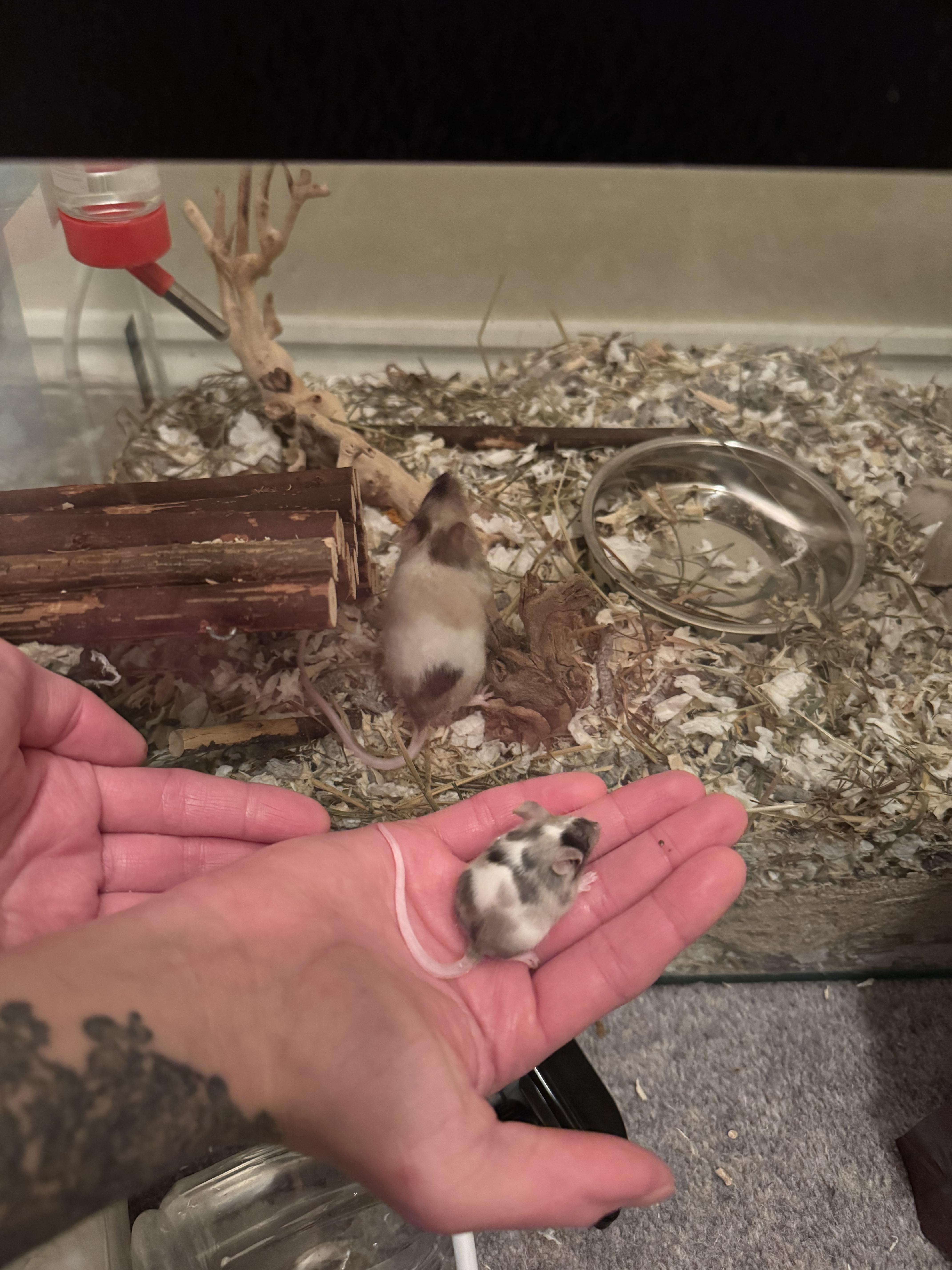
CONTEXT: i work at a pet shop. we breed mice and rats there, one day i stumbled upon a newborn mouse without any limbs. I'm assuming this happened due to excessive over grooming from the mother. At first I wondered if it was cruel to keep her alive, but she clearly has the fight to live and seems well, she hasn't dealt with any infection or illness from her missing limbs. she's about 6 months old now
photo of her when she was a few weeks old (apologies for carrying her poorly here)
my 2 girls are in a 40 gallon tank, they have lots of hides, and they build lots of little tunnels underneath as i keep the bedding high. i try not to clean it too often. i usually just do some every other day spot cleaning/wipe their wheel down and then every few weeks i will take all the items out and remove 2/3 of the bedding and replace with new bedding. i will occasionally wash all their items with water and fragrance free soap when it needs it. i use about 75% aspen bedding and 25% paper bedding. they have a mesh lid on the tank, and i constantly have an air purifier running in my room, a ceiling fan, and a window open when the weather allows.
however, my girls are still very stinky!! i know it can be counterproductive to clean too much, but i also worry i’m not cleaning enough as it’s definitely an ammonia/pee smell. i’m thinking that maybe some of their wooden hides/wooden stairs might need to be replaced as i’ve had them for almost a year, and maybe there has been too much pee on them even with regular cleaning.
any tips?? thank you!! attached pics of them bc they are so cute 💕
Just brought him home yesterday (from the store I was working at) and wanted to share how his cage is looking! His wheel got stuck in the mail so it won't be here until tomorrow, but it'll be on the front left when it is (which means everything else in the front left will get crammed in. somewhere else.)
Originally had a little wire shelf where the poptart box is (last pic), but I saw him nibble at the coating last night and pulled it just to be safe 💔 So now I'm brainstorming other ideas for hanging his water bottle
I was stopping in for a few treats for my other girls and the hamster I just adopted, when I came across this girl. She was the only one not running around. When I asked to hold her, she didn’t fight and I could feel her spine. Was told by the owner she may also be pregnant.
She made it through the night but she was very cold. I’m warming her up by keeping her in my shirt. I’m hesitant to put her with my other girls bc she may be sick. (I always quarantine my mice anyway.)
Does anyone have tips on keeping a singlet mouse warm, or helping a (possibly pregnant) mouse through a respiratory infection? I’m not getting my hopes up, but I’m not giving up, either.
Edit: getting her to a vet as soon as I’m in my home state.
Warning!! that this is not a very easy sickness, and I’m worried it might be the nearing the end…
My sweet girl has a respiratory infection of some kind. I took her to an emergency vet last night… they weren’t able to confirm exactly what it is, but they think that it might be lower respiratory rather than upper. Not sure if that’s significant but thought I’d mention it.
They prescribed an antibiotic, but it won’t be ready until Wednesday. That’s a pretty long time for a little girl.
She’s about 9 months old, and has two cage mates who seem to be active and okay, all things considered. They suggested that I possibly keep them apart, but she’s really not doing well and I don’t want to let her be alone in an unfamiliar tank, so I’ve opted to keep her with her sisters.
My question now is what to do when it seems like she might be suffering? She’s been sitting in the corner of the tank chittering and breathing very heavily and rapidly. I don’t want her to be in pain or uncomfortable, and I’m worried about how to make sure that isn’t the case. I also don’t want to jump to conclusions in case she might somehow get better, or make it through until I’m able to get her medicine…
Does anyone have any advice? I love her very much and I just want to do whatever will be best for her.
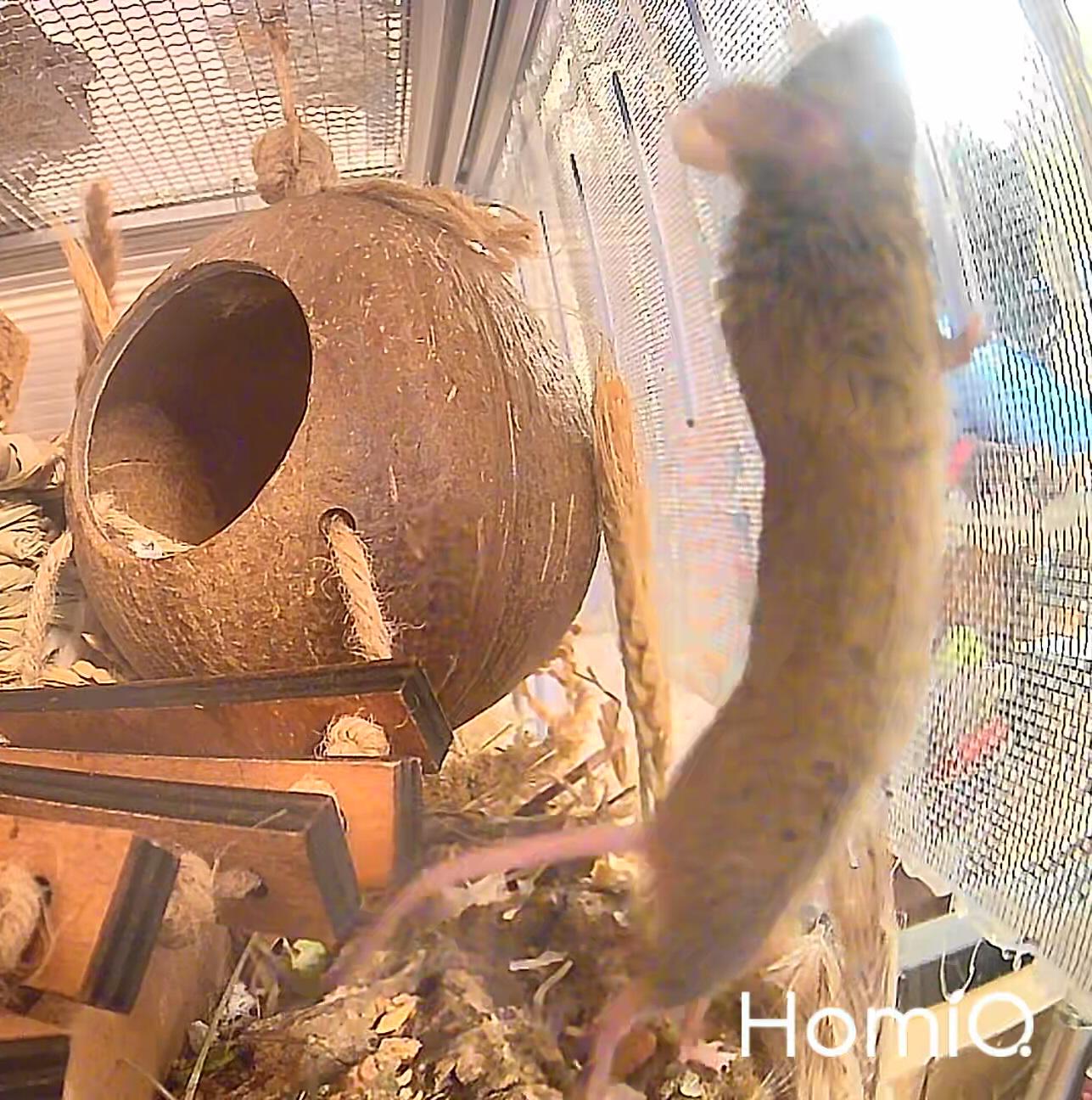
Can somebody help me, I don’t know what he’s doing. He has does this several times over a few months but it’s not every minute he does it. It’s not every time I interact with him but it keeps happening. He’s 1.6yrs old and I’ve noticed him slowing down. I love him too much for anything to happen, what should I do? I’m struggling with finances, and I have a GoFundMe if anyone would like to help so I can get him help asap. https://gofund.me/4894f7089
I also want to clarify: he wasn't actively eating when these episodes start. I've seen him actually choke before, and this just isn't it; his ears don't go flat back like they do when he chokes.
The last two mice I purchased from PetSmart hadn’t been handled by staff at all. As a result, both were incredibly skittish and would consistently become aggressive and bite when I tried to handle them.
I’m certainly not new to owning mice. I’ve had over 40 throughout my lifetime and have never experienced anything like this!
I’m curious where everyone is getting their mice these days. Are local breeders the way to go? Any recommendations for reputable breeders in Toronto or the GTA would be greatly appreciated!
my mouse rémy, when I pick him up, always at one point kind of climbs on my face and puts his snout on my lips and kind of nibbles on them and feels like he’s giving me kisses, but I don’t want to sound delusional hahah
My male, mouse (former lab mouse, saved when they no longer needed him) died today. I am hoping it was just old age, as I got him as an adult.
This was his enclosure. It has a screen lid, and it was cleaned often.
What you can't see is the water bottle (which I cleaned and refilled every other day), wooden toys (that he kept on burying) and his food/treats.
I used shredded paper from my shredder as bedding. I made sure there were no harmful inks, staples or plastic.
This is a 20 gallon long.
Did I do it right??? Or did I cause his death?
I'm beating myself up.
He got high quality seed at all times and a couple pieces of dry cat food a week (for protien). I know glass tanks let ammonia build up, but it didn't have a chance to do so because I kept it pretty clean.