r/PureLand • u/Burpmonster • 16h ago
Donglin Monastery’s 49-Day Winter Retreat for Amitabha Recitation
4
Upvotes
r/PureLand • u/Shaku-Shingan • 17h ago

This translation was originally completed a couple of months ago, but I recently revised it and updated the layout to the latest Shingan's Portal format (which will slowly be rolled out for other translations).
Taishō 362 is the second earliest translation of the Larger Sūtra and was probably translated by Zhi Qian in the Wu Dynasty, but Lokakṣema's hand may have also been involved somewhere in its translation.
The text itself differs from the more well-known versions in several respects, but I have attempted to show, for instance, where the parallels appear in the vows by annotating how they line up with the Saṅghavarman translation. Please note that many Sanskrit names are reconstructions, and Zhi Qian's Chinese transliterations are mostly from Prakrit. I consulted the Nepalese Sanskrit manuscripts for many names, though the alignment may not be perfect.
Finally, it should be noted that these early Chinese translations are often hard to understand. I therefore consulted the contemporary Japanese translation in the Shinshū Seiten (whose pagination is also provided), though I did not let it override my own judgment. However, if anyone who reads Chinese notices any issues with the translation, please let me know, and I will edit it ASAP.
r/PureLand • u/Antique_Forever_4840 • 1d ago

Letter 1
Turn Afflictions into Bodhi
Since we last met, six years have gone by in a flash. During that time, not
only have the snow and dew undergone change, the destiny of our nation has been
profoundly transformed as well. The evanescence of life is truly something we all
deeply mourn!
I am pleased to learn from your letter that you have not neglected your Pure
Land practice. However, you indicated that you are not at peace in body and mind.
Could this be the result of financial difficulties or chronic illness?
If you suffer financial hardship, I suggest you retreat a step. You should reflect
thus: “although there are many in this world more fortunate than I, those who are
less well off are hardly few in number. I should seek only to escape hunger and cold;
why dream of riches and honor?”
Moreover, if you are content and at peace with your circumstances and surroun-
dings, you can even turn afflictions into Bodhi (Enlightenment), not to mention
grief into peace and joy!
If you suffer chronic illness, you should reflect deeply that this body is the
very source of suffering, develop a revulsion toward it and strive to cultivate the
Pure Land path, determined to achieve rebirth in the Land of Ultimate Bliss. The
Buddhas view suffering as their teacher, thus achieving Ultimate Enlightenment.
Likewise, you should consider illness as medicine, to escape Birth and Death.
You should realize that human beings are bound by all kinds of karmic afflic-
tions. Without the sufferings of poverty and illness, they will, by nature, pursue
the world of sight and sound, fame and profit, finding it difficult to let go. Who
would then willingly turn around to watch and ponder the state of perdition to come?
The sage Mencius once said:
Those who will be entrusted with great tasks should first endure hardship
both in body and mind, suffering hunger and destitution or failure in their
undertakings. Only then will they be able to forge their character, develop
patience and endurance and attain outstanding abilities, beyond the ken of
the multitude.
Therefore, you should realize that human character is usually forged in adversity.
If adversity cannot be avoided, you should remain at peace and practice forbearance.
Moreover, in speaking of great tasks, the sage Mencius was referring merely
to mundane undertakings. Even so, enduring hardship is necessary for success –
how much more so when lowly beings such as ourselves undertake the great dual
task of achieving Buddhahood and rescuing sentient beings! If you are not tested
to a certain extent by financial hardship and disease, your worldly delusions will
know no bounds and your Pure Land practice will be difficult to perfect. With
your Mind-mirror clouded, you will revolve for many eons in the evil realms – not
knowing when you will ever achieve liberation!
The ancients have said:
If it were not for a period of penetrating cold, the plum blossom could never
develop its exquisite perfume!
This is the meaning of what I said earlier.
♦
♦ ♦
You should persevere in reciting the Buddha’s name, to eradicate past karma
swiftly and avoid developing a mind of afflictions, resenting the Heavens, blaming
your fellow beings, considering the law of Cause and Effect as a fairy tale and
rejecting the Buddhas and their teachings as ineffective. You should know that from
time immemorial, we have all created immeasurable evil karma. As the Avatamsaka
Sutra states:
If evil karma had physical form, the empty space of the ten directions could
not contain it.
Thus, how can haphazard, intermittent cultivation possibly annihilate all
afflictions and obstructions?
Sakyamuni Buddha and Amitabha Buddha, out of compassion for sentient
beings who lack the strength to rid themselves of evil karma, specifically taught the
method of “relying on the Buddha’s power to take their residual karma along to the
Pure Land.” Such compassionate action is all-encompassing; even our obligations to
the Heavens or to our parents cannot be compared to it – not even on a scale of ten
thousand to one. Therefore, you should engage in earnest repentance, seeking the
Buddhas’ assistance in eradicating past karma and achieving peace and tranquility
of body and mind.
♦
♦ ♦
If illness and suffering become unbearable, in addition to reciting the Buddha’s
name morning and night and dedicating the merits toward rebirth in the Pure Land,
you should call wholeheartedly upon the Bodhisattva Kuan Yin (Avalokitesvara).
With Her silent vow to rescue sentient beings, the Bodhisattva appears throughout
the worlds of the ten directions. If in time of crisis, a person can keep reciting Her
name and revere Her, She will respond according to the circumstances, enabling
him to escape suffering and achieve happiness.
♦
♦ ♦
Although Buddha Recitation is simple, it is very deep and encompassing. The
most important thing is to be utterly sincere and earnest, for only then will your
thoughts merge with those of Amitabha Buddha and will you reap true benefits
in this very life. If you are lazy and lax, lacking even the least bit of reverence
and awe, you may sow the seeds of future liberation but you must still bear the
inconceivable evil karma stemming from disrespect and over-familiarity. Even if,
thanks to residual merits, you escape the evil realms, you will still find it difficult
to join the Ocean-Wide Lotus Assembly!
Nowadays, there are quite a number of scholars who study Buddhism. However,
almost all of them simply read the words of the sutras and commentaries seeking
arguments and rationalizations to prove that they are versed in the Dharma.
Those with the sincerity and devotion to cultivate according to the Dharma are
few indeed! I have always said that to reap the real benefit of the Dharma, you
should approach it with a truly reverent mind. One-tenth of reverence and devotion
annihilates one-tenth of afflictions and evil karma, and increases merit and wisdom
by one-tenth – and this applies to two-tenths, three-tenths or total reverence and
devotion.
Conversely, the more lax and disrespectful you are, the more obstructions and
evil karma you develop, resulting in a corresponding decrease in merit and wisdom.
How sad it is! When you meet with other laymen, you should counsel them along
these lines. This would be a great Dharma gift.
♦
♦ ♦
If you can penetrate the profound, subtle meaning of the Pure Land method, so
much the better. However, even if you are not entirely clear about certain aspects
of it, you should still believe firmly in the words of the Buddhas and the Patriarchs.
You must not harbor doubts. To doubt is to turn your back on Buddha Amitabha,
distancing yourself from Him, making it difficult to be in communion with Him and
be “received and guided” at the time of death. The ancients have taught:
Only the Buddhas can truly fathom the ultimate meaning of Pure Land; even
those Bodhisattvas who have achieved near equality with the Buddhas cannot
grasp it completely.
If even the highest level Bodhisattvas cannot fully understand the Pure Land
method, how can we expect to assess it with our own limited minds and capacities
without falling into error? Intelligent persons, these days, may study the Dharma,
but since they have not been in the company of fully enlightened sages, they almost
always emphasize theory and noumenon (principle) while rejecting “phenomenal”
cultivation as well as the law of Cause and Effect. Little do they realize that without
phenomenal cultivation and belief in Cause and Effect, theory and noumenon cease
to exist.
There are also certain individuals of great talent and ability, whose writings can
astound the gods. However, their actions are no different from those of the dullards
in the marketplace. The root cause is their rejection of phenomenal cultivation
and Cause and Effect. This grave error is repeated by other people; it is a case
of betraying the Dharma with one’s body (actions). The depth of such offenses
and transgressions is immeasurable! Witnessing this, those endowed with profound
wisdom can only sigh in pity and compassion ...
An Elder Master once said:
Those who skillfully discourse on Mind and Self-Nature surely can never reject
Cause and Effect; those who believe deeply in Cause and Effect naturally
understand the Mind and Self-Nature in depth. This is a natural development.
The Master’s words are a truth that has withstood the test of time, a needle
pricking the heads of those with delusive wisdom.
Last autumn, during your esteemed brother’s visit to P’u T’o Mountain, I
brought up these “sincere, respectful” points. However, I wonder whether he has
taken them as the sincere, earnest words they were meant to be?
♦ ♦ ♦
r/PureLand • u/Burpmonster • 1d ago

r/PureLand • u/TrustReasonable7001 • 1d ago

By Venerable Master Miao Lien
Dispensing his teachings according to people’s capacities, he taught without discrimination. He also taught contemplative practices as antidotes, and the practice of giving as a means to seek blessings.
There are twenty-eight generations of successive patriarchs in India. Shakyamuni Buddha passed down the patriarchy first to Kasyapa. The second patriarch was Ananda. The fourth one was Uptagupta. The latter was born one hundred years after the Buddha’s Nirvana and became a monk at the age of seventeen. After attaining Arhatship at the age of twenty, Uptagupta started to widely propagate the Buddhadharma. Even though he didn’t have the Buddha’s thirty-two auspicious characteristics and eighty minor marks, he guided countless people just like the Buddha did. At the time, people praised Uptagupta’s widespread teachings and honored him with the title, “The Buddha without the Marks.”
One of Uptagupta’s many disciples had a strong desire for food. He did not eat because he was hungry. He ate because he was a glutton. He felt hungry even after eating an excessive amount of food. Due to this shortcoming, he made little improvement in his cultivation. Consequently, he had many afflictions which made him desire a return to the lay life. Uptagupta used skillful means to teach and transform him.
In the old times, accomplished practitioners like Uptagupta had the spiritual power to know people’s past lives and could deliver appropriate teachings according to a person’s capacity and circumstances. These practitioners acted like great doctors who can prescribe the right medicine based on a patient’s symptoms and ailment. One day, Uptagupta purposely asked the gluttonous disciple to come to his room where he had prepared a hot creamy beverage. When the disciple saw the delicious treat, he could not wait to have it.
Uptagupta said, “Wait until it cools down before you drink it!” The gluttonous disciple, of course, could not wait. He held the hot beverage and blew on it, attempting to cool it down faster. Being such a glutton, he wanted to indulge as soon as the beverage cooled down. Uptagupta said again, “Wait a little longer! Although the drink has cooled down, the desire in your mind has not!” He asked the disciple to contemplate cold water so that his mind would cool down and be calm. That way, having the cool beverage would give him much comfort. One shall not pour cold drinks into a burning mind.
Perhaps some might ask, “When the mind is hot, isn’t taking a cold beverage the right thing to do?” Actually, it is the opposite. It is like adding ice cubes to a pot of hot water; the ice cubes will surely crack and break. All objects behave likewise and so do human bodies. Adding ice cubes to hot water will cause the ice to crack. Obviously, pouring boiling water into an icy cold glass jar will cause it to crack as well. It is common sense that hot water cannot be poured into an icy cold glass jar. The cold glass must be warmed up before hot water can be poured in, to avoid problems.
Uptagupta had prepared enough of the drink to fill the disciple’s stomach. What happened after the disciple was full? The master asked him to vomit it out. Only sick people with a gastric ailment would throw up. But if everything is settled in the stomach, how can one throw up? Well, there is an easy way to do that! You can place two fingers over the tongue and start pressing, which will then induce vomiting. After the disciple threw up, Uptagupta said, “Now eat the puke!” The disciple said, “Master! How can I eat this vomit? It is so gross!”
Uptagupta said, “Now you have seen this gross food after you have vomited it out. When the drink is taken, it is just as disgusting inside your stomach!” He wanted this gluttonous disciple to contemplate the impure aspects of food. After eliminating the desire for food, he attained the first stage of sagely fruition (Srotaapanna). Once a practitioner achieves the first stage, attaining the fourth stage (Arhat) is a sure thing!
If one has a strong desire for food, one must contemplate its impurity; for example, vegetables are fertilized with urine and excrement. Although it is impure, one must eat to sustain one’s life. Nonetheless, such contemplation will help one not to overeat. If you do not have heavy desire for food, it is not necessary to contemplate food this way.
Only those who are ill need medicine. If you don’t have an illness, why would you take medicine? Sentient beings with too much greed should practice the contemplation of impurity. However, those with too much anger should not practice the contemplation of impurity, as doing so will instigate one’s anger even more; instead, they must cultivate the contemplation of compassion. The Buddhadharma is analogous to medicine; each kind of medicine cures one type of sickness. Medicine should not be misused or prescribed incorrectly.
r/PureLand • u/Flaky-Examination833 • 2d ago
(Forgive, I am posting from my phone)
I've been chanting for a few months now. I don't know why but the anxiety came at me hard and fast while I was chopping vegetables last night. It was mostly work related stresses but it was about to take over and make me act out in a bad way. I found myself chanting quietly and it just sort of faded.
I woke up this morning and banged out 2 reports after I got the kids their breakfast. I think in the past I would still be spiraling.
Not sure what's going on. Apologies if this sort of post is not on topic.
r/PureLand • u/Ineffable-Ugin • 2d ago
Guan Yin is someone I really connect with and I have a question for anyone who follows her or knows more about this than I do.
With the mantra Namo Guan Shi Yin Pusa, is the belief that just hearing it can bring protection and help, or do you have to specifically ask her for whatever it is you need?
The way I understand it she's basically at the level of a Buddha, so she sees everything, knows everything, and is present everywhere at once. If that's true then wouldn't she already know what you need before you ever say a single word about it?
What I'm really wondering is if it's normal for people to just play her mantra with a specific goal in mind, not chanting it, just listening to it, and trust that her presence is gonna carry over to wherever they need her and stay for however long they need her. Or is that not how it works, and you actually have to directly ask her for help with whatever you're dealing with?
I'd like to hear how other people practice this and what your tradition or teacher says about it.
r/PureLand • u/Automatic-One3901 • 2d ago

r/PureLand • u/TrustReasonable7001 • 2d ago

A glorious palace building is seen on the top. In the courtyard Amida and two Bodhisattvas, Kannon (Avalokiteshvara) and Seishi (Mahasthamaprapta), are seated on the lotus-thrones. Two trees are in the foreground. Amida's transformed body is welcoming the aspirant on the western bank. Near the white path on the eastern bank is Shakyamuni Buddha standing. He is urging the traveler to take the path. Bandits and animals are pursuing the traveler. At the bottom are houses depicting the earthly life in Samsara.
A Parable of “Two Rivers and the White Path”
From the“Commentary on the Meditation Sutra” authored by Master Shan-tao
“Two Rivers and the White Path”, a parable that appears in the Commentary on the Meditation Sutra authored by Master Shan-tao (善導大師), illustrates how an aspirant for the Western Pure Land awakens faith in Amitabha and attains birth in that land.
The river of fire represents anger, and that of water, greed. The white path symbolizes the slim possibility of awakening faith in a mind full of evil passions. The voice from the eastern bank is the teaching of Shakyamuni, and that from the western bank, the summons of Amitabha. The western bank represents the Pure Land.
PARABLE TEXT:
(translated by Hisao Inagaki from Chinese)
I wish to say to all aspirants for birth: I will now present a parable for practitioners in order to protect their Faith and to guard it against attacks by those who have non-Buddhist, wrong and delusory views. What is the parable?
Suppose a man is traveling a hundred thousand miles towards the west. On the way, he suddenly comes upon two rivers: one is a river of fire that extends southward, and the other is a river of water that extends northward. The two rivers are each a hundred paces wide and unfathomably deep, extending endlessly to the north and south. Where they meet, there is a white path, four or five inches wide. This path is a hundred paces long from the east bank to the west. The waves of the water splash and the flames of the fire burn the path. The waves and flames alternate without ceasing.
This traveler has already journeyed far into the open plain where there is no one to be found. Suddenly, there appear many bandits and vicious beasts. Seeing him alone, they approach competing with each other to kill him.
Afraid of death, he at once runs to the west. When he suddenly sees this great river, he says to himself, "This river extends endlessly to the south and to the north. I see a white path in the middle, but it is extremely narrow. Although the two banks are close to each other, how can I get across? Undoubtedly, I shall die this day. When I turn around to return, I see bandits and vicious beasts coming closer and closer. If I try to run toward the south or north, I see vicious beasts and poisonous insects vie with each other to attack me. If I seek the path to the west, I will certainly fall into one of the two rivers of water and fire.
His horror at this moment is beyond expression. So he thinks to himself,
"If I turn back now, I shall die; if I stay, I shall die; if I go forward,
I shall die, too. Since I cannot escape death in any way, I would rather follow
this path. Because there is a path, it must be possible to cross the rivers."When this thought occurs to him, he suddenly hears a voice from the
eastern bank urging him, "Take this path with firm resolution. There is no
danger of death. If you stay there, you will die."Again, he hears another voice from the western bank calling to him, "Come at once single-heartedly with right mindfulness. I will protect you. Do not fear that you may fall into
the calamities of water or fire." Since the traveler hears this voice
urging him from the bank and the calling from the other, he resolutely, body
and soul, takes the path and proceeds at once without doubt or apprehension.As he takes a step or two, he hears the voices of the bandits on the eastern bank, "Come back! That path is treacherous. You cannot cross it. Undoubtedly, you are sure to die. We have no evil intentions in pursuing you."
Though hearing the calling voices, this person does not even look back. As he proceeds straight on this path with singleness of heart, he, in no time, reaches the western bank and is now free from all danger. There he meets his good friend, and his joy knows no end.
LESSON EXPLAINED BY MASTER SHAN-TAO:
The meaning of the parable is as follows. 'The eastern bank' is the burning house of this Saha world. 'The western bank' is the Treasure Country of Utmost Bliss.
'Bandits and vicious beasts calling with feigned friendship' refer to sentient beings' six sense-organs, six consciousnesses, six sense-bases, five aggregates, and four elements.
'The open plain where there is no one to be found' refers to always mixing with evil friends without having a chance to meet a true good teacher.
'The two rivers of water and fire' describes sentient beings' greed and lust which are like water and their anger and hatred which are like fire.
'The white path in the middle, four or five inches wide' shows that a pure aspiration for birth arises from within sentient beings' evil passions of greed and anger. Since greed and anger are intense, they are compared to the water and fire. Since a good mind is faint, it is compared to a white path.
Further, 'waves always splash the path' describes the greed which constantly arises and defiles one's good mind. 'Flames always burn the path' shows that anger and hatred burn the Dharma-treasure of virtue.
'This man at once takes the path westward' shows that he, at once, proceeds westward by leaving behind various practices. 'Hearing a voice from the eastern bank urging him to proceed, he immediately takes the path to the west' shows that even though Shakyamuni has already passsed away and people can no longer see him, his teaching still exists and can be followed; the teaching is compared to a voice.
'As he takes a step or two, bandits call him to return' shows that people of different understandings, different practices and wrong views confuse him with their false views, saying, "You will commit evil karma and fall back from the Path."
'There is a man on the western bank calling to him' refers to the purport of Amida's Vow.
"In no time he reaches the western bank and rejoices at seeing his good friend" shows that the sentient beings who have long been sinking in the state of birth-and-death, transmigrating from the eternal past and being deluded and bound by their own karma, from which they cannot set themselves free, are now urged by Shakyamuni to proceed to the west - they are also summoned by Amida's Compassion.
Faithfully following the wishes of the two sages, they take the path of Vow-Power with constant mindfulness while unafraid of the two rivers of water and fire; after their death, they will be born in his land, where they will see the Buddha with boundless joy.
r/PureLand • u/Automatic-One3901 • 3d ago

r/PureLand • u/TrustReasonable7001 • 4d ago

“The third requisite is Determination and Perseverance (in doing good and cultivating virtue). Now goodness in little things brings a speedy recompense; the rewards of great virtue come slowly. But speedy rewards consist of only trivial blessings; those which delay their coming consist of very great ones. There are people in the world who believe this, but very few who act it out with any resolution. And why? Because, after they have walked in the ways of virtue for little while, they meet with difficulties or obstacles; whereupon they are discouraged, and say, foolishly, that the laws of Heaven are really very hard to understand; so that finally they abandon all the progress they have made so far, and allow their impatience to hinder them from reaping the rewards of their well-doing.”
r/PureLand • u/TrustReasonable7001 • 5d ago
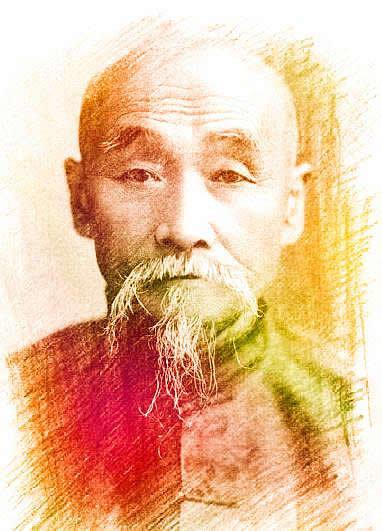
Buddhist, Confucian and Taoist Preacher Wang Feng Yi (1864–1937)
Translation:
r/PureLand • u/TrustReasonable7001 • 5d ago

Translation by LYMT Canada Translation Committee
r/PureLand • u/Antique_Forever_4840 • 5d ago

Why Is It So Hard to Let Go?
By Master Zhisui
We want to be in control of everything. We insist on micromanaging every detail, running the whole show, and doing all the heavy lifting ourselves. The moment you try to control it all, you’re asking for trouble!
If we know we’re bound for the Pure Land, where our true life awaits, we can simply relax and take each day as it comes while we’re in this world. Having food on the table and Amitabha Buddha’s name to recite is more than enough!
Stop worrying so much about what will happen to your kids or your aging parents. Your children have their own lives to live and will find their own way. As for your elderly parents, life is impermanent—when their time comes, they will naturally depart from this world. When you truly see this, you’ll stop holding on so tightly to everything.
Some people say, “Master, I feel trapped. I want to break free.”
Who is tying us down? We are doing it to ourselves.
Amitabha Buddha comes to untie us. Burdened by karma from countless lifetimes, it’s very hard to break free on our own. The Buddha tells us: simply recite “Namo Amituofo,” and he will set us free.
Simply put, the Pure Land path is about letting the Buddha liberate us. All we need to do is turn to Amitabha and entrust ourselves to him. He will carry us across to the other shore, the Land of Ultimate Bliss.
More often than not, life doesn't go the way we hope. Yet knowing the Pure Land awaits us, even those struggles become much easier to bear.
If we’re poor, we make peace with it; if we’re wealthy, we enjoy it.
If we’re healthy, we savor our well-being; and if we’re sick, we learn to live with it.
Master Hōnen once said, “Those who aspire to be reborn in the Pure Land find joy even when illness befalls them.” If we simply shift our perspective and see ourselves as citizens of the Land of Ultimate Bliss, we will find it much easier to get through our days in this transient world.
On the other hand, if we regard this Saha world as our permanent base, insisting on being in charge and trying to shape it into whatever we want, life will only become a constant struggle.
As Amitabha-reciters, we should learn to let go. Let’s loosen our attachment to this world of suffering and turn our hearts toward the Land of Ultimate Bliss, our eternal home.
Namo Amituofo 🙏
(Translated by the Pure Land School Translation Team; edited by Householder Fojin)
#PureLandBuddhism #NamoAmituofo #NamoAmitabhaBuddha
▫️ ▫️ ▫️ ▫️ ▫️ ▫️ ▫️ ▫️ ▫️ ▫️
🏡Pure Land Buddhism
http://www.purelandbuddhism.org/
r/PureLand • u/Automatic-One3901 • 6d ago

r/PureLand • u/tastexst • 6d ago
Namo Amituofo 🙏🏼
I'm from the west so my understanding to pure land buddhism isn't quite as deep since there aren't many practitioners here, but I've been practicing by myself for a few months too. I want to join a sangha too but it's pretty hard for me to find the time since I'm in my final year in university.
I often chant the buddha's name to myself multiple times a day, every day, but i'm not sure if I'm doing it "correctly". When i chant, i either do it in my mind or I'll whisper or speak aloud. My question is, does it only "count" if i do it during meditation? When is it appropriate to chant the buddha's name?
Thank you and blessings 🙏🏼
r/PureLand • • 8d ago

r/PureLand • u/Burpmonster • 9d ago

🪷 Donglin Monastery’s 49-Day Winter Retreat for Amitabha Recitation is coming, sincere practitioners are warmly welcome. 🪷
r/PureLand • u/Antique_Forever_4840 • 11d ago

r/PureLand • u/Sudden-Macaron-4531 • 11d ago
I am on about hour 24 of a migraine. I had fallen into a deep sleep about two hours ago.
In that dream, I dreamed that I was viewing images of people who had died in distressing ways, like I was looking at a picture in a newspaper. I then realized I was sitting at a desk next to a chute, and the body of a decaying person came down the chute right past me and landed on the floor. I got out of the chair and ran to what I perceived was another room. I then saw all four of my children who appeared happy to see me, and then their faces morphed and became angry and they grew fangs and started growling and howling and clawing at me.
At this point I am extremely terrified and my brain clicks over to “Amitabha Buddha - Amitabha Buddha - Amitabha Buddha…”etc. I was able to turn around from the frightening beings and I saw a door with a stained glass window, which turned yellow. I saw an image of Amitabha Buddha, and rays were coming out from him. He motioned toward the doorknob which turned on its own and I walked outside. There was a lady who looked vaguely like Guanyin, but she was dressed in a long dark purple skirt and a lavender jacket. She guided me to step on a white mound of something that looked like snow, and the whole time I’m still chanting “Amitabha Buddha”. I remember her saying “You want to go to the Pure Land?” And I said “yes!” She gave me a big smile. I remember that clearly. I then felt myself falling gently, like I was going down a tunnel, but was so at peace, and I woke up.
This is the first time I’ve had a nightmare and remembered to chant Nianfo, and this is also the first time I’ve seen Amitabha Buddha in a dream and he’s settled the dream and pulled me out of it! Namo Amitabha Buddha 🙏🙏🪷🪷 Namo Amituofo ☸️☸️📿📿


