r/SixFeetUnder • u/b4beratt • 10h ago
Finale Discussion Six Feet Under — On the Final Dream of “Ecotone”

Having read countless books and watched hundreds of films and shows, Nate’s final dream sequence in 'Ecotone' still stands, by far, as the greatest scene in all of fiction in my opinion
Six Feet Under — On the Final Dream of “Ecotone”I
This piece is a personal reflection on the final dream sequence in Six Feet Under’s episode “Ecotone.” I don’t want to reduce every detail of the scene to a single definitive explanation. On the contrary, for me, the power of this sequence lies in its ability to hold multiple meanings at once and to immerse the viewer in an ambiguous sensation rather than handing out a clear-cut answer.
At the core of my interpretation are three elements: the concept of an ecotone as a border and transitional zone, Nate staging a decision that has already been made while appearing to choose between life and death, and the show transforming this dream into a visceral viewer experience through its visual language.
- Ecotone: Where Two Worlds Collide
The defining quality of an ecotone is that it is not a wall separating two territories. There is no exact line where one begins and the other ends; the transition from one realm to the next can happen in a single step. That is why I see a direct connection between the mountain lion attack at the beginning of the episode and the ocean at the end. In the opening scene, we witness a human death right where two worlds intersect; in the finale, Nate himself becomes that transitional zone.
Although Nate appears to stand before two distinct choices, the boundaries between them are blurred. David and Nathaniel seem to represent the two opposing poles of life and death, yet both reach us filtered through Nate’s own mind. Therefore, rather than an objective division in the external world, this duality may be a boundary constructed entirely within Nate’s consciousness.
2. The Childhood Bedroom: The Past Still Lingering
We see Nate waking up. His childhood bedroom is covered in dust, and the bed is completely flat, as if untouched. To me, the state of this room suggests that the past hasn’t been entirely left behind; instead, it has ceased to be a lived-in space and turned into a dormant memory waiting in silence.
The dust signifies the passage of time, while the unmade, flat bed shows that the room is no longer used. Even though this space belongs to Nate’s childhood, it feels as though his youth remains frozen here in the exact same state. Nate’s past hasn't changed, yet he no longer has a genuine relationship with it. Rather than a past that has been lived and closed, the room feels like a possibility whose door was left ajar.
I also connect this to Nate’s lifelong evasion of responsibility. A childhood bedroom can represent a time before a person has had to confront the full consequences of their own life. Waking up here takes Nate back to a moment when nothing was set in stone. However, this return does not offer a real new beginning—it merely reconstructs the image of the past.
For this reason, rather than giving Nate a new life, the dream seems to temporarily reorganize his existence through familiar images of childhood and family.
3. David Saying, “I’m Already Wearing My Suit”
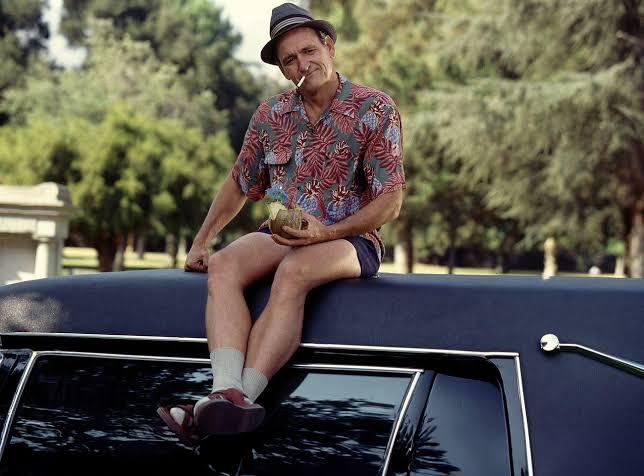
When Nate goes downstairs, he gets into the van with David. Nate asks David where his suit is, and David replies, “I’m already wearing it”—even though he is dressed in old, worn-out summer clothes.
This brief exchange is one of the most crucial details of the dream for me, because there is a blatant contradiction between what David says and what we see. David claims to be wearing his suit, yet visually, he isn't.
I read this as a dream in which David is finally able to inhabit his true self. In waking life, David is trapped between family obligations, societal expectations, and the roles others project onto him. In the dream, however, he is sitting in a van wearing old, comfortable clothes. Nate’s question seems to probe which role David belongs to, while David’s answer claims he is already carrying that role on his back.
Yet the image contradicts his words. David’s “suit” is not a visible garment; perhaps it is an identity he no longer needs to bear. The dream does not erase his social role—it simply carves out a space where he can exist outside of it.
The van is equally significant here. A van is not a fixed house; it is a mobile living space that does not have to belong anywhere. The juxtaposition of David’s casual clothes and the van evokes the sense of freedom he could never find in real life—a freedom not defined by the absence of responsibility, but by not having to define oneself solely through those responsibilities.
At the same time, this version of David may be a projection of Nate’s own mind. Nate is seeing David not through the weight of his real-life burdens, but through the possibility of his liberation.
4. David and Nathaniel: The Figures Flanking Nate
The true ecotone of the dream occurs when Nate runs between David and Nathaniel. David appears on one side, Nathaniel on the other. They seem to hover right over Nate’s shoulders, both wearing subtle expressions of pain.
I read these figures as embodiments of life and death. David represents life—the earthly tie waiting beside Nate’s hospital bed—while Nathaniel represents the pull toward the ocean, death, and absolute infinity.
However, reducing these two figures strictly to “life” and “death” feels somewhat incomplete. David also embodies family, duty, the people left behind, and attachment to the world. Nathaniel, on the other hand, may represent not just death, but an escape merged with freedom inside Nate’s mind. The ocean becomes the point where Nate’s desire to break free from the world merges with the idea of eternity.
Thus, I view the figures flanking Nate as representatives of two different modes of existence: on one side, living, relationships, and responsibility; on the other, the possibility of stepping outside all of it. Nate’s run is the movement taking place between these two realms.
The pain on both of their faces is equally telling. David is not merely beckoning him to live, nor is Nathaniel simply calling him to die. The fact that both carry sorrow suggests that, in Nate’s mind, neither option comes without a cost. There is pain in living, just as there is grief and loss in the call of death. What Nate sees is not a simple choice between an easy path and a hard one.
Ultimately, Nate runs toward the ocean. I interpret this movement not as a free choice, but as surrender. For him, the ocean is not just a physical place; it is an image of infinity where all boundaries dissolve and he himself is erased from the world.
5. Nathaniel’s Identity: The Father in the Dream as Nate’s Own Creation
Here lies the real turning point for me: Are these two figures independent beings standing before Nate, or are they projections created by Nate’s own mind?
Throughout the series, we see Nathaniel through the eyes of different characters. Everyone remembers him slightly differently; each person constructs a different Nathaniel based on their own needs, longings, and resentments. Even though Ruth’s Nathaniel and Claire’s Nathaniel are the same man, they are not the same father figure—in one’s mind he is weeping, while in the other’s he is cheerful.
This detail shifts my entire reading of the final dream. If Nathaniel is continuously reconstructed in different ways inside the minds of those around him, then the Nathaniel in the dream can also be seen as a product of Nate’s own psyche. Nate isn’t confronting his actual father; he is confronting the father-image he carries within himself.
The same applies to David. The David in the dream is not an exact replica of the David Nate knows in waking life—he is the David Nate wants to see, needs to see, or is capable of making sense of in his own mind.
Seen this way, the final dream ceases to be a scene where two real people pull Nate in opposite directions. Instead, it becomes a stage where two figures invented by Nate’s mind represent two conflicting forces that already exist within him.
Read through this lens, Nathaniel’s call is not an external summons—it is a call generated from within Nate himself. Likewise, David’s presence is not an external obstacle, but a visual manifestation of the part of Nate still tethered to the earthly world.
This is the tragedy of the dream: Nate is running between two figures created by his own consciousness, yet both of those figures are already inside him.
6. Is Nate Really Making a Choice?
For me, the central question of the finale is not “Which option will Nate choose?”—it is whether Nate is actually making a choice at all.
The scene makes us feel as though we are watching a dilemma unfold: David on one side, Nathaniel on the other; life versus death. Nate’s sprint looks like the culmination of a decision made between these two possibilities.
Yet if David and Nathaniel are projections of Nate’s psyche, then the dilemma itself was staged by his mind. Nate is not deciding between two independent options. His subconscious has already chosen a direction; the dream is simply constructed to turn that pre-made decision into a meaningful narrative.
According to this reading, Nate’s run is not the moment a decision is made, but the performance of a decision already finalized. The dream allows Nate to experience his own surrender as an act of agency. He sees himself caught between two figures on the threshold of two lives, even though both sides have likely already been settled within him.
I link this directly to Nate’s lifelong avoidance of making choices. Refusing to choose can sometimes feel like freedom: by never closing off any possibility, a person feels limitless. Yet the unchosen lives continue to linger in the mind. Nate’s dream operates as just such a space—instead of choosing his actual life, he wanders among the possibilities generated by his own consciousness.
The moment he sprints into the ocean, one of those possibilities is realized. However, rather than presenting it as the outcome of his own agency, the dream frames it as Nate answering a call independent of himself. In doing so, Nate ceases to be the subject of his own decision and becomes a character inside the scene where that decision takes place.
7. The Bedroom Scene: Stretching Time and Compressing Movement
Before getting out of bed, Nate is held in the exact same shot for an unusually long time. The frame is static. We watch his breathing, his face, and his stillness. This prolonged duration evokes a sense of apathy, deep silence, and a desire for absolute inertia.
What matters here is not merely that Nate stays in bed for a long time, but that the time of the scene becomes our time. Normally, a character waking up is conveyed in a couple of seconds. Here, the scene stretches that duration and traps us inside Nate’s immobility. As viewers, we aren’t going anywhere either.
When Nate finally gets up, however, the scene accelerates abruptly. While stillness is drawn out, the physical movement itself is kept remarkably brief. This contrast speaks less to Nate’s internal state and more to the viewer’s temporal experience.
The time spent in bed forces us to feel the weight of inaction. The instant he stands up, time seems to rush forward again. Although Nate’s movement looks like a beginning, that beginning flashes past almost instantaneously.
When viewed alongside the final sprint, it becomes clear that the episode manipulates time in two opposing ways: Nate’s stillness is prolonged, while his final movement is executed rapidly. Consequently, the viewer is placed inside the anticipation before the decision rather than the decision itself.
This formal choice intensifies the dream’s unsettling calm. Everything unfolds as if it were ordinary, yet the manipulation of time is anything but. The scene feels simultaneously too slow and too fast—a rhythmic contradiction that structurally mirrors the ambiguity of Nate’s transition.
8. Color Palette: Pulling the Viewer Into the Dream
Starting from “Perfect Circles,” there is a noticeable shift in the show’s color palette. Following the darker, more muted tones of the first two seasons, the third season introduces vibrant, almost hyper-real colors—lakes, birds, and lush nature imagery that feel almost too flawless to be real.
I read this shift not merely as an aesthetic choice, but as a device designed to manipulate the viewer’s perception. During parts of Season 3, I genuinely wondered if Nate might still be in a coma, simply because the visuals felt so surreal. The colors and pastoral imagery subtly tilt the show’s sense of reality.
At this point, the boundary of the dream exists not only in Nate’s mind, but in the viewer’s perception as well. We, too, become uncertain of what is real. On one hand, the imagery is mundane and natural; on the other, it is too idyllic, too serene, and too perfect. Thus, we aren’t just observing Nate’s dream—for a while, we inhabit his altered sense of reality.
The exact second Nate runs toward the ocean, I believe this visual illusion fractures. The pristine atmosphere built over seasons suddenly cracks. That rupture feels not just like the end of Nate’s dream, but like the viewer being abruptly pulled out of it as well.
For me, the color palette is never mere decoration standing outside the narrative. It is a storytelling instrument that transfers the unreality of the dream into the viewer’s body and perception. Through color and rhythm, the world constructed inside Nate’s mind becomes real for us, too—if only for a moment.
9. Why Is the Calmness So Unsettling?
What makes the finale’s atmosphere so disturbing is not simply Nate’s death, but the extraordinary calmness with which everything unfolds.
Instead of a grand dramatic explosion or an intense emotional monologue, the scene flows almost like an everyday dream: a casual chat with David, a van, nature, the image of a father. Everything appears normal on the surface. Yet beneath these ordinary images lies the heavy sensation that Nate is standing on the ultimate threshold of his existence.
This serenity creates a hollow gap between the emotional reaction the viewer expects and the atmosphere the visuals actually deliver. The gravity of the event clashes with the quietude of the storytelling, making the sequence feel all the more surreal.
At the same time, it suggests that the dream is an attempt to manufacture meaning. Nate’s mind assembles familiar symbols—his father, his brother, his childhood room, a van, the ocean—to make sense of what is happening to him. Yet no matter how familiar these images are, the scene resists full explanation. While appearing meaningful, the dream simultaneously dissolves meaning itself.
Conclusion: The Final Boundary Built in Nate’s Mind
For me, the finale of “Ecotone” is not a scene in which Nate freely chooses between life and death. Rather, it is his mind turning a decision it has already made into a meaningful story one last time.
David and Nathaniel are less objective representatives of life and death than they are projections born within Nate’s consciousness. They stand on either side of him, yet both reside inside him. Similarly, his sprint into the ocean feels less like a free choice between two options and more like the final motion of an inevitable surrender.
That is why I see the ecotone not merely as the border between life and death, but as a boundary constructed within Nate’s own psyche. In the dream, two worlds appear separated, yet the transitional space between them is Nate’s consciousness. Who David and Nathaniel are, what they represent, and whether Nate truly makes a choice all gain meaning only by passing through that consciousness.
From the mountain lion scene at the opening to the ocean at the end, the episode builds a structure where borders continually blur: city and forest, life and death, reality and dream, choice and surrender. Nate’s final dream becomes the exact point where all these boundaries converge.
And in my view, the true power of the episode lies in its refusal to collapse this experience into a single answer. The visuals, colors, silence, and elasticity of time draw us deep into Nate’s mind, yet we are never entirely sure what is real and what is his own fabrication. Perhaps that is where the finale’s lasting impact lives: we watch the final story Nate constructs inside his own head, yet even within that story, we can never be certain what he truly chose.