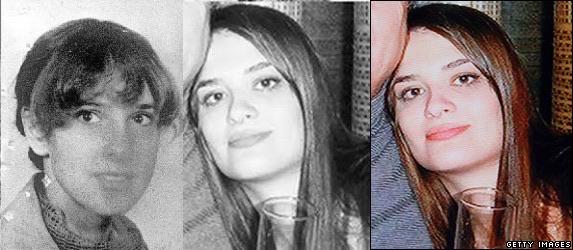
This case happened in 2012, and the report is from 2020. There are other more recent reports, but he remains missing.
Artur Paschoali wanted to travel the world without a set destination. When he was 19, in December 2012, he disappeared while backpacking through Peru.
More than seven years later, the young man's disappearance is a mystery that has never been solved. His father believes there is a possibility his son is alive. His mother prefers not to get her hopes up and believes the young man died.
Friends and relatives describe him as adventurous and detached from material possessions. Artur lived in Brasília with his parents and his three siblings—two younger sisters and a brother, the oldest.
"Artur was always the most detached and distant from the family, despite being very loving. He didn't have the social need to be with us, to be present. He belonged to the world and always cared about social causes. Since he was little, he said he wanted to visit many places. His family was always the world," explains the young man's mother, architect Susana Paschoali. At the end of September 2012, he traveled with a group to Peru, shortly after starting a performing arts program at the University of Brasília (UnB). Artur was only going to spend a few weeks in the Cusco region, but he fell in love with the place and extended his backpacking trip.
To stay in the region, he worked at hostels and a bar. Shortly before Christmas 2012, he stopped sending messages to his parents. Days later, he was reported missing. Searching for answers about their son's whereabouts, his parents went to Peru several times. They conducted their own investigations and report spending more than R$ 200,000, yet they never found an answer about what happened to Artur. "I consider that I did everything in my power to try to find my son. I traveled all over Peru trying to uncover something; I know that country better than Brazil," says rideshare driver Wanderlan Vieira, the young man's father.
Artur's disappearance is marked by assumptions and uncertainties. His parents believe he may have fallen victim to people involved in drug trafficking in the region or that he may have been enslaved. Peruvian authorities, responsible for investigating the case, never obtained any concrete information. The investigations were closed nearly three years ago.
Detached and adventurous
The trip to Peru represented an opportunity for Artur to learn more about the local culture. He was passionate about the arts. Shortly before traveling, he had won an award for a short film he produced in Brasília. He loved playing the acoustic guitar. Much to his mother's dismay, he used to play the instrument on public transportation. "I would die of embarrassment when people told me they had seen my son singing on the subway," says Artur's mother. The young man's family is middle-class. "He didn't need to do that," Susana explains. He also juggled at traffic lights in the Brazilian capital because he refused to depend financially on his parents.
When her son said he would travel to Peru with a group of Brazilians, Susana panicked. "I always knew he wouldn't be very present in my life, because he belonged to the world. I thought about holding him back, to keep him close, but I knew there was nothing I could do to stop him from traveling," says the architect.
Their last night together is one of the moments that stands out most in Susana's memories. Before he left for Peru, she went out with him. "We had beer and played billiards. That day, we sat on the curb of a street in Brasília and drank together. I was already hurting so much about his trip, so I decided it would be important for us to be together at that moment," says the mother.
Once in Peru, he began communicating with his parents via Facebook messages. "He had a cell phone, but he didn't like it. He even bought a local SIM card, but he always preferred sending messages on social media. We never knew when he would send a message," says the architect.
In a message in mid-November, he let his parents know that the group of Brazilians he had traveled with was returning to Brazil. However, Artur stayed in Peru. He said he had fallen in love with Cusco and wanted to stay in the region for six more months. By the middle of the following year, he planned to travel to Bolivia and then return to Brazil. "It was awful for me to know he would be alone, but I couldn't argue with him. There was nothing to do, because he sent me a message every ten days," Susana says.
He refused to accept financial help from his parents. He worked as a receptionist at hostels and at a bar so he could have room and board. In early December, he moved from Cusco to Aguas Calientes, also near Machu Picchu, the lost city of the Incas.
"He said the owner of the hostel in Cusco had a friend who owned a hostel in Aguas Calientes and needed people to work over the holiday season. That's why my son went to the other town along with two other Brazilians," says Susana.
The disappearance
Days after arriving in Aguas Calientes, he sent a message that worried the family. "He said he drank too much, 'put on a scene,' and the boss didn't want him there anymore. I was very angry with Artur for doing that, but I calmed down and avoided arguing at that moment because it was hard to stay in touch with him. I just said: don't worry, just let me know where you are," Susana recalls. According to his parents, he said he was going "into nature," without specifying where. The family grew worried. He sent a message only a week later, letting them know he was in the Peruvian district of Santa Teresa. "It was the 21st when he told us that. We felt more relieved," says Susana.
On December 28, Wanderlan dreamed about his son. "I dreamed that Susana was on a bus, holding Artur on her lap, but he had no head. She was holding his head, detached from his body, with her other hand. He told me he was alive, but he was injured and needed help," the young man's father recounts.
The family called a hostel in Santa Teresa, and a man confirmed the disappearance of a Brazilian, though he couldn't identify the tourist. Desperate, they reached out to Brazilian or Peruvian authorities who might be able to help them. However, according to them, they couldn't get support at that moment. They got plane tickets for December 31 and flew to Peru. In Lima, they found out that the missing young man was Artur.
Searching for answers
Susana and Wanderlan went to Santa Teresa looking for answers about their son's disappearance. The police began searching for him. The case started to be covered in the press.
The search for Artur brought together Peruvian and Brazilian authorities. Susana and Wanderlan also decided to conduct their own investigations. They report discovering that Santa Teresa is a town overrun by drug trafficking, with a population intensely afraid to reveal any information. "Drug trafficking is very strong in that region. It's an area with a lot of cocaine production, especially on farms located around the mountain. So it's a very dangerous area," says Susana.
Artur's parents reveal that they received several death threats while in Santa Teresa. Despite that, they didn't give up looking for answers. On social media, relatives started a campaign to raise funds so the parents could stay in Peru and help with the search. In four months, they raised just over R$ 50,000 through donations.
To search for information, they say they had help from local informants. "Everyone cooperated anonymously," Wanderlan explains. He says he experienced terrifying situations while looking for his son. "A woman said she had information about Artur. We arranged to meet at a spot, and when we arrived, she was dead, covered with banana leaves and with her hands cut off," says the driver, who says he couldn't eat for a week after witnessing the scene.
"There were many complicated situations while we searched for answers. We were heavily threatened by drug traffickers in the region. The local people live in terror. Residents told us that the only reason we weren't killed during the search for Artur was because the media was covering the story," Susana says.
The first time, Susana and Wanderlan stayed in Peru for four months. They conducted relentless searches for him, but got no answers. She returned to the Andean country once more. He went four more times, the last in 2016.
"A lot of evidence was destroyed or disregarded. The police didn't conduct a real investigation," Wanderlan criticizes. The family believes that because it is an area of heavy drug trafficking, authorities were afraid to thoroughly investigate the young man's disappearance. After the parents' persistence, Peruvian police authorities began investigating the case as a crime rather than just a missing-person case.
Dead or alive
For Susana, her son is dead. She believes he may have been murdered in December 2012. "A woman knocked on my hostel door at five in the morning, said she had to talk to me quickly before dawn, and told me she heard my son being beaten and begging not to be hit," Susana says.
She says she doesn't know the reasons behind the alleged assault. "I believe Artur may have discovered something that bothered people in that area," says the architect.
The house where the witness reported hearing Artur's screams belongs to the owner of the bar where he worked. Bloodstains were found at the residence. The traces were analyzed, and tests indicated they did not belong to the young man. "But to this day I believe that blood was my son's," Susana states. In her view, further tests should be done on the collected material.
Since learning of her son's disappearance, she says she has learned to cope with the idea that he died. "In my mind, he is dead. But who guarantees I'm right? I don't know what happened. Some acquaintances say this might be an escape so I don't suffer anymore. Maybe. But for seven years I've lived with the feeling that he died," says the architect. Wanderlan, however, believes his son may be alive. When he returned to Peru two years after Artur's disappearance, he says he heard several people claim they saw a young man with features similar to the missing youth. "Some people told me he might be in an Indigenous reserve in northern Peru. In mid-2015, I went to that region and many people said he was there," the driver recounts.
"The last information I have is from 2015, that he was there, being enslaved to work as a translator because he knew English and Spanish. I was told he had been sold by local traffickers for an amount similar to R$ 100,000. But I couldn't find him, especially because I didn't have the money to stay in that region that long," Wanderlan adds.
With every year without information about his son's whereabouts, Wanderlan says his hopes of finding him diminish. Still, he believes the young man may be alive. "Today I believe in that less, but I still think he might be alive," he says.
In a statement to BBC News Brasil, Itamaraty [Brazil's Ministry of Foreign Affairs] emphasizes that the investigations into the case were closed by Peruvian authorities in 2017. According to the agency, it involved five years of work, which included "several investigative steps in the region where the disappearance took place."
At least for now, investigations into Artur's disappearance have been suspended due to a lack of evidence regarding the young man's whereabouts. "Up to this moment, Itamaraty has not been informed of any new fact that could serve as justification to request, alongside Peruvian authorities, the reopening of these investigations," Itamaraty explains.
While they don't get concrete answers, Susana and Wanderlan, who were married for more than 25 years and have been separated for two years, say it is hard to live with longing and uncertainty about their son. Despite having different opinions on what happened to the young man, they share one thing: hope that they will still get answers about his disappearance.
To soothe her longing, Susana often shares posts about her son on social media. "It feels like there are days when the pain won't fit in my chest. Then I search for you in my soul so I can breathe. How much you are missed," the young man's mother wrote, months before reaching seven years without answers about Artur.