r/Urbanism • • 3h ago

An architectural design studio in the Philippines is calling out horribly designed public works and is going viral for it.

Thumbnail
gallery
223 Upvotes

r/Urbanism • • 13h ago

Walmart is capable of building pedestrian-oriented stores

Thumbnail
gallery
464 Upvotes

A Walmart doesn’t need a massive parking lot to succeed. None of the Walmart stores shown in these photos rely on tax incentives to stay in business, and survive on actual sales. So why is Target virtually the only superstore chain in the U.S. that operates both in suburban big boxes and in dense urban locations like those shown in these photos? Even if we broaden the scope to include grocery stores, we’re still left with Whole Foods, a handful of Trader Joe’s and ALDI locations, and not much else.


r/Urbanism • • 8h ago

“There’s 15, 20 different Manhattans in Tokyo to me.” -Anthony Bourdain

Post image
177 Upvotes

r/Urbanism • • 1d ago

The Tapiola garden city in Finland – a flagship project by Finnish architects and, from the 1950s onwards, the most closely watched urban planning project in the world, which influenced the design of countless residential areas in the United States, Western Europe, and the Soviet Union

Thumbnail
gallery
25 Upvotes

Photographer: Teuvo Kanerva

Source: KAMU Espoon kaupunginmuseo


r/Urbanism • • 1d ago

Willowdale West is mostly towers and has more street trees per km than Toronto's typical house neighbourhood

Post image
26 Upvotes

Here’s an interesting neighbourhood in Toronto.

Willowdale West (west of Yonge between Sheppard and Finch), has 155 trees per km with 63% of homes in high-rises, more than 19 of the 25 “house”neighbourhoods.

According to Averow, the Median City street trees per km of street is 115 in Toronto's 55 mostly high-rise neighbourhoods, 127 in its 25 mostly detached-house neighbourhoods (City street tree data, 2021 Census)

So It is possible to find a high rise lifestyle without giving up the beauty of nature…you just have to know where to look!


r/Urbanism • • 1d ago

People Who've Been to Contentious City Council Meetings Will Absolutely Agree with this Take, but, I'm Still Gonna Have to Explain Myself: "Public Comments" Portions of Municipal Meetings Aren't Actually Reflective of the Public, thus, Aren't Democratic, and Should be Replaced

137 Upvotes

I'm desperately hoping that the title, and this topic, aren't seen as low effort ragebait, or, an abuse of mod powers, but, I've been thinking about this topic all week:

I, like most Urbanists in the Metro Detroit area, had the displeasure of learning that Detroit City Council voted 7-2 in favor of giving Bedrock Management Services LLC (simply known as "Bedrock" among locals), $548 Million in "tax incentives" in return for a puny $133 Million in City-requested "community benefits" to tear down 2 of the 5 towers of the internationally-recognizable Renaissance Center complex in order to "open up" the Riverfront.

We were able to see, first hand, that the current and widely used method of "public engagement" not only went on to fail to protect the public's interests, but also, showed the World just how undemocratic supposedly "local" government can actually be.

I suggest this for a couple reasons:

  1. 200+ people showed up in person and online to give their opinions on the RenCen deal, owing to the number of people involved, everyone was given a mere 30 seconds to express their complex feelings about the proposal. So, the Detroiters who took valuable time out of their busy lives and more than likely stayed up to write compassionate letters to City Council could only publicly proclaim very short snippets of their genuine thoughts.
  2. Of the 200+ people who commented, at the very beginning of the public comment portion, it was increasingly obvious that speakers in support of the deal were astroturfed, with the overwhelming majority of them coming from men in suits with "business elite" connections, or, reps from hand-picked union locals. I controversially suggest that the speakers were astroturfed because, as the public comment section dragged on, the sentiment from speakers became more and more overwhelmingly negative and against City Council giving Bedrock half a Billion dollars. Finally
  3. There were blatant conflict of interest violations during the public comment section, as both Dani Hourani, a local figure within Detroit and Dearborn as well as a financial backer of Detroit Mayor Mary Sheffield publicly spoke in favor of the deal (which, he did not publicly advertise on his social media) and, former Detroit Chief Financial Officer, current General Motors and Regional Transit Authority board member Dave Massaron was at least present at the vote (I'm unsure if he spoke since I was working at the time, I suggest those interested in this sotry inquire with local media).

I think, in light of this, public comments should be gotten rid of altogether. But, instead of solidifying this obvious democratic defecit within our local governments, I (per usual) will suggest that my proposed changes to municipal government explified within the Metropolitan Parliament, specifically, my post on various short-stories I created detailing how the Metropolitan Parliament would work short story 3 is where I hypothesis what civic engagement would look like under a radically more democratic system.


r/Urbanism • • 2d ago Bravo Regret

Can making cities less accessible to cars actually make them more accessible to people?

1.6k Upvotes

Watching the streets around Amsterdam Centraal, I'm struck by how naturally pedestrians, cyclists, and trams share the city. Less space for cars, more space for actual human beings. Is this what good urban planning should look like, or does restricting cars create problems we're overlooking?


r/Urbanism • • 2d ago

Why Does Montreal Feel So Much Bigger Than Toronto? I Compared Toronto's 6 Best Neighbourhoods Against Just ONE Montreal Neighbourhood.

Post image
55 Upvotes

Turns out, even after combining six of my favourite walkable neighbourhoods in Toronto, they still don't match the concentration of things to do in just ONE Montreal neighbourhood.

I've always found it interesting how Toronto is so much bigger geographically, yet Montreal often feels like it has so much more going on when you're actually walking around. I wanted to see if I could put that feeling into numbers, so I decided to compare Toronto's best walkable neighbourhoods against one of Montreal's top neighbourhoods: Le Plateau-Mont-Royal.

I decided to compare Toronto's best walkable neighbourhoods against one of Montreal's top neighbourhoods: Le Plateau-Mont-Royal.

To do this, I took Toronto's 6 best walkable neighbourhoods and combined them into one massive zone (approximately 9.25 square kilometres), which I'll call the Toronto Urban Playground: Kensington-Chinatown, Trinity-Bellwoods/Ossington, West Queen West, Little Italy, Little Portugal, and The Annex.

Then I compared it against the Plateau (8.1 square kilometres).

And here's the crazy part. Even when comparing identical 1 km² walking areas in each city, the Plateau comes out ahead, with roughly 200 places to shop, eat, and drink compared to about 165 in Toronto's combined zone (including retail stores, cafes, bars, and restaurants).

But what's even more interesting is that we're not just talking about one square kilometre. The Plateau is a single neighbourhood spanning 8.1 square kilometres, and throughout that entire area, you find an incredible concentration of cafes, restaurants, bars, boutiques, independent shops, and places to discover. It's this constant presence of things to do throughout the neighbourhood that makes it so different. We're essentially comparing one Montreal neighbourhood against six of Toronto's best, and the Plateau is just one example of the kind of urban experience Montreal offers. Many of Montreal's other neighbourhoods are on a similar level, each with their own lively commercial streets, independent businesses, and distinct character.

I think part of what makes Montreal so special is its street layout. Its grid system allows commercial activity to spread throughout neighbourhoods, rather than being concentrated on just a handful of major streets.

Toronto obviously has incredible commercial streets like Yonge, Bloor, and Queen, but in Montreal, you can turn left or right off a major street and still find cafes, bars, restaurants, independent shops, and interesting little businesses. You're not immediately met with endless stretches of residential housing. The activity feels much more spread out and woven into the neighbourhood itself.

It really shows how little total land size on a map tells you about a city's actual feel. Nobody experiences the empty parts of a map; you experience the city right in front of you.

In the Plateau, the streets look nicer, feel livelier, and are safer.

And remember, this is a huge chunk of Toronto's best urban neighbourhoods going up against just ONE of Montreal's top neighbourhoods.

We haven't even touched Montreal's other amazing neighbourhoods like Villeray, Rosemont–La Petite-Patrie, Saint-Henri, Verdun, Old Montreal, or Downtown.


r/Urbanism • • 2d ago

I mapped crash hotspots in 21 US metros. Freeway ramps keep topping the list.

Thumbnail
gallery
8 Upvotes

I built crashmaps.org, a free map of crash hotspots in 21 US metros, using each state's or city's own crash records. It started as a Denver project and grew from there.

One pattern keeps showing up: in car-oriented metros, the worst spots are where freeways meet city streets.

  • Riverside, CA: all 10 of the city's top hotspots are I-215 or SR-91 interchanges.
  • Salt Lake City: 7 of the top 8 are I-15 or I-80 interchanges.
  • Washington, DC: the worst spots are surface arterials instead. New York Ave NE at Florida Ave had 135 crashes in 2024, and Benning Rd at Minnesota Ave had 23 pedestrian crashes over three years.

These are raw counts, not adjusted for traffic volume, so busy places will rank higher on volume alone. Even so, the ramp-to-street handoff keeps coming up across very different cities.

Curious what you all think. Is it ramp design, the speed change at the handoff, or just volume?

Free. No ads, no sign-ups, no tracking. For full disclosure: I used AI coding tools (Claude) to help write the code. The data choices and hotspot checks are mine, and every number comes from official crash records.


r/Urbanism • • 2d ago

Condensed suburban housing

0 Upvotes

Why not just build a 1 acre 4 story development with businesses on the first floor, 2,000 square foot condos on the top three. A garden on the roof and a park and baseball field around the corner. That way you can get the benefits of a large suburban house, privacy, and greenery as well as the benefits of density. As long as you build the building proper with soundproof walls.


r/Urbanism • • 2d ago

Good urbanism channels/blogs

13 Upvotes

I've been into urbanism for a couple years now and I feel like I've watched and read everything I can find, at this point most of the stuff I end up consuming is about a topic I've already looked into. Do you guys have any recommendations for more niche urbanist channels or blogs?


r/Urbanism • • 3d ago

Population Density is Different from Car Dependency.

11 Upvotes

What's the densest city in the US? What's the second, and what's the third? How do we define a city? The artificial boundary? Does the mountain count?

According to Demographia World Urban Areas, 20th edition, published in August 2025, the suburban hellhole of Las Vegas is the 3rd densest urban area in the US.

RankUrban regionPopulationUrban land (sq. mi.)People/sq. mi.Car Dependency (Drive Alone)
1Los Angeles–Inland Empire15,582,0002,6715,834High (69%)
2Honolulu829,0001455,717Mid (64%)
3Las Vegas2,280,0004355,241High (70%)
4Miami–Fort Lauderdale6,129,0001,2444,927High (68%)
5Greater New York20,892,0004,3804,770Low (47%)
6Denver2,892,0006094,749Mid (64%)
7Fresno727,0001594,572High (72%)
8San Francisco–San Jose6,376,0001,4034,545Mid (61%)
9San Diego3,053,0006754,523High (68%)
10Bakersfield582,0001324,409High (77%)

Source: The drive-alone data is from https://censusreporter.org/

The methodology includes: Developed suburbs, commercial districts, industrial districts, and transportation infrastructure.

And it excludes: Oceans, lakes, and major undeveloped natural areas; extensive unurbanized mountains, deserts, forests, and agricultural land.

It's not just Las Vegas. In fact, we can see that 7 of the 10 densest cities in the United States are car-dependent. The reason for Las Vegas’s high ranking is its near-total lack of major industrial land, combined with a very high density of single-family homes. The median lot size of single-family homes in Las Vegas is just 5660 sqft, compared with 7020 sqft in Houston.

The least car-dependent CSAs are: Greater New York, Bay Area, DC & Baltimore, Seattle, and Chicago. But only 2 of the 5 made it to the top 10 densest CSAs.

I'm not an expert. I guess that a high density in a very small area or corridor will be more beneficial to public transportation than having a denser CSA.


r/Urbanism • • 3d ago

Thoughts on Safety and Urbanism

Thumbnail
youtu.be
30 Upvotes

I was watching this video and starting at 7:15 she seems to have the typical attitude of most as to why not live Downtown in a walkable area. It’s the feeling of safety and comfort that drive most people away. LA has a good metro, lots of mixed use and storefronts yet the expansion of skid row over the years and looters causing big stores to close seem to keep people away. How can these issues be addressed? What would make people choose to be an early resident and outnumber the unconventional elements?


r/Urbanism • • 4d ago

Washington, D.C. “legalized” new corner stores in 2016: A decade later, none are open

Thumbnail ggwash.org
247 Upvotes

r/Urbanism • • 4d ago

Belinson Park, Petah Tikva

Thumbnail
gallery
10 Upvotes

r/Urbanism • • 5d ago

I feel like we should not regard NIMBY opinions when building transit.

50 Upvotes

We all know NIMBYs and how they will go the extra mile to bring a rail project of any kind down. In order to combat this, I say we just disregard their opinions on the project unless they actually make good points. For example, if there is an important historical landmark, or if the project would demolish important structures or tear through a neighborhood, and if people are complaining about that, we'd consider it. However, if a group of people are opposing and/or trying to get rid of a transit project because they don't like it, or if its "too loud" or "criminals from the city will come and steal my things!" then their opinions should not be considered.


r/Urbanism • • 5d ago

Ten urbanist interview questions for Los Angeles Mayor-elect Nithya Raman

Thumbnail
futureis.la
60 Upvotes

No LA mayor has campaigned on housing and mobility the way Nithya Raman did. Now she'll be judged on them. How will she speed up bike installation? Implement SB 79? Reform the Metro board? My 10 urbanist questions for the mayor-elect.


r/Urbanism • • 5d ago

NYC is planning a road diet for one of the city's key arteries. Third Avenue in Brooklyn is one of the deadliest streets in the city. This video is a detailed breakdown of the project. Meanwhile, drivers are already whining that they're against it.

Thumbnail
youtu.be
30 Upvotes

r/Urbanism • • 5d ago

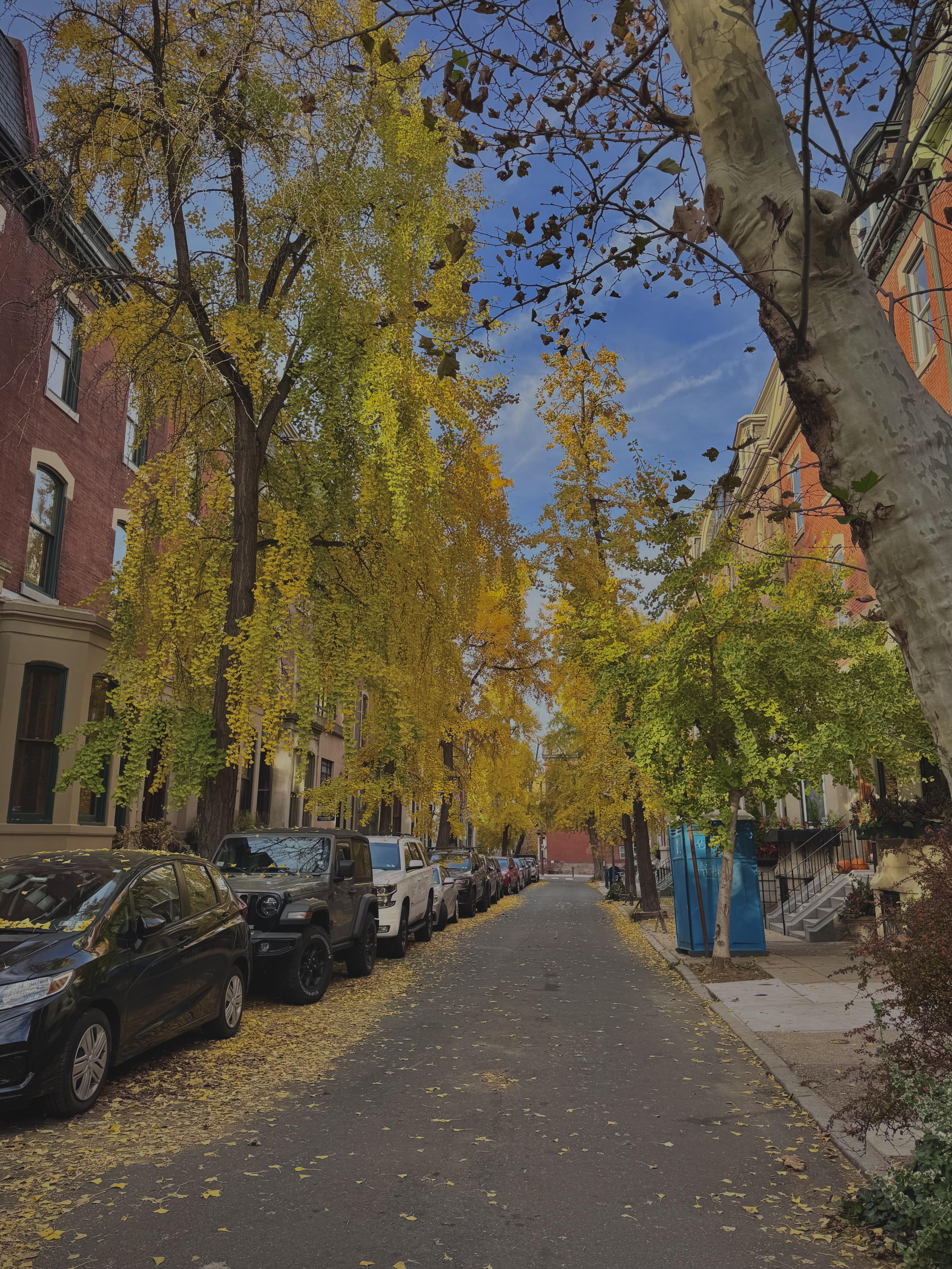
Fall colors hanging on in Center City Philadelphia

Post image
120 Upvotes

r/Urbanism • • 5d ago

Málaga, Lisbon, Madrid: These are the best cities in Europe for expats

Thumbnail
euronews.com
0 Upvotes

r/Urbanism • • 6d ago

Florida, Reckless Development, and Flooding: More Evidence for the Case Study Against Contemporary Building Practices in the American Southeast Millennium Era

5 Upvotes

Hello future Urbanists!

For future case studies, I would like to once again point to how Florida Developers in the 2000s American South East have used policy to enable inefficient, destabilizing, and dangerous building practices in order to make money off resources and taxes while contributing strain on infrastructure without adequate or long term planning.

The effects of this have been disastrous, and repeatedly pointed out.

The predominant party leading the state uses funds to give Developers tax breaks to pave over the wetlands and install inefficent infrastructure for short sighted gains.

This can been seen in:

Increasingly deadly traffic-- they are using radiated waste to lay down the roads, the congestion leads to negative health effects, and the poor planning leads to pedestrian deaths, road rage murders, and massive and frequent car accidents

Enviornmental Dysregugulation and massive loss of habitat due to the current practice of clear cutting everything and re-leveling it to mass produce housing that leaves no room for the ecosystem. Entire biomes are replaced with mono-culture that is ill suited to what that land needs. The people living in these homes intentionally poison the land. The small governments installed in these collections of units fine people for not poisoning the land.

Flooding and droughts as a direct result of the complete destruction of the habitat very quickly-- The building up of the cities in Florida over the last 40 years has been to completely demolish acres, pave them over, and either poison the water supply, or completely degrade it. The water has nowhere to go and evaporates. The droughts in the year 2026 Spring and Summer Seasons have led to massive flooding especially in the Everglades region in the Fall of 2026.

An unstable and unaffordable market built up intentionally by market forces looking to capatilize-- house builders view the entire framework through "investment" and refer to homes as units. They view real estate property as a means to produce profit, as opposed to being land that we live upon. People will be living on the streets in front of massive half empty Luxury apartments that replaced the homes they were living in.

These factors have led to a destabilized society, in which the infrastructure is crumbling while those who built this are capitalizing before they jump ship.

Instead of spending funds on infrastructure, legislation time is devoted to letting these developers who build poorly receive benefits from the government while boxing out people from being able to build their own homes.

They take up labor and resources, making it more expensive to build. Quality projects are sidelined to make room for the mass produced particle board houses that cannot withstand the Florida enviornment and deteriorate quickly.

The discourse surrounding building and the purpose of government have been directed so that you cannot question the entities building up problem cities.

The "Luxury Apartments" as they are marketed create extremely negative effects as Developers build them using poor quality, in inappropriate ways, while charging Luxury prices just by calling them Luxury.

They claim to offer "affordable living" but often go back on the deal.

Developers use litigation to silence the people who bought the houses they built in order to keep up the idea they are fixing the housing crisis that is becoming global as the result of land being funneled into the hands of Private Equity firms who use algorithms to extract as much rent as possible while taking it and using it to buy more land to extract the resources and pave over.

There are real, identifiable consequences to this kind of building, but the entities responsible obfuscate responsibility in the discussion.

The planners of these areas like Miami, Tampa, and Orlando-- major urban areas experiencing the effects of destructive building practices-- are directly to blame, but hide behind the laws they created to continue building in ways that are terrible in order to continue to profit.

The roads always needing to be repaired while at the same time being inefficient-- as can be seen on the major travel roads like 75, and their off ramps to the massive quickly yet terribly built subdivisions-- lead to never-ending contracts.

They have controlled the narrative so it is impossible to speak about these things, but the quickly deteriorating infrastructure, the deadly weather, and the actions of the leaders all reveal the inherit problems with the societal attitude towards land versus capital, and how alienated the citizens are from their own enviornment.

I have no solutions while the leaders in charge continue to act on short-sighted, selfish, anti-social impulses.

This is merely for to share that this is an ongoing issue in spaces devoted to talking about responsible urban planning, and to give an example of how there are people directly and repeatedly identifying the problems and who is responsible for creating them.

The current Urbanist practice is to view building in a vacuum, often relying entirely on virtual planning to little regard for the actual land. The building is regarded as the highest importance, while the land it sits on is reduced to an obstacle.

This is unsustainable, and refusal to acknowledge it has led to widespread issues increasingly affecting the global scale.

It can be clearest seen in Florida, where the Developers have the most power, while using the very language, laws, and discourse to avoid accountability.

Despite repeated attempts to downplay the role the planners and builders have in the failures of their creation, the creator who goes out of their way to buy land and build on it, are directly responsible for what they built.

This is a fundamental fact in the discussion, and downplaying the responsibility Developers have to consider the ramifications of their buildings and the laws they lobbied for in pursuit of the power to build those buildings, has led to major problems in the infrastructure.

This is all based on first hand continous observation over a decade. I can provide links upon request depending on the topic, but all one need to do right now in this moment is go to the Miami Newspapers and newspapers along Central Florida to see the flooding occurring as a result of Wetland destruction.

I, myself have spoken on this issue several times on Reddit, and have been met with rebuttals that refuse to engage the actual topic while trying to deflect to meaningless economic arguments that have been used to justify these building practices in the first place.

As the issues get worse and worse, it becomes more important to repeatedly and intentionally call out the narratives and practices that allow for malintened entities like "Private Equity Firms" to overtake the land and install failing infrastructure.

Please look into the building practices alongside major Intersection Exits, and how traffic lights are placed to prioritize corporate buildings intended for a twenty year shelf life.

How massive fast food companies serve as a real estate front to buy up land, convert it to retail, and then abandon the property. Intentionally building in ways that make it marketable to resell as opposed to being built for a long term purpose.

How communities are incentived to drive, and pedestrians and bicyclists are boxed out of the conversation, so major Main roads are clogged with car dealerships that take up space with parking lots.

How the buildings built create a sterile enviornment that disincentivizes social connection, and instead prioritize consumerism.​


r/Urbanism • • 8d ago

Boston Photo Series (2 of 3) - Downtown, Back Bay, North End

Thumbnail
gallery
263 Upvotes

Some highlight from my camera roll over the last 3 years. If you’re interested in where these were taken:

#1 - #6 - North End

#7- #8 - On the MBTA

#9 - Seaport

#10 - Christian Science Center, Back Bay

#11- Public Garden

#12 - #15- Back Bay

#16 - Downtown

#17 - Public Library (Back Bay)

#18 - Esplanade looking toward Back Bay

#19 - Back Bay

#20 - Downtown


r/Urbanism • • 6d ago

Same sun, same 5,000-shekel plumbing, completely different skyline

Thumbnail
gallery
0 Upvotes

Look at the rooflines in these two towns—Umm al-Fahm and Petah Tikva.Everyone here is doing the exact same thing: trapping Mediterranean sun in cylindrical rooftop tanks so they don't have to pay the electric company for a hot shower. Nobody climbs onto a roof to swap a boiler for ideological reasons; with a crane and installation, one of those pot-bellied steel cylinders runs around five thousand shekels, so you only touch it when the old one rusts through.

​From a distance, the color of the tanks still draws an old, familiar map—black cylinders in one place, white cylinders in the other. Yet if you look closely at the hillside in Umm al-Fahm, a few standard white tanks are already peeking through. Even the most stubborn binary skyline is slowly dissolving, one leaking boiler and wholesale warehouse delivery at a time.From a distance, the color of the tanks still draws an old, familiar map—black cylinders in one place, white cylinders in the other. Yet if you look closely at the hillside in Umm al-Fahm, a few standard white tanks are already peeking through. Even the most stubborn binary skyline is slowly dissolving, one leaking boiler and wholesale warehouse delivery at a time.


r/Urbanism • • 8d ago

Boston Photo Series (1 of 3) - On the Water

Thumbnail
gallery
231 Upvotes

A few of the highlights from my Camera roll over the last 3 years

If you’re curious where these were taken -

#1 - #2 - Taken from the Seaport looking Downtown

#3 - #7 - Seaport District

#8 - Fort Point

#9 - Seaport looking Downtown

#10 - East Boston looking across harbor to Downtown

#11 & #13 - Christopher Columbus Park (sandwiched between Downtown and the North End)

#12 & #14 - Charles River from Cambridge

#15 - Longfellow Bridge looking toward Back Bay

#16 - #19 - The Esplanade on Charles River

#20 - Back Bay from The Esplanade