r/butterfly • u/santandude • 1d ago
Identifying the species Extremely Smol butterfly

71
Upvotes
Didn’t know they came this small. BTW that’s my pinky
r/butterfly • u/ArtisticDragonKing_2 • Sep 03 '22
You want to post about taxidermy? Go through this list to make sure you can!
1) If you want to post a photo of someone's taxidermy you purchased, it is allowed but it must be stated that it's not your taxidermy in the comments.
2) You have a question about taxidermy. Ask away! No permission needed.
3) You have your own taxidermy you would like to share. Look at these three bullet points to see what you should do.
•I want to promote my business! Message in modmail for permission. Your business might also be added in the "about section" after asking as well!
•You want to ask a question about how to taxidermy. Thats okay! Just make sure to listen to everyone who helps! No permission needed.
•You want to post your work on a butterfly. Please ask permission first. You can message in modmail.
DO NOT CONTACT ME! I am no longer a moderator, I switched to my other account for all moderation!
r/butterfly • u/santandude • 1d ago
Didn’t know they came this small. BTW that’s my pinky
r/butterfly • u/magik_mushroo • 1d ago

r/butterfly • u/Responsible-Tea-7305 • 2d ago

r/butterfly • u/RowInevitable7986 • 2d ago
have a caterpillar that just palpated yesterday afternoon. This morning it is gone. I checked very carefully underneath where it could have fallen, even though I’ve never had a chrysalis just fall down before. There were a couple of very small gaps in the mesh at the enclosure
Could something have gotten in there taken the whole chrysalis away? Gap’s not even big enough for a small bird to get through and high off the ground.
It’s almost December. I don’t know if a butterfly would’ve survived once it emerged. - but I feel bad
r/butterfly • u/Evadregand • 3d ago
r/butterfly • u/thatsitarashop • 4d ago

r/butterfly • u/Zestyclose_Durian634 • 5d ago
r/butterfly • u/Jsolt1227 • 5d ago
My granddaughter spotted this while we were out hiking. The outside temperature was around 40F today. The butterfly was sluggish, probably due to the cold, but otherwise it looked freshly emerged. I ended up bringing it home. Once the monarch warmed up a bit, it became pretty lively. I figured I would make her/his last days as comfortable as possible, so I prepared some sugar water for it to eat. My granddaughter suggested that we take the butterfly to Mexico. Haha!
r/butterfly • u/Automatic-Bird-6895 • 6d ago

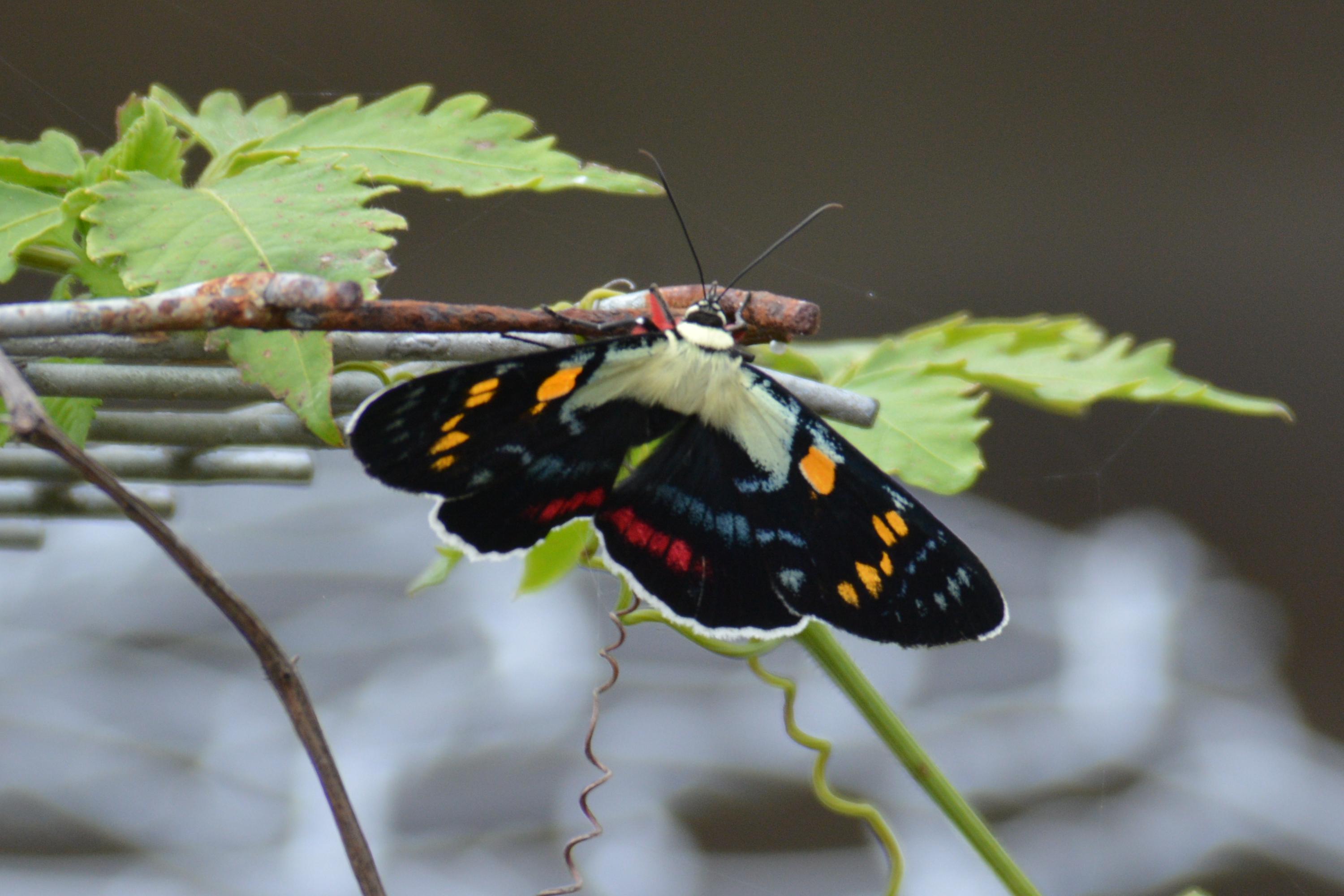
Can someone help me out whith what kind of butterfly this is? Taken in my local forest here in Boituva, São Paulo
r/butterfly • u/Beautiful-Fondant-61 • 6d ago
- Scientific name: Amblyscirtes aescupapius
- Also known as Cobweb roadside skipper, Cobweb little skipper, Canebreak roadside skipper, and Textor skipper.
- Description: The lace-winged roadside skipper is much more distinctive than the other "roadside skippers". Dark blackish brown, it has an irregular line of diffuse pale spots accross the upper surface of each wing. The veins of the hindwing below are outlined with two irregular bands of pale spots to give an unmistakable cobweb effect. It is this dramatic pattern that gives rise to such terms as "lace-winged" and "cobweb."
- Size: 1 - 1.25 inches.
- Range: The species ranges through the southeastern states, from Delaware to Florida and westward to eastern Oklahoma and Texas. It reaches the southwestern limits of that range near Houston. According to Williams, "Mike Rickard first discovered this cane-dwelling species in the San Jacinto bottomlands of eastern Harries Co. in the early 1970s."
- The scientific name of this prettiest of our roadside skippers, aesculapius, is the Latin form of the Greek Asclepius, the god of healing and medicine. The species was once called A. textor, a name now long out of date.
- The lace-winged roadside skipper visits a variety of flowers and sips from mud puddles and stream banks, but it seldom wanders far from dense bottomland forests or thickets where giant cane grows.
- The tall, semi-woody member of the grass family, Arundinaria gigantea, has been assumed to be larval host, but most authors state that the early stages of this roadside skipper are "not reported" or "incompletely known."
- A dozen caterpillars ranging from three to twenty-six millimeters (one inch) long were found by carefully searching stands of giant cane along a woodland stream. Each was well separated from other larvae, and each was concealed within a folded leaf. The smallest larva makes a fold near the tip of the leaf blade and alomg one edge; the mature larve makes a tube by tying together the opposite edges of the blade. The caterpillar feeds at the end of its shelter, finally leaving only a short tube hanging from a long section of the bare midrib. It then crawls quickly to another leaf and rolls it tightly.
- The first larval stage are pale-green, with no obvious body markings beyond small transverse wrinkles in the skin. Under a microscope, however, the entire surface is covered with tiny pores, eachbearing an extremely short hair. These pores and setae are not visible to the naked eye. The head is an unmarked rusty brown and covered with very short hairs.
- In its last instar, the larva has a black collar at the rear of the first thoracic segment. A black line outlines the rusty tan head, with another forked black line down the center. The gray-green body resembles that of the earlier instars.
- Before pupation, the caterpillar isolated a segment of leaf slightly more than an inch long by chewing away the blade both above and below, leaving the section hanging by the midrib. It then folded this section along the rib, stitching the edges tightly together. The caterpillar then pupated within this secure shelter suspended in the air.
- The pupa was tan in color, with bulging eye cases and a long probobscis reaching nearly to the tip of the abdomen. There was no projection on the head, as on many other skipper pupae
- Adults emerged in captivity within ten to fifteen days. From small caterpillars collected on July 30, adult butterflies were obtained during the last week of August and the first week of September.
- This episode indicates the effectiveness of the skipper's lifestyle, living and pupating within a leaf sheltwr. Of the dozen roadside skipper found, only one was parasitized; the others produced perfect butterflies. In the same stand of gogantic cane, however, the authors aslo gound forty-seven pupae and larvae of the sothern pearly eye. Fully exposed on the leaves, only three were free of parasitic tachnid flies.
- Season: March-September.
r/butterfly • u/RowInevitable7986 • 8d ago
r/butterfly • u/Odd_Impress_2185 • 9d ago
r/butterfly • u/JourneymanJames • 10d ago
r/butterfly • u/-AWP- • 10d ago
Please help
r/butterfly • u/tropicalmerrow • 11d ago
r/butterfly • u/-AWP- • 10d ago
What could this be
r/butterfly • u/Science_Raven • 10d ago

In 2015 I wrote a tree of life with photos, and I gave up because google was making it difficult. Now I coded a website thanks to iNaturalist and Wiki, it makes trees of life with photos. You can try search for colorful bugs and butterflies here: https://science-raven.com/tree/s/9IaK1Ic3
It's designed with graphics for children, hopefully to help kids in countries with high biodiversity to learn about what is precious in their habitat.
The tree information breaks down a bit for very closely related butterflies because, so many species to find relatedness of. Cheers!

