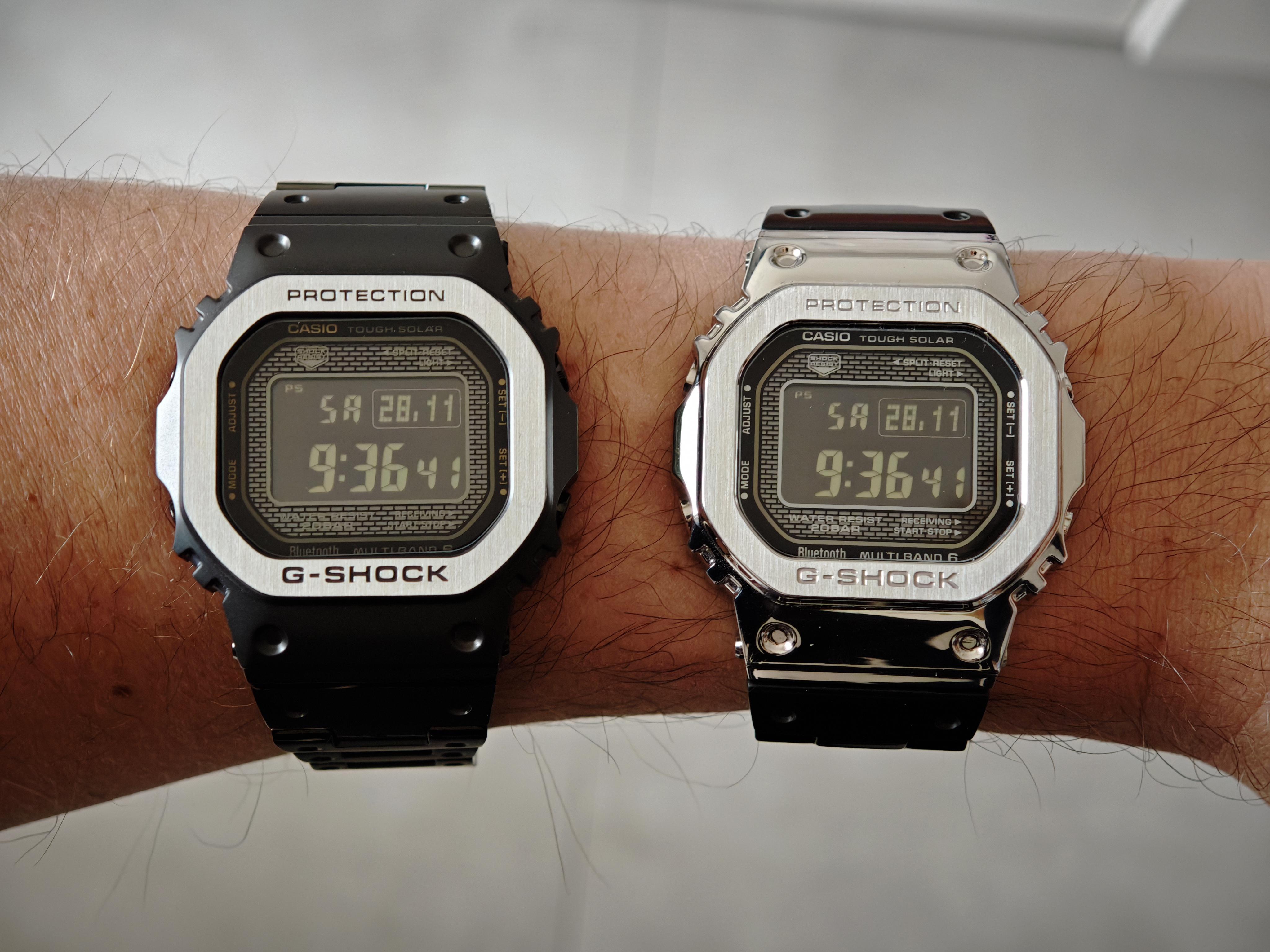
I’ve seen a lot of discussions about why Casio doesn’t simply give us an option to switch between positive and negative MIP displays, like Garmin does. I also wondered for a long time whether it was just a marketing strategy to sell two versions of the same watch.
But recently I noticed something that made me rethink this.
When a positive G-Shock MIP display loses power, it becomes completely white, while a negative one becomes completely black. This means that the displays are physically different and have different natural states without electricity.
Now here’s my theory:
On a positive MIP display, most of the display is already in its natural state because the background is white. Only the relatively small number of pixels showing the digits and other information need to be held in the opposite state.
If Casio allowed us to invert that same display through software, most of the pixels would now need to be held in their opposite state because the background occupies most of the display.
The same logic would apply the other way around to a native negative MIP display.
Even if the difference in power consumption is extremely small, considering how much Casio prioritizes power efficiency and battery longevity, especially on Tough Solar models, I could see why they might prefer manufacturing two physically different displays instead of implementing a software toggle.
Garmin, on the other hand, makes watches designed to be regularly recharged, so such a difference might be less relevant to them.
I’m not saying this is definitely Casio’s reasoning, and I don’t have actual power consumption measurements to prove it, but it makes more sense to me now than assuming it’s purely a marketing strategy.
Would be interesting to hear from someone who knows more about MIP display technology.
Edit 1: To everyone saying “iT’s jUsT CaSio bEiNg gReeDy, sToP dEfenDing cOrPoRateS” without understanding the point im trying to make, wouldn’t it make more financial sense for Casio to care less about battery longevity so people would need to replace their watches sooner?
I’d imagine far more people would buy a new watch when their old one stops working than buy two versions of the exact same watch just to have an inverted display.
Yet Casio puts a lot of effort into making watches that can last for decades. That’s why I’m curious whether there’s more to this decision than just marketing. I’m not ruling out financial motives, I just don’t think they automatically explain every design decision.
Edit 2: With “I still believe it’s a marketing gimmick” being the top comment in this thread, I realized how easily people can settle on an explanation without actually discussing the technical reasons behind it.
I’m glad I didn’t stop there, because some of the more constructive comments and technical research actually provide evidence that there is more to this than just marketing, including power efficiency and display longevity.
I’d rather question an assumption and learn something new than simply go along with the most popular opinion