r/learnmachinelearning • u/qxthnzy • 4h ago
Question ML on MacOs
7
Upvotes
hi guys, is a MacBook M5 good enough for ML development?
r/learnmachinelearning • u/techrat_reddit • Nov 07 '25
https://discord.gg/3qm9UCpXqz (Discord is currently closed)
Just created a new channel #share-your-journey for more casual, day-to-day update. Share what you have learned lately, what you have been working on, and just general chit-chat.
r/learnmachinelearning • u/AutoModerator • 15h ago
Welcome to Resume/Career Friday! This weekly thread is dedicated to all things related to job searching, career development, and professional growth.
You can participate by:
Having dedicated threads helps organize career-related discussions in one place while giving everyone a chance to receive feedback and advice from peers.
Whether you're just starting your career journey, looking to make a change, or hoping to advance in your current field, post your questions and contributions in the comments
r/learnmachinelearning • u/qxthnzy • 4h ago
hi guys, is a MacBook M5 good enough for ML development?
r/learnmachinelearning • u/Beneficial-Front-807 • 6h ago
I am very new to AI and wanted to learn AI. But there’s so many courses and I don’t know where to start. So many field of AI out there but what have the potential for work and easier to learn?
r/learnmachinelearning • u/Wael0dfg • 7h ago
I'm searching for a free course that teachers me everything from zero to a good level where i can at least make useful AIs
r/learnmachinelearning • u/dead_ai_slop_coder • 58m ago
will keep on updating my progress in this micro blog manner
x : https://x.com/habeebstwt/status/2126556681106833578?a=RqizY9ez0gZ3lWWIml4&s=20
worklog 1 : https://habibsnippets.github.io/writing/reinforcement-learning-worklog-1/
worklog 2 : https://habibsnippets.github.io/writing/reinforcement-learning-worklog-2/
thanks
r/learnmachinelearning • u/indianPangolin • 1h ago
I’ve spent about 2 decades in fiber sensing (distributed acoustic sensing) and applying it to almost every possible domain. I’ve been trying to develop a 2 stream approach of solving the industry’s biggest shortcomings and the biggest problem the industry will never talk about by - figuring out if I can build mathematical context around this terabyte level unstructured data.
I’m no ML engineer. I’m an electronics engineer who got into signal processing out of need and became a commercial operator out of course of life.
This problem has haunted me for years and I’m trying to do something about it now. Would love some experts and people who’ve done something in this field to collab.
r/learnmachinelearning • u/Dangerous_Skin_7959 • 1h ago
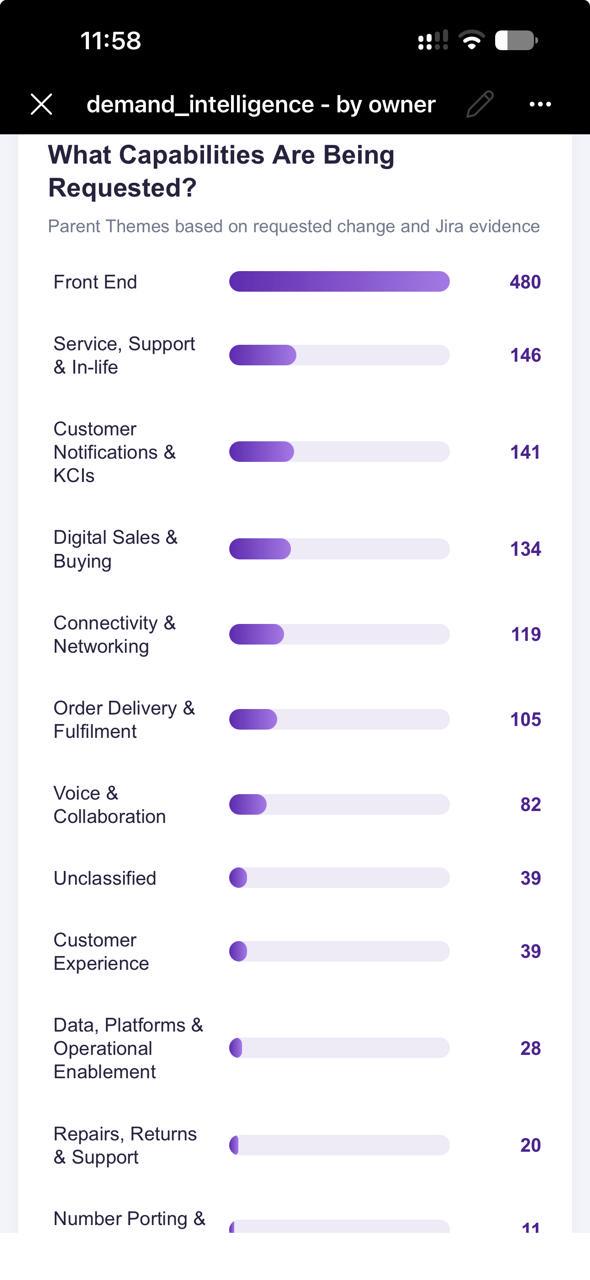
Hi Red fam. I work in PMO and was looking at change management tickets logged in JIRA. Idea was to group tickets and take it up with LT for process interventions.
For context, my org is flexible in terms of who gets to raise JIRA tickets - be it Product, Architecture, Engineering, Delivery or Project Managers themselves (way of working fail). One objective was to find any correlation between groupings and job roles.
I used BERTopic for topic creation and mpnet for clustering. While am happy with the MVP - I had to brute force some business overrides/nuances as the model misgrouped quite a few tickets.
I tried changing dimensionality and clustering variables but the model didn’t help much beyond a point. Am looking for suggestions to train the model on existing data and automatically group new tickets that come in into the queue - can anyone please help me with an approach?
r/learnmachinelearning • u/JKCinema • 1h ago

r/learnmachinelearning • u/rexShail • 3h ago

I built a Hello World RAG App in Python
Normal LLM = Answers from training data (can hallucinate)
RAG LLM = Answers from YOUR documents
I asked it Saudi it didn't say Saudi Arabia.
It said "Contractor at Saudi Aramco" - because it read MY LinkedIn PDF.
This is how it works:
Tech: Python + LangChain + ChromaDB + Groq + Gemini Embeddings
Save this for your next interview
Comment "RAG" and I'll send you the full code + next part.
Follow for AI Engineer series - Part 2 coming next.
r/learnmachinelearning • u/Designer-Walrus2068 • 7h ago
Hi, I'm Khalik, a Computing Science student in London.
To be upfront about where I am: I'm still learning Python, I'm new to machine learning, and I haven't done maths seriously in years. But I'm aiming high. I want to work towards competing in big open AI prizes like the AIMO ($5M) and the ARC Prize.
I'm looking for a few people at a similar stage, or more experienced people happy to guide beginners, to:
What I bring: consistency, discipline, and I'm happy to organise the group and keep it moving.
I’m tryna aim for something big to incentivize cuz I know I will just get bored after a while.
Comment or DM me with where you're at and what you want to learn.
r/learnmachinelearning • u/Big_Asparagus3624 • 5h ago

I've worked in data science for years, and I realised my fundamentals had gotten rusty. Re-reading textbooks wasn't sticking, so I started explaining each concept through cricket. Turns out a run chase is a surprisingly good way to understand probability, and a batting order works for a lot more than you'd expect.
The channel is Cricket x Data. It's hand-drawn whiteboard explanations, with no face cam and no hype. The focus is on why things work, not just the code.
The plan, roughly in order:
You don't need to love cricket, because I explain any cricket terms as I go. If you do follow it, that's a bonus.
I'd love feedback, especially on which topics people find hardest to understand. That's where I want to go next.
Channel: https://www.youtube.com/channel/UCMW7LA9bWtDHOyhZdp0tGTQ
r/learnmachinelearning • u/RepulsiveRevenue8086 • 16h ago
I made multiple attempts at solving the Rubiks Cube using Reinforcement learning. This is a personal project, but I am a 1st year master in CompSci.
Initially, I tried to map states to actions with both Rainbow DQN and GRPO using curriculum learning. This had no success. After scrambling 6 moves it was already to hard for the agent.
Then I found the DeepCubeA approach and I took some inspiration from that. I trained a DQN to estimate the cost-to-go for each possible action, using a combination of demonstrations and self-generated rollouts. Essentially, each output estimates how many moves are still needed to solve the cube after taking that action. I then used these estimates as a heuristic to guide beam search.
With a beam_width of 2^18 and 1.5 hours of Kaggle GPU usage, here are the results for 1000 cubes (100 moves scrambles):
Time per cube: 10.30s
Avg steps: 19.67
Success: 100%
This beats Sebastian Lague's solver which had an average steps of 19.9 to solve the cubes. Not that it is a competition or something :)
r/learnmachinelearning • u/EmuAfter5933 • 6h ago
I run a tool that scores AI projects from their code, and after 3,502 repositories some patterns are very consistent. If you're building a portfolio:
- Tests are the biggest separator. Even a few tests on your data processing or metric code put a project ahead of most others at its level.
- Evaluation code matters more than model code. A notebook that trains a model is common; a script that evaluates it honestly (held-out data, baselines, a written-down metric) is rare.
- Make it someone else's project to run. Pinned dependencies, a config file instead of hard-coded paths, and a README that says how to reproduce the result.
- One deep project beats five tutorial forks. Forked course material barely registers. The same idea extended in a direction the tutorial didn't go does.
- Stars don't predict any of this. Some of the highest-scoring projects have zero stars.
If you want to see how your own repos read to an automated reviewer, access it on AI-Atlas: paste your GitHub username and every score links to the files it was based on.
Happy to answer questions about any of the above!! :)
r/learnmachinelearning • u/picttwos • 20h ago
As a second-year Computer Engineering student, I'm currently exploring different areas of software development and continuously working to expand my technical knowledge.
However, I'd like to gain better clarity on what I should focus on beyond programming languages and frameworks.
I'd love to hear from experienced developers and fellow students in the industry:
What are the fundamental concepts, technical skills, or areas of computer science that students often overlook but every aspiring software engineer should understand?
Your recommendations and insights would be incredibly valuable in helping me build a strong foundation and make informed decisions about my learning journey.
r/learnmachinelearning • u/No-Conclusion3720 • 8h ago
The EU Quantum Act passed, VirusTotal added new threat-intelligence capabilities, and a rash of tanker cyberattacks hit maritime infrastructure this week. The piece that keeps coming up in security circles is quieter: AI is compressing the timeline on cryptanalytic attacks against classical schemes. The assumption baked into most long-lived data stores and signed artifacts is that RSA and ECDSA hold for the foreseeable future. That floor is shifting. Harvest-now-decrypt-later attacks mean adversaries do not need to break crypto today — they collect ciphertext now and wait for the compute curve to catch up. The EU Quantum Act signals that regulators have already priced this in and expect organizations to have a migration path. Most enterprise infrastructure does not. TLS termination, signing pipelines, secrets managers, and inter-service auth tokens are almost universally classical. Migrating any one of them is a multi-team project; migrating all of them simultaneously while keeping services running is an unsolved operational problem for most shops. How are practitioners actually sequencing this in real environments — are you prioritizing data-at-rest, in-transit, or signing infrastructure first, and what is forcing that order?
r/learnmachinelearning • u/Big_Asparagus3624 • 5h ago
I've worked in data science for years, and I realised my fundamentals had gotten rusty. Re-reading textbooks wasn't sticking, so I started explaining each concept through cricket. Turns out a run chase is a surprisingly good way to understand probability, and a batting order works for a lot more than you'd expect.
The channel is Cricket x Data. It's hand-drawn whiteboard explanations, with no face cam and no hype. The focus is on why things work, not just the code.
The plan, roughly in order:
You don't need to love cricket, because I explain any cricket terms as I go. If you do follow it, that's a bonus.
I'd love feedback, especially on which topics people find hardest to understand. That's where I want to go next.
Channel: https://www.youtube.com/channel/UCMW7LA9bWtDHOyhZdp0tGTQ
r/learnmachinelearning • u/North-Roll-4544 • 13h ago
Hey everyone! I have an AI/ML fresher interview in about 6 hours. Could you please share some commonly asked technical and scenario-based questions that I should prepare for?
Also, I graduated in 2024 with a B.Tech in CSE (AI specialization), but I’ve been working in a non-technical role for the past 2 years due to a lack of opportunities in AI/ML.
How should I handle the question, “Why did you work in a non-technical role after graduation, and why are you switching to AI/ML now?”
Any last-minute tips on handling this question and making a good impression would be greatly appreciated.
Thanks! 🙏
r/learnmachinelearning • u/Effective_Potato_990 • 17h ago
i ve 5+ years of experience in nodejs
i'm learning from 'build an llm from strach - Sebastian Raschka' ... chapter 3 has 'attention mechanism' .. i'm hitting the wall ..
most of the article and youtube vidoes .. it does that it does this ... i wanna understand what is happening .. any experience guys can help me out here ?
r/learnmachinelearning • u/No-Conclusion3720 • 11h ago
A critical authentication bypass in Drupal is being actively exploited in the wild right now. Attackers are using it to fully take over sites — not deface them, not exfiltrate a table, but own the entire application layer. Bleeping Computer confirmed the exploitation is in-progress, not theoretical.
The mechanic is familiar: gain a foothold via a privileged identity, then every downstream action inherits that trust. CMS platforms, APIs, and increasingly autonomous agents all share this structural problem. The privileged credential is the blast radius.
What makes this iteration particularly ugly is how quietly it compounds. A compromised service account or session token doesn't throw errors — it just acts. By the time logs show something wrong, the takeover is complete.
For those running production systems with any non-human identities in the request path — agents, integrations, automated workflows — how are you actually handling the gap between credential issuance and runtime behavior? Are you relying on perimeter controls, or do you have something that evaluates the action at the moment it fires?
r/learnmachinelearning • u/IntroductionFlimsy56 • 18h ago
I ran a small research project to test a practical question: how much of a frontier LLM's judgment survives when you distill it into a tiny bidirectional encoder that runs in a single forward pass on a plain CPU?
Full write-up (with dataset breakdown & notebook): https://elei.io/research/fallacy-encoder/
Live playground to test both encoders (free, no sign-in): https://didistutter.dev
The setup:
- Task: 23-label reasoning & tone classification (e.g., false dilemma, slippery slope, ad hominem, loaded wording) in one forward pass — no prompt, no chain-of-thought.
- Base encoders: mmBERT-base (307M, 8k context) and BidirLM-1.7B-Embedding (1.7B).
- Teacher: GPT-6.1 Sol giving both yes/no labels and 0–100 confidence scores.
- Independent referee: DeepSeek V4.1 Flash (never seen during training) on URL-grouped held-out sets (1,000 real web texts + 400 exam passages from 16 published fallacy datasets) so no thread or page ever leaks across train/test.
Headline numbers (Macro Average Precision):
- Exam passages (400 texts): BidirLM-1.7B hit 0.743 vs. 0.721 for the second full-size LLM
- Open web text (1,000 texts): BidirLM-1.7B hit 0.646 vs. 0.693 for the second LLM; distilled mmBERT-307M hit 0.559 (training 3.9x faster)
- Both stay quiet on ~95% of clean ordinary comments and run in 40–160ms (307M) or <0.5s (1.7B) on CPU.
Three takeaways that genuinely surprised me:
Main caveat: 11 of the 23 flaws show up fewer than 20 times in the 1,000-text web test, so tail-class performance is still noisy.
If you want to poke at both encoders (switch between 307M and 1.7B, or slide the thresholds live to see calibrated probabilities), the playground is up at https://didistutter.dev — curious what breaks them for you!
r/learnmachinelearning • u/Tricky_Magician_9777 • 17h ago
r/learnmachinelearning • u/Difficult-Ad-3014 • 1d ago
Berkeley's agent MOOCs, CMU's ML in Production, MIT's efficient DL course and Stanford CS336 are all free and great, but scattered. I put them into one path for devs with no ML background: 101 chapters, guides to all 77 lectures, 5 capstones, and Python examples that run without an API key.
Every chapter links back to the original lecture.
Site: https://acailic.github.io/ai-engineer-path/
Repo: https://github.com/acailic/ai-engineer-path
A free, self-contained course distilled from six open university courses:
If something's wrong, tell me or open issue.
r/learnmachinelearning • u/Few_Tune6754 • 13h ago
I do get the fact that each z is going to be a random vector let's day with 64 columns, Z_DIM = 64. But why exactly 64, does it have anything to do with the vector space, what kind of difference does it make to have Z_DIM= 2 and 64, i initially confused it with the features of an image actually.