r/DungeonMasters • • 2h ago

Discussion How damage types affect secnarios

2 Upvotes

I dm'ed my first dnd game which is also the first dnd game i have ever played in my life with my family.

The party was fighting a manticore and one of the players rolled a 14 on the attack roll, where the manticore's AC is 14 and then they did like 7 damage but they described: ' I slash the manticore's eyes with my sword'

I thought ok well i geuss the manticore is now blinded, disadvantaged against everyone until it dies

But did I DM correctly cuase how do you determine what can do such a devestating thing, does the d20 roll the damage roll have to be particlarly hight

Does the character have to be very descriptive of their attack

If anyone is hit in the head with a bludgeoning attack how do i determine if they fall unconscious or not?

Same with all the other damage types. Like ok the player rolls a 3 damage and says their sword pierces through their heart does the goblin contiue with their 4 health or does it just instantly fall down and bleed to death

What I think I am asking is how powerful is the players imagination in the world and how do I make sure they do what they are supposed to


r/DungeonMasters • • 9h ago

Resource What if a Lich traded its decaying flesh for a mechanical body? Meet the Mechalich, a fusion of necromancy and arcane engineering!

Thumbnail gallery
12 Upvotes

Why settle for a decaying body when you can build a better one?

Mechaliches are former spellcasters who have taken lichdom one step further, abandoning their mortal bodies in favor of mechanical constructs powered by necrotic energy.

Rather than concealing their phylacteries in forgotten vaults, these creatures house their very souls within arcane reactors, replacing conventional spellcasting with devastating integrated weaponry.

Their lairs are sprawling necropolis-fortresses, where tireless machines and necromantic forges produce entire armies of constructs.

I've always loved the idea of combining necromancy with arcane technology, and the Mechalich is easily one of my favorite creations from Tome of Monsters: The Ultimate Monster Compendium for 5E and 5.5E, now available on DriveThruRPG!

What started as an ambitious collection of creatures eventually grew into my biggest project yet: a fully human-illustrated 379-page bestiary for D&D 5E/5.5E, featuring 308 monster statblocks ranging from CR 0 all the way to CR 30.

I wanted the Tome to be more than a huge collection of statblocks, so throughout the book I've tried to give DMs plenty of material to actually build encounters, adventures, and parts of their worlds around these creatures.

What's Inside?

The Tome of Monsters is a massive bestiary designed to bring new creatures, challenges, and possibilities to your D&D adventures. Here's a glimpse of what it's gonna be inside:

  • 308 monster statblocks, ranging from CR 0 all the way to CR 30, including entirely original creatures, new variants of familiar monsters, and powerful legendary foes.
  • Detailed lore and descriptions, exploring the origins, behaviors, habitats, and roles of these creatures in your worlds.
  • Monster families and variants, providing multiple versions of certain creatures to challenge adventurers across different levels of play.
  • Knowledge Checks, allowing characters to uncover useful information about the monsters they encounter.
  • Adventure Hooks and Customization Options, helping Game Masters introduce these creatures into their campaigns and adapt them to their needs.
  • Lair Actions and Regional Effects, bringing additional depth and danger to encounters with particularly powerful creatures.
  • Random Encounter Tables and additional Monstrous Adventure Hooks, offering inspiration for everything from unexpected encounters during a journey to entire adventures centered around these creatures.
  • And much, much more!

There are creatures for just about every kind of campaign I could think of! Some are designed to fill gaps I felt were missing from official bestiaries, while others grew into entire monster families with different stages, variants, or increasingly dangerous forms.

My goal throughout the project was always the same: give Dungeon Masters creatures that can inspire an encounter or adventure, rather than simply another block of numbers to put on the table.

You can find Tome of Monsters on DriveThruRPG, where the PDF and Hardcover are currently discounted for the release, with the PDF + Hardcover bundle available at a special price as well. There's also a 30-page preview on the product page if you'd like to take a proper look through the book!

You can also find Tome of Monsters on my Patreon, where it's available alongside my growing collection of D&D supplements at exclusive member pricing. If you'd simply like to follow my work, you can also join for free to access previews, announcements, and regular updates on current and upcoming projects!

Black Friday Sale

Since the release happens to coincide with Black Friday, all my other titles are also currently 40% off until the end of November. You can find them on my DriveThruRPG Publisher Page!

Happy adventuring!


r/DungeonMasters • • 20h ago

Discussion The Art of Initiation

2 Upvotes

I have been sensing some friction with my players over a long period of time, combat starts when someone rolls initiative, but the rules say very little about how the DM should decide when that moment arrives or where everyone is standing when it does. My players argue about starting positions, they feel punished when a failed Stealth check wastes their first turn, or when a harmless action such picking up an object triggers a fight in a more "investigation and perception" phase. These frustrations raise two practical questions: should DMs change how initiative starts, and who should decide where characters are positioned when it does?

When a DM calls for initiative, players often want to move their characters to the space that gives them the best opening, whether that is behind a pillar, near a doorway, or beside the enemy spellcaster. From the player's view, the party was not in a fixed formation before combat, so claiming a favorable space feels reasonable. From the DM's view, the combat was already established where everyone was, and rewriting it after the fact lets players gain a free tactical advantage by repositioning in the moment before the combat clock starts. The conflict grows worse when the DM has not described the scene clearly, because nobody agrees on where anyone actually stood. Asking for a marching order is great for bridges, tunnels, and narrow areas but asking for a marching order before every combat allows players to position assuming combat will happen. A logistical issue is unless its combat most of my players at least just do not touch their tokens, they just describe what they are doing and moving their token along seems more of a hassle, should I ask them to change this?

The rules treat combat as starting for everyone at once, so if a party sneaks up on a group of enemies and one character fails a Stealth check, the enemies notice and everyone rolls initiative. Under the 2014 rules, only creatures that are surprised lose their first turn, and a creature is surprised only if it fails to notice any threat. One failed check can therefore cancel the surprise for the entire party, which means the careful rogue's plan and the other players' preparation both count for nothing. The group check rule in the Player's Handbook softens this, since half the group succeeding means the group succeeds, but many tables do not use it consistently, and it is not applied to every sneaking scenario. What rules do you recommend?

Players often do not realize that reaching for an object on a table, opening a chest, or stepping into an apparently empty room can begin combat if a hidden creature, trap, or guard reacts. The player thought they were exploring an empty space, and the DM knew something was waiting. When initiative is called with no warning, it can feel like a gotcha, as if the DM was waiting for a trigger the players could not have known about. It is more about the lack of information, since an ambush that the players had no chance to detect is hard to feel good about, even when it is realistic. Should there be repeat triggers or should triggers be more unique?

Before combat begins, a DM can describe the layout and mention where each character is standing, so everyone shares the same picture. When a hidden threat could be detected, the DM can call for a Perception check or give a clue before the trigger, so players have a chance to avoid it or otherwise tell there is something awry. Telling the table at the start of a campaign that initiative can begin from any action, including mundane ones, sets the expectation and removes the sense of being tricked.

Separately one of my players loves leaving the map and being as far away from the enemies with a longbow. Is making this less desirable by having ganking enemies move within 5 feet of them or making the combat space limited a challenge to them or discouraging a valid playstyle?

Letting players choose their starting spaces within a limited space rewards planning and gives them agency, particularly when the DM allows it only within a short distance of their last described position. Telling players where they are keeps the fiction consistent and prevents last-second repositioning, and it works well when the scene was clearly described beforehand. A middle path is to have players state their positions before the trigger whenever a tense scene is coming, such as a marching order or a description of where each character stands while exploring a room. That way no one is choosing a space after the fact, and no one is surprised by where the DM places them.

r/DungeonMasters • • 12h ago

Drop in grid for MapsVTT (DnDBeyond)

Post image
3 Upvotes

r/DungeonMasters • • 23h ago

Discussion Starting a library D&D program for adults: connected one-shots, rotating players, mixed experience levels. Advice and resources?

37 Upvotes

Hi all. I'll be running D&D at my local library for adults, twice a month. Players sign up before each session with a cap of 6, so the table may change from session to session. I expect a few regulars, but I honestly can't predict how many.

I'd love advice and resources on:

  1. Running connected one-shots Each session needs to work on its own, with a clear goal that wraps up in one sitting. I'd also like them to tie loosely into a bigger story. My current idea is a patron or organization that sends the party on missions: some advance a main quest, some are unrelated side jobs. How to handle things so it's easy for players to drop in each week? How to build up a larger plot when the people at the table keep changing?
  2. Regulars and drop-ins at the same table How do you reward regulars for coming back without making first-timers feel like outsiders? Do you use pre-gens for drop-ins, let people bring their own characters, or both? (Any good pregen resources for 5e OR 2024... I'm going to survey the first ones to sign up which edition they prefer)
  3. Brand-new and experienced players together How do you teach the rules at the table without slowing down the veterans? Have you found ways to get experienced players to help new ones instead of running the show?

I'm also open to recommendations for published one-shots, adventure anthologies, beginner handouts, cheat sheets, or posts and videos on this format. I already have some modules (old school terminology there I know) I've written that I could work in.


r/DungeonMasters • • 7h ago

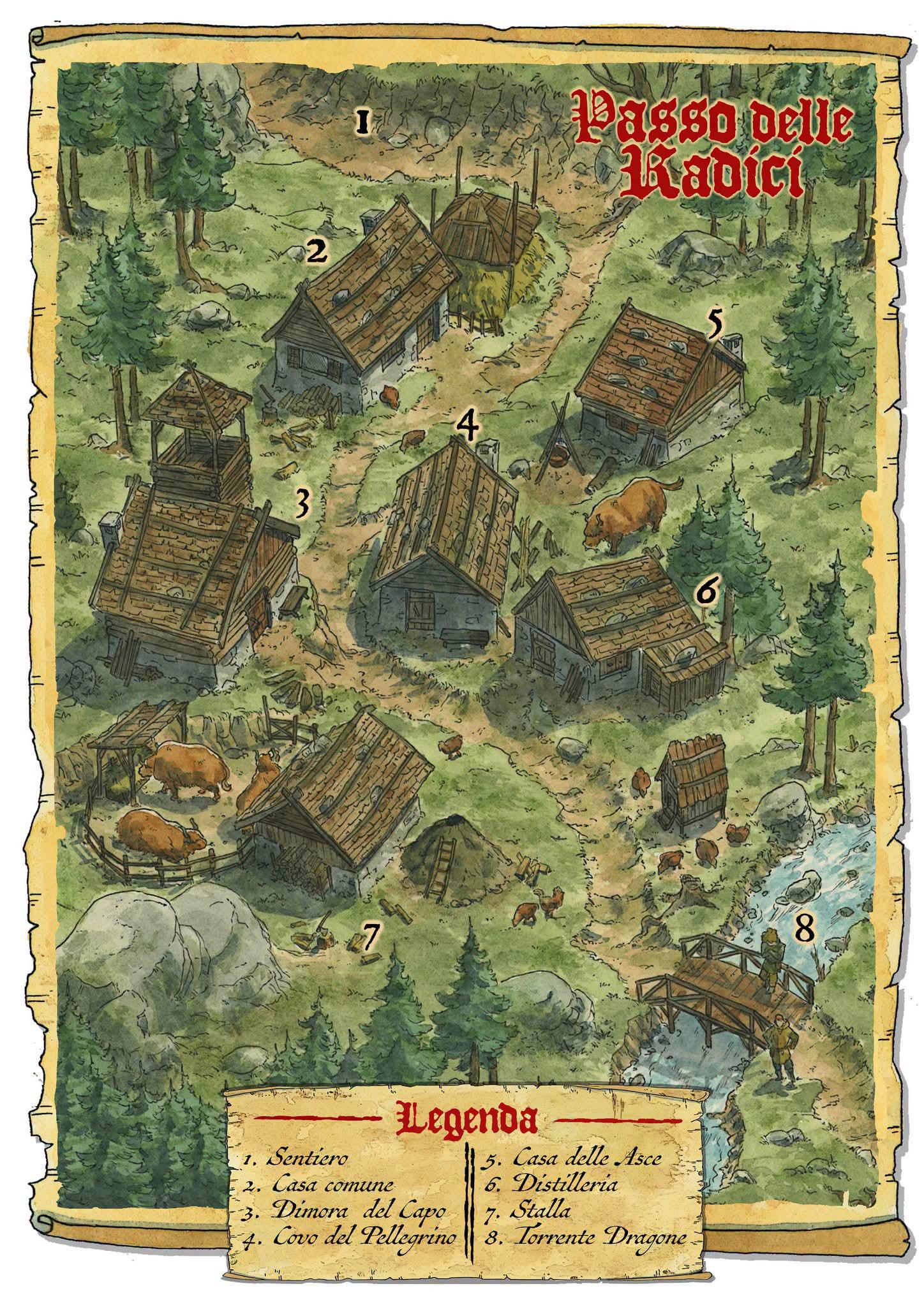
Discussion Map! 🗺️

Post image
10 Upvotes

We are publishing a few maps from a few years ago...

Map of the "Passo delle Radici" created for the RPG project "Terre Furiose" RPG inspired by Ariosto's trip to Garfagnana, developed by Lucca Comics & Games and Acheron Games. A great pleasure and honor to have taken part in this magnificent project, Thanks to Mauro Longo for involving us in the project!! 🗺️🧭

Moreno Paissan and Angela Gubert art 2022 Acheron Games all rights reserved!


r/DungeonMasters • • 13h ago

Ideas for minis

Thumbnail reddit.com
2 Upvotes