r/DungeonMasters • u/-SCRAW- • 1h ago
Resource Old School Sandboxes: The Starting Town

Full article here
https://gnomestones.substack.com/p/ttrpg-sandboxes-the-starting-town
The Starting Town
Long have I stood by this GM adage: when beginning a campaign, a detailed town can become a drawback. If you’re using a Points of Light model, the main town is probably the densest place in the game in terms of NPCs and locations, requiring a greater degree of prep. For inexperienced groups, starting in a tavern can give players a sense of 5e-esque plot security, leading to mischievous behavior and escalating to arrest or TPK. Let’s consider a few ways to not get bogged down in the starting town:
- Start the action at the mouth of a dungeon
Pros: A great way to introduce people to old school gaming. The action begins with a delve, the best situation for introducing the rules the format. If the players survive, the next portion will be high-stakes wilderness travel in order to get back to town, teaching about navigation, encounters, and rations. Both of these portions occur before the starting town is encountered.
Cons: If the players die in the dungeon, it will be a short campaign indeed. Some players may be confused by this kind of start and want to buy more items.
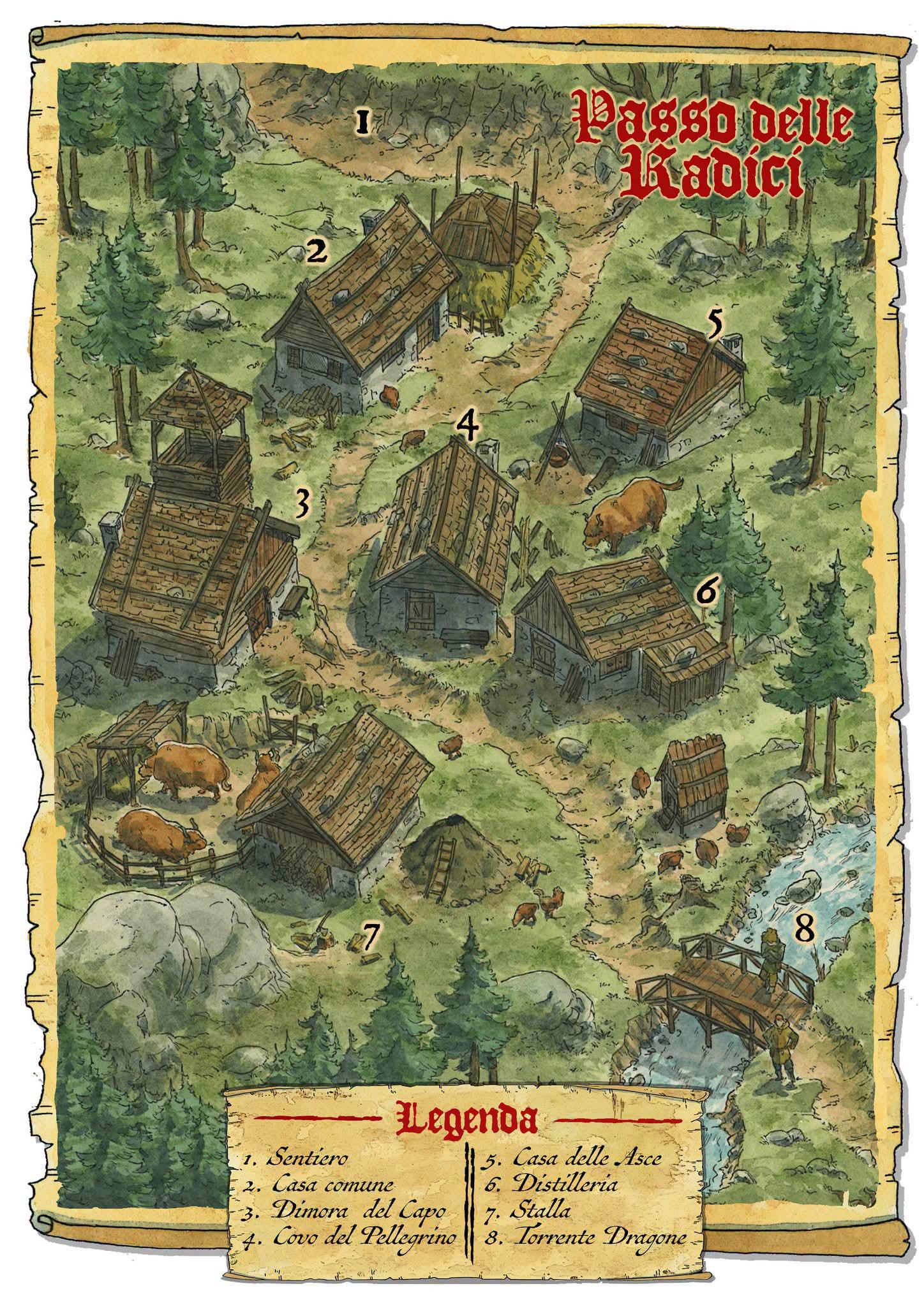
2. Start in a tiny border outpost
Pros: The Pokemon strategy. This gives a feeling of preparation to the players, but doesn’t start too big. With smart lore drops, you can build up the reputation of the larger town before the players arrive.
Cons: Two settlements means more work overall. There are limited reasons for the players to return, so initial NPCs could be left behind.
3. Start in the city, but only allow access to a small portion
Pros: With this strategy you can have your cake and eat it too. Create a portion of the city, and explain that more sections will be available later. Pace the players in a way that gets them on the road quickly.
Cons: Players may become curious as to why part of the city is blocked off. You will have to make up convincing answers, or break immersion and explain that the city isn’t done yet. Either way, you are on the hook later to contextualize your fabricated answers when you do build the city.
4. Just build the big town in the first place.
Pros: If you’re not sourcing from the Lazy GM school of thought, it might be better to prep the whole city in the first place. This gives you the most opportunity to be prepared for player choices.
Cons: When you put most of your prep into the town, there’s a good chance that the action will dither there longer than you’d like. In addition, you risk over-prepping and creating situations that don’t match player trajectories and interests. For these reasons I usually recommend completing a couple sessions before finishing the main settlement