r/casualconlang • • Mar 29 '26

Official INTRODUCING: BIWEEKLY THEMES!

26 Upvotes

Hello Conlangers!

The moderators of r/casualconlang are excited to present BIWEEKLY THEMES! These are intended to serve as a way to engage the community further around specific topics and to encourage conlangers to focus their efforts on a particular aspect of their language.

How it will work

Every other week, each day of the week will have a particular theme where users are encouraged to post something related to the daily theme. We decided to make this bi-weekly because we wanted to give other the freedom to share what they want us to know and we still want to maintain the "casual" atmosphere of the sub. Also, you are not required to post only themed posts on theme days, we just want to start officially encouraging community engagement around particular topics rather than trends (like the cool, but kinda old sentence structure trend). All we ask is that if you make a themed post, be sure to use the appropriate "Theme -" flair on your post.

We will start the Biweekly Theme cycle today as an off week so Biweekly Themes will officially start the following week of Monday, April 6th with Morphology Monday!

The proposed daily themes are:

Morphology Monday

A general theme day with a focus on morphological systems. Users are invited to share descriptions of their languages' morphology. "Description" can be just a subset of the phonology or even how a particular affix functions as long as it pertains to the theme.

Syntax Tuesday

A general theme day with a focus on syntax. Users are invited to share descriptions of interesting syntactic phenomena in their languages.

Word-building Wednesday (Lexday)

A themed day focusing on word derivation or creation. Users are welcome to share interesting word etymologies in their language or their process/system for lexical derivation. Users are also welcome to share tips to new users for how to get past the common obstacle of lexicon building.

Thornsday

A themed day focusing on orthography! Users are welcome to share anything orthography-related (rules still apply regarding ciphers or other things not in the spirit of the sub) including complete systems with descriptions, origins of their systems, and usage examples. Named in honor of Thorn an obsolete letter from Old English, which is named after Thor which the name for the day Thursday is derived from.

Phonology Friday

A themed day focusing on phonology and phonetics. Users can share anything related to the sounds of their language, phonological rules, tips regarding phonology or phonetics, and more. Rules regarding tables and no-context phonetics tables still apply. IPA should be enforced during this day.

Sociolinguistics Saturday

A themed day focusing on concultures and historical linguistics. Users are invited to share aspects of their conculture and how it relates to their language (influences, pidgins, older language form development, etc.). Users are also invited to share immersive stories related to their conculture or world provided it is relevant to their language.

Slapped-Together Sunday (Speedlang Sunday)

A fast-paced theme day where the sub is given a prompt with a collection of language features and users have until the end of the day to submit their speedlang, Users can then discuss the results of the challenge and upvote their favorite submissions.

We hope you enjoy this and as always let us know via modmail if you have any concerns.

Sincerly,

The Moderators of r/casualconlang


r/casualconlang • • 5h ago

Resource Jimu! Zelian basic greetings

Thumbnail
gallery
6 Upvotes

Sorry, I forgot to put how to introduce your name. Here's how:

Zua p̂a ey m̩? /'zu.a pʰa ei̯ m̩/ What's your name?

Ya p̂a ____ /'ja pʰa ____/ My name is ____


r/casualconlang • • 29m ago

Beginner/Casual My language Hexien

1 Upvotes

I created a new language for my fictional world with some additional help, and here is what I got so far.

Hexien Sounds

Hexien uses 18 letters, each with one consistent sound.

Letter: Sound

A: ah, as in father

E: eh, as in bed

I: ee, as in sea

O: oh, as in moe

U: oo, as in loom

M: m

N: n

P: p

T: t

K: k

L: l

R: r

S: s

V: v

W: w

F: f

H: h

Y: y, as in yes

Every letter is pronounced. There are no silent letters or confusing spelling rules.

Words are usually made of two or three syllables, and there is no stress to any of the syllables.

 Basic Grammar

Hexien uses a simple sentence structure:

Subject + Verb + Object

Just like English.

For example:

“I see the bird.”

“The child likes water.”

“You know my name.”

Hexien has no grammatical gender, no irregular verb conjugations, and no complicated spelling exceptions.

Pronouns

Hexien: English

Mi: I / me

Ti: You

Sa: He / she

Vuna: We / us

Tin: You all

San: They / them

Verbs

Verbs never change depending on who is doing the action.

Hexien: English

Lufa: To see

Nari: To know

Pava: To speak

Suli: To like

Kanu: To go

Fira: To make

Luvi: To love

Huti: To hate

Kero: To have

Fen: To want

Ita: To eat

Past and Future Tense

To change the tense, add a small word before the verb:

Nu: past

Va: future

For example:

Mi lufa. “I see”

Mi nu lufa. “I saw”

Mi va lufa. “I will see”

Not

To say "not," put na before the verb and after any tense word.

Mi nu na suli wina. "I didn't like water.”

Noun Rules 

Plurals

To make a noun plural, add 'ma. The apostrophe makes no sound and shows where the ending begins. Pronouns don't take 'ma.

Hexien: English 

Koro'ma: trees

Puli'ma: children

Tanu'ma: animals

Possessives

Put the owner before the thing owned.

Mi kuli: "My book"

Ti nari mi aflo. "You know my name.”

Nouns after a number don't take 'ma. Kiro koro: "Ten trees”

Describing words

Put describing words before the noun.

Hexien: English

Oka: Big

Ako: Small

Pami: Good

Imap: Bad

Ofu: Hot

Ufo: Cold

Rofa: Red

Oram: Orange

Yami: Yellow

Kari: Green

Tila: Blue

Vilu: Purple

Pin: Pink

Noku: Black

Ukon: White

Vilu loru: : “The purple bird.”

Oka koro: "Big tree"

Mi oka hovi: "My big house."

Questions

Questions end in ka? Question words go where the answer would go.

Ti suli kasu ka? "What do you like?”

Hexien: English 

Koya: Who

Kasu: What

Kusi: When

Kipa: Where

Kayi: Why

Kohi: How

Compound Words

Join two words with no space to make a new word. Keep both spellings the same.

Hexien: English

Pamivelo: Goodbye (pami "good" + velo "bye")

Femati: Thank you (fema "thank" + ti "you")

Numbers

Kiro means ten and fifa means five, so kirofifa is 15 (10+5). A number before kiro, huma or ahima multiplies it, and numbers after are added. For example, pi kirouna is 21: pi (2) × kiro (10) + una (1).

Noma: Zero

Una: One

Pi: Two

Tiya: Three

Ko: Four

Fifa: Five

Susk: Six

Sipo: Seven

Ifa: Eight

Kalu: Nine

Kiro: Ten

Kirouna: Eleven

Kiropi: Twelve

Kirotiya: Thirteen

Kiroko: Fourteen 

Kirofifa: Fifteen 

Pi kiro: Twenty 

Pi kirouna: Twenty-one

Tiya kiro: Thirty

Huma: Hundred 

Huma kirouna: One hundred eleven

Pi huma pi kirouna: Two hundred twenty-one

Ahima: Thousand

My Vocabulary

Hexien: English

Mura: Person

Puli: Child

Suvi: Friend

Tanu: Animal

Loru: Bird

Wina: Water

Falu: Sun

Nimi: Moon

Koro: Tree

Hovi: House

Rina: World

Yaloi: Language

Sora: Sky

Fina: Fire

Kuli: Book

Mari: Map

Upa: Up

Apu: Down

Yisa: Yes

Nayot: No

Aflo: Name

Velo: Bye

Fema: Thank

Hano: Hello

Sero: Sorry

Peno: Please

O: And

Au: Or


r/casualconlang • • 1h ago

Writing System This is my conlang: Presenta!

Post image
1 Upvotes

i know its a very small image but have you ever heard of zooming in also þere are 6 digraghs too

ch,nh,dz,dž,ea,eá


r/casualconlang • • 18h ago

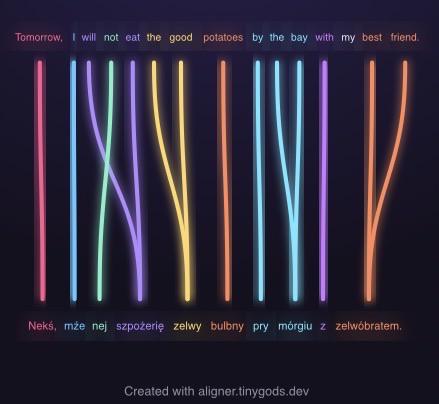
Activity How would you say this in your conlang? A sentence in Nuathluan / 놭롼

Post image
19 Upvotes

r/casualconlang • • 9h ago

Writing System Designing runes - starting with geometric designs for syllables, then adding curves

Thumbnail
gallery
2 Upvotes

Kazlishya is based around eighteen runes, each representing a core concept such as the Weaver (creation) or the Sun (light). Each rune is represented by three consonants or consonant blends. Weaver is Selek, for instance.

Words that emerge from the Selek rune will keep those consonants if they are very closely related, then swap out consonants as they become less related. A loom is syalek, very closely related to weaving, while a prisoner is sielpe, less closely related—but prisoner belongs to the same consonant triad (s/l/p) as sentence, which is syalpe. Essentially, the consonants in most words tell you a lot about what concept they are related to and how they evolved. There are rules for turning nouns into verbs, adjectives, and adverbs, as well as turning a word into its opposite, that mean making one word almost be necessity leads to about eight more words.

It makes word creation very fun because you have to decide what rune the word aligns with and its evolutionary path to make.

I knew I wanted to decide what the runes look like but just randomly scribbling until things looked 'cool' wasn't working for me. In this method, I started on picture 2 by assigned every runic consonant or blend to a simple, geometric shape (an abbreviated syllabary). On picture 1, I made the geometric version of each rune, color coded to show which letter is first, second, and third in the triad.

Then, I used an SVG editor to make rough drafts of the runes. These people use brushes and quills to write, so I thought about how I'd draw the geometric version in a hurry without lifting my pen and while removing the fiddly bits.

The process was really fun!

What I want to do next is design a tarot deck with each rune and 3-5 related words that people from this culture could use to predict the future. The linguistic associations make it easy to categorize 'children' of each rune and to embed allusions.


r/casualconlang • • 5h ago

Writing System Monolis Ah, B, Ch

Thumbnail gallery
1 Upvotes

Monolis Ah, B, Ch, features a clean, geometric design well-suited for writing Bahasa Sungai. The systematic pairing of mirrored shapes, rotations, and line variations makes the 48-character set visually cohesive and easy to recognize.


r/casualconlang • • 9h ago

Grammar Help me with my grammar!

Thumbnail
reddit.com
1 Upvotes

r/casualconlang • • 11h ago

Beginner/Casual My language Hexien

1 Upvotes

I made myself a language called Hexian, and here is the language.

Hexien Sounds

Hexien uses 18 letters, each with one consistent sound.

Letter: Sound

A: ah, as in father

E: eh, as in bed

I: ee, as in sea

O: oh, as in moe

U: oo, as in loom

M: m

N: n

P: p

T: t

K: k

L: l

R: r

S: s

V: v

W: w

F: f

H: h

Y: y, as in yes

Every letter is pronounced. There are no silent letters or confusing spelling rules.

Words are usually made of two or three syllables, and there is no stress to any of the syllables.

 Basic Grammar

Hexien uses a simple sentence structure:

Subject + Verb + Object

Just like English.

For example:

“I see the bird.”

“The child likes water.”

“You know my name.”

Hexien has no grammatical gender, no irregular verb conjugations, and no complicated spelling exceptions.

Pronouns

Hexien: English

Mi: I / me

Ti: You

Sa: He / she

Vuna: We / us

Tin: You all

San: They / them

Verbs

Verbs never change depending on who is doing the action.

Hexien: English

Lufa: To see

Nari: To know

Pava: To speak

Suli: To like

Kanu: To go

Fira: To make

Luvi: To love

Huti: To hate

Kero: To have

Fen: To want

Ita: To eat

Past and Future Tense

To change the tense, add a small word before the verb:

Nu: past

Va: future

For example:

Mi lufa. “I see”

Mi nu lufa. “I saw”

Mi va lufa. “I will see”

Not

To say "not," put na before the verb and after any tense word.

Mi nu na suli wina. "I didn't like water.”

Noun Rules 

Plurals

To make a noun plural, add 'ma. The apostrophe makes no sound and shows where the ending begins. Pronouns don't take 'ma.

Hexien: English 

Koro'ma: trees

Puli'ma: children

Tanu'ma: animals

Possessives

Put the owner before the thing owned.

Mi kuli: "My book"

Ti nari mi aflo. "You know my name.”

Nouns after a number don't take 'ma. Kiro koro: "Ten trees”

Describing words

Put describing words before the noun.

Hexien: English

Oka: Big

Ako: Small

Pami: Good

Imap: Bad

Ofu: Hot

Ufo: Cold

Rofa: Red

Oram: Orange

Yami: Yellow

Kari: Green

Tila: Blue

Vilu: Purple

Pin: Pink

Noku: Black

Ukon: White

Vilu loru: : “The purple bird.”

Oka koro: "Big tree"

Mi oka hovi: "My big house."

Questions

Questions end in ka? Question words go where the answer would go.

Ti suli kasu ka? "What do you like?”

Hexien: English 

Koya: Who

Kasu: What

Kusi: When

Kipa: Where

Kayi: Why

Kohi: How

Compound Words

Join two words with no space to make a new word. Keep both spellings the same.

Hexien: English

Pamivelo: Goodbye (pami "good" + velo "bye")

Femati: Thank you (fema "thank" + ti "you")

Numbers

Kiro means ten and fifa means five, so kirofifa is 15 (10+5). A number before kiro, huma or ahima multiplies it, and numbers after are added. For example, pi kirouna is 21: pi (2) × kiro (10) + una (1).

Noma: Zero

Una: One

Pi: Two

Tiya: Three

Ko: Four

Fifa: Five

Susk: Six

Sipo: Seven

Ifa: Eight

Kalu: Nine

Kiro: Ten

Kirouna: Eleven

Kiropi: Twelve

Kirotiya: Thirteen

Kiroko: Fourteen 

Kirofifa: Fifteen 

Pi kiro: Twenty 

Pi kirouna: Twenty-one

Tiya kiro: Thirty

Huma: Hundred 

Huma kirouna: One hundred eleven

Pi huma pi kirouna: Two hundred twenty-one

Ahima: Thousand

My Vocabulary

Hexien: English

Mura: Person

Puli: Child

Suvi: Friend

Tanu: Animal

Loru: Bird

Wina: Water

Falu: Sun

Nimi: Moon

Koro: Tree

Hovi: House

Rina: World

Yaloi: Language

Sora: Sky

Fina: Fire

Kuli: Book

Mari: Map

Upa: Up

Apu: Down

Yisa: Yes

Nayot: No

Aflo: Name

Velo: Bye

Fema: Thank

Hano: Hello

Sero: Sorry

Peno: Please

O: And

Au: Or


r/casualconlang • • 11h ago

Activity Join Angma Schwa’s 2026 Conlanger Census

Thumbnail
docs.google.com
1 Upvotes

r/casualconlang • • 13h ago

Beginner/Casual Alfabeto Aǧeró

1 Upvotes

Esta es mi primera publicación (no sé inglés, una disculpa) y quería compartir un poco el alfabeto con los fonemas de mi primer conlang. Se llama Aǧeró y es un conlang de una lengua romance.

Disculpen por no hacer una imagen, no sé como hacerla.

Aa: a /a/

Bb: be /b/

Cc: ce /ts/

Čč: čiěde /t͡ʃ/

Dd: de /d/

Ee: e /e/

Ěě: ět /ɛ/

Ff: ěffe /f/

Gg: ge /g/

Ǧǧ: ǧiě /d͡ʒ/

Hh: hašě [sin sonido]

Ii: i /i/

Jj: jiět /j/

Kk: ke /k/

Ll: ělle /l/

Ľľ: ěľie /ʎ/

Mm: ěmme /m/

Nn: ěnne /n/

Ňň: ěňie /ɲ/

Oo: o /o/

Pp: pe /p/

Rr: ěre /ɾ/

Řř: ěřie /ʁ/

Ss: ěsse /s/

Šš: ěšie /ʃ/

Tt: te /t/

Uu: u /u/

Vv: ve /v/

Ww: dubble ve /w/

Xx: ěxes /x/

Zz: zittě /z/

Žž: žiětt /ʒ/


r/casualconlang • • 1d ago

Beginner/Casual A sentence in my conlang!

Post image
7 Upvotes

This is my first ever conlang and it’s so hard bro I only know English so trying to make a Slavic language is hell please do not judge too hard😭


r/casualconlang • • 1d ago

Overview Bhentú (Victish)

Thumbnail
gallery
4 Upvotes

r/casualconlang • • 1d ago

Beginner/Casual A simple sentance in hätɐhänä

Post image
11 Upvotes

It has its own symbols but I just used Katakana instead


r/casualconlang • • 1d ago

Translation Provinces of China in Chaupon'o

Thumbnail
gallery
10 Upvotes

Side note about pronunciation: When a ৎ (~t final) precedes another syllable starting with a consonant, the ~t can optionally be dropped, causing the following consonant to geminate. For instance, Kîtlim (কীৎলিম/吉林) and itjang (ইৎজং/日常) could be pronounced and/or written as Kîllim (কীল্লিম) and ijjang (ইজ্জং).


r/casualconlang • • 1d ago

Writing System Hekashian(my second script) Abugida

Post image
4 Upvotes

I am new lol


r/casualconlang • • 1d ago

Translation Something in Ňe-Daelich

Post image
7 Upvotes

Hi everyone, this is a quote translated in my conlang.

I have been in love with no one, and never shall – she whispered – unless it should be with you.

Hadét agethem nunn, et nuch quenn žalam – lae sazadan – unn ga dat sit dha.

/ˌhaːˈdet ˌaːˈɡɛː.θem ˈnuɴ | ˈet ˌnuq ˈqʷeɴ ˈʒaː.lam | ˈlæ ˌsaːˈzaː.dan | ˌuŋ ɡaː ˈdat ˈsɪt ða/

```

Hadét ageth-e-m nunn ,

PFT.PST love-IND.PRS-1SG NIND ,

et nuch=quenn žal-a-m –

CONJ NEG=TEMP intend.to-IND.PRS-1SG –

lae saz-ada-n –

3SG whisper-IND.PST-3SG –

unn=ga=dat sit dha .

EXC=REL=DEM.3SG.F COP.SBJC.PRS.3SG 2SG.F.ACC .

```

The literal translation is: I have loved no one, and I never intend to – she whispered – unless that one is you.

What do you think about it? It makes sense?


r/casualconlang • • 1d ago

Resource Conlanging Beyond the Basics: An in-depth naturalistic conlanging tutorial (Chapters 0 & 1 out now!)

Thumbnail reddit.com
1 Upvotes

r/casualconlang • • 1d ago

Activity I have a survey for you guys!

4 Upvotes

I’m making a sort of speedlang challenge for myself, and I’d like to make it with the input of fellow conlangers! If you are interested, please feel free to fill out this survey and I’ll use the results to shape the conlang!

https://docs.google.com/forms/d/e/1FAIpQLSfAfmoB9_mhl1j_8tRD4Gj3fqQrDXvghqWPeZLAqm2GD5Ep9Q/alreadyresponded?pli=1&pli=1


r/casualconlang • • 1d ago

Grammar Suffix (and infix) declensions

Thumbnail reddit.com
1 Upvotes

r/casualconlang • • 2d ago

Question What part of you is evident in your creation?

7 Upvotes

In my case, it’s my passion for linguistic typology. That’s why my conlangs revolve around syntax, while I largely neglect the aesthetics of an alphabet or the phonology. In your case, what trait gives you away as the author of your conlangs? What kind of breadcrumb trail do you leave behind?


r/casualconlang • • 2d ago

Phonology Here's the IPA of Zelian. I'm lazy to make a picture of it, sorry.

4 Upvotes

A /a/

B /b/

Ç /t͡ʃ/

D /d/

 /æ/

Ê /ɝ/

E /e/

F /f/

G /g/, /k/

H /h/

Î /ɨ/

I /i/, /ɪ/

J /d͡ʒ/

K /kʰ/

L /l/

M /m/

M̩ /m̩/

N /n/

Ŋ /ŋ/

Ɲ /ɲ/

Ô /ɔ/

O /o/

P /p/

B̂ [Not confirmed because I couldn't find the exact IPA, but I know how to pronounce it]

P̂ /pʰ/

R /ɾ/, /r/

S /s/

Ŝ /ʃ/

T /θ/

T̂ /tʰ/

Û /y/

U /u/

V /w/

Y /j/

Z /z/

Ẑ /ʒ/

' /ʔ/


r/casualconlang • • 2d ago

Translation Monggatirron Weld e Shukao

1 Upvotes

Dakkunnon skri e paël weldded id. Tulon nemmom shiridza u tuyom dakkunnam hanaia. Tijit, dakkunnom paël shomattin kiriztïna. Tuyom kadraon lees e tolsikkin ish yam niyen tsamishda. Me, dakkunnom paëlled skrib e welddam tsukiztïna. Dakkunnom dakkunnon shokiam e tuyam shukaoïn tasuiztïna. Shukaom tsukiztïna e dakkunnon shukaom shokiam id.

Translation

Legend of the World and Us

A god with a pen a paper exists within this realm his name is unknown but we call him dakkun. One day he cut paper in small pieces. These pieces became the laws of nature and wisdom that us men will gather in the future. Then he wrote in paper with his pen and created our world. He took part of his life and gave it to us. We were created and we are part of him.