r/inearfidelity • • Sep 15 '26

Video CrinEar Nightfall is now LIVE!

Thumbnail
youtu.be
77 Upvotes

r/inearfidelity • • Feb 11 '25

News NO purchase or tech help posts reminder!

20 Upvotes

Hey everyone, zerostresslevel here!

Reminder: NO purchase or tech help posts—check the rules!

Join the Official Hangout.Audio x IEF Discord instead:

👉 Click to join! 👈

Hope you're all doing well! 😊


r/inearfidelity • • 4h ago

Review Artpical Gabriel Review (vs ER5, 1900, TEA PRO and ASTRALIS)

Thumbnail
gallery
18 Upvotes

Artpical hit jackpot here, the Gabriel juggles a lot of qualities at once in a spectacular fashion, the sound is very good but nothing mind blowing, but from the sound, the accessories, the looks, this is a must buy, after all this is somewhat of an extravagant hoppy. Also, This review is just in time for new NORTHLANE - ANEMOIA, this is perfect representation of this IEM, having snappy midbass and upper mids for fun while not drowning the mids and staying technical.

Here is a TLDR:

BASS--> very snappy, fun, excellant definition, midbass focused, subbass rolls of a bit but still very decent.

LOWER MIDS --> still textured and has excellant weight, a bit backwards tho and not most resolving

UPPER MIDS --> vocals are decently forward with excellant weight

​LOWER TREBLE --> it acts as a support to midbass and upper mids, but very precise and has very good sparkle

Treble --> extended with no micro p,anar timbre what so ever

Vs BINARY 1900: 1900 more textured in lower mids, more focused on neutral presentation and refinment with emphasis on vocals, but bass is soft and not ver fun, it is suffiecient but is supporting the mids, odc worse accessories

Vs ERAND RESONANCE 5 --> ER5 has more leveled staging, but is softer overall, vocals more backwards, more subbass. GABRIEL more fun, precise and detailed

Vs ASTRALIS --> ASTRALIS is linear warm than dynamic, has outstanding lower mids for rythym guitars and male vocals, Gabriel put more shine on vocals and treble

Vs TEA PRO --> TEA PRO has mire subbass albiet softer bass, but excell in treble shimmer and sparkle. Gabriel is way snappier and still has very good details in treble

As per usual i prefer visual presentation, so check out all images, or check out full notes and video on:

https://canva.link/mnqukw2qv2590iv

https://youtu.be/EzX_Up2JTbg?si=NPSfNsEvgh18pG1c

This set was provided by POLOVOX/ARTPICAL for review, but my thoughts are my own, i wasnt paid or anything, i analyze IEMs thoroughly and carefully to get the best out of them. If you want to check out their store:

https://palavox.net/​

https://a.aliexpress.com/_mKuzmQB


r/inearfidelity • • 3h ago

Review The Kaldas Research INOX: An Ode to the Ridiculous

Thumbnail
gallery
11 Upvotes

So, I have been going through a slump and experiencing massive burnout with writing reviews, where I stand in terms of enjoying both the gear and the music, and, more broadly, the overall culture of audio reviewing, which has become increasingly toxic and self-centred, both in India and globally. Before my break commences, I still had a few commitments to fulfil. Just when I needed a breather, u/Accomplished-Stock-8 invited me over to his home to have a crack at his entire audio roster, and he had a crack at mine. 

Believe me, I am a peasant when it comes to the hardware in front of him. Out of all the bits and pieces, the one I was most interested in was none other than the Kaldas Research INOX, which I believe are the world's only closed-back electrostatic headphones currently in production. As an Indian, I am proud that this is a homegrown project spearheaded by an audiophile and retro motorbike enthusiast, Aumkar Chandan.

For me, this is less of a review and more an appreciation of how one good listen to the INOX simply brought back the fire in me to mindlessly, idiotically ramble about audio gear in general. Although my friend tried his best to arrange a meeting between Mr. Aumkar and me, circumstances did not work out, and I unfortunately didn't get the opportunity to meet him and understand the drive behind his lunacy to create a closed-back electrostat. This is particularly interesting given that he comes from a community and market where the majority of folks have not ventured beyond mid-fi IEMs in the Indian market.

SOURCE USED FOR EVALUATION

As I was u/Accomplished-Stock-8's guest, I let him set things up for me, and he gave me two options:

  • The Holo Audio May KTE + the Mjölnir Audio KGSSHV Carbon electrostatic amplifier.
  • The Denafrips Iris 12th DDC + the Denafrips Pontus 15th + Mjölnir Audio KGSSHV Carbon.

After two days of straight audio degeneracy, I decided to go with the latter because I felt there was just a little something missing at the KTE's end. I also wanted to try out his ZMF Atrium Open later with the Pontus, so he obliged, set everything up, and I proceeded to pen my thoughts on the INOX using the second combination.

FIT AND FINISH

I thought that, given the INOX doesn't come out of a factory where the fit and finish across hundreds of sets can be guaranteed to be consistently polished, the build quality would be good, but perhaps not quite there.

I was bamboozled when I held the INOX for the first time. I immediately felt that the earpads were the weakest link in what was otherwise an excellent fit and finish. It is a hefty headphone, yet it didn't wear my neck down like something else would (something else = Audeze in this context, and I have done significant neck training as a powerlifter. Do not ask me why). The earcups are spherical, and the pads have enough depth that I didn't feel the drivers touching my ears, even though the clamping force was more than what I am used to. The top of my head didn't experience any pressure buildup, but I did have to swap my frames, as the thicker acetate Ray-Bans I own definitely caused some discomfort after the three-hour mark. The other, more flexible plastic frames were fine, and I only had to take the headphones off after seven hours of wearing them. I wear earrings too, and they were causing me some fatigue around my ears.

The chassis looks somewhat futuristic in its design language, with INOX written across the earcup and the yoke and hinge featuring a minimalist font. Hilariously, u/Accomplished-Stock-8 and Aumkar had been trying to figure out a "squeal of death" coming from the INOX before my arrival. He was apprehensive about me trying the INOX out, but I only heard a faint buzz during the first ten minutes of using it. Since then, no squeak, squeal, shriek, or anything remotely similar has been reproduced by the INOX. So, in a way, I fixed the headphone.

Alright, enough rambling. Here's my take on the INOX.

LOWS

Tipper: Gulch

The INOX, like most e-stats, will not impress most listeners with its perceived bass quantity. However, it compensates in the form of blitzing-fast transients, particularly in the attack and, more specifically, the decay. The speed at which the notes disappear is so stupidly fast that I am left in shock and awe.

The impact of the bass is where the INOX again shines. Separation of the bass from the non-bass elements is excellent, and there is nothing extraordinary about the perceived stage. It is ample, but I would have preferred a whisker's worth of additional width. What is especially noticeable is how the INOX makes whatever little fuzzy-phase-like elements this track has apparent enough that I cannot simply ignore them while relishing the transients.

Rush: Limelight

This is where the INOX's capabilities regarding the perceived stage become quirky. It is acceptably wide, with a fair bit of height, but underwhelming depth. Then you look at the headphones once again and realise that you're listening to a closed-back e-stat.

The INOX ideally shouldn't exist, but while it was making me faintly question my sanity, I was stupefied by how granular and gnarly Geddy's bass tone was. The perceived note weight was just right, and it dependably complemented the crisp, precise, and borderline mathematical drum work of Pearl. The toms were the definition of crisp, the kick was as snappy as a cowboy cracking his bullwhip, and the only thing I wanted was a faint hint of resonance.

Towards the breakdown, when the guitar comes alive, it is positioned right dead centre while Geddy indulges the Gibson with his bass. This entire package is strung together so well by Pearl. The INOX here is like a mojito with the mint leaf missing while still packing so much flavour. The resonance is the one thing missing from Pearl's concluding rudiment. Had the INOX delivered even a little of that resonance, my oh my, this track would have been looped a hundred times in my listening sessions.

Rage Against the Machine: Bullet in the Head

The first glamorous highlight is Commerford's thick, potent, brutal bass wizardry, and the INOX gets it right without exaggerating what is, after all, an e-stat. The enunciation of the notes receives the necessary emphasis while balancing the once again crisp, hard-hitting, punchy drum work of Brad Wilk.

When the track reaches its breakdown, the bass goes head to head with Morello's angsty guitar, while De La Rocha takes a forward and central position with his shrieks and wails. I mean, the INOX keeps the entire package in order and executes the bass in such a way that, if you seek quantity, you are a heathen to me.

MIDS

Muddy Waters: My Home Is in the Delta

This track is mastered in a way that demands competency, and the INOX lights up like a lighthouse beacon. First, its grasp on tonality is unprecedentedly good. The entire presentation is just so lifelike and balanced.

Muddy's vocals, from his lamented wails to the sudden bursts of energy he delivers across passages, are particularly revealing. Usually, towards the end of these expressive passages, there is a boom that also shows up in the bass across sections, and the INOX simply has none of it. The way the INOX presents the blunt tip of the pick on the guitar, articulates the perfectly metallic timbre of the high strings, and captures the grazing of the slide across the strings and their subsequent quivering is remarkable. The INOX presents detail at that level just effortlessly.

Then, to conclude, the stage is simply wide, although nothing too extraordinary. However, for a closed-back, the height allows me to assess the resonance and how it bounces around. The excellent sense of space between the instruments is effortless brilliance.

Tool: Lateralus

This has been an enlightening, vivid experience with the INOX because it has given me a different meaning of what a competent piece of gear can be. The INOX makes light work of Danny's complex rudiment by giving it such a beautiful sense of spatial panning. The way he moves around his kit and how the toms create a circular sense of direction in the psychoacoustic perception of the imaging is borderline ridiculous.

This was realised especially with the Denafrips Pontus 15th replacing the Holo Audio May KTE stack, particularly in terms of the perception of the kick drum. The guitar has the perfect amount of tonal crunch on this track, and the bass offers adequate extension.

Finally, to end this show, Maynard's vocals sit centrally without being too forward, with the perfect note weight. This also allows me to notice that the cymbals have a crunchy texture and adequate shimmer, which never teeters into harshness or shoutiness.

HIGHS

Arne Domnerus: Almighty God (with Gustaf Sjökvist)

This section is going to be incredibly short. The saxophone has the best brassy timbre I have heard from a piece of gear to date, with a sense of genre that makes it very hard to believe this is a closed-back.

Gustaf's arrangement of the organs makes the atmosphere feel like living through the motion of ocean waves, rising and crashing. Given how tonally perfect it is, the INOX offers an experience that goes beyond meticulous analysis. To top it off, the resonance that both elements have, while giving such a grand sense of space, is simply brilliant.

Carmen Gomes: Unchain My Heart

The INOX easily manages to capture the snare's woody timbre and incredible resonance, along with the crisp yet mellow hit of the snare played with brushes. The way those same brushes fizzle across the cymbals, and the way the twang of the bass and guitar is executed, are all rendered beautifully. Each and every one of these aforementioned characteristics is flawlessly reproduced by the INOX.

The best way to describe how well Carmen Gomes' vocals come across on the INOX is to consider how an artisan makes caramel candy from scratch. It comes across as effortlessly playful, yet retains a prodigal grip. From a textural standpoint, her vocals are incredibly sensuous and erotically lush, while retaining a ridiculous grip over the vibrato. This is supplemented by the entire ensemble, especially that bass. Just sit, shut up, wear the INOX, sit down, and appreciate your life's privileges.

CONCLUDING NOTES

I believe I would have enjoyed the INOX either way, with or without the Titanic of my mental blues. However, I think there's something beyond my understanding of spirituality and science that allowed me to take this trip and actually understand the genius and mental fortitude of the mind behind conceiving a headphone built around a technology that needs to be set up as though it belongs in an infant ward of a hospital. A few pumps of hand sanitizer, perhaps even surgical gloves and a whole sanitized robe, and then someone comes along and says, "You know what would be crazy? Let's make it a closed-back."

In a way, I respect the zeal it takes to make something as ridiculous as the INOX, especially in a market where most of the "made in the country" manufacturers are selling white-labeled slop. The rest of the enthusiast market still seems economically apprehensive about taking a leap of faith on something of this sort. So, I respect my friend's wallet at the same time, and now I know why he sold almost all of his IEMs.

For me, the INOX is no longer just a headphone. It isn't even a piece of audio gear. My time spent with this headphone has been nothing short of a pilgrimage, and the only way to conclude my time with the INOX is to say that I have returned home, enlightened. The INOX managed to make me do something that only a few pieces of gear have managed to do: shut the f**k up, just listen to your goddamn music, and do so at the highest order possible.

Aumkar, if you are reading this, I wish I could be as passionate and insane as you are about such frivolous hobbies as this. Sometimes, such exercises in engineering do not exist to prove a point. They exist simply to prove that they have to exist, which, in a way, becomes the point to be proven. I salute you for taking this up, you madman.


r/inearfidelity • • 29m ago

Review Will I quit Iems ?

Post image
2 Upvotes

INTRODUCTION

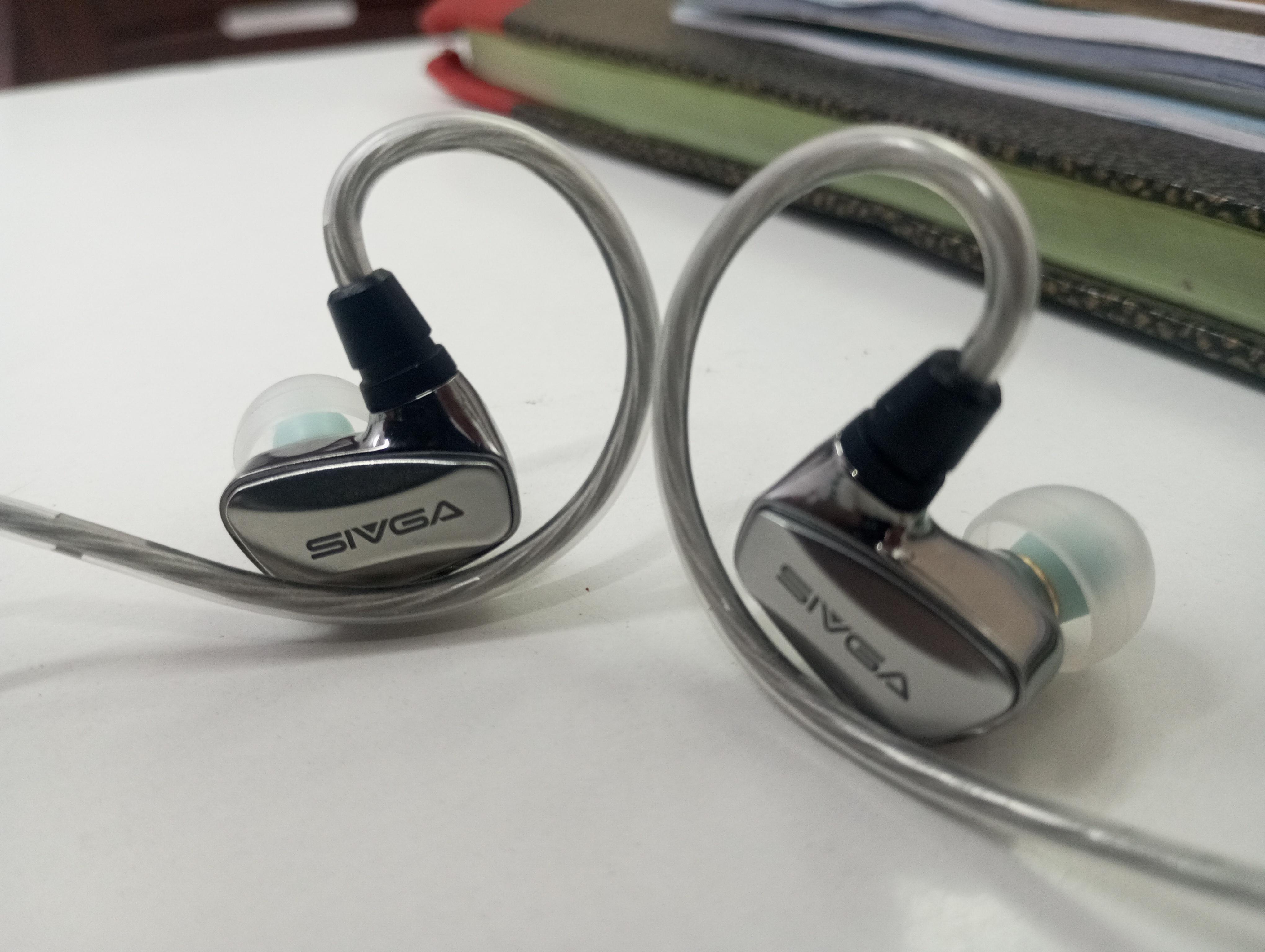
• The SIVGA M260 is a flathead style earphone that was launched in May 2026 at $39.90 for the 3.5mm version and $45 for the USB C version if you don't want to deal with dongle dangle.

• The driver configuration is a single 14.2mm dynamic driver with a copper ring composite bio diaphragm. Single DD lovers rejoice.

BUILD AND COMFORT

• The shell is CNC machined from aluminum with a knurled grip pattern and a gold colored rear plate. The retro aesthetic looks classy and feels far more premium than the price tag suggests.

• The earbud is lightweight and comfortable for long listening sessions, helped by the slightly more compact 14.2mm housing compared to larger 15.4mm flatheads. Because this is an open flathead design, there is zero ear canal pressure build up, though it also means there is virtually no passive noise isolation. Enjoy the crying infant noises on the subway.

• The front features a metal mesh

grill that protects the driver from dust and debris.

• The overall fit is very important. The way you angle the flathead changes the sound significantly. Keep this in mind.

ACCESSORIES

• The cable is a 1.2m silver plated OFC wire using detachable MMCX connectors ( for better or worse ). It comes with either a non swappable 3.5mm L shaped plug or a straight USB C termination with an integrated DAC and mic. The cable is supply with virtually no memory. I like the cable.

• The M260 comes with 4 pairs of foam covers:

• Hollow donut foam rings for an airier presentation and more secure grip.

• Full foam covers to thicken the low end and tame brightness a wee but.

• Unlike many budget sets that skip storage, including sivga in their SM100 iem ( why tho ?) the M260 includes a textured fabric carrying case with enough room for the earbuds and a small dongle DAC if you chose the 3.5 termination.

SONIC PERFORMANCE

• Foam covers used: Stock hollow donut foams, full thick foams.

• Source: iBasso DC04 Ultra

TECHNICALITIES

• The soundstage is moderately wide and open , which is inherent to the flathead form factor.

• Detail retrieval is very respectable for the price bracket, easily outperforming what most people (and even me) expect from a budget flathead.

• Instrument separation is on par with the class. You can pick out individual instruments in busy mixes without things smearing together. This was a surprise.

• Imaging is spacious and natural rather than claustrophobic. I will never recommend these for gaming tho , the form factor is not built for lot of head movements.

BASS

• The M260 has no real sub bass rumble to speak of , it is a flathead and obeys the laws of physics. No seal, No sub bass.

• The mid bass was surprisingly good. It was punchy and tactile and the quantity was satisfactory as well. Swapping to thicker full foams helps bring out more low end warmth. Attack and decay are of average duration.

MIDS

• The mids are not between warm and neutral as some people say , the M260 is straight up warm and cozy.

• String and acoustic instruments sound pleasant and smooth.

• Woodwind and brass instruments come

across as soft as if you had an otl tube amp source.

• Male vocals sound thicker/ dense , almost pitched down. Definitely not accurate.

• Female vocals sound lush and ethereal. I kinda like the effect it has on female vocals.

TREBLE

• Cymbals also sound soft without any sense of metallic harshness. The wash is muted but prolonged.

• Higher pitched female vocals stay smooth and well controlled, but if you use the donut foam , it may sound a little thin sometimes. Trailing resonance notes are muted.

• Snare drums and acoustic plucks have crisp initial definition while remaining easy on the ears during longer sessions.

• The M260 has some air but there really is not real treble extension that is obviously audible.

• The transient response is fast and tight thanks to the lightweight CCAW voice coil.

CONCLUSION

• The SIVGA M260 is an impressive budget flathead that nails the fundamentals. Its wide soundstage, lush vocal delivery, detachable MMCX cable, and solid metal build ( with tasty gold accents ) punch well above its $40 price point. The main trade offs are the expected sub bass roll off, zero noise isolation, and a fit that depends heavily on your ear anatomy and foam choice. Foam rolling makes a noticeable difference in dialing in the warmth and low end punch. This is a really well made and compelling product but will I grab these over a pair of iems ? I don't think so , the noise isolation is a must for me and the fit is finicky. This has nothing to do with the product itself, it's just the form factor.

Disclaimer - M260 was sent by sivga but all my opinions are my own , I won't sell out for 40 bucks.

Non affiliated purchase links :

Official Store:https://sivgashop.com/products/m260

AliExpress Store:https://www.aliexpress.com/item/1005012238909809.html

Tracks used:

• Killshot by Eminem

• GDFR by Flo Rida

• Another One Bites the Dust by Queen

• Toxic by Britney Spears

• Winter, Four Seasons by Vivaldi

• Mexico by Vitamin String Quartet

• When I'm Down by Chris Cornell

• Show Me How to Live by Audioslave

• Angel of the Morning by Juice Newton

• Monomyth by Animals as Leaders

• Fuel by Metallica

• Novocaine by Amber Rubarth

• Hurt by Johnny Cash

• Take Five by Dave Brubeck


r/inearfidelity • • 12h ago

Review The forgotten budget banger

Post image
12 Upvotes

INTRODUCTION

• The Sivga SM100 was priced at $50 at launch but you can find it around $40 now . The black friday deal drops it down to $31 before shipping.

• The SM100 is a 10mm dual chamber single dynamic driver utilizing a PU + sapphire like ceramic composite diaphragm.

BUILD AND COMFORT

• Sivga has surprisingly moved away from wood and instead the shell is constructed from zinc alloy. The metal shell has 2 finishes , yes , you read that right. The faceplate is brushed while the rest of the iem is polished. This is a budget iem by the way.

• Each earpiece weighs roughly 7.2g, giving it a reassuring heft without feeling overtly heavy. The ergonomic contours sit nicely in the ear for most people , the shell literally disappears into my pinna. It fits well for something that's shaped like a golf club.

• The iem has 2 tiny vent holes , one for the main shell cavity and the other near the nozzle. I faced no pressure buildup during my listening sessions.

• The nozzle is about 5.5mm in size with a lip to grip eartips.

ACCESSORIES

• The stock cable is a 1.2m silver plated copper wire with 0.78mm 2 pin connectors, a straight 3.5mm single ended plug, and an inline microphone with media controls. The cable is thin, supple, and practical for an everyday desk or mobile use. I also have to mention the attention to detail here , the 2 pin housing and iem socket have a coherent design where the curvature is continous and tapers into the cable. This was really designed , they could have used an off the shelf cable but no , sivga chose to do this. It's the little things that make the difference, and it shows they actually cared for the end product, irrespective of price.

• The SM100 comes with a barebones accessory package, just 3 pairs of basic silicone eartips (S/M/L), No carrying/ travel case is a big no no for this price range. They have a nice fabric hard case for the m260 , use that sivga.

SONIC PERFORMANCE

Source used : iBasso DC04 Ultra

Eartips used : Stock silicone tips are bad , I used dunu candy as usual.

Power output required : With a 27Ω impedance and 107 dB sensitivity, the SM100 is very easy to drive. Any smartphone, laptop jack, or even an entry level dongle DAC will get it painfully loud.

TECHNICALITIES

• The soundstage is good for the price range , doesn't feel claustrophobic.

• Detail retrieval is really good or above average. You get most of the macro details with these. They don't jump at you but if you listen closely, they are there.

• Instrument separation is phenomenal for the price. I didn't expect it to be this good , second only to the cozoy D1 in the class.

• Imaging is decent and accurate to a point. Casual gamers will be more than happy , It's also passable for fps gaming but not the best.

BASS

• The sub bass is average to good with decent rumble with some extention. Sub bass is not the standout feature here.

• Mid bass punch is tight, fast, and controlled. Kick drums and bass guitars have a clean definition with zero bleed into the lower midrange. Mid bass was the best aspect of this iem , the stock tips don't do this iem any favour. Liquid silicone tips or even the dunu candy would be better.

• Overall, the bass is good for the price. Definitely not a basshead iem.

MIDS

• The overall tone is more neutral than bright.

• Acoustic guitars, strings, and pianos come across crisp and well defined. Dare I say , a little natural ?

• Male vocals are good enough though baritone vocals lack that huskyness.

• Female vocals sound pretty good. They sound lively, forward, and airy, but on poorly mastered tracks it may sound grainy.

TREBLE

• Cymbals and hi hats have a crisp, clean attack with a muted wash.

• Upper treble avoids harsh metallic splashiness. This was a highlight for me. The sound may not be accurate but you're given pleasant sound signature instead.

• Sibilance is well controlled even in the upper register of female vocals. This single DD was tuned with intent.

• Treble extention is not the term I would be using here , air frequencies are muted to me. This is where you loose that sense of perceived micro details. Then I remember the price and shut up.

Conclusion

- The sivga SM100 was a surprise to me. I really did not expect a well rounded product that is well built at around 30 dollars. The exemption of a travel/carry case needs to be rectified asap. Sonically, I wouldn't complain much , maybe a touch more sub bass and more treble extension is all this iems needs to be top of the class. Well done sivga.

Disclaimer - Sivga sent the SM100 for review in exchange for an honest review. If SM100 fit the bill for you after reading my review , you can purchase it from the non affiliated links below.

Non affiliated links :

Official Store:https://sivgashop.com/products/sm100

AliExpress Store:https://www.aliexpress.com/item/1005010425585295.html

Tracks used -

- Killshot by Eminem

- GDFR by flo rida

- Another one bites the dust by queen

- Toxic by britney spears

- Winter , four seasons by vivaldi

- Mexico by vitamin string quartet

- When I'm down by Chris Cornell

- Show me how to live by Audioslave

- Angel of the morning by Juice newton

- Monomyth by Animals as leaders

- Fuel by Metallica

- Novocaine by Amber rubarth

- Hurt by Johnny Cash

- Take Five by Dave brubeck


r/inearfidelity • • 7h ago

Discussion Interpreting treble and its effect on sound

Post image
2 Upvotes

Hey guys, I was curious how one should go about interpreting the sound on these 2 IEMs.

They both graph similarly all the way to the presence region for the most part.

The Position has a dip in the upper treble that's not present on the Cadenza, with slightly more energy before the 8k peak.

What would that mean for the sound and more specifically for (1) the naturalness of vocals and (2) differences in potential sibilance, if any?


r/inearfidelity • • 22h ago

Review Not Every IEM Needs to Be a Detail Monster

Thumbnail
gallery
25 Upvotes

Erand Resonance 5 is a $189 IEM featuring a 2DD + 2BA + 1MP driver setup. It's one of the most hyped IEMs to come out recently, from a brand that seemingly came out of nowhere and quickly started gaining attention.

I've been interested in trying it for a while because of this and finally got the chance. In this review, I'll talk about what I liked and didn't like about the Resonance 5 and how it compares to other IEMs in its price range.

What I Like

  • The bass of Resonance 5 digs deep into the sub-bass. It has a very satisfying rumble that rattles your ears.
  • The mid-bass isn't lacking either, but it's not the focus of this IEM. There's a decent punch, but it doesn't feel huge in impact.
  • The bass feels very tight without sounding woolly or loose. It's not the sharpest-sounding bass, as the notes have a rounded character to it.
  • Midrange sounds full and thick and the vocals are on the relaxed side. There's enough upper-midrange emphasis to prevent the overall sound from feeling too subdued.
  • This type of tuning works really well for male vocals, as they sound chesty and lush. Piano notes also sound realistic without being too metallic.
  • The treble sounds smooth for the most part. It's very easy to listen to and I haven't encountered any issues with sibilance either.
  • Most of the treble presence comes from the lower treble, which feels smooth for the most part. There's enough sharpness to give the treble some bite and prevent it from sounding too soft or undefined.
  • Imaging performance is pretty standout when it comes to subjective qualities. It sounds precise and accurate for the most part. Instrument separation is also good, with decent layering and doesn’t sound congested.
  • The accessory package of the Resonance 5 is impressive. You get a variety of eartips and the case is also of high quality. It's spacious enough to carry the IEMs comfortably. This is one of those cases I would actually use.
  • Resonance 5 fits my ears snugly, and I haven't faced any comfort issues. It also isolates very well compared to most IEMs.

What I Don't Like

  • I would have liked a bit more emphasis in the upper mids, as the female vocals sound too relaxed to my ears. 
  • A little more emphasis could have given female vocals more bite and presence, making them sound clearer. With this tuning, male vocals sound better than female vocals.
  • The upper-treble roll-off can make the sound feel a bit dull at times. Cymbals, for example, don't sound particularly crisp or sparkly.
  • The relaxed tuning means the Resonance 5 doesn't particularly impress me when it comes to subjective qualities, especially perceived detail retrieval and resolution. It sounds good enough for its price range, but it doesn't really wow me in any other way.
  • I'm not a fan of the fabric-coated cable, even though this is one of the better fabric cables I've come across.
  • My main issue with this cable is that it doesn't behave very well and tends to retain its shape. Fortunately, it's not overly microphonic, but it is more microphonic than most regular IEM cables.

Comparisons

Juzear Light Shuttle:

Light Shuttle sounds more natural and correct sounding. Vocals sound more natural on Light Shuttle compared to Resonance 5. It also has excellent treble extension.

I would give the Resonance 5 the edge in bass quality, as the bass sounds much more satisfying than Light Shuttle. 

However, when it comes to technical qualities like detail retrieval and imaging resolution, the Light Shuttle is better than the Resonance 5.

Aful Miracle One

Miracle One has better treble extension than the Resonance 5 and I prefer the way treble is tuned in Miracle One as it sounds much more energetic.

I also prefer the way the Miracle One is tuned in the midrange. The upper-midrange emphasis makes female vocals sound much more energetic compared to the Resonance 5.

However, the Resonance 5 has better bass. It sounds tighter, more impactful and more satisfying to listen to. The Miracle One's bass, in comparison, doesn't have the same impact.

In terms of overall tonality, the Miracle One comes across as drier compared to the Resonance 5, which is much smoother to listen to. When it comes to perceived technical performance, I'd place both in the same range.

Binary 1900

The Binary 1900 is a bit more expensive than the Resonance 5, but I compare as both have a similar kind of tuning. 

I have a clear preference for the Binary 1900 when it comes to overall tuning, as it sounds much more energetic due to its upper-midrange emphasis, while the Resonance 5 is much more relaxed here.

The treble on the 1900 can sound a bit spicier compared to the Resonance 5, which is very smooth to listen to.

When it comes to bass, I don't have a clear winner because I enjoy their different presentations. The Resonance 5 has a deep, sub-bass-focused tuning, while the 1900 has a more textured bass response with mid-bass emphasis.

When it comes to perceived technical performance, I'd give a slight edge to the Binary  1900. It sounds more detailed than the Resonance 5 and its imaging is also more distinct and precise.

Who's it for?: It's for those who prefer a smooth and relaxed tuning with a laid-back presentation that handles pretty much anything you throw at it well.

Who's it not for?: It's not for those looking for a more technical and natural-sounding IEM with  excellent treble extension.

The Erand Resonance 5 was provided by Hifichoi for review. I haven't been compensated or asked to say anything specific about it. These are my honest thoughts after spending time with it.


r/inearfidelity • • 1d ago

Review A Smaller Que But Somehow Better.

Thumbnail
gallery
32 Upvotes

SIVGA Lyrebird is a quad-driver setup similar to the Simgot SuperMix 4. But I would say the Lyrebird feels like a better version of the SIVGA Que. A big Thanks to sivga for providing Lyrebird for the review.

Unboxing
I love the unboxing of Sivga. The box also looks classy.
We get 3 pairs of normal silicone eartips and 3 pairs of liquid silicone eartips. You also get a leather finish carrying case which is quite similar to the one that comes with the que.

The cable uses standard 2 pin connectors and comes with a 4.4mm termination. It also feels very premium. Neither too thin nor too thick. But the cable does feel a bit stiff. There is a spring around the termination which helps to protect the cable from tearing.

From the looks it seems like a fabric braided cable but it actually has some kind of plastic coating on the outside.

Build, Fit and Comfort

It looks like a smaller sister of the SIVGA Que.

The body is made of metal and the faceplate is made of wood with a layer of resin/epoxy on top. The cable is from the Japanese brand Furukawa.

It only comes with a 4.4mm cable. Idk if they sell it with a 3.5mm cable option.

The nozzles look a bit thinner compared to the que. I usually don't get good comfort with thicker nozzles but I didn't have any problems with the Lyrebird.

Good to see SIVGA managing to fit 4 different types of drivers inside a small shell.

Sound Profile

Before getting the Lyrebird I saw a few reviews on Reddit. Almost everyone was calling it a bright set.

But as per my testing I find it very warm and smooth. I don't feel any sibilance at all. It actually made me question my HRTF lol.

These are very friendly for treble-sensitive listeners without losing much detail.

Technicalities

Soundstage is good. Not too shallow and not too wide either. Vocals also have a good sense of width and there is decent depth. Nothing feels too narrow or closed in. It gives instruments enough room to breathe.
Separation is also quite good. Even with busy tracks you can follow different instruments without much trouble.

Low End and Bass

Bass and lows are quite similar to the SIVGA Que.

Sub bass is tamed down while the mid bass is lifted up. Mid bass has more kick to it compared to the que. Sub bass is mostly here to provide a little bit of texture.

You can hear it but you won't get excessive sub bass rumble unless the music itself has a solid amount of it. But you won't really notice the lack of bass because the mid bass provides that rumbling texture whenever needed.

The bass has good control and doesn't feel bloated. Even on busy tracks it doesn't overpower the mids.

Any kind of drums you listen to feel very natural. Kick drums have a nice punch and toms have good body to them. Mid-bass performs like a charm here.

Mids and Vocals

I have tested the Que and M260 flathead from SIVGA. I have never been disappointed with their vocal presentation. Same goes for the Lyrebird.

Even though the Que has very fulfilling vocals it can get shouty sometimes. But on the Lyrebird everything feels much smoother and more natural. Tonality also feels very natural.

One thing I noticed is that in a few songs with lots of instruments the vocals feel a bit behind or parallel to the instruments. Personally I prefer vocals to be a bit more forward. Even though vocals are not particularly forward here they still feel very fulfilling.

I don't have any complaints about female vocals but male vocals feel a bit thin and light. Female vocals have good clarity without becoming too sharp. Instruments also have a natural tone and don't feel overly coloured.

Anything with drums and fast attacking instruments like kick drums, toms and snare drums sounds very pleasing. The attack feels fast and natural.

I also had the SuperMix 4 which uses a similar quad driver setup. But the drum attacks on the SuperMix 4 had that thin kind of feeling. On the Lyrebird they feel much more natural and have better body to them.

Piano and guitar also sound very natural. Overall the mids are smooth and musical without losing much clarity.

Treble and Highs

Idk why so many reviews call this a bright set. I strongly disagree. Maybe it's due to my HRTF.
After the SuperMix 4 this is one thing I can say. I don't feel any sibilance or fatigue without compromising on details.
Even though the SuperMix 4 was on the brighter side the Lyrebird is much warmer.

You still get a pretty good amount of air and sparkle. Cymbals and hi-hats have good presence without sounding sharp or metallic. Treble has good extension and doesn't feel dull or rolled off.

I also like how it handles details without feeling sharp . But overall it's a smooth and comfortable treble presentation without losing its energy.

Who Should Buy?
If you prefer a warm and smooth sound without losing much detail.
If you are treble-sensitive and don't enjoy bright or fatiguing IEMs.
If you want an all-rounder that can handle different genres without doing anything particularly wrong.
If you love wooden faceplates and premium build quality.

Who Should Avoid?
If you are a basshead looking for strong sub-bass rumble.
If you want a more aggressive and energetic sound rather than a laid-back presentation.

Final Thoughts

I would say if you want something with a laid-back warm sound without compromising much on detail retrieval then the Lyrebird is a very good option.

It's more of an all rounder. It's not particularly specialised in one thing but can do many things cleanly.
Compared to the Que I would say the Lyrebird feels like a more refined version. Especially when it comes to smoother vocals and more natural drum attacks.

Also packed with good accessories and a beautiful wooden design.

For me this is a pretty easy recommendation if you prefer a warmer and smoother sound without going too dark.


r/inearfidelity • • 9h ago

Review Fosi IM4 - IM impressed!

Thumbnail
gallery
1 Upvotes

Pros: Great performance for it's price
Excellent form factor, build and aesthetics, accessories
Superb staging and imaging

Cons: I've really gotten spoiled enough to start expecting modular cables for everything
Details retrieval isn't the best
Upper mids tuning doesn't work for me with some shoutiness creeping in

Many years ago I promised myself I would regret nothing. Then I bought the Fosi IM4. And gave it to a friend who never gave it back and just offered me money in its stead. And then I started reviewing music. And I realised that I really liked this one and wanted to write my impressions of it down or on screen. So I was pleasantly surprised when another (arguably with better timing) friend offered to send me his set for a demo and review. And under pain of immense loss of face and possible bodily harm, I will have to send this back once I’m done. I will try offering money as a way to condone the potential dastardly act of keeping this one with me but let’s see how that goes.

Now Fosi is a brand that I love the design language of. I use the ZH3 as my primary desktop source for a while and love the matte black/charcoal shades with the bright orange knob. And it sounds very good, especially for how much it costs. I was, thusly, super excited to lay my hands on the IM4 which is their first foray into the IEM space. Their way of owning the entire signal chain I suppose.

The IM4 is a single DD affair, made of machined aluminium and comes in black and white (more or less) with the faceplates showing an orange mesh peeking through. A really nice sleek looking affair. The box includes a 3.5mm cable, a nice enough pouch, 3 sets of tips - bass, more bass, and less bass (more or less), and an alternate nozzle made of brass. An acceptable unboxing for the price of $100. The set that I had also had the $20 DS2 dongle dac, which is a fair dac that sounds fine for its price.
The IM4 has an impedance of 21 ohm and a sensitivity of 109 dB, making it remarkably easy to drive.
I tested the IM4 on the ZH3, VE Prime Stack, Onix Beta, Fiio M33. Tidal tracks from here https://tidal.com/playlist/3078c9b9-a1c0-4fde-8ce7-81f0e34b426c and local flac files. Stock and Azla Origin tips gave me the best seal

Time to dive right in.

Bass
The beryllium coated PU diaphragm on the dynamic driver, coupled with the open back gives this IEM a very authoritative yet not booming bass. The diaphragm responds quickly and has some decay to differentiate its sound from a planar. Sub bass on Doing it Right by Daft Punk is adequately rumbling and adds a nice foundation for the kicks and the synth bass to build the low end. Kicks have a bit of a physicality to them. I (maybe imagined) felt the impact of the kicks in my ear and in a controlled non booming way. On tracks with a busy low end - Got a Match by Chick Corea Elektric Band, the double kicks are heard and the running bass line from John Pattitucci are well heard and there is a well implemented resolution of bass on this set. It certainly isn’t the most detailed set I’ve ever heard but as a single DD IEM, it escapes having a floppy bass and there’s no bleed into the lower mids.

Mids
The mids on this set are mostly natural sounding with the lower mids borrowing some of the low end weight to add some additional body to male vocals. The upper mids, however, have some shoutiness to them which mostly creeps in with saxophones on Snarky Puppy’s What About Me. Female vocals also have occasional shoutiness based on the register that they are singing in. On Subcity by Tracy Chapman, there is definitely some shoutiness that makes a longer listen to the complete Best of Tracy Chapman album a little fatiguing. But Tilted by Chirstine and the Queens doesn't sound bad at all, in fact, the staging on this set makes that song delightful. And of course there’s that bass. On Playing God by Polyphia, the same shoutiness or peaking spills over to the snares. And that brings us to…

Treble
The treble for the most part has the air and shimmer without sibilance but suffers in tracks where the upper mid peaking causes some occasional sharp notes that make me wince. And this will not forgive a bad mastering. Everywhere by Fleetwood Mac is sharp in the snare and cymbals department and there is a slight unnatural shoutiness to Christie McVie’s voice which is a shame, really. All Nite by Janet Jackson has some sibilance and largely because that’s how it’s recorded. And this gets worse with scaling the volume.
And this is with the black, aluminium nozzles. The brass ones take it up a notch.

Stage, Imaging and resolution
Now staging and imaging are this IEMs strength. Along with the look, the bass and the comfort. The open back design gives it a really large holographic soundstage and the imaging is precise, both laterally and front-back. Resolution and detail retrieval, again, is not the greatest but it’s up there with the best at this price point.

Final thoughts
The Fosi IM4 is a great little IEM - a looker, very comfortable for long sessions, a great bass response and working tuning nozzles. It’s also likely a great gaming set, with matching aesthetics. It is does falter with the upper mids and some female voices and instruments in that register and is an extremely unforgiving IEM so the mastering and signal chain need to be great. Would I buy it? I did and enjoyed it!


r/inearfidelity • • 1d ago

Impressions The Trade Off with Playing It Safe? My Early Thoughts on the Apsara

Post image
22 Upvotes

A few days back, I had shared the unboxing video of the Binary Acoustics Apsara - https://www.reddit.com/r/iems/comments/1y4al6b/iridescent_beauty_binary_acoustics_apsara_unboxing/

I really liked how it looked and was very really eager to know how it sounds!. After listening to it for the past 3 days or so, here are my impressions. 

I find the Apsara to be very serene and inoffensive. It presents your songs with a certain sense of calmness. Whether its bass, mids or the treble - everything is heard front and clear without really dominating the other.

And honestly, I kinda dig that! 

Sometimes, you just want to put on your favourite playlist, sit back and let the music play. That being said, sometimes I feel like that it doesn’t have that one single point or X factor. 

Don’t get me wrong, I enjoy my regular songs on this but sometimes I do miss that one factor just pulls me towards it. At this price point, the competition is really high and I will be comparing this to the other IEMs and really test out the Apsara. Full review soon! 

Do you guys prefer IEMs that simply lets you listen to music effortlessly or do you crave for that one distinct character?


r/inearfidelity • • 9h ago

Review FiiO QX13 - Desktop muscle without the lumbar strain

Thumbnail
gallery
1 Upvotes

Pros: Ridiculous headroom in a 33g dongle (900mW @ 32Ω in Desktop Mode)
Clean, warm-neutral Sabre tuning that skips the usual ESS glare
Crisp 1.99-inch color display with full on-board menu and PEQ
Dual USB-C ports keep phone battery drain in check

Cons: Needs an external power bank or E-stick to unlock full Desktop Mode
Glossy glass front is a fingerprint magnet
Overkill if you only run hyper-sensitive IEMs
Not sure if a want a touchscreen
Unforgiving to poor recordings
The case is badly designed

After surviving airport security with transportable stacks (VE Prime) and nursing a mild lumbar strain from lugging desktop-class gear around (KAEI Tap 1 Pro with the PSU), a 33-gram dongle claiming 900mW per channel feels like a practical joke. Yet here we are. Thank you u/Gaming_Sushii for lending me the QX13 for a review. The unit goes back to him post review and my thoughts are my own.

Introduction

The FiiO QX13 packs a flagship 8-channel ES9027SPRO DAC, a 16-core XMOS XU316 USB receiver, and a quad-INA1620 amp stage into a 21-layer carbon fiber shell—complete with a 2 inch Corning glass display that finally tells you your exact volume steps and voltage. Praise Be!!
The bottom has 3 buttons that are tactile and need to be pressed down to work for Volume up, Play/pause, and Volume down. A long press on the play/pause button brings up a menu for gain,filters, output options, channel balance, themes (including a cute Vu meter and cassette), PEQ (via the fiio app), and this HID button setting which just changes the way the 3 buttons on the QX13 behave. I spend an inordinate amount of time looking for a HID button on the side and all I found was a second usb port for power and a switch to turn on beast more.

Specs & Chain

• Outputs: 3.5mm SE (with S/PDIF coax out) + 4.4mm Balanced
• Power (@ 32Ω): 605mW balanced in standard mode; 900mW balanced in Desktop Mode (via dedicated secondary USB-C power port)
• Tested with: Mac mini (local FLAC), Moto Edge 60 fusion, Sennheiser HD600, Final E5000, Nightjar Singularity, Softears Twilight, and Sennheiser IE600, Audiotechnica ATH-R70xa

TLDR: Natural, authoritative, and dead silent. It brings desktop-grade grip and note weight to a pocketable form factor without offending the treble-sensitive.

Bass
The QX13 doesn’t artificially bloat the low end, but the sheer current headroom gives dynamic drivers real grip. On Angel by Massive Attack and Islands by The xx, sub-bass rumbles with dense, tactile authority rather than loose flabby bloat. Switching to The Dance of Eternity by Dream Theater, kick drums and bass runs stay cleanly separated without bleeding into the lower mids.

Mids
This is far removed from the sterile, clinical Sabre dongles of before. Vocals and acoustic instruments carry natural note weight and zero shoutiness. On Take Five by Dave Brubeck and Playing God by Polyphia, the midrange stays transparent and uncolored, letting the Softears Twilight and Nightjar Singularity keep their organic timbre intact.

Treble
Polite, extended, and honest to the transducer. It extracts micro-detail cleanly without adding artificial zing or glare. Even on the Sennheiser IE600, the QX13 preserves top-end air and cymbal shimmer while keeping sibilance firmly out of the danger zone.
Stage, Imaging & Power
In standard bus-powered mode, staging is well-proportioned with sharp lateral imaging. Plug a secondary power source into the red USB-C port to engage Desktop Mode, and the stage noticeably opens up—driving the Sennheiser HD600 and Final E5000 with effortless dynamics and a pitch-black noise floor. It does struggle with the ATH-R70xa, needing desktop mode and a significant volume to open that set up.

Comparisons
KAEI KD01 Pro: Both punch well above their weight class in raw output, with the KD01 Pro hitting 700mW on bus power and 1200mW with its dedicated PSU1. Tonally, the KD01 Pro injects a noticeable mid-bass boost and extra warmth—great for leaner sets, though it can push already lush IEMs like the Final E5000 into overkill on bass-heavy tracks like Giorgio by Moroder by Daft Punk. The QX13 takes a cleaner, more neutral-warm approach that keeps the low end tighter while solving every ergonomic gripe I had with the KD01 Pro: you get a proper volume display, no plug-in pops, and far cooler thermal behavior.

Peeves
With the desktop mode and the ability to scale, with a good set of headphones, the QX13 is unforgiving poorly mastered music. I mean, one can reduce the amount of power it’s spitting out but where’s the fun in that.
I am not quite sure if I want a touch screen. There seems to be a lot of wasted real estate on the screen. And finally, that case from hell. I get that it’s hard to design a case for something this small. But if it’s open on the 3.5/4.4 end then every time I stick a usb cable on the opposite side it pushes the QX13 out. Same when I try pulling the iem/headphones out. Time to crankout the 3d printer and design either a TPU condom style sleeve, or something that will hook on to the edges, maybe bring the 90s back with belt clip.

Final Thoughts
The FiiO QX13 hits a sweet spot between pocketability and raw driving power. If you want a single source that can run sensitive IEMs on a flight and still wake up full-size headphones at your desk—without needing a chiropractor afterward—this is an easy recommendation.


r/inearfidelity • • 1d ago

Review Aune Audio IR300 A Hiden Gem

Thumbnail
gallery
11 Upvotes

Aune Audio IR300 A Hidden Gem

Another week, another review. This time around we have a new brand Aune Audio & set of today's focus is IR300.

If you know me I am a sucker for good Single DD sets & if I sniff a good one I just pounce on it. So, when I had a brief demo of IR300 I was intrigued. As the story goes Aune lent IR300 for a review tour to AudioGeek India and I, being on the lookout, grabbed the opportunity. What do I feel about it? Please read on to find out.

First of all, mighty thanks to AudioGeek India & Aune Audio as without their help this review wouldn't have been possible.

I was not paid or compensated in any manner for this review. After the review the set would revert back to the brand. All opinions & thoughts are mine.

My preference in tone & timber is DD > Hybrids > Planar

Please keep my bias towards DD sets in mind while reading this review.

Now that all the pleasantries have been exchanged let's get on with the meat & potatoes of the review.

Pros:

* Impactful low end

* Nice balanced Vocals with respect to low end & highs

* Nice detailed yet safe treble

* Engaging dynamic set

* 3x2 tuning options

* Excellent Build Quality

Cons:

* Bit more Sub bass would have been great

* Female vocals need more refinement

* Stage could have been bit bigger

* A hard leather case could have been added.

Build Quality:

What do you get in the box?

Two IEM shells, One modular cable with 3.5mm & 4.4mm jack adaptors. 2 sets of ear tips are included. A leather (faux) draw string pouch & lastly a plastic box containing nozzles & tuning modules.

Shells are made of metal entirely. They have nice checking on the faceplates. Shells are on the small side.

Nozzles are removable. They are used to alter tuning of the set alongside the tuning modules on the faceplates. These tuning modules are swappable. Nozzles have lips to them.

Cable is an OFC one; it looks & feels very premium. It is a 4 core one. The best part is that it is modular so you can use it with various sources. Fixtures are premium & made up of metal.The only thing I would have loved to see improved is connection mechanism from friction fit to locking screw in type. As friction type overtime becomes loose. But the overall cable is solid.

The included (faux) leather pouch is let down and would have loved to see a proper hard case included. It is big enough to carry IEMs + cable + eartips & small dongle but don't expect any protection.

Overall Build Quality 5/5

Comfort:

IEM shells are small so fitting was not an issue. If you are a person with small ears this one is best for you. Passive noise isolation is good around 60-70%. Nozzles are long, provide deep insertion & stable fit. Lips on the nozzles prevent ear tip slip offs. Shells are not heavy being made up of metal. There was no ear pain or pressure felt in long listening sessions.

Cable is supple & easy to wrap. It doesn't tangle & there are no microphonics in it. Ear hooks don't tug on the shells. Chin synch actually works & stays in its place.

Overall comfort 5/5

Sources:

IR300 was kept on stock cable & stock ear tips. Black nozzles, an enclosed back module, were used to write this review. Sources used for this review are neutral to keep everything reproducible.

I preferred neutral & warm sources with IR300 rather than bright sources. I feel bright sources don't suit this set well.

Sources used Dethonray Clarinet, Tri TK3, Onix Xi Alpha, FiiO Q3, Burson Stellar

General Sound Impressions:

There are total 3x2 tuning possibilities. I finally settled on black nozzles & closed back modules. Entire impressions are based on it.

Bass/Lows:

Sub bass rumbles but the rumble is light. It's not anemic, it's enough to give a feeling but don't expect basshead level sub bass here. It doesn't go too deep. Mid bass is impactful & tight it doesn't overstay it's welcome. It's quick in decay. I feel the IR300 has mid bass over sub bass type tuning. If you love mid bass over sub bass this one is right up your alley.

Drums & kick drums sound good but the deep rumble is just a tad bit less for my taste. Guitars sound great, they have enough note weight to make them enjoyable. Their rumble & buzz is a bit less for my taste. But again I am nit picking your mileage will vary. Percussion instruments sound good. Bass here is well nuanced; you can make out between different instruments.

I would have loved to have more sub bass but hey you can't have all of it. Overall I think this has a nice low end which adds to the character of the IR300.

Overall Bass/Lows 4.5/5

Mids:

Vocals feel balanced with the bass & treble. They are neither too forward nor recessed, just perfectly balanced. I love such presentations.

Male vocals, be it low pitched or high pitched ones feel nice. They have note weight to them. I feel low pitched male vocals feel better. As for female vocals they feel good. They lack the edge to them. They are not emotive enough. They don't get intense. I would have loved a better female vocal presentation but hey again nit picking. You might totally disagree with me here.

Clarity in the mids is good. No congestion or smearing is observed. Is it the best in price point? No, but above average. No off timber or tonality is observed in the instruments in mids.

Overall Mids 4.5/5

Treble/Highs:

This is going to be a point of disagreement for a lot of you. I feel the treble is just shy of becoming bright. It has enough details to cover all macro & micro details you will ever need. It won't focus on them but rather present them in a non intrusive manner. Is it the smoothest treble? No, but it is well tuned & properly tamed. Some might find it a bit bright. People sensitive to treble please demo before purchase. I also feel it could have been a bit more smooth.

Instruments in the treble are reproduced nicely & sharply enough to make them stand out properly in the mix. They are not highlighted but are properly rendered. Guitar strings feel nice. Flutes, piano's higher notes feel equally good. Shakers, cymbals and crashes feel good. There is no metallic zing to them.

Perceived sound stage, the stage here is above average. It's wider than tall. The depth is average . It creates the feeling of instruments playing around your head & vocals in the center. But more of the stage would have been great but again we need to consider all the constraints the set has to go through.

Overall Treble/Highs 4.5/5

Song Impressions:

To correlate my findings in sound impressions with songs I have chosen a few songs.

  1. Higher by Creed

Strings sound engaging just the buzz & rumble is a bit less for my personal taste. The lead singer doesn't feel buried in the instruments. Drums sound good. Cymbals sound good. But the guitars which are the main protagonist here sound amazing. I felt the stage was less compared to other times I have heard this song. Anyways the entire presentation was enjoyable. I am just nitpicking as a reviewer. It's my job to find faults to create a full picture.

2. Daisies by Nina Shallman

The starting drum sequence feels a little bit bloomed. It lacks the deep rumble. Nina Shallman sounds good, just her voice lacks the edge. Her voice has that youthfulness that IR300 fails to do justice to it. Shakers & bells here don't stand out. They gel well with the mix. Strings sound amazing. Piano notes are great. The entire presentation was enjoyable. Just the vocals feel let down.

3. Ego Death by Polyphia

This is my resolution check song aka driver speed check song. This song taxes the driver. On slow drivers there is smearing or congestion is felt. On IR300 no such issues. It resolved the complex passages well. Just felt more clarity could have been great.

Strings are the USP here. The wild play of the various guitars is just next level & I really enjoyed their presentation here. Just the rumble is not up to my taste. Drums sound impactful. Cymbals and crashes sound good, no metallic zing to them. This song can get a bit intense for the listener. But thankfully no such case here.

I was head banging to the song on IR300.

Comparison with some sets:

  1. Canpur Silver Flash Vs Aune IR300

Vocals are better on the IR300 for me. Clarity is better on Silver Flash. Sibilance is present on Silver Flash absent on IR300. Treble feels a bit brighter on Silver Flash. The stage is a bit bigger on Silver Flash. In the low end the IR300 is better for me. Silver flash has a good low end still I prefer the IR300. For my preferences I will take IR300 over Silver Flash.

2. Dita Prelude Vs Aune IR300

The stage is more open on the Dita Prelude. Treble is almost similar, slightly smoother on Prelude.Vocals are better on Prelude please consider my bias towards Dita tuning while reading this. For some the IR300 may be perfect for vocals. Sub bass is better on Dita Prelude but mid bass is better on IR300. Clarity is good on Prelude. Details pop more on IR300 so if you want more details IR300 is the way to go.

The competition is tough here. It is really hard to find a winner here. I can say that these compliment each other well.

3. Artpical Raphael vs Aune IR300

Sub bass is better on Raphael whereas the mid bass is better on the IR300. Male Vocals are better on the IR300. Female vocals are better on the IR300. Clarity is more or less equal. The stage is more or less equal, just the IR300 feels slightly more open. But slightly. Treble is bright on the Raphael compared to IR300.

Again here we have a tie between the sets. Some might prefer one over the other based on their preferences. For me they are just two sides of the coin. You can easily use one or the other based on your choice.

Final Conclusion:

I mostly thought that the USD 100-200 range was done for single DD sets & no new set would come & challenge the status quo. I was proven wrong by the Aune IR300. It brings a nice well balanced tuning that is dynamic, engaging and pulls you into the music.

This one sits firmly between sets that are musical & analytical. This one is straddling perfectly. It has enough detail to satisfy your needs for it & it is musical enough to give you enjoyment without becoming less detailed. I am thoroughly moved by it due to this. I am planning to add this one to my collection. It has few chinks in its Armor but these are not big enough to knock it out of my recommendation list & buy list.

If anyone asks me, should they buy this? I would definitely say you should. Would I personally buy this? I think I have answered the question. Who is this for? People who love balanced tuning neutral lovers. Treble heads this is a close call. Bass heads this one is maybe set. Just a word of caution if you are a treble sensitive demo before purchase as in some situations it goes into a bright zone.

Thank you for enduring with me till the end. Now go grab yourself a cup of coffee & let's get high on the safe high i.e. Music.

Aune Audio IR300 a Hidden Gem 4.5/5


r/inearfidelity • • 1d ago

Review ZiiGaat x Jay Audio Seraphim: Clean, Fatigue-Free Fun

Thumbnail
gallery
13 Upvotes

Hello everyone! Whenever a new ZiiGaat model comes out, my expectations go up since the brand has rarely disappointed me, I keep waiting for things from them that will surely end up arriving, like models with even riskier driver configurations, although little by little they are peeking their heads out with some recently released model. For this case I am especially excited since Jay’s Audio is collaborating, and precisely my first ZiiGaat even before I started doing reviews was the ZiiGaat Estrella, which I enjoyed for months until I kept testing new models from other brands and had to let them go. On this occasion he collaborates on a new model called Seraphim that brings some things in common with the Estrella and others that set it apart from it, among several is the material, something unusual for the brand, moving in this case to aluminum, but I will talk about this further down.

What I liked / What I didn't like

  • The sub-bass is deep and weighty.
  • The bass respects vocals quite well.
  • Crisp and well-controlled treble.
  • Wide and deep soundstage.
  • Innovative shell within the brand in design, shape, ventilation…
  • Accessories already known from the brand, but with a better cable than usual.
  • The lower mids are somewhat thin, taking prominence away from male vocals.
  • The nozzle is somewhat short, although you can half fix it depending on the eartips.
  • It can lack a bit of air.
  • The modular connector still lacks a screw-on lock to keep it secured against accidental tugs.

Specifications

  • Drivers: 2x 10 mm dynamic with PEEK + PU composite diaphragm in isobaric configuration + 2 BA Knowles RAF 32873 + 1 BA Knowles RAD 33518 (per side)
  • Impedance: 9 Ω 1 kHz
  • Sensitivity: 105 dB 1 kHz
  • THD: 0.75%
  • Frequency response: 20 Hz - 35 kHz
  • Shell: CNC-machined aluminum, with front vent
  • Weight: about 5.8 g per shell
  • Connector: 2-pin 0.78 mm
  • Cable: silver-plated oxygen-free copper, coaxial Litz structure, 25 AWG, 1.25 m
  • Termination: modular, 3.5 mm and 4.4 mm
  • Price: 259$

My sources

At home I listened to it with the FiiO K9, with the 4.4 cable plugged directly into its balanced output. On the go, the FiiO QX13 connected to my phone.

Unboxing and build

Regarding the unboxing experience, there are no remarkable novelties if you have already owned models from the brand, the box design follows the one that has been used in recent releases, and the same goes for the inside layout, with the 2 IEMs at the top and underneath a box containing the case with the rest of the accessories inside (cable, eartips, spare filters, interchangeable plug, and documentation).

Something that has been different this time, and will not be forever, is including a cardboard card featuring the ZiiGaat and Jay Audio logos, and underneath Jay's signature, which according to what he mentioned in the video dedicated to this model, he took care of signing personally for the first units of this model, I don't know how many signatures he managed to make and if the model is still sold with those signatures, but I was lucky enough to receive mine in time to be able to show it to you, a signature that honestly needs improvement, although within its simplicity lies its charm xD.

Let's talk about the accessories separately, starting with the eartips, nothing I haven't seen before, perhaps a bit of risk would have been appreciated taking advantage of the cable change, but they are the 3 pairs of transparent ones, 3 of the black ones, and 1 pair of foam ones. They are not bad eartips and I understand ZiiGaat leaving them as the default in their releases, but surely they could look for ways to get something more unique and tailored to the IEM you are buying.

About the carrying case the same thing happens, I have seen it too many times already and in most models from the brand, except in specific models where, if I remember correctly, the case was black and I would say somewhat squarer than this brown one included here. As I have said in other reviews, it is a case where everything fits perfectly, it has an extra compartment for other accessories and a kind of mold where you can place the IEMs and the cable so that they stay better positioned during travel and don't get as tangled when taking them out.

The cable seems like a total hit to me, it is a really thin cable, yet both aesthetically and in performance I find it super functional, it takes up very little space, it has no memory unlike what happens with the usual black cable which is somewhat stiffer and holds its shape a bit when bent. The idea of offering the 3.5mm and 4.4mm modular connection is maintained, even though it is a direct friction fit without any locking ring that screws on and secures the connection against any accidental tug.

About the IEM, and as I already mentioned, the brand moves away from resin this time and goes into machined aluminum, I don't know if it is a decision by ZiiGaat or by Jay, but they don't weigh as much as I expected, and yet you feel like you have a more premium product without it directly affecting the final price. It is also worth highlighting the elongated vent grille that does not rely on a single hole or pair of holes strategically placed around the IEM. I find the faceplate design original, maybe it won't be to everyone's taste, but I think it works and takes it away from the brand's already overused aesthetic of those repetitive designs seen on the Estrella, Odyssey, Arcanis, among others…

They are quite comfortable IEMs in the ear and the extensive vent really helps prevent pressure buildup. The nozzle may be the most controversial part of this model, it is somewhat short and will require that, together with the eartips, you find a proper seal that doesn't slip out of the ear. With the transparent eartips they stayed less secure for me and I lost some bass, whereas with the black ones I achieved a better seal, although without being 100% what I would like.

Sound

Bass

This model leans more towards sub-bass than mid-bass, you can feel the physical rumble that many IEMs unfortunately fall short of achieving, even in configurations designed for it. The mid-bass, although it also has body, sits below the sub-bass on this occasion. It is not the fastest bass I have heard within this range since, even though it is fast, it leaves that slight trail at the end of notes to help the sub-bass decay, yet everything stays in its place, it is not something that works against it, so it has been more than well thought out by the people behind the configuration and tuning. I must point out that the sub-bass is lost quite a bit if you don't use the right eartips and size for your ear, and that can vary the experience with the Seraphim quite a lot since it is precisely this part of the frequency range that starts to get lost due to a poor seal.

Mids

About the mids, there is something I must mention that didn't fully convince me, and it is regarding male vocals, although clarity is palpable, they sounded somewhat thinner to me than what I am used to on other models, something that can also be noticed in tracks I have already listened to more than enough, and also paying attention to some distorted guitars and other instruments I already had internalized in a certain way. Female vocals improve the situation, without being an IEM focused on vocals, they don't fare too badly. They sound quite natural and without weird annoying peaks up to fairly high volumes. There are instruments like pianos and acoustic guitars that sound really good in this frequency range, without the warmth or detail that other models from the same brand do provide, such as the Arcanis, which treats this range with a special and incomparable care within ZiiGaat's catalog.

There is a track by a Spanish band that released their new album recently, despite having the band name in English they sing in Spanish, they are called Warcry and the track is called El pasado, with which they close the album, I want to comment on how they sound on this track since it is a song I listened to both at home on the FiiO K9 and on the go with the QX13, and I highlight how clean and bright the opening piano of the track sounds before kicking off with all the heavy artillery. The voice, despite being male, is a distinctive enough voice to be able to stand out even on a model not completely focused on vocals, and I like the result. But if there is one thing I can highlight, it is how, without having the fastest bass, being a track with constant double-kick drumming, it barely masks the mids as one might expect, the guitars can sit a bit further in the background compared to how I have perceived them on this same track with another IEM, yet overall I like how they render this track among several I listened to.

Treble

The Seraphim has good treble detail, yet it is not a model that takes many risks either, however I am aware that the idea behind this model was to start from a balanced IEM, and unlike what happens with most of them, where they are too safe or lack some dynamism and texture, here you can appreciate the intention to give a little emphasis to some regions, and the treble, as I say, without being anything excessive, provides an amount of detail and extension that does not leave this frequency range in a bad spot. There is not too much sibilance, only on very specific occasions due to the recording, and you can tell how from 10 kHz onwards the energy of this treble starts to roll off, while maintaining air and sparkle smoothly. If you listen at a medium volume you won't have any problem in the long run, you can even turn it up a bit more, reaching almost loud levels without it becoming unbearable. On very bright recordings perhaps there is a certain limit you cannot cross, but in the general use I have had during sessions at home and on the go, I have been able to use them turning up the volume without fear to appreciate more details and without suffering the effects of a poorly controlled tuning.

Recommended eartips

If you want to go beyond the stock ones, I recently reviewed the NiceHCK D12 and I tested them precisely on this Seraphim. If you are curious to know how they change the sound of this model, I tell you all about it in my review of the NiceHCK D12.

Soundstage

The soundstage of this Seraphim is quite wide and with enough depth, I think it more than competes with most offerings within its price range, you won't get the feeling of a huge stadium where it is hard to even perceive where the width and length of the space end, yet it doesn't stay close to your head either. The sub-bass helps, and the controlled mid-bass allows air to remain naturally between the foundation of the music and the vocals, giving that pleasant sense of space. It is true that this lack of extra air is what prevents it from truly having a larger soundstage, but it is not a soundstage that falls short for most people.

Instrument separation

Separation also gives a more than decent result, on busier tracks where other models get a bit congested and some instruments pile up, the Seraphim maintains good separation. Vocals and instruments are spread out in space, sounding clean at all times, although being a bit more critical, it is not the most technical model within its price range, yet it does compete right now among the best under 300$ in instrument separation.

Imaging

I consider the imaging precise, and they can also be considered for audiovisual content and for video games, without being IEMs designed especially for that, you can easily locate where sounds are coming from on the sides and also in depth in front and behind thanks to a wide soundstage. The mids help to better understand dialogue if you watch movies, and that is without being the protagonists of the tuning, and the treble finishes fine-tuning the detail in the most precise and distant positioning.

Comparisons

Kiwi Ears released the Halcyon a few months ago, and it is an IEM that moves within the price segment of the Seraphim, in fact they have a similar price, although the Halcyon now costs a bit less, it started at a similar price. The Seraphim has a bit more sub-bass, although both models have physical bass. In the mids both models are quite similar, although the Halcyon has that dip between 5-6 kHz that makes them sound calmer, besides the fact that in the treble the MEMS driver of the Halcyon provides a bit more detail than the Seraphim, although it is not as well calibrated to sound good on practically everything you listen to. I think the Seraphim is better balanced overall and is a safer option.

The ZiiGaat Estrella was Jay's previous collaboration with ZiiGaat before this Seraphim, and since I had them for quite some time and have fond memories of them, I see fit to add them to the comparison. Without a doubt the Estrella wins in fun, they have a tuning that will surprise anyone who has been in the IEM world for a short time and will give a special life to the music they listen to with that very pronounced V-shape. The Seraphim goes for a bit more sub-bass while attenuating the mid-bass slightly compared to the Estrella. Also, the Estrella gives you more air and detail in the treble, being an advantage, yet at the same time a con past a certain volume where they can be somewhat harsher. I would say the Seraphim also falls into the group of fun IEMs, but cleaner and more restrained, plus with a very similar driver configuration, only that the Estrella right now at the time of this review is slightly lower in price, even though it is not its usual price, and it is a detail to consider especially if you want a more critical listen and prefer a more typical resin IEM.

You can check my full ranking of all the IEM reviewed so far on my profile (Reddit doesn't allow me to post the Drive link here)

Conclusion

The Seraphim is undoubtedly an IEM that stays in my collection, for its sturdiness in build and design, for having a tuning that works with few flaws, even though it has them. Suitable for long sessions, which are usually the ones I do over several afternoons and I need them not to end up fatiguing me, allowing me to listen to all kinds of genres while performing really well in styles like electronic, pop, rock, and a few others. You get a sub-bass that with the right seal is noticeable and enjoyable, and clean, controlled treble with a good soundstage. The mid-bass can sound somewhat thin and lack that extra touch on some instruments and vocals, especially male ones, yet it is not something that overshadows the rest of the virtues it has…

Purchase Link: https://www.linsoul.com/products/ziigaat-x-jay-audio-seraphim 

Disclaimer: This unit was sent by Linsoul for review. 

My opinions are completely independent and have not been influenced by the brand or the store, maintaining objectivity based on my tests and personal listening sessions with my reference equipment.


r/inearfidelity • • 1d ago

Review Can Endgame Actually Be Achieved For Around $300? I Compared 5 IEMs To Find Out!

Post image
61 Upvotes

I didn't do 10 minute demos. I lived with all of these. Same tips, same source, same playlist, long sessions.

Disclosure: DUNU provided the DN142 for review purposes. They had no input on the content, and all opinions are my own. For more info on Dunu products, visit www.dunu-topsound.com/

My bias: I like neutral with bass boost. I hate shouty upper mids and harsh treble. I value tonality > technicalities, but I want both if I'm calling it endgame.

Important context: I have small ears. Comfort changes my ranking. Keep that in mind.

1) DUNU DN142 - $249

1DD + 4BA + 2 Micro Planar

Sub bass focused, neutral leaning tribrid that tries to let everything breathe.

Build & Accessories: Generous. 3 types of eartips (S&S, Candy, Balanced), Q Lock Mini cable with 3.5mm + 4.4mm plugs, spacious case, character cards, cleaning brush. Best in terms of accessories in this list. Shell is light 3D printed resin, well built and feels solid. Rounded corners, no sharp edges. Would have preferred a slightly smaller shell, but fit is decent because of that shape.

Bass: This is the best sub bass here. Extension is nice and deep. It reaches low rumbles when the track calls for it, but stays controlled. On electronic and hip hop you get that physical sub rumble without it turning boomy or loose, and on acoustic tracks it stays out of the way. Bass doesn't bleed into the mids at all, which keeps vocals and instruments clean even on bass heavy mixes. Mid bass isn't too full, but it has enough texture and body to give a satisfying punch. Not boomy, not thin, just textured and tight. You can hear the texture in bass guitar notes and the body of a kick drum, not just a one note thump. Transients are fast, so kicks start and stop cleanly, double bass in rock / metal doesn't smear together, and bass lines stay separated instead of becoming a wall. It could use a bit more weight for pure bass head tracks, but for a neutral leaning tuning this is the right balance. Deep, clean, and punchy without overpowering everything else. This is NOT a basshead set. Do not buy it if you want heavy mid bass slam.

Mids: Clean and natural. Tonality is neutral, timbre is natural. Instruments sound like instruments, not metallic or plasticky. Acoustic realism is strong here, guitars, piano, strings sound believable. Vocal presence is the key point for me. Vocals are NOT too forward. They sit in the mix rather than on top of it, which allows instruments to come through properly. Male and female vocals are very neutral sounding, clear without being intense or shouty. It could use a bit more body to feel fully lush, but that's part of its neutral approach. It prioritizes clarity and balance over richness.

Treble: Good treble extension. It brings out micro details and nuances without forcing them on you. Controlled amount of sparkle and air. Cymbals have shimmer, but not splashy. I didn't find it sibilant even at higher volumes, except once or twice on already bright / sibilant tracks.

Technicals: Soundstage width is average. Not super wide, but open and not congested. Soundstage height is decent, gives a sense of vertical space, not flat. Instrument separation is strong. Layering is clean. In busy tracks each layer stays in its own place and doesn't collapse. Detail retrieval is very good. Micro details like subtle breath sounds, fingers on strings, room echo, small nuances in a mix come through without having to hunt for them.

Best for: Neutral lovers, sub bass + detail, instruments breathing with vocals.

Not for: Bassheads, vocal forward lovers, people who want lush mids.

2) Softears Volume S - $319

1DD + 2BA + Passive Radiator

Warm leaning, natural, forward vocals, punchy physical bass.

Build & Accessories: Solid resin shell, great case, Softears Ultra Clear tips. Has an impedance switch, I stayed on Low Impedance mode. High mode is too thin sounding for me. Shell is chunky for my small ears, fills my whole ear. Sound is incredible, but not a long session fit for me.

Bass: This is the best MID BASS here, not the best overall bass. Mid bass is thicker, punchier, with more body and physical slam than DN142. You feel kick drums in your chest. It has weight and warmth that makes music feel alive. Sub bass is good, but DN142 reaches deeper and rumbles more with cleaner extension. Volume S sub bass is more about body than depth. Bass does have a touch of warmth that bleeds slightly into lower mids, in a good way, it adds body to vocals. It doesn't get loose or boomy, but it's not as cleanly separated as DN142.

Mids: Richer and lusher than DN142. Vocals pop more. Male vocals especially sound fantastic. Thick, natural, chesty. Female vocals are warm and full, not thin. Tonality is warm leaning, timbre is natural and inviting. Vocals are forward here, in a good way. They sit slightly in front of instruments, which is the opposite of DN142. If you listen to vocals first, this will feel instantly more engaging. It could use a bit more clarity vs DN142, because that warmth trades a little separation for body.

Treble: Smoother in the treble with less air than DN142. Treble is safe, relaxed, fatigue free. Cymbals have body but lack the shimmer and sparkle of DN142. You won't get sibilance here, but you also won't get that last bit of air. For long sessions this is a blessing, for detail hunting it's a slight loss.

Technicals: Stage is intimate / closed in, not wide. Separation is good but not DN142 level. That mid bass warmth makes layers feel closer together. Layering is clean on simple tracks, but on very busy tracks it can feel a bit dense vs DN142. Detail retrieval is above average, but micro details are less obvious than DN142. They sit under that warm midrange instead of popping out.

Best for: Warmth, body, forward vocals, musical enjoyment.

Not for: Small ears, max detail, air, wide stage.

3) Letshuoer Cadenza 4 - $249

1DD + 3BA

More mid centric, vocals first.

Build & Accessories: Light shell, modular cable with 3.5mm + 4.4mm plugs, good case but average eartips. For my small ears, this is the most comfortable flagship here. Light, small shell, disappears. I can wear this for hours.

Bass: Clean and tight in the bass with a sub bass lift, but DN142 reaches deeper and rumbles more when the track calls for it, while Cadenza 4 feels a bit tighter. Mid bass is lean. Not for bassheads. Bass is textured and fast, but it doesn't have the physicality of Volume S or the depth of DN142. It stays clean and out of the way, which lets mids shine.

Mids: The star. Vocals sit more forward and attract your attention. DN142 is more neutral, vocals sit in the mix and let instruments come through. Cadenza 4 flips that. Vocals are the main event. Vocal tonality is natural, clear, and slightly intimate. Male and female vocals both have good body without being thick. Instruments are clean, but they sit slightly behind vocals, not alongside them like DN142. If you listen to singer-songwriter, acoustic, K-pop, J-pop, this presentation feels right instantly.

Treble: Smooth and natural, not sibilant, but DN142 has a bit more extension, controlled sparkle and air. Cadenza 4 treble is clean and detailed, cymbals have shimmer without splash. It's not bright, it's not dark, it's just correct. Treble sensitive listeners will be very happy here. It's a very open sounding set which doesn't force anything from either end of the frequency upon you.

Technicals: Soundstage is wide, not very wide. Slightly better than DN142, open and not congested, but don't expect a huge stage. Separation is very good, layering is clean. Detail retrieval is very good, micro details come through clearly because the midrange is so clean. Not quite DN142 level on separation in the busiest tracks, but very close. Pick Cadenza 4 if you want vocals first. Pick DN142 if you want instruments + sub bass to breathe, with vocals staying neutral.

Best for: Vocals, acoustic, jazz, classical, small ears, long sessions.

Not for: Bass lovers, sub bass rumble, treble sparkle chasers.

4) Tanchjim Kasier - $129.99

1DD + 4BA

The giant killer, but with limits.

Build & Accessories: Good build, great T500 tips (Treble + Bass tips actually change sound). Cable is 4.4mm only, no 3.5mm option and a very well thought out case . For my small ears, not ideal, the nozzle lenght puts pressure on my ears after an hour and the shells don't sit flush on my ears. Great sound, but not a long session set for me.

Bass: Clean, fast, tight. Quantity is just right, punchy, elastic, cuts off cleanly. No bleed. But to be honest, it did NOT feel like deep sub bass to me. Sub bass is present and clean, but it doesn't rumble like DN142 or punch like Volume S. Mid bass is light, textured, but lacks weight. If you want physical bass, this will feel lean. If you want clean bass with enough depth that stays out of the way, this is perfect.

Mids: Forward, intimate, sweet. Female vocals are exceptional, sweet, airy, clear. This is the best female vocal presentation under $150 I've heard. Male vocals are clean but thinner than Volume S and Resonance 5 but have enough body to feel accurate. Vocals sit forward like Cadenza 4, not in the mix like DN142.

Treble: Detailed, extended, clean. Smooth for most, but can show sibilance / sharpness on bright recordings at high volume. More energetic than Cadenza 4, less controlled than DN142. Treble sensitive listeners should tip roll here.

Technicals: Absurd for $130. Resolution and separation that punch way above it's price tag. Stage is wide and well organised but not tall. Layering is clean, detail retrieval is strong. You hear micro details in the mix. It doesn't beat DN142 on separation or sub bass, but it gets shockingly close on mids and treble.

Best for: Vocals, J-pop / K-pop, rock, value.

Not for: Small ears / long sessions, bassheads, sub bass lovers, 3.5mm only sources.

5) ERAND Resonance 5 - $199

2DD + 2BA + 1 Micro Planar

The new challenger.

Build & Accessories: Stunning shell, great case + 4 tip sets + modular 3.5 / 4.4mm cable. Cable looks beautiful but in practical usage produces microphonics since it is of fabric covering. Comfort is good, just like Cadenza 4 for me. I can wear this for a full session without thinking about my ears. That's a huge win vs DN142 / Volume S / Kasier.

Bass: Deep sub bass, tight, satisfying rumble. Quality > quantity. Sub bass is deeper than Kasier and Cadenza 4, but not as deep or clean as DN142. Mid bass has more body than DN142 and Kasier, but less punch and physicality than Volume S. It's the middle ground. Satisfying without being heavy, clean without being lean. Bass stays controlled and doesn't bleed into mids.

Mids: Full, thick, natural. Male vocals sound chesty and lush, closer to Volume S than DN142 here. Female vocals have enough energy but less bite than Kasier and Cadenza 4. Vocals sit slightly forward, but not as forward as Cadenza 4 and kasier. They sit in a sweet spot. Present, but instruments still get room. Tonality is natural, timbre is warm leaning but not thick.

Treble: Smooth, relaxed, no sibilance for me. Micro planar gives good extension / air, but upper treble rolls off a bit vs DN142. Cymbals have body but lack the shimmer of DN142 and Cadenza 4. This is the easiest treble here to listen to for hours. Nothing jumps out, nothing fatigues.

Technicals: Precise imaging, decent separation / layering, would have appreciated a bit more sense of openness. Stage is average, similar to volume S and kasier, average width and height, but not congested. Detail is good but not class leading vs DN142 and Cadenza 4. Micro details are there, but you have to listen for them vs DN142 where they pop out. In busy tracks it stays clean and doesn't collapse, which is impressive at this price.

Best for: Easy listening all rounder, smooth + fun without fatigue, small ears.

Not for: Max technicalities, treble sparkle chasers, sub bass depth chasers.

FINAL VERDICT - CAN ENDGAME BE ACHIEVED FOR AROUND $300?

Honestly, yes! But not in the way people usually mean it. It's not about finding one perfect IEM that beats everything. It's about finding the one that fits your ears, your library, and your taste so well that you stop wanting to upgrade. All five of these can do that for the right person.

What sounds detailed to me might sound sharp to you, what sounds warm to me might sound muddy to you. Preference matters more than any ranking. And don't underestimate eartips. Swapping tips changed the sound on the Cadenza 4 more than I expected, especially the bass. Spend 10 minutes rolling tips before you judge any of these.

For my library, it's honestly a 50/50 between the DN142 and the Cadenza 4. I keep going back and forth depending on what I'm listening to. If your current set makes you forget about gear and just enjoy the music, you've already won.

I've only compared a handful that felt worth it to me. Have you found your perfect set yet, from this list or outside it, and at what point did spending more stop making sense for you?


r/inearfidelity • • 2d ago

Review Aful Ember-01 Review: I think this is the one!

Thumbnail
gallery
64 Upvotes

I've repeatedly claimed that I'm not much of a source memer. Most inexpensive DAC/amps sound perfectly fine to me, and I've rarely found compelling reasons to spend more purely for sound quality.

AFUL Ember 01 does not exactly change my opinion.

I've been comparing it with several DACs in my collection using the same music, source and volume matched as closely as possible. With revealing IEMs like Thieaudio Monarch MKIV, Xenns Top Pro and Symphonium Meteor, I keep coming back to the Ember.

It sounds slightly better to me. The differences are subtle, but they seem to exist. And interestingly, this uses an AKM DAC rather than the Cirrus Logic or ESS implementations found in most of my other portable sources.

Disclosure: AFUL Ember 01 was provided to me for review. All impressions and opinions are my own.

As always, my ranking list covers 180+ audio products and 30+ ear tips, including headphones, IEMs, DAC/amps and gaming recommendations. Link in my Reddit profile.

Hardware and design

SpecificationAFUL Ember 01
Price$90 MSRP
DACAKM AK4493SEQ
AmplifiersDual SGM8262
Outputs3.5mm and 4.4mm balanced
3.5mm power125mW @ 32Ω
4.4mm power500mW @ 32Ω
Dynamic range121dB
DecodingPCM 32bit/768kHz, DSD512
EQ10 band PEQ
Other featuresGain control, physical buttons, mic support, UAC 1.0/2.0

The design is attractive, with a metal chassis and transparent window exposing the circuitry. Physical controls, gain adjustment, PEQ and balanced output make this a very complete package for $90. For me personally this is a lot of power packed in such a small form factor. Scientifically, it will never be used to its full potential with most of the audio equipment you may own.

Listening tests: Am I hearing things?

Clean as a whistle. That's my immediate impression of Ember 01.

There's a wonderful sense of clarity, naturalness and separation. Individual instruments seem slightly better defined, and the presentation feels detailed without becoming sharp or aggressive.

It's subtle, but compared with some of my Cirrus Logic and ESS dongles, I find myself preferring Ember. I tried A/B/C/n comparisons over close to 4+ hours. I have no measurement equipment to claim if what I am hearing is correct or just flat out placebo. But it sounds better to me.

I've previously described AKM implementations as something of a middle ground between the smoother Cirrus devices and the occasionally spicy ESS implementations I've tried. Ember seems to reinforce that impression. Make of that what you will.

Driving IEMs and headphones

With Monarch MKIV, Top Pro and Symphonium Meteor, Ember delivers an exceptionally clean and enjoyable presentation. All were driven fine and the power on tap using the balanced port is more than enough for any IEM I have.

Full sized planar testing:

HeadphoneResults
Hifiman Arya StealthWorked as it should
Sendy Apollo ProWorked as it should
DCA Aeon CoreWorked as it should

Everything ran absolutely fine. I even compared it with my K17 R2R and didn't feel anything was lacking (apart from the coloration that K17 R2R adds). Overall, nothing told me that this can't work as a complete desktop replacement.

The competition

DeviceMSRP vs. price I paidMain advantage
Apple dongle$9 vs. $3Cheap and sufficient for many IEMs
TRN Black Pearl$30 vs. $22Excellent value, balanced output and PEQ
Snowsky Melody$40 vs. $30Smooth sound, balanced output and PEQ
AFUL Ember 01$90 vs. N/AAKM implementation, PEQ and 500mW balanced power
EPZ TP65$129 vs. N/A60W charging passthrough and physical controls
FiiO BTR17$199 vs. $105Bluetooth, PEQ and versatility
MUSEHiFi M7$400 vs. N/ATube mode and substantial amplification

Black Pearl and Melody remain excellent value, and BTR17 is still one of my favorite portable sources for its versatility.

Ember is interesting because it combines a complete feature set with a sound I personally prefer. Whether that justifies the additional cost over a $20 to $30 dongle is question each user has to answer for themselves. Personally, for me the aesthetics alone are amazing and worth going for it.

Battery consumption

This matters when using a dongle with my iPhone 17 Pro Max. I tested Ember 01 across five songs with the phone at approximately 75% volume and Low Power Mode enabled.

Battery consumption was 2%, which is reasonable compared with my other dongles.

DeviceBattery consumed over five songs
NICEHCK NK1 Ultra1%
Kiwi Ears Allegro Mini1%
FiiO BTR17 (BT)1%
MUSEHiFi U32%
Snowsky Melody2%
AFUL Ember 012%
TRN Black Pearl3%

These are approximate observations rather than controlled measurements, and listening conditions weren't necessarily identical across devices. Ember sits comfortably in the middle of the pack, with no particular concerns about battery consumption from my testing.

Aesthetics, PEQ, price/value and conclusion

At $90 (btw discounts right now on Hifigo website or Ali Express store for Black Friday), AFUL Ember 01 offers an attractive design, excellent functionality, substantial balanced output power and a genuinely enjoyable sound.

I personally like the aesthetics of this over the other similar window or non window dongles. It has a light indicator that shows colors depending on what mode you are running the DAC/AMP at with red for lowest bit rate and green etc. for other bit rates. It also has a white light that lights up when you max volume on the DAC/AMP (I really like this rather than guessing what is the volume level of the DAC/AMP).

PEQ is also included which worked fine using chrome browser on both PC and MAC. It has 6 built in delta sigma filters plus a 10 band PEQ which is easy to use (doesn't need an account even). Can save to device. Unfortunately, on iPhone the website wouldn't let me change anything even when using Chrome. I believe this is due to Apple restrictions on using WebHID.

I have listened enough to notice subtle differences in sound but I am not going to claim this is what you should expect. This is a DAC/AMP like any other and provides 99% of same sound as any other dongle you may already have.

For most IEM users, inexpensive dongles like Apple Dongle or Black Pearl remain perfectly good purchases. I still believe that.

For me the aesthetics alone are worth it and if this was the first dongle dac I was buying to use across desktop or mobile, I would just go ahead and buy it. One thing I do miss is inclusion of bluetooth at this price point. There are other dongles that now include blue tooth with similar power levels and for me it should be standard.

I would take advantage of the running discounts and order one if you need a dongle or are looking at the aesthetics and thinking, that looks cool; because it really does!


r/inearfidelity • • 1d ago

Review KBEAR Cadence: modern build, retro aesthetics.

Thumbnail
gallery
3 Upvotes

Hello Community!

Anyone who thinks that buying the earphones is the end of the road has not yet fallen into the trap of finding the right partner for them. Finding a cable that matches both the aesthetics of each shell and our daily routine can even become another hobby in its own right. Today I'm talking about one of the most eye-catching offerings in KBEAR's extensive catalogue: the Cadence.

Official price: $30-27€.

Link

Pros:

  • Aged bronze finish with plenty of personality.
  • 5 different types of conductors, all of them insulated to prevent microphonics.
  • Reinforcements at the solder joint connection points to extend durability.
  • Silky feel and natural drape, say goodbye to tangles and pulls.
  • Pre-shaped ear hooks with gentle and firm pressure.
  • Works just as well when stretched out on the sofa, in front of the PC or walking down the street.

Cons:

  • Packaging, the usual from the brand.
  • No possibility of swapping the plug, you have to choose between 3.5mm or 4.4mm when purchasing.

Aspects to keep in mind:

  • I don't believe in a cable's ability to modify sound unless it contains electronics, resistors or capacitors.
  • My tendency lately is to prefer thin cables for mobility outside the home and semi-rigid ones for desktop use.

Specifications:

  • Upgrade cable for IEMs.
  • 1.2m in length.
  • Hybrid braid of 77 strands per core (40 silver-plated copper + 21 oxygen-free copper OFC + 10 enamelled copper + 3 graphene + 3 high-purity copper).
  • High-density shielding against interference.
  • Available connectors: 0.78mm 2-Pin, QDC and MMCX.
  • Available terminations: 3.5mm SE and 4.4mm BAL.
  • Anodised aluminium alloy metal hardware.
  • Gold-plated connections.

How is it built?

If we stop for just a second to look at and understand the internal composition of the KBEAR Cadence, it is quite surprising to see the number of materials the brand has put inside such an affordable accessory. Each core combines five different materials: 40 strands of silver-plated copper, 21 of oxygen-free OFC copper, 10 of enamelled copper, 3 of graphene and another 3 of high-purity copper, all wrapped in high-density shielding designed to keep electromagnetic noise and microphonics caused by friction under control.

For me, the merit of this architecture lies in offering clean conductivity, good mechanical resistance and zero interference at a truly ridiculous price. Anyone who wants to or is able to hear changes in the sound, congratulations, I hope I can appreciate something one of these days.

But I'm going to focus on the visual aspect, which is what really determines whether I want one model or another among all the cables in this extensive market, and where I consider the Cadence to score points immediately.

That antique bronze tone suits it wonderfully, obviously when paired with a red or copper-coloured IEM, adding a sober, aged and somewhat retro feel that also dresses up any shell with a dark or metallic finish.

The parts embedded in the cable, what I call the metal hardware in my analyses of these products, such as the plug, splitter and slider, are made from lightweight anodised aluminium, with clean machining that conveys solidity both in the hand and at first glance, without adding unnecessary weight that would spoil the accessory's visual impression with a questionable shine. The pins and Jack are gold-plated.

In my case, I'm testing the version with 0.78mm pins and a standard 3.5mm plug, and I'm glad to see that KBEAR has included small plastic reinforcements at the connection outlets to protect the braid against pulls or bends caused by continuous use. This is a nice detail from a brand that is committed to durability, and one that is greatly appreciated in this price range.

Package and quality of life:

When it comes to packaging, no surprises whatsoever: the Cadence comes in the typical transparent airtight bag, without a case or filler accessories. It's a pragmatic decision that I would much rather have than pay ten euros more for a pretty box that will end up collecting dust in a drawer.

Once in use, I see it as a genuine all-rounder, to be honest. As you know, I spend long periods walking or training with a player on me, and the key here is that the cable must not get in the way or pull on my ears with every movement. The Cadence has just the right thickness: it's not like dental floss, let's be honest, but its drape is so docile that it adapts to movements without exerting leverage on the earphones. I also couldn't get it to produce any friction or rubbing noises, even when deliberately trying to do so, something that is greatly appreciated outdoors or if your listening volume is medium-low.

And back at the desk, between gaming sessions and hours of working at the keyboard, it behaves admirably. The outer sheath has a kind of satin finish that glides gracefully over the mouse mat and the edge of the desk, without getting caught or forming stubborn tangles. On the other hand, I really liked the ear hooks and the pressure they exert: they have a firm yet gentle curvature that distributes tension evenly, without causing me any discomfort.

Final conclusion and personal thoughts:

The KBEAR Cadence is a sensible purchase if you value this type of cable as I do, with varied, intense, less intense... living conditions. You have to consider that it is not a premium product, but I think that for the price, it offers more than could be expected, since we get a well-shielded and well-finished cable, pleasant to the touch, with a very well-executed and original aesthetic and that great flexibility, which is exactly what someone needs if they don't intend to keep changing cables for every situation.

If you've made it this far, thank you for reading.

More reviews on my blog.

Social media on my profile.

See you in the next review!

Disclaimer:

This cable was sent by KeepHifi. I sincerely appreciate the opportunity to try one of their products free of charge and the fact that no conditions were imposed when preparing this analysis.

Despite this, my priority is to be as impartial as possible within the subjectivity involved in analysing an audio product. My opinion belongs only to me and I develop it around the perception of my ears. If yours is different, it is just as valid. Please feel free to share it.

IEMs in the photos:

  • Artpical Lucifer.

r/inearfidelity • • 2d ago

Review Kaiser of the sub $150 class

Thumbnail
gallery
17 Upvotes

INTRODUCTION

• The Tanchjim Kasier is priced at $129.99, though Tanchjim notes it was originally developed to compete in the $200 class, and I believe that ( foreshadowing )

• Built as a successor to the KARA, the Kasier is a [1DD + 4BA] hybrid iem. It uses a 10mm DMT 5 dynamic driver with a dual magnetic circuit and dual cavity design dedicated to the low end, paired with four in house developed "PURE" series balanced armatures (2 Mids + 2 Highs, the same drivers used in the SODA apparently) managed by a 3 way crossover and second order analog filter. The sound is delivered to the nozzle through 3 acoustic tubes.

BUILD AND COMFORT

• The shell is made from DLP printed medical grade clear resin paired with brushed metallic/ silver faceplate and subtle blue accents. The Iem housing is completely transparent, you get a clean view of the neatly arranged drivers, acoustic tubes, and internal wiring . The design language is similar to the likes of teenage engineering designs ( IYKYK ).

• The resin shell is smooth and contoured, which feels great in the ear. On closer inspection , it is slightly different in shape and size in comparison with the Soda. The soda was uncomfortable for me while the Kasier is not. The shell size is also on the medium to large side, so those with smaller ears might find the fit a little snug.

• Despite housing five drivers per side, the Kasier is lightweight and comfortable for long listening sessions. The ventilation grille does a good job of relieving internal pressure, so there is no uncomfortable pressure build up even during prolonged listening sessions.

• The nozzle is 6.0mm in thickness and has a protective mesh filter to prevent debris from getting inside.

ACCESSORIES

• The stock cable is a 1.25m silver plated copper Litz wire (same cable as Soda)with 0.78mm 2 pin connectors and a fixed 4.4mm balanced plug. The cable is lightweight, supple, and virtually memory free with minimal microphonics, though the lack of a modular 3.5mm option is a big drawback if you don't primarily use balanced sources. Beginners in the iem world should keep this in mind before purchasing.

• Kasier comes with 6 pairs of Tanchjim’s T500 eartips -

  • 3 sizes of treble enhancing tips
  • 3 sizes of bass enhancing tips

• A white well padded PVC leather carrying case with a magnetic closure. While the case looks pretty but the storage capacity is quite limited. You can fit just a basic Dongle dac with the iem. The other issue is the white colour, it gets dirty easily. I could already see a few specks of dirt and discoloration after a couple of days of use. I could wipe it clean because it was still new.

SONIC PERFORMANCE

Source used - iBasso DC04 Ultra

Eartips used - Stock T500 (Bass & Treble) but the best eartips for me were Tang Sancai Noble tips.

Power output required - With a 16Ω impedance and 121 dB/Vrms sensitivity, the Kasier is very easy to drive and gets plenty loud off a basic dongle with an output of 30 to 60mw.

TECHNICALITIES

• The soundstage is moderately wide with some depth.

• Detail retrieval is impressive for the class, it punches well above its price tag in raw resolution and perceived clarity.

• Instrument separation is excellent. The 3 way crossover keeps the 10mm DMT 5 DD and four BAs coherent, allowing the Kasier to handle fast layered tracks without turning into a homogeneous blob of sound.

• Imaging is sharp and accurate, making it easy to pinpoint sounds in the mix. These work very well for both casual and competitive gaming.

BASS

• The sub bass was the least interesting part of this iem , it has decent quantity, extension and rumble but it's nothing to write home about. I have to note that sub bass is clean , lean and does not muddy other frequencies.

• Mid bass punch is tight, tactile and fast with a natural decay that stops just short of sounding dry. Kick drums have a solid impact without bleeding into the lower midrange. I have no complaints in this department.

• Overall, the bass is punchy and clean. Bassheads , look away.

MIDS

• The overall tone is neutral bright for the mids. They sound extremely clean.

• Acoustic guitars, strings, and pianos sound crisp and sharp.

• Woodwind and brass instruments sound clean and accurate.

• Male vocals are done well except for men with a baritone voice , the bright tuning doesn't help with bringing out the lushness in the vocals. There is also the issue of vocal sibilance, even with male vocals. I was able to cut it down significantly with the Sancai noble tips.

• Female vocals are almost perfect. They sound airy and natural. I can't complain here either, especially for the price.

TREBLE

• Cymbals have a clean attack, crisp shimmer with a normal wash. No metallic brashness either.

• Female vocals in the upper frequencies are handled competently, again the vocal sibilance was an issue with stock tips, Sancai noble fixes it again. Trailing resonance notes are perceptible.

• The snare drums and string plucks have that characteristic initial crisp note, sometimes they can be a bit too bright or harsh.

• The upper treble/ air frequency extension is decent with a rather smooth roll off. It adds a sense of perceived details without making the iem sound fatiguing or harsh.

• The transient response is fast, clean, and well controlled across the board. It does make it sound like an expensive iem.

Conclusion

- The tanchjim Kasier has big shoes to fill since the flagship Soda is about to be discontinued. It takes the design , case, cable and even the tuning from the Soda at less than half the price. This iem is the perfect example of trickle down economics. The Kasier sounds expensive and feels expensive, tanchjim has successfully created a formidable iem in the sub 200 space, maybe even the best. Yes , the vocal sibilance is an issue but that might be just a product of my personal HRTF. If you prefer your coffee dark and iems brightish , then Kasier is for you.

Disclaimer - The Kasier iem was provided to me by Tanchjim in exchange for an honest review. All my opinions are my own.

Tracks used -

• Killshot by Eminem

• GDFR by flo rida

• Another one bites the dust by queen

• Toxic by britney spears

• Winter , four seasons by vivaldi

• Mexico by vitamin string quartet

• When I'm down by Chris Cornell

• Show me how to live by Audioslave

• Angel of the morning by Juice newton

• Monomyth by Animals as leaders

• Fuel by Metallica

• Novocaine by Amber rubarth

• Hurt by Johnny Cash

• Take Five by Dave brubeck


r/inearfidelity • • 1d ago

Review I'm not afraid of the dark My review of the DUNU PRS5

Thumbnail
gallery
3 Upvotes

Good day, everyone. So here is my review of the new set of IEMs from the brand DUNU, the PRS5 (1DD,3BAs,1MP). First off, a disclaimer: DUNU did provide these to me for review free of charge, and all they asked for was my honest thoughts in the form of an online review, so take this review with as big a grain of salt as you believe that merits. That said, all opinions here are fully my own, and I have made the attempt to review these as if I had bought them with my own personal money. Also keep in mind all of my opinions are based on the price range unless stated otherwise, so when I say excellent, I mean excellent at the price range. These are available currently for $159.00.

So with that out of the way, I'll continue with the review.

Most of this review was done powering them out of my Fiio BTR11, but I also tested them with both the DTC DACs from DUNU.

TLDR: Similarly to what Dunu did with the DN242/142 sets, this one came out alongside it's bigger sibling, the PRS6. And like the 242/142, the PRS sets also differ quite significantly in terms of sound while maintaining very similar builds and accessories. The build and look of the PRS6 was already outstanding at the price, and with this one being 90 dollars cheaper the deal only gets better. None of that would matter if the PRS5 were a sonic disaster, but I'm happy to announce that not only is it not, for music I personally find it more enjoyable than its more expensive counterpart. This iem is a dark, mellow and relaxing set that maintains a large amount of the technicalities of the PRS6 while adding a coat of extra musicality that makes them really enjoyable to listen too for long periods of time. While their overly relaxed treble isn't exactly to my tastes and the shell size remains an issue like it was with other PRS6 they are in the top 3 items I would recommend under 200 dollars (which these days is becoming an incredibly competitive section of the market.)

Starting from the accessories package, it's almost identical to the PRS6, although one could argue it to be even better. It comes with the same zipper case made out of green plastic. It's on the taller and squatter side in comparison to the previous envelope or hardshell style cases, but it is very nice looking and remains a great size to make it a grab and go package (it fits the iems, the tips in holding cases, and even a single dac). It isn't as crush resistant as the previous cases but it'll do a good job at protecting your items from most situations. The cable in this set is different to the one on the PRS6 but in some very subtle ways. It's also a brown 4 core braided cable that splits into 2 two core twists past the y split, but in comparison it's slightly thinner and lighter. I actually found it more comfortable and better behaved as well. The hardware is the same well machined metal but the chin chinch is a small intrusive plastic bead rather than the sharp plastic square on the PRS6. It also has the q lock system that I have so frequently praised for being interchangeable between the provided 3.5 and 4.4mm and locking at a size not much bigger than even non interchangeable terminations. The 2 pins are also extended but the iem has a recessed port so it's not even an issue like it is with many other sets these days. Overall this cable is the best cable I've handled with an iem at this price and one of the best cables I've ever handled overall. This iem also comes with 3 sets of ear tips (although it doesn't come with the foams the PRS6 has) all in S,M,L (and the s&s set even come with a xs pair). The normal clear silicone balanced tips, the red and black atmosphere tips (which are my favorite iem eartips of all time and the default choice I make whenever testing a new iem) and the very well regarded S&S tips. This set also lacks the 3.5 to 6.35mm adapter the PRS6 comes with, but I don't think that's a big loss. It also comes with a cleaning brush tool and it replaces the oreo sized acrylic stand with a postcard sized one with art so beautiful I've been tempted to use it as a desktop background on my pc. This set of accessories is by far the best one I've seen in the price range, it wouldn't be out of place in iems coating 4-5 times as much as this.

As for the earpieces themselves, they are a tough following act to the PRS6 which I described as the most beautiful iems I've ever seen, but they put up a really valiant effort in that regard still. Unlike the PRS6 these are a full resin build with no metal faceplate. The faceplate they do have has a holographic oilslick effect that shimmers with metallic reds,blues, greens and yellows to form an incredibly mesmerizing effect. The body of the iem is a black 3d printed resin that can only be seen through if you backlight them. And here is probably my biggest hangup with this iem, which it shares with its sibling but maybe to an even bigger (pun intended) extent. These items are massive, even larger than the PRS6 in terms of depth. They dwarf even some flagship iems, and that might be a sticking point for some. The inside shape of the iem is also quite opinionated, so while it also fits me well enough, it might not fit others. In terms of weight it’s about the same as the PRS6 in spite of the lack of metal faceplates. It also shares the long but mercifully thinner than average nozzle, allowing for surprisingly comfortable usage given their mastodon size. The shells have the same venting system as the PRS6 but it works even better, completely eliminating the driver puff issues I was having with them, also making sure there is no pressure build up.

After tip rolling them with all the provided tips, the most comfortable and best sounding tips for me on these were the S&S tips which made the iems more airy and open without overemphasizing or killing off the bass, although if they were my daily iems I'd be looking to put them on some wide bore tips to bring up the treble a little bit.

Now for sound impressions, keep in mind I would describe myself as an unashamed extreme treblehead, but I will try to make the impressions as tuning agnostic as possible.

While the PRS6 was a barely warm, very neutral set, these fully embraces the warm and dark character, it pumps the bass way up in comparison leaving a syrupy thick sound that is quite relaxing and enjoyable. My biggest issue with it is that the treble is way too soft for my personal tastes, although increasing it would compromise the character of the iem. The iem these most remind me of are incredibly popular Aful Explorers, but these have more bass and more treble making them slightly less dark and substantially more technical as well as just much more enjoyable to me.

Starting from the bass, its exceptional at the price range. It's meaty and warm without being overly boomy. It doesn't have the tightness or precision of other iems like the PRS6 but it makes up for it in spades with its texture and lush, enveloping character, like a comfy blanket to build the rest of the sound upon. It's very well extended and shows more of a sub bass rumble than a mid bass slam. The bass does bleed in a little into the mids but with this amount of warmth it's expected and it doesn't detract from the experience. I could recommend them to a basshead as long as they aren't looking for subwoofer teeth shaking slam.

The mids are warmed up by the bass but they remain musical. They push vocals forward without making them shrill or overly present. For how warm these are, microdetail is quite competent. Male vocals are especially favored by the tuning while female vocals lack some of the nuance due to softened upper registers.

The treble is probably where I have the most issues with this iem. It's just way too soft and meek. This makes it really calm and comforting but I can't help wishing it had more sparkle. It has a similar treble to the PRS6 (without as much extension or air) but the increase in bass shifts the balance substantially towards the low end. This means that I can't imagine a single human being that will find these in any way sharp or sibilant. If you like the amount of treble of the explorer you will love these but if you want some shimmer in your top ends these are not the iems for you.

Now for the comparison section, I'll try and compare them to things in a similar price range, but sadly I haven't had the opportunity to try every IEM, so some that I have been asked for comparisons for that I haven't tried are the Punch audio Martillo/Portazo/Patada, the Truthear Pure White, the Ziigaat Crescent/Arete 2, the CKLVX Lava, the Thieaudio Hype 4, the Kiwiears Astral, the 7 Hertz Diablo/Divine, the Elysian Pilgrim 2026 or the Crinear Reference (I have tried the Nightfall but it was for a very short amount of time so I cannot use them as comparison in good faith.)

Vs. Aful Explorer: I have compared these iems a couple times through the review and with good reason, they are both chasing a relaxing, smooth, lose yourself in your music type tuning, but the PRS5 is the evolution of what the explorer does, with much better technicalities, a more engaging bass and, at least to my ears doesn't feel as veiled and muddy. If these are your iems and you want an upgrade the PRS5 is the perfect recommendation

Vs. Ziigaat Odyssey 2: I think the PRS5 is a better version of the warm relaxing tuning idea than the O2, without the ziigaat treble that just doesn't vibe with my ears. The O2 is a more traditional fit and the metal case might be more to the taste of some people. Personally I'd take the PRS5 without thinking about it much.

Vs. the Juzear Fiesta : The Fiesta feels like a much more obvious capital b Bass iem, rather than pure warmth it has much more slam and the treble is also more present in the mix. If you want a much more bloodpumping v shaped tuning the fiesta is a better choice but personally I think the PRS5 is a better iem.

Vs. the Aful MiracleOne: The MiracleOne is an insane engineering flex to see what one can do with a single 6mm DD and has quite a pleasant naturality, the PRS5 has better technicalities and a much more musical presentation, although they lose in terms of comfort, the MiracleOne still is the most comfortable iem I've ever tried.

Vs. the Crinear Daybreak: The default recommendation at the price, and quite a different iem to the PRS5. its bass is substantially leaner and the treble is much more present, with its classic new meta tuning. I think these are both comparable in terms of quality so it depends on what you are looking for in an iem, if you are coming from the hexas/pures the daybreak is a better upgrade, if you are coming from the explorers then the PRS5 is a better choice.

Vs the Juzear light shuttle: I have a full in depth review of these so i will direct you to that for my opinions on this one but tldr I put these on the same level as the daybreaks but with a more bassy less thin presentation, meaning that if you are upgrading from something like the defiant I would recommend the light shuttle but if you want the warmth the PRS5 is more recommendable.

In conclusion, The PRS5 has quickly inserted itself into the upper echelon of the price range and is a very solid recommendation for a specific vibe that other IEMs in the price range do not cover or match. I really recommend these heavily.

Songs I use to do preliminary tests on IEMs (I listen to much more if I have the time, but these are a minimum before I solidify my opinion.)

ALI WILD SIDE

Tuki HYURURIRAPAPPA

Ski mask the slump god Faucet Failure

Beelzebub's Cathedrals of Mourning

Aliceband Wolf

Fukashigi no carte

An Unkindness Fragments

Big wild City of Sound

Antonio Banderas Canción del Mariachi

Malcura Gerudo Valley

Berlioz deep in it

Thank you guys for your time; I'll be happy to answer any questions or pass on any suggestions to DUNU. Good day!


r/inearfidelity • • 2d ago

Review You guys NEED to try out Flatheads!

Thumbnail
gallery
30 Upvotes

Most people in this hobby spend all day arguing about nozzle sizes, eartip bores and how deep an IEM sits inside the ear canal. So when Sivga released the M260, a classic flathead earbud priced around $40 to $50, it felt like stepping back into an older era of portable audio. After spending weeks living with these at my desk, while watching videos and even while gaming, I am finally ready to put down my thoughts.

A huge thanks to Sivga for providing this unit to me.

I am under no obligation to speak in favour of this product, and absolutely no one, not even the brand, gets to see this review before it is published. My thoughts and critiques are entirely my own.

Readers’ disclaimer: Read this more like an impression than a review. I am still an amateur when it comes to flathead earbuds, so I am not giving any ratings here. Please take this as the perspective of someone who is into IEMs and is trying out flatheads for the first time.

Build, Comfort & Accessories

Sivga knows how to make budget gear look and feel expensive, and the M260 punches well above its $40 price tag when it comes to construction. It has a clean, classic flathead look, and unlike older flatheads with fixed wires that die the moment a cable frays, Sivga has finally given the M260 detachable MMCX connectors. I had the Type-C version, which comes with a mic.

The cable is honestly one of the best that I have come across on any IEM. It is soft, thin and lightweight, and it doesn’t tangle or pull on the earbuds at all. If I could, I would have bought it separately if they sold this with 2-pin connectors.

In the box, you also get a very nice textured carrying case that easily fits the earbuds and a small dongle DAC, along with both full foam covers and donut-shaped foam rings.

When it comes to comfort, flatheads are in a league of their own, because nothing is being shoved inside your ear canal. The smaller housing sits easily without creating any hotspots, and you honestly forget they are in your ears after ten minutes. The catch, of course, is no passive isolation and fit sensitivity: if you tug the cable or move around too much, the seal breaks and the bass drops off significantly.

Let’s get to the sound, because to properly judge a flathead, you have to adjust your expectations compared to IEMs.

Midrange, Instruments and Vocal Delivery

This is where the M260 shines the most. The tonality leans warm, and both the male and female vocals come across quite lush, sitting right in the centre of the stage with lots of air around them. In Nutshell by Alice In Chains (MTV Unplugged), Layne Staley’s vocals sound natural and full, and the guitar strums feel quite open. In The Lucky One by Alison Krauss & Union Station, the female vocals float effortlessly without feeling boxed inside my head, and the banjo and acoustic strings have great clarity and a quick decay. Honestly, I am liking how this warmth is coming through, it made the whole experience quite nice.

Zyglrox by Periphery was a nice experience too. The open nature of a flathead gives busy metal tracks plenty of room to breathe, so the instruments never feel jammed together in your head, and the kick drums sound quick and crisp. Separation holds up decently even in the chaotic passages, which is impressive for an earbud, but I would be lying to say that the bass never smeared over the lower-mids, there were a couple of times where I felt the mids veiled, especially in busy tracks like this. Just keep an eye on the upper mids: depending on how tightly the earbud sits against your ear, they can be sibilant if you push the volume, especially with the donut foams or bare shells, but the full foams definitely smooth that out.

Low-End Performance

Bass is not something you should be looking for in a flathead, and the M260 doesn’t pretend otherwise. Coming straight from sealed IEMs, the deep sub-bass is simply not there, so the heavy drops in Grabbers Holders by Tipper feel rather polite, and Angel by Massive Attack cannot recreate that dark, menacing effect. What saves these tracks is the open, airy staging, which lets you hear the electronic effects moving across a wide space.

With a correct fit and some adjustment though, you can still get the warmth and body you want from it. In Hysteria by Muse, the distorted bassline came through with a snappy mid-bass punch, and with no bloated sub-bass buildup, it never bled into the guitars, but it was the mid-bass that did bleed into the mix sometimes. Just make sure to properly insert the foams, since a broken seal will lead to no bass.

Treble Performance & Technicalities

The technicals, like the soundstage and imaging, were surprisingly good. The stage feels noticeably wider and more open than most budget IEMs. In Bubbles by Yosi Horikawa, the transients on the bouncing balls were crisp and the left-to-right placement was easy to track, though the pinpoint depth is not quite as accurate as on a well-sealed IEM.

The treble has decent sparkle and air without turning piercing or metallic. In September Fields by Frazey Ford, the higher vocal registers stayed smooth and relaxed with the full foams on, while still letting enough detail through to never feel dull. Stopover At Djibouti by Anouar Brahem benefits a lot from the open staging as well: there is a natural sense of space between the players, and the oud and double bass sound lovely, even if raw micro-detail retrieval is not at the level of a technically proficient IEM.

Since they were so comfortable, I even used them to play some games, and the wide stage and good imaging worked really well for it. I would not recommend them for hardcore competitive gaming, but for story mode games, they are great.

Conclusion

To be clear, this is not a proper review and I am not giving any rating, as I am still an amateur with flatheads. Think of it as the perspective of an IEM person trying out flatheads for the first time. That said, the Sivga M260 is a super comfortable, well-built flathead that brings a fantastic detachable MMCX cable, a wide open soundstage and warm, lush vocals to the $40 bracket. It is fantastic for acoustic music, jazz, podcasts, story games and long desk/study sessions where you do not want tips stuck in your ears. At the same time, the zero noise isolation, fit-dependent tuning and missing sub-bass mean it cannot replace a proper IEM for noisy commutes or bass-heavy genres.

I would highly recommend that anyone who hasn’t tried a flathead should try one at least once, even just for the novelty, and the M260 is a great starting point because of what it offers and excels at: comfort, staging, lush vocals and a warm tonality, all for around $40.

What This Earbud Means To Me

Spending time with the Sivga M260 reminded me why flathead earbuds still have a cult following. When I am sitting at my desk late at night watching videos or listening to acoustic tracks, not having anything jammed into my ear canals feels quite free, this was actually the most used audio gear on my desk for a decent while for this very reason. It will never replace my IEMs when I step outside or want heavy bass, and constantly adjusting the fit can get a little annoying, but for $40 it is easily one of the most enjoyable chill sets I have tried.

As always, this section of my review is a personal and subjective rant. It has nothing to do with the actual rating/impressions I give the product. The above section can be ignored and should not be taken in consideration for judging the earbud, nor be taken too seriously.

Foam Selection

Stock Full Foams: My preferred setup, adds much needed mid- bass body, secures the fit in the ear, and keeps the upper-mid energy smooth and fatigue-free.
Stock Donut Foams: Opens up the soundstage and treble air even further, though it sacrifices a bit of bass weight and can sound slightly sharper on higher volumes.


r/inearfidelity • • 2d ago

Review HiSenior Mega7 Review — Deep bass, leaner mids

Thumbnail
gallery
10 Upvotes

HiSenior Mega7 Review — Deep bass, leaner mids

I like the Mega7 when a deep bass note holds under a voice and I can still make out how the singer finishes a line. There's enough low-end weight to give the music a sense of scale, and the quieter parts around the lead still have a place. When the drummer is the reason I put the record on, I get the snap of the hits and sometimes want more weight behind them.

Disclosure

NT Global / hifi-passion provided this HiSenior Mega7 on loan for review. It will be returned after the reviews are completed. There was no requirement to give it a positive review or to submit the text to NT Global / hifi-passion for approval before publication. I write my listening notes and review in german and AI is used to translate.

Fit, cable and everyday use

The Mega7 is a wired hybrid with a 10 mm dual-cavity dynamic driver and six balanced armatures per side, four from Sonion and two from Knowles. It uses a four-way passive crossover and four sound tubes. The box lists 21 Ω impedance, 103 dB/mW sensitivity at 1 kHz, a frequency range of 10 Hz to 40 kHz, and −20 dB isolation.

I like the rounded resin shells. Given the reach of the metal nozzles, I'd check whether I can get a seal while the shell still rests comfortably, especially in smaller ears. HiSenior lists silicone and foam tips in the box. I'd pick a tip that keeps the bass steady when I move my jaw. A loose seal takes away the deepest notes, which is enough to change how prominent the upper range sounds. The shells have a vent for pressure relief. For isolation, I'd judge the fit by how consistently the tip seals.

My Mega7 came with the black Orca cable and its fixed 4.4 mm balanced plug. The 0.78 mm two-pin connectors let me swap the cable if I need a different plug. I like the substantial feel of the Orca. The splitter and plug account for a fair bit of its bulk. It makes more sense to me on a desk or with a player that already has a 4.4 mm socket than with a stack of connectors in a pocket.

NT Global's German listing includes a 4.4 mm to 3.5 mm adapter. For orders placed in HiSenior's own store a 4.4 mm to USB-C adapter is listed. For a player with only a 3.5 mm headphone jack, I'd check for the 3.5 mm adapter before ordering. It lets me use the Orca with that player and adds a short lead and a second connection in my pocket. I always choose 4.4 mm balanced when the source offers it, so I'd plug the Orca straight into that output.

I'd look for a quiet player or dongle with low output impedance. The Mega7's impedance varies with frequency. A low output impedance limits how much the source can affect the tonal balance.

The compact Manatee case makes sense on a desk, where the magnetic flap makes the IEMs easy to reach. The Orca's hardware takes up a noticeable share of the space inside. I'd want a zipper in a crowded bag, especially with the adapter taking up more of the space.

Bass depth and drum weight

The Mega7 puts its emphasis in the deepest notes. A synth bass line has enough substance for me to hear where the pitch steps down and where a note fades under the next phrase. I also like how easily I can tell where a short kick lands against that held note. The pitch of a bass guitar remains recognizable as the strings go from the initial pluck to the part of the note that carries the groove. It's an easy low end to follow, and it can sound substantial when the recording gives it something deep to work with.

The same balance gives an acoustic kick a distinct front edge and less weight through the rest of the hit. I hear that most clearly when the kit has to push a groove by itself. I can place the drumbeat easily, even when the weight falls away sooner than I'd like. An electronic line can carry the groove between hits, and a held low note has enough presence to do that here.

Voices and treble

Voices come through with good definition. I can hear the shape of a word and the way a voice changes as it goes from a quiet line to a harder one. A lower male voice can sound a little dry to me. Its consonants and the grain at the edge of a note are easy to make out, while I hear less of the chest resonance that gives a sustained phrase its weight. That matters most to me when the arrangement is sparse enough that the voice has to carry the song. When a singer is working against a dense backing, the same clear outline helps me stay with the phrasing.

The upper mids give a rhythm guitar enough bite to stay audible behind a lead, and a singer gains real presence as they lean into a phrase. A voice that's already forceful in the mix can get tiring here.

I hear a similar difference with cymbals. On a balanced recording the initial tap has a clean edge, and I can hear the shiver of the metal grow finer as it dies away. When the recording is already splashy, the bright part of the strike can pull me away from the tune. I'd keep the volume down on those records.

Space and separation

The stage feels moderately wide. I value the placement within it, especially the sense that a guitar ringing behind the singer has some space of its own. I can hear that guitar decay in the gaps between the words, even with a second instrument playing at the side. I can pick the part back up when the singer comes in again because it still occupies much the same place. That's often more useful to me on a dense recording than an extra bit of width.

When the recording leaves room around a kit, I can hear the decay extend behind the hits. The band still feels close on a tightly recorded mix. Even there, the Mega7 can make it easy to hear a quiet part continue when a louder instrument comes back in. That's the detail I value most here.

Twelve tracks

Drake — Nonstop

Test focus — Sustained sub-bass and the space around the vocal.

The low pulse keeps going in the gaps between Drake's lines. The kick is a short accent over it. Each new line starts cleanly, with the bass holding steady underneath. I like how much of that unhurried groove comes from the bass note alone.

Kendrick Lamar — DNA.

Test focus — Vocal articulation through the beat switch.

The backing gets rougher and takes up more of the mix after the beat switch. Even as the track gets more frantic, I can hear Kendrick crowd the syllables together, leave a little gap and land the accents against the beat.

OutKast — B.O.B.

Test focus — The pulse under rapid percussion and overlapping voices.

The bright, crisp percussion adds to the rush. When the voices pile in, the bass drum is the beat I hold on to. The faster pattern stays clear above it, and I can move between the two without losing the pace of the track.

Lana Del Rey — West Coast

Test focus — The change in pace and the weight of the vocal.

I can follow the swing of the verse into the slower chorus, where the bass notes have time to hang. The shift makes the ends of Lana's phrases stand out. She stays close and I hear how long she lets the words trail over the lower backing. Once the song takes that darker turn, I want a little more weight under her voice to go with the atmosphere around it.

Led Zeppelin — When the Levee Breaks

Test focus — Drum impact and the space heard after each hit.

Bonham's hits have a clear snap, and I can hear that big room sound carry from one hit to the next even with the rest of the band playing. I wish the hits themselves had a bit more weight.

Led Zeppelin — Dazed and Confused

Test focus — Descending bass notes and the guitar's replies.

Page lets a bend hang, rough around the edges as it fades. Underneath, I can hear each step of the descending bass line. I like the tension between how long the guitar takes to finish a phrase and how steadily the bass pushes the song along.

Vivaldi — The Four Seasons: Winter I. Allegro non molto — Anne-Sophie Mutter / Herbert von Karajan

Test focus — The repeated ensemble strokes and Mutter's exposed phrases.

The repeated bow strokes have a dry attack. I hear the little changes in emphasis as the ensemble digs in. When Mutter lets a held note swell and ease off, those clipped strokes keep ticking away around her. I like the tension in that exchange, especially as her note dies away and both lines are still clear.

Vivaldi — The Four Seasons: Summer III. Presto — Anne-Sophie Mutter / Herbert von Karajan

Test focus — Note definition through fast runs and orchestral accents.

The fast violin runs stay clear as more strings join. I feel the extra force when the group strikes together. At the loudest points the edge of the massed strings catches my ear first, and I can still hear the turns in the run leading into the accent. That brighter tone suits the urgency of the movement.

Depeche Mode — Enjoy the Silence

Test focus — Synth layering and front-to-back placement.

Gahan's voice sits forward while the sustained synth chords have room behind it. The familiar guitar figure keeps its own place, and I like hearing the synth tail in the gaps between the guitar notes. When the voice comes back in, I can still pick up that softer layer farther back. I get depth between the parts while Gahan's voice keeps its close, centered position.

Michael Jackson — Billie Jean

Test focus — Bass-line pitch against the repeated kick and snare.

The kick sets a steady pace and the snare has an immediate snap. I hear the bass change notes clearly against that regular drum pattern, especially where the start of a bass note and a kick fall together. I'd enjoy a little more shove from the kick itself. There's plenty of motion in the way the bass keeps changing under a beat that barely moves, and that's what brings me back to this track.

Santana — Soul Sacrifice

Test focus — Interlocking percussion and sustained guitar tone.

I can tell which drums are answering each other from their pitches and how long they ring. As more percussion comes in, a short hit cuts through while an earlier one is still ringing. If I go back to the guitar in the middle of that, the held note is right there and I can keep track of what the drums are doing.

Joe Cocker — With a Little Help from My Friends

Test focus — The lead vocal's rasp and the backing voices as the song builds.

Cocker leans into a line and the rasp comes forward. When the backing singers answer, I still catch the ends of his words. His voice carries as the band builds, and at the peak I wish there were a little more chest behind that rasp.

Mega5EST 7th Anniversary and Tea Pro

My HiSenior Mega5EST 7th Anniversary Limited Edition loan unit is labeled Mega5EST VA and has a 3.5 mm cable. The fit is excellent for me. It sits deep, stays in place, and holds its seal.

The 7th Anniversary gives a lower voice and a tom hit more body, with a gentler beginning to each note. I find the small parts around a singer a little easier to follow on the Mega7. There's more outline to the start of a guitar note or a drum hit, and less weight behind a note that hangs on in the lower mids.

The German list prices including VAT are €449 for the Mega7 and €529 for the 4.4 mm package of the 7th Anniversary. I'd pay the extra €80 for fuller voices and gentler attacks if I wanted one IEM for long listening sessions with the singer front and center. I'd take the Mega7 if I wanted the quieter guitar and percussion parts to be easier to follow when the band comes in behind the singer.

My XENNS Mangird Tea Pro gives kicks and bass guitar more weight through the middle of the bass range. I'd keep it for records where that push gets me into the rhythm. On the Mega7 I pick up small percussion a little more readily beside the main beat, and the low bass can still have real substance. As a second set beside the Tea Pro, the Mega7 would earn its place on records where I want to follow those smaller parts through the mix.

Verdict

At its €449 German list price, I'd buy the Mega7 for the way it lets me follow a quiet synth or guitar line when the mix fills in. A sustained bass note can still carry the groove. I get the most out of that balance when I can listen somewhere quiet.

I'd pick a fuller-sounding IEM if I wanted the chest resonance of a voice or the weight of an acoustic kick to carry the song. If I regularly turn down records with forceful vocals or splashy cymbals, I'd look for a gentler upper range.

I give the Mega7 4.5/5 overall.

SteveListens | Personal Audio Review | Germany


r/inearfidelity • • 2d ago

Impressions HiSenior Mega5EST 7th Anniversary Limited Edition: Deep bass and an easy balance

Thumbnail
gallery
8 Upvotes

HiSenior Mega5EST 7th Anniversary Limited Edition: Deep bass and an easy balance

When a synth bass holds a note, the Mega5EST gives it weight. I can follow the singer and still hear the cymbals ring. It sounds excellent to me, and the shells sit deep and stay put in my ears, which makes it easy to settle in for a long listen. I want a sharper first hit when the kick sets the pace of a track. A distorted guitar riff can sound a little too smooth for me, too.

Disclosure

NT Global / hifi-passion provided this Mega5EST 7th Anniversary Limited Edition on loan for review. It will be returned after the reviews are completed. There was no requirement to give it a positive review or to submit the text to NT Global / hifi-passion for approval before publication. I write my listening notes and review in german and AI is used to translate.

The fit and the review unit

The fit is perfect for my ears. The Mega5EST feels as though it were made for me. It goes in deep, stays put, and gives me an excellent seal. It holds that seal, so I keep the weight in the lowest notes that a leak would take away.

I like the understated blue faceplates and the rounded gray-blue resin shells. They feel compact for what they contain, although the inner part of the shell still needs room in the outer ear. I'd check that the tip seals at a depth where the shell still rests comfortably. If the shell presses against the outer ear first, a different tip shape is worth trying. Tip shape and insertion can change how much upper treble comes through, too. Isolation is useful for me. I would look for something more isolating if keeping environmental noise out were my main priority.

My box carries the Mega5EST VA label. The 7th Anniversary Edition uses a 10 mm dynamic driver, two balanced armatures, and two electrostatic tweeters per side, with a four-way passive crossover. The box specifies 25 Ω impedance and 100 dB sensitivity at 1 mW.

The White Whale on my loan unit has a 3.5 mm plug and connects directly to a matching headphone jack. It feels substantial without being stiff, and the detachable 0.78 mm two-pin connections make replacing the cable practical. Swappable plugs make it easier to use the same cable with different players. I'd choose the plug that fits my source and keep the cable.

My carton lists a carry case, six pairs of silicone tips, two pairs of medium foam tips, a cable clip, and a cleaning cloth. The tip selection matters because the right shape has to seal at a depth that works with the shell. Cases, tips, and adapters can vary between packages. If I were ordering one, I would check the plug and contents on the exact listing before paying.

Deep bass, rounded impact

The bass does more for me when the music asks for depth than when it asks for a quick, hard hit. A sustained synth note has size even as it fades. On less bass-heavy music, the bottom end recedes enough that the lower mids retain their own shape. Bass guitar has a solid body and recognizable changes in pitch, though the grain of the string and the initial pluck are less distinct than the note that follows.

A kick has plenty of body when it has space in the mix. I can follow the timing, though the first instant feels soft. When a deep bass note is still sounding underneath, that first hit can get harder to pick out. I like the scale this gives hip-hop and electronic music built around sustained bass. When the drummer supplies most of the forward momentum, I want a little more snap. Adding more low end would do little to solve that for me.

Voices, instruments, and treble

The midrange makes the Mega5EST more than a bass specialist for me. Lower male voices have enough body to sound like part of the performance, and I can hear the shape of a phrase without the lower notes growing chesty. Female vocals have enough presence to come through a full arrangement. When a recording pushes a voice forward, that energy is still there, but I rarely feel the singer has been pulled out of the music and placed on top of it.

The same balance helps with acoustic instruments. A piano note has a distinct beginning and enough body afterward for me to hear it hang in the air. Strings can sound full as the bow settles into a long note, with enough texture left to hear the way the phrase starts. On distorted guitar I would trade some of that gentleness for more abrasion. A softer leading edge can be welcome on a sustained violin line and less convincing when a guitar riff depends on its bite.

I hear the treble as fine and clear. A cymbal has a bright touch at the start and a lighter sound that lingers after the hit. Hearing that tail helps me place the percussion against instruments that are still holding a note. The Mega5EST leaves those sounds audible without pushing them ahead of the singer. A sharp recording can still sound sharp. On some mixes I'd like a little more openness around the cymbal tails. I enjoy longer listens because the treble rarely pulls my attention away from the rest of the music.

Placement and detail

My sense of the stage changes with the recording. I hear useful width and some front-to-back layering, with voices usually well anchored in the middle. On recordings with audible room sound, I can follow the decay behind the notes and hear that some parts sit farther back. In a dense, bass-heavy mix, I can hear the bass spread to the sides while the distance from front to back feels smaller.

The vocal usually keeps its place in a busy passage. I can stay with it while percussion moves around it, and softer parts remain audible farther back. I have to listen more closely when two of those quieter parts overlap. I'd want more distinct edges around the hits if I were trying to locate each part of the percussion in a dense mix.

Twelve musical references

1. Drake — Nonstop

Test focus — 808 weight and the space around the kick and voice.

Drake's low, even delivery stays centered while the 808 holds its note underneath him. The bass stays present between phrases, and I can still make out the words clearly. The kick's initial hit is rounder than I prefer, especially where the low sounds arrive together. The track still has a strong pulse, but its pull comes more from the weight of the repeating bass than from the kick cutting through.

2. Kendrick Lamar — DNA.

Test focus — The change in force when the production gets denser.

Kendrick remains intelligible as the production piles more around his delivery. I hear the intensity build and can still follow the shape of his lines as the backing gets more unruly. The jump would be more startling with a harder edge on the drum hits. As it is, I get the shift in scale and pressure more clearly than the abruptness that makes the second half so confrontational.

3. OutKast — B.O.B.

Test focus — Fast phrasing, percussion, and the backing figure.

The bright keyboard figure stays audible behind the fast delivery. I can keep up with the words while the percussion picks out the gaps between phrases. Some hits have softer edges, but the pattern remains distinct enough to keep the track moving at full speed.

4. Lana Del Rey — West Coast

Test focus — Vocal body through the change in rhythmic feel.

Lana's voice has a soft center against the darker backing. When the rhythm settles into its slower sway, the ends of her phrases have room to hang over the bass. I can still follow the words as the arrangement opens around her, and her voice keeps the same intimacy through the change in pace. The tuning lets that atmosphere build without making the whole track sound thick.

5. Led Zeppelin — When the Levee Breaks

Test focus — The drum strike and the recorded space after it.

Bonham's drums have the size this recording needs. The sound behind each hit stretches into the space before the next, and that trailing resonance is as much a part of the groove for me as the strike itself. The Mega5EST gives me the weight and the decay convincingly. I would ask for more crack at the front of the hit, but the drums still have their rolling, heavy momentum with the rest of the band in place.

6. Led Zeppelin — Dazed and Confused

Test focus — Tracking the bass line while the guitar grows rougher.

That descending bass line holds my attention as the playing loosens up. It stays clear under the voice, and the guitar stands apart enough for me to hear its tone change. When the guitar is exposed, I'd like a little more grit.

7. Vivaldi — The Four Seasons: Winter I. Allegro non molto — Anne-Sophie Mutter / Herbert von Karajan

Test focus — The solo violin's articulation against the ensemble.

Mutter's line stays out in front even when the accompaniment gets busy. The other strings keep their shape behind her. The opening of a phrase gives me some bow texture, and then the note fills out instead of instantly becoming wiry. The very short attacks are rounded to a degree, but I like the continuity when the solo stretches into a longer phrase.

8. Vivaldi — The Four Seasons: Summer III. Presto — Anne-Sophie Mutter / Herbert von Karajan

Test focus — Repeated figures and ensemble drive at full tilt.

The fast repeated figures retain their shape as more of the ensemble bears down on them. I can follow the solo line and hear the group build behind it. At the peaks I miss some cutting urgency in the massed strings. The excitement comes through most in the rising pressure of the whole group, with less emphasis on the sharp start of each individual stroke.

9. Depeche Mode — Enjoy the Silence

Test focus — Sustained synth layers around the centered vocal.

The bass gives the sustained synth parts a firm base. A quieter synth hangs on in the background after a brighter one takes over. The layers shift on either side of Gahan, whose voice stays put in the middle.

10. Michael Jackson — Billie Jean

Test focus — The bass note contour and the snare's contribution to the groove.

The bass line stays easy to follow from note to note, even though its edges are round. The voice holds the center while the lighter percussion sets a regular pace above it. A crisper snare and firmer kick would make the groove more insistent. I hear the momentum here in the repeating bass figure and the small accents above it.

11. Santana — Soul Sacrifice

Test focus — The exchange between the percussion parts and the guitar.

One percussion part answers the next, and I can follow those exchanges even as the guitar holds its own line. The drums have the body to make their accents count. The venue feels modest in size to me. I still get the sense of players responding to one another, which matters more to the performance than the amount of space around them.

12. Joe Cocker — With a Little Help from My Friends

Test focus — Vocal rasp and the growing pressure of the backing voices.

Cocker's lead has enough weight to stay at the center as the backing voices rise. I can still hear each response as its own phrase in the arrangement. His roughness stays audible through the build, and so does the way he changes the shape of a line as the backing singers come up behind him.

Where the money goes

The German retail listing for the 4.4 mm package showed €529 including VAT on 22 November 2026. Before buying, I'd check availability and the price of the 3.5 mm configuration I have.

I paid €239 for my AFUL Performer 5+2 in 2025. With SpinFit W1 it gives me convincing sub-bass and keeps its mid-bass tidy. I can follow a busy arrangement on it, and the more open sound and firmer drum and guitar attacks are good reasons to keep it. I'd switch for the Mega5EST's deep, secure fit and the rounder attack I enjoy with voices over a long listen.

The HiSenior Mega7 is the closest comparison in price and character. Its German listing was €449 including VAT on the same date. I'd choose it if I mainly wanted to follow the quieter parts in a busy backing. They sit a little farther apart for me. The Mega7's leaner lower mids give an acoustic drum or a low male voice less body. For me, the fuller sound of those parts on the Mega5EST is worth the €80 difference between the two listings.

I hear firmer mid-bass and a crisper snare on my SIVGA Lyrebird with its stock silicone tips. A European retailer listed it at €167 on the same date. I'd take the Lyrebird when the groove depends on the first drum hit. I'd spend more for the extra weight the Mega5EST gives sustained low notes and the gentler upper mids I hear on vocals that can sound a little hard through the Lyrebird.

My verdict

I'd buy the Anniversary at a price close to the €529 listed for the 4.4 mm package, after checking what the 3.5 mm version actually costs. The deep fit and reliable seal are part of what I'd pay for. With that fit I can settle in for a long listen and hear the weight of a held bass note while following the singer in the middle of a band.

I'd accept the softer first hit for that combination. If I were buying mainly for the crack of a drum or the rough edge of distorted guitar, I'd put the money toward an IEM with a firmer attack.

I give it 4.6/5 overall, with the price factored in.

SteveListens | Personal Audio Review | Germany


r/inearfidelity • • 1d ago

Review Letshuoer EJ10. Life will never be the same. And Vortex Cables

Thumbnail
gallery
2 Upvotes

Pros: Everything little thing it does is magic

Cons: The stock cable is a disappointment
Your mileage may vary depending on whether you like basshead or treblehead tunings - this is neither

There’s the law of diminishing marginal returns that applies to pretty much everything in life that states that the relationship between quality of good/service doesn’t necessarily scale at the same rate as the amount of money spent on it. The main effect in IEMs is that while there’s a massive difference between a $20 IEM and a $250 IEM, the difference between a $1500 and $3000 is far less. The value-price curve essentially begins to flatten.
That being said I have had the good fortune to listen to and own some very expensive IEMs and this is not an exhaustive list but off the top of my head, the Nightjar Singularity and Duality, Faith Audio E1000, Jomo Nautica Stellar, Fir XE6, to name a few. But when the Letshuoer EJ10 came my way thanks to Audio Geek India, I had to stop and think a bit. The EJ10 is of course now sold as the Sonata with fancier faceplates for close to $2400.
In the journey of anyone in the world of listening to and appreciating audio equipment, there are milestones. And there are paradigm shifts that change pretty much the idea of everything. Life after the EJ10 is going to be like that.

Letshuoer is a brand that needs no real introduction. They started in 2021 and went on a planar rampage with the S series and then the Astralis came out which was my go-to IEM for a while. And now there’s the S15. But on the non-planar side Letshouer has been packing some wild technology into iems with Cadenza4 and Cadenza 12. And there’s this. The EJ10 that got rebranded with a swanky Roman motif-ed titanium faceplate but has the same innards.

Boxing and accessories

As I mentioned this was a tour unit so it came in the rather large leather case with a magnetic flap closure. The insides are soft suede lined and feel fairly luxurious. The set comes with 9 pairs of tips including the TRI Clarions. The iems rest in soft felt pouches and the cable. Possibly my only annoyance. It’s a tangly nylon coated 280-core hybrid braided cable made of monocrystalline copper and silver-plated copper. With a non modular 4.4mm termination and 2pin on the other end. The nylon coating makes it prone to microphonics when it touches anything. The case has room for a dongle dac, but it’s a squeeze. A dap is pretty much out of the question. A thin ipod would fit but the termination is 4.4 so this point is moot.
But this is a twofer of a review. I also got 2 cables from uber cool aftermarket cable maker Vortex - Cirrus and Lotus. This review is going to be about the EJ10, of course but will split the sound into what it sounded like to me on each cable. And we’ll decide if my ears are really brilliant or cables are snake-oil or the dreaded opposite where I’m deaf as a post and cables are a significant part of the analog signal chain and change the sound.

Looks and fit

The IEMs are fairly straightforward, machined metal shells (titanium alloy) smooth all around with just a hint of my hated ridge/bump. The nozzles extend off of the shells and are mesh covered. The faceplates are made of stabilized maple burl with an acrylic layer. Needless to say every single one has a unique pattern. They are incredibly comfortable for long sessions. And with the number of drivers it has packed in, it is incredibly ergonomic. The Vortex cables are another story. The Lotus is a 4 wire type 7 litz cable, made of 5N OFC copper. It is copper coloured, plastic coated, supple and has the standard 2pin and 4.4mm terminations. The Cirrus is a 4 wire 7 litz cable. It is a silver-plated, Silver Copper Alloy cable. And a beautiful blue.
Oh and they also come in a foam lined Pelican style case. I’m in love.

Tech nerdiness

The Ej10 does what it does with 2 x 8mm Custom Subwoofer Dynamic Drivers, 4 x Knowles Balanced Armature Drivers and 4 x Sonion Electrostatic Drivers. (EJ-10! Get it?) It is rated at 22 ohms of impedance, 102 dB sensitivity, and a 20 Hz–40 kHz frequency response. That’s it.
No there’s a fancy electronic 3-way crossover with a 4-bore acoustic tubing design, all coming together to make this IEM something to aspire to.

Testing Equipment

I wanted to keep this as simple as possible so the tests were with the VE stack - Prime/Runabout, and VE Galvatron(occasionally)
Playing off a Mac mini, tidal and local flac files.
I did do 2 whole runs with each cable and for tips I found the Azla Origins to be a perfect fit on the first try. And stuck with them. Though the new Dunu S&S Pro are quite nice. But they are a pain to get on the wider nozzles that this set has.

Sound

TLDR - It’s hard to describe it. Perfect is too strong a word but I couldn’t find a single thing about this set that didn’t work for me. It is tuned to make all music sound incredibly good.

Vortex Lotus

Bass

So there’s BASS and there’s the quiet voice on the side ready to rise to the occasion when it needs to. The EJ10 delivers a controlled but weighty rumble in the subbass with no bleed or bloat. On Giorgio by Moroder by Daft Punk, the sub bass is rumbling and impactful. It’s not in your head and moving the auditory nerve around but it’s more than just a note being played, it has the needed mass to be felt and not just heard. I don’t know how the 2 dynamic drivers are doing what they do but the mid bass is simply sublime. On Anesthetize by Porcupine Tree, the circa 6 minute insanity that is Gavin Harrison’s drums are incredible. Every kick drum hit is heard clearly with no smudging and with impact. The layering between the bass and the bass drums is also clearly discernable and the separation is on point.
On pop/dance tracks like Don’t Stop Now by Dua Lipa and Makeba by Jain, the EJ10 does not hold back. The kicks are tight and punchy. They jab at my senses instead of pummelling them. It’s a masterclass in careful restraint.

Mids

The mids, the mids, my kingdom for these mids. Female vocals like the aforementioned Dua Lipa sound melodious and natural with none of the weird BA timbre. Male vocals are not recessed. They carry weight and appear to be front and centre of the soundscape. The intro of Diamonds on the Soles of Her Shoes by Paul Simon and Lady Smith Black Mambazo (they never get credited enough) is all kinds of fun since every vocal part is heard distinctly. Instruments are lifelike and natural in their timbre. (Polyphia test passed).

Treble

I’ve come to learn that there are songs where there will be sibilance. And this is the fault of the recording and not the messenger.Sibilance outside of these situations is what really matters. Diamonds on the Soles is one such track where Paul Simon sings “She makeS the Sign of the teaSpoon, he makeS the Sign of the wave” and I winced. Under Pressure by Queen and David Bowie is another such track with each of the singers trying to outdo the other in the “Sss” department. Though to be fair I’ve heard much worse reproductions.
The Thriller album with Wanna Be Startin’ Somethin’ and Human Nature by MJ also have their fair share and I feel benevolent towards the EJ10 (partly because I may be in love) because the shimmer in the intro crash on Dreams is really something.

Stage and Imaging, other technicalities

The stage is adequately wide, it is not vast. Imaging is on point, and if you want to play PUBG on your mobile with a dongle dac and a $2400 iem, you will definitely enjoy it. And the world is likely your oyster. The EJ10’s greatest strength is how it deals with complex tracks. Janine Jensen’s rendition of Four Seasons by Vivaldi, is a full orchestral performance. Every instrument is heard and in its specific place. The layering and separation are simply something to be heard to be believed.

Vortex Cirrus

Only because I picked the Lotus first on a whim, the Cirrus alas gets the footnote level review but I’ll do my best to do some justice.
Almost immediately the treble catches a little more air. I decided to hot swap the cables in the middle of Autumn (Four Seasons, remember). A few more micro details in treble seem to appear, the slight vibrato on the last high note of the lead violin.
The slight shift to the right of the curve makes the Cirrus give the EJ10 a little more space and stage. The Imaging and layering and separation stay on point.
The air extends to upper midsleading to snares and Dua Lipa’s voice getting a little bit of an edge. The bass gets tighter while retaining its weight and impact.

Comparisons

I spoke of my good fortune to get to try IEMs that I would never have tried or even heard about. In that list are the Nightjar siblings - Singularity and Duality which go through life with one purpose - the bass is boss. While both have great details the EJ10 scores well above them in details but not in the sheer quantity that the Singularity and of course the Duality deliver. The Faith Audio E1000 is another single DD end game IEM which can get a little sharp but again sacrifices detail. The EJ10 with the dual DD setup has a more impactful sub bass. And finally the Jomo Nautic Stellar, which again has some incredible wizardry for a single DD to sound the way it does. The Nautic again falters on detail retrieval.

Final Thoughts

Emotionally, listening to this IEM was like seeing the original Starry Nights by Van Gogh or the works of Hokusai. It changes you in a way that is really hard to explain. I’ve always loved IEMs for the feeling of closeness to the music the Letshuoer EJ10 takes to the next level. I’m gushing and I should stop but this is maybe the best I’ve heard till date.


r/inearfidelity • • 2d ago

Review EPZ TP65 - Absolute $129 Powerhouse

Thumbnail
gallery
3 Upvotes

Pros:

  • High power output
  • 60W PD3.1 Type-C pass-through charging
  • High amount of button controls and indicators
  • 10-band PEQ with pre-amp volume control
  • Online EQ and Game EQ, good integration with EPZ mobile app
  • 100-step volume control
  • Visually gorgeous
  • UAC 1.0/2.0 compatible
  • Supports inline microphone

Cons:

  • No volume indicator to fully capitalize on the 100-step volume control, only through dedicated hardware button
  • No screen (nitpick)
  • On the larger side

DISCLAIMER:

EPZ sent this set to me as a review sample to keep. There will undoubtedly be subconscious bias as human psychology - I'm not about to deny that. However, I will be as honest as I can possibly be given these circumstances. Don't take my word for it, watch some of my TikTok reviews and see it for yourself.

INTRODUCTION:

I've had the opportunity to try some EPZ products (though not their dongles, only their IEM lineup) at Canjam Singapore in 2026. I found their house tuning pretty unflavored and didn't really find anything noteworthy, so now I'm glad EPZ gave me the opportunity to try their mid-higher end DAC/AMP dongles.

The TP65 is a portable dongle headphone DAC/AMP comes in at $129 MSRP on EPZ's website as of writing. Now, this is even more expensive than the likes of Crinear Protocol Max, and Fiio KA15, so I'm wondering if this is really worth the cost.

Let's move on to the review.

UNBOXING/ACCESSORIES:

  • Type A to C Adapter
  • Type C to C cable

    • Honestly premium build
  • The TP65
  • Assorted Quick Guide & QC card

BUILD & DESIGN:

I believe the TP65 is made out of CNC machined aluminum (hopefully alloy), though the build material is not stated exactly on the official product page, it definitely feels like it to me. Build quality is standard for the price, yet it is solid.

Visually, I think the hues and gradient are stunning. I personally received the gold colour and pictures do not do it justice. It reminds me of a 'sunset' theme, fading from red to gold. At the front you have a transparent window to see the circuit board, which takes up roughly 50% of the front side. The word 'ADVENTURE' on the top of the dongle is a little uncalled for, but I can ignore that.

CONTROLS & I/O:

On the left side of the dongle, you get VOL +/- buttons, which control the dongle's 100-step volume controls, though there is no indication of the current volume level, yes, this is not even shown on the EPZ android app for some reason as of writing. Long press will continuously adjust the volume. Perhaps a future software/firmware update can solve this.

You also get a gain H/L switch, which is always nice. Unlike some other dongles though, this does not get 3-stage amplification, i.e. Low, Medium, High gain.

Finally, an RGB indicator light, which indicates audio stream format (i.e. PCM sampling date, DSD), and UAC 1.0/2.0. Once again, no indication for hardware volume.

On the right side, you get a Mic indicator light, which turns red when a mic cable is plugged into the 3.5mm jack and the Mic Mute button is pressed (so it's muted), and turns off when it's unmuted.

Now, you get an additional USB-C PD3.1 charging port that supports 60W of fast charging passthrough. This is pretty insane. I'm now waiting for future technology to make a 120W fast charging passthrough for my Xiaomi phone lol.

At the top, you have both 3.5mm and 4.4mm jacks, and at the bottom a USB-C data transfer plug (5V) for your normal music listening.

FEATURES & COMMENTS:

DAC & Opamp: 2x CS43198 DAC chip, 2x SGM8262 Op-Amp

Software:  EPZ Android app and Web driver (not on iOS)

EQ:

  • 10-band PEQ with adjustable pre-amp.
  • 7 Music Presets (in Chinese so I have no idea what exactly they are)
  • Assorted game-specific presets (Valorant, Delta force, PUBG lite, CS:GO, etc...)
  • EQ community sharing, mostly in Chinese though, you might have to use translator

Connectivity: Type C (UAC 1.0 and 2.0 supported)

Size: 62.1 × 27 × 13.1mm (chonky boi)

Weight: 27.52g

Other Specs:

  • SNR: 135dB@32ohms for 4.4mm balanced output (Great!)
  • Power Output: 3.5mm Single Ended (151mW@32ohms), 4.4mm Balanced (551mW@32ohms)
  • THD+N: <= 0.00025 (Great!)
  • Absolute noise floor: Virtually pitch black
  • Supports inline microphones and controls
  • 5 Filters (Fast-LL, Fast-PC, Slow-LL, Slow-PC, Non Oversampling)
  • Class AB/H, change via app

Volume Control: 100-step volume control

SOUND QUALITY:

It sounds clean and transparent, even clinical. Pitch-black, non-existent noise floor on even my most sensitive IEMs (Even my Softears Karma with 122dB/Vrms sensitivity and 7ohms of impedance). No distortion on my hardest to drive headphones (VE UA Vanguard), easily drove anything I threw at it. I don’t have any insanely difficult to drive headphones (e.g. Modhouse Tungsten) to test it on.

I did not hear any difference between filters.

Flawless audio performance all around.

You can even transform it to sound whichever way you like using PEQ, configured through the EPZ Android app or the website.

SOFTWARE EXPERIENCE:

The EPZ app is functional. It's not anywhere as polished as the NiceHCK app that I used in reviewing the PureAural, and the EPZ app occasionally has some hiccups and not that smooth overall, but it works. It's better than the walkplay app by miles, and perhaps matching the Tanchjim app experience.

As mentioned earlier, there does not seem to be a display of the 100-step volume control, so there is no way to know exactly which step you are on. That is a bit of a letdown.

Otherwise, every other feature mentioned above can be configured via the mobile application.

COMMENTS/CONCLUSION:

It's almost everything I expect it to be for the price. I don't have another dongle in this price range to make a full comparison.

Aside from the missing volume indicator, which I have reiterated one too many times earlier, I think this is pretty feature packed all things considered, and is a straight buy in my books.

Whether you want a dongle that's functional that is similar in features, but more lacking in other aspects like the TRN Black Pearl, or something like this which is multiple times the price, is wholly down to the individual. I do believe it's worth what you pay for, which is $129 USD.

Good job, EPZ. You've made yet another solid DAC/AMP. Just add my one (small) request to your software please.

Thank you for reading! And catch y’all in the next one. 👋