r/inearfidelity • • 6h ago

Review Artpical Gabriel Review (vs ER5, 1900, TEA PRO and ASTRALIS)

Thumbnail
gallery
31 Upvotes

Artpical hit jackpot here, the Gabriel juggles a lot of qualities at once in a spectacular fashion, the sound is very good but nothing mind blowing, but from the sound, the accessories, the looks, this is a must buy, after all this is somewhat of an extravagant hoppy. Also, This review is just in time for new NORTHLANE - ANEMOIA, this is perfect representation of this IEM, having snappy midbass and upper mids for fun while not drowning the mids and staying technical.

Here is a TLDR:

BASS--> very snappy, fun, excellant definition, midbass focused, subbass rolls of a bit but still very decent.

LOWER MIDS --> still textured and has excellant weight, a bit backwards tho and not most resolving

UPPER MIDS --> vocals are decently forward with excellant weight

​LOWER TREBLE --> it acts as a support to midbass and upper mids, but very precise and has very good sparkle

Treble --> extended with no micro p,anar timbre what so ever

Vs BINARY 1900: 1900 more textured in lower mids, more focused on neutral presentation and refinment with emphasis on vocals, but bass is soft and not ver fun, it is suffiecient but is supporting the mids, odc worse accessories

Vs ERAND RESONANCE 5 --> ER5 has more leveled staging, but is softer overall, vocals more backwards, more subbass. GABRIEL more fun, precise and detailed

Vs ASTRALIS --> ASTRALIS is linear warm than dynamic, has outstanding lower mids for rythym guitars and male vocals, Gabriel put more shine on vocals and treble

Vs TEA PRO --> TEA PRO has mire subbass albiet softer bass, but excell in treble shimmer and sparkle. Gabriel is way snappier and still has very good details in treble

As per usual i prefer visual presentation, so check out all images, or check out full notes and video on:

https://canva.link/mnqukw2qv2590iv

https://youtu.be/EzX_Up2JTbg?si=NPSfNsEvgh18pG1c

This set was provided by POLOVOX/ARTPICAL for review, but my thoughts are my own, i wasnt paid or anything, i analyze IEMs thoroughly and carefully to get the best out of them. If you want to check out their store:

https://palavox.net/​

https://a.aliexpress.com/_mKuzmQB


r/inearfidelity • • 5h ago

Review The Kaldas Research INOX: An Ode to the Ridiculous

Thumbnail
gallery
12 Upvotes

So, I have been going through a slump and experiencing massive burnout with writing reviews, where I stand in terms of enjoying both the gear and the music, and, more broadly, the overall culture of audio reviewing, which has become increasingly toxic and self-centred, both in India and globally. Before my break commences, I still had a few commitments to fulfil. Just when I needed a breather, u/Accomplished-Stock-8 invited me over to his home to have a crack at his entire audio roster, and he had a crack at mine. 

Believe me, I am a peasant when it comes to the hardware in front of him. Out of all the bits and pieces, the one I was most interested in was none other than the Kaldas Research INOX, which I believe are the world's only closed-back electrostatic headphones currently in production. As an Indian, I am proud that this is a homegrown project spearheaded by an audiophile and retro motorbike enthusiast, Aumkar Chandan.

For me, this is less of a review and more an appreciation of how one good listen to the INOX simply brought back the fire in me to mindlessly, idiotically ramble about audio gear in general. Although my friend tried his best to arrange a meeting between Mr. Aumkar and me, circumstances did not work out, and I unfortunately didn't get the opportunity to meet him and understand the drive behind his lunacy to create a closed-back electrostat. This is particularly interesting given that he comes from a community and market where the majority of folks have not ventured beyond mid-fi IEMs in the Indian market.

SOURCE USED FOR EVALUATION

As I was u/Accomplished-Stock-8's guest, I let him set things up for me, and he gave me two options:

  • The Holo Audio May KTE + the Mjölnir Audio KGSSHV Carbon electrostatic amplifier.
  • The Denafrips Iris 12th DDC + the Denafrips Pontus 15th + Mjölnir Audio KGSSHV Carbon.

After two days of straight audio degeneracy, I decided to go with the latter because I felt there was just a little something missing at the KTE's end. I also wanted to try out his ZMF Atrium Open later with the Pontus, so he obliged, set everything up, and I proceeded to pen my thoughts on the INOX using the second combination.

FIT AND FINISH

I thought that, given the INOX doesn't come out of a factory where the fit and finish across hundreds of sets can be guaranteed to be consistently polished, the build quality would be good, but perhaps not quite there.

I was bamboozled when I held the INOX for the first time. I immediately felt that the earpads were the weakest link in what was otherwise an excellent fit and finish. It is a hefty headphone, yet it didn't wear my neck down like something else would (something else = Audeze in this context, and I have done significant neck training as a powerlifter. Do not ask me why). The earcups are spherical, and the pads have enough depth that I didn't feel the drivers touching my ears, even though the clamping force was more than what I am used to. The top of my head didn't experience any pressure buildup, but I did have to swap my frames, as the thicker acetate Ray-Bans I own definitely caused some discomfort after the three-hour mark. The other, more flexible plastic frames were fine, and I only had to take the headphones off after seven hours of wearing them. I wear earrings too, and they were causing me some fatigue around my ears.

The chassis looks somewhat futuristic in its design language, with INOX written across the earcup and the yoke and hinge featuring a minimalist font. Hilariously, u/Accomplished-Stock-8 and Aumkar had been trying to figure out a "squeal of death" coming from the INOX before my arrival. He was apprehensive about me trying the INOX out, but I only heard a faint buzz during the first ten minutes of using it. Since then, no squeak, squeal, shriek, or anything remotely similar has been reproduced by the INOX. So, in a way, I fixed the headphone.

Alright, enough rambling. Here's my take on the INOX.

LOWS

Tipper: Gulch

The INOX, like most e-stats, will not impress most listeners with its perceived bass quantity. However, it compensates in the form of blitzing-fast transients, particularly in the attack and, more specifically, the decay. The speed at which the notes disappear is so stupidly fast that I am left in shock and awe.

The impact of the bass is where the INOX again shines. Separation of the bass from the non-bass elements is excellent, and there is nothing extraordinary about the perceived stage. It is ample, but I would have preferred a whisker's worth of additional width. What is especially noticeable is how the INOX makes whatever little fuzzy-phase-like elements this track has apparent enough that I cannot simply ignore them while relishing the transients.

Rush: Limelight

This is where the INOX's capabilities regarding the perceived stage become quirky. It is acceptably wide, with a fair bit of height, but underwhelming depth. Then you look at the headphones once again and realise that you're listening to a closed-back e-stat.

The INOX ideally shouldn't exist, but while it was making me faintly question my sanity, I was stupefied by how granular and gnarly Geddy's bass tone was. The perceived note weight was just right, and it dependably complemented the crisp, precise, and borderline mathematical drum work of Pearl. The toms were the definition of crisp, the kick was as snappy as a cowboy cracking his bullwhip, and the only thing I wanted was a faint hint of resonance.

Towards the breakdown, when the guitar comes alive, it is positioned right dead centre while Geddy indulges the Gibson with his bass. This entire package is strung together so well by Pearl. The INOX here is like a mojito with the mint leaf missing while still packing so much flavour. The resonance is the one thing missing from Pearl's concluding rudiment. Had the INOX delivered even a little of that resonance, my oh my, this track would have been looped a hundred times in my listening sessions.

Rage Against the Machine: Bullet in the Head

The first glamorous highlight is Commerford's thick, potent, brutal bass wizardry, and the INOX gets it right without exaggerating what is, after all, an e-stat. The enunciation of the notes receives the necessary emphasis while balancing the once again crisp, hard-hitting, punchy drum work of Brad Wilk.

When the track reaches its breakdown, the bass goes head to head with Morello's angsty guitar, while De La Rocha takes a forward and central position with his shrieks and wails. I mean, the INOX keeps the entire package in order and executes the bass in such a way that, if you seek quantity, you are a heathen to me.

MIDS

Muddy Waters: My Home Is in the Delta

This track is mastered in a way that demands competency, and the INOX lights up like a lighthouse beacon. First, its grasp on tonality is unprecedentedly good. The entire presentation is just so lifelike and balanced.

Muddy's vocals, from his lamented wails to the sudden bursts of energy he delivers across passages, are particularly revealing. Usually, towards the end of these expressive passages, there is a boom that also shows up in the bass across sections, and the INOX simply has none of it. The way the INOX presents the blunt tip of the pick on the guitar, articulates the perfectly metallic timbre of the high strings, and captures the grazing of the slide across the strings and their subsequent quivering is remarkable. The INOX presents detail at that level just effortlessly.

Then, to conclude, the stage is simply wide, although nothing too extraordinary. However, for a closed-back, the height allows me to assess the resonance and how it bounces around. The excellent sense of space between the instruments is effortless brilliance.

Tool: Lateralus

This has been an enlightening, vivid experience with the INOX because it has given me a different meaning of what a competent piece of gear can be. The INOX makes light work of Danny's complex rudiment by giving it such a beautiful sense of spatial panning. The way he moves around his kit and how the toms create a circular sense of direction in the psychoacoustic perception of the imaging is borderline ridiculous.

This was realised especially with the Denafrips Pontus 15th replacing the Holo Audio May KTE stack, particularly in terms of the perception of the kick drum. The guitar has the perfect amount of tonal crunch on this track, and the bass offers adequate extension.

Finally, to end this show, Maynard's vocals sit centrally without being too forward, with the perfect note weight. This also allows me to notice that the cymbals have a crunchy texture and adequate shimmer, which never teeters into harshness or shoutiness.

HIGHS

Arne Domnerus: Almighty God (with Gustaf Sjökvist)

This section is going to be incredibly short. The saxophone has the best brassy timbre I have heard from a piece of gear to date, with a sense of genre that makes it very hard to believe this is a closed-back.

Gustaf's arrangement of the organs makes the atmosphere feel like living through the motion of ocean waves, rising and crashing. Given how tonally perfect it is, the INOX offers an experience that goes beyond meticulous analysis. To top it off, the resonance that both elements have, while giving such a grand sense of space, is simply brilliant.

Carmen Gomes: Unchain My Heart

The INOX easily manages to capture the snare's woody timbre and incredible resonance, along with the crisp yet mellow hit of the snare played with brushes. The way those same brushes fizzle across the cymbals, and the way the twang of the bass and guitar is executed, are all rendered beautifully. Each and every one of these aforementioned characteristics is flawlessly reproduced by the INOX.

The best way to describe how well Carmen Gomes' vocals come across on the INOX is to consider how an artisan makes caramel candy from scratch. It comes across as effortlessly playful, yet retains a prodigal grip. From a textural standpoint, her vocals are incredibly sensuous and erotically lush, while retaining a ridiculous grip over the vibrato. This is supplemented by the entire ensemble, especially that bass. Just sit, shut up, wear the INOX, sit down, and appreciate your life's privileges.

CONCLUDING NOTES

I believe I would have enjoyed the INOX either way, with or without the Titanic of my mental blues. However, I think there's something beyond my understanding of spirituality and science that allowed me to take this trip and actually understand the genius and mental fortitude of the mind behind conceiving a headphone built around a technology that needs to be set up as though it belongs in an infant ward of a hospital. A few pumps of hand sanitizer, perhaps even surgical gloves and a whole sanitized robe, and then someone comes along and says, "You know what would be crazy? Let's make it a closed-back."

In a way, I respect the zeal it takes to make something as ridiculous as the INOX, especially in a market where most of the "made in the country" manufacturers are selling white-labeled slop. The rest of the enthusiast market still seems economically apprehensive about taking a leap of faith on something of this sort. So, I respect my friend's wallet at the same time, and now I know why he sold almost all of his IEMs.

For me, the INOX is no longer just a headphone. It isn't even a piece of audio gear. My time spent with this headphone has been nothing short of a pilgrimage, and the only way to conclude my time with the INOX is to say that I have returned home, enlightened. The INOX managed to make me do something that only a few pieces of gear have managed to do: shut the f**k up, just listen to your goddamn music, and do so at the highest order possible.

Aumkar, if you are reading this, I wish I could be as passionate and insane as you are about such frivolous hobbies as this. Sometimes, such exercises in engineering do not exist to prove a point. They exist simply to prove that they have to exist, which, in a way, becomes the point to be proven. I salute you for taking this up, you madman.


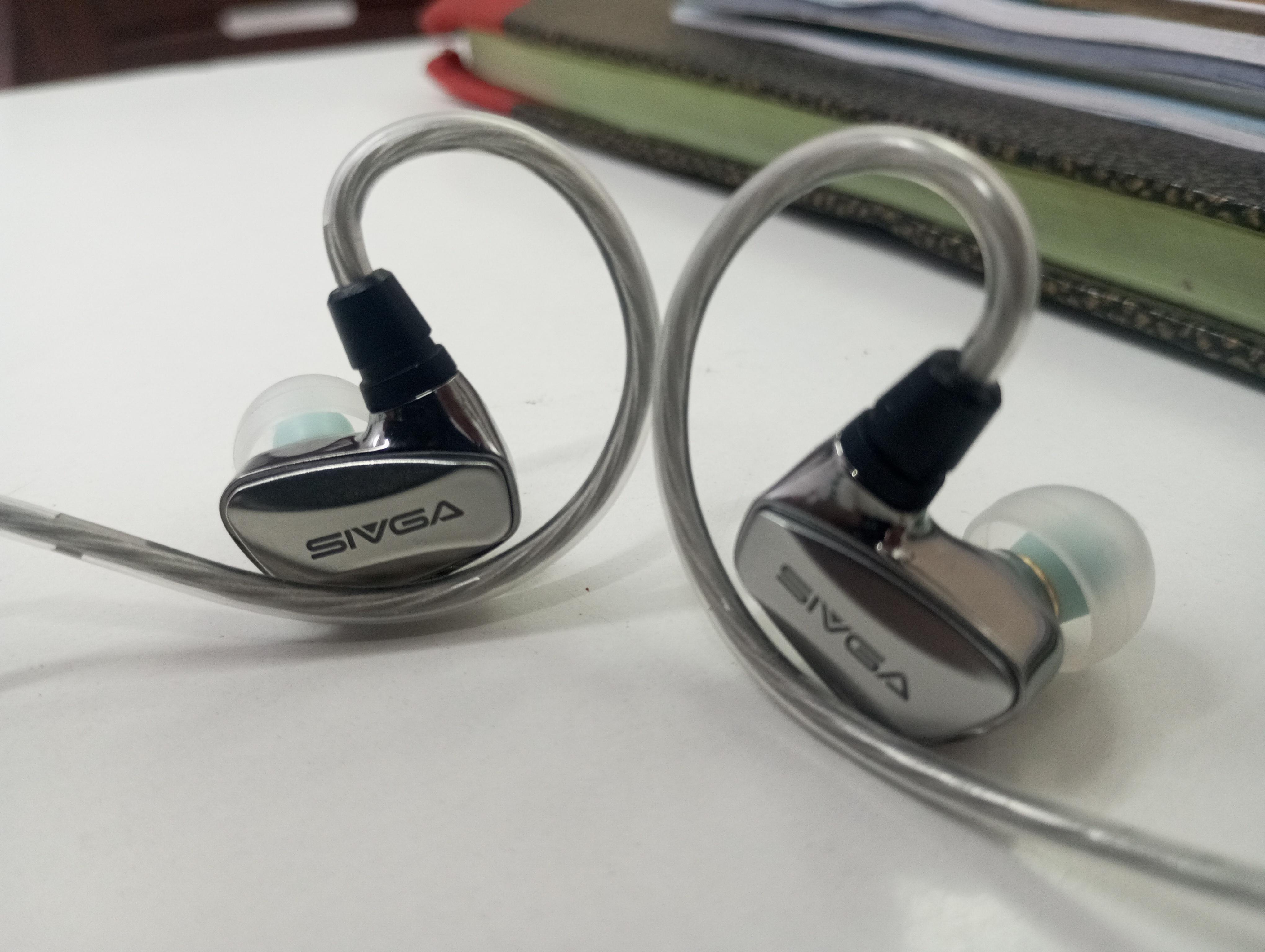
r/inearfidelity • • 14h ago

Review The forgotten budget banger

Post image
12 Upvotes

INTRODUCTION

• The Sivga SM100 was priced at $50 at launch but you can find it around $40 now . The black friday deal drops it down to $31 before shipping.

• The SM100 is a 10mm dual chamber single dynamic driver utilizing a PU + sapphire like ceramic composite diaphragm.

BUILD AND COMFORT

• Sivga has surprisingly moved away from wood and instead the shell is constructed from zinc alloy. The metal shell has 2 finishes , yes , you read that right. The faceplate is brushed while the rest of the iem is polished. This is a budget iem by the way.

• Each earpiece weighs roughly 7.2g, giving it a reassuring heft without feeling overtly heavy. The ergonomic contours sit nicely in the ear for most people , the shell literally disappears into my pinna. It fits well for something that's shaped like a golf club.

• The iem has 2 tiny vent holes , one for the main shell cavity and the other near the nozzle. I faced no pressure buildup during my listening sessions.

• The nozzle is about 5.5mm in size with a lip to grip eartips.

ACCESSORIES

• The stock cable is a 1.2m silver plated copper wire with 0.78mm 2 pin connectors, a straight 3.5mm single ended plug, and an inline microphone with media controls. The cable is thin, supple, and practical for an everyday desk or mobile use. I also have to mention the attention to detail here , the 2 pin housing and iem socket have a coherent design where the curvature is continous and tapers into the cable. This was really designed , they could have used an off the shelf cable but no , sivga chose to do this. It's the little things that make the difference, and it shows they actually cared for the end product, irrespective of price.

• The SM100 comes with a barebones accessory package, just 3 pairs of basic silicone eartips (S/M/L), No carrying/ travel case is a big no no for this price range. They have a nice fabric hard case for the m260 , use that sivga.

SONIC PERFORMANCE

Source used : iBasso DC04 Ultra

Eartips used : Stock silicone tips are bad , I used dunu candy as usual.

Power output required : With a 27Ω impedance and 107 dB sensitivity, the SM100 is very easy to drive. Any smartphone, laptop jack, or even an entry level dongle DAC will get it painfully loud.

TECHNICALITIES

• The soundstage is good for the price range , doesn't feel claustrophobic.

• Detail retrieval is really good or above average. You get most of the macro details with these. They don't jump at you but if you listen closely, they are there.

• Instrument separation is phenomenal for the price. I didn't expect it to be this good , second only to the cozoy D1 in the class.

• Imaging is decent and accurate to a point. Casual gamers will be more than happy , It's also passable for fps gaming but not the best.

BASS

• The sub bass is average to good with decent rumble with some extention. Sub bass is not the standout feature here.

• Mid bass punch is tight, fast, and controlled. Kick drums and bass guitars have a clean definition with zero bleed into the lower midrange. Mid bass was the best aspect of this iem , the stock tips don't do this iem any favour. Liquid silicone tips or even the dunu candy would be better.

• Overall, the bass is good for the price. Definitely not a basshead iem.

MIDS

• The overall tone is more neutral than bright.

• Acoustic guitars, strings, and pianos come across crisp and well defined. Dare I say , a little natural ?

• Male vocals are good enough though baritone vocals lack that huskyness.

• Female vocals sound pretty good. They sound lively, forward, and airy, but on poorly mastered tracks it may sound grainy.

TREBLE

• Cymbals and hi hats have a crisp, clean attack with a muted wash.

• Upper treble avoids harsh metallic splashiness. This was a highlight for me. The sound may not be accurate but you're given pleasant sound signature instead.

• Sibilance is well controlled even in the upper register of female vocals. This single DD was tuned with intent.

• Treble extention is not the term I would be using here , air frequencies are muted to me. This is where you loose that sense of perceived micro details. Then I remember the price and shut up.

Conclusion

- The sivga SM100 was a surprise to me. I really did not expect a well rounded product that is well built at around 30 dollars. The exemption of a travel/carry case needs to be rectified asap. Sonically, I wouldn't complain much , maybe a touch more sub bass and more treble extension is all this iems needs to be top of the class. Well done sivga.

Disclaimer - Sivga sent the SM100 for review in exchange for an honest review. If SM100 fit the bill for you after reading my review , you can purchase it from the non affiliated links below.

Non affiliated links :

Official Store:https://sivgashop.com/products/sm100

AliExpress Store:https://www.aliexpress.com/item/1005010425585295.html

Tracks used -

- Killshot by Eminem

- GDFR by flo rida

- Another one bites the dust by queen

- Toxic by britney spears

- Winter , four seasons by vivaldi

- Mexico by vitamin string quartet

- When I'm down by Chris Cornell

- Show me how to live by Audioslave

- Angel of the morning by Juice newton

- Monomyth by Animals as leaders

- Fuel by Metallica

- Novocaine by Amber rubarth

- Hurt by Johnny Cash

- Take Five by Dave brubeck


r/inearfidelity • • 2h ago

Review Will I quit Iems ?

Post image
4 Upvotes

INTRODUCTION

• The SIVGA M260 is a flathead style earphone that was launched in May 2026 at $39.90 for the 3.5mm version and $45 for the USB C version if you don't want to deal with dongle dangle.

• The driver configuration is a single 14.2mm dynamic driver with a copper ring composite bio diaphragm. Single DD lovers rejoice.

BUILD AND COMFORT

• The shell is CNC machined from aluminum with a knurled grip pattern and a gold colored rear plate. The retro aesthetic looks classy and feels far more premium than the price tag suggests.

• The earbud is lightweight and comfortable for long listening sessions, helped by the slightly more compact 14.2mm housing compared to larger 15.4mm flatheads. Because this is an open flathead design, there is zero ear canal pressure build up, though it also means there is virtually no passive noise isolation. Enjoy the crying infant noises on the subway.

• The front features a metal mesh grill that protects the driver from dust and debris.

• The overall fit is very important. The way you angle the flathead changes the sound significantly. Keep this in mind.

ACCESSORIES

• The cable is a 1.2m silver plated OFC wire using detachable MMCX connectors ( for better or worse ). It comes with either a non swappable 3.5mm L shaped plug or a straight USB C termination with an integrated DAC and mic. The cable is supply with virtually no memory. I like the cable.

• The M260 comes with 4 pairs of foam covers:

• Hollow donut foam rings for an airier presentation and more secure grip.

• Full foam covers to thicken the low end and tame brightness a wee but.

• Unlike many budget sets that skip storage, including sivga in their SM100 iem ( why tho ?) the M260 includes a textured fabric carrying case with enough room for the earbuds and a small dongle DAC if you chose the 3.5 termination.

SONIC PERFORMANCE

• Foam covers used: Stock hollow donut foams, full thick foams.

• Source: iBasso DC04 Ultra

TECHNICALITIES

• The soundstage is moderately wide and open , which is inherent to the flathead form factor.

• Detail retrieval is very respectable for the price bracket, easily outperforming what most people (and even me) expect from a budget flathead.

• Instrument separation is on par with the class. You can pick out individual instruments in busy mixes without things smearing together. This was a surprise.

• Imaging is spacious and natural rather than claustrophobic. I will never recommend these for gaming tho , the form factor is not built for lot of head movements.

BASS

• The M260 has no real sub bass rumble to speak of , it is a flathead and obeys the laws of physics. No seal, No sub bass.

• The mid bass was surprisingly good. It was punchy and tactile and the quantity was satisfactory as well. Swapping to thicker full foams helps bring out more low end warmth. Attack and decay are of average duration.

MIDS

• The mids are not between warm and neutral as some people say , the M260 is straight up warm and cozy.

• String and acoustic instruments sound pleasant and smooth.

• Woodwind and brass instruments come across as soft as if you had an otl tube amp source.

• Male vocals sound thicker/ dense , almost pitched down. Definitely not accurate.

• Female vocals sound lush and ethereal. I kinda like the effect it has on female vocals.

TREBLE

• Cymbals also sound soft without any sense of metallic harshness. The wash is muted but prolonged.

• Higher pitched female vocals stay smooth and well controlled, but if you use the donut foam , it may sound a little thin sometimes. Trailing resonance notes are muted.

• Snare drums and acoustic plucks have crisp initial definition while remaining easy on the ears during longer sessions.

• The M260 has some air but there really is not real treble extension that is obviously audible.

• The transient response is fast and tight thanks to the lightweight CCAW voice coil.

CONCLUSION

• The SIVGA M260 is an impressive budget flathead that nails the fundamentals. Its wide soundstage, lush vocal delivery, detachable MMCX cable, and solid metal build ( with tasty gold accents ) punch well above its $40 price point. The main trade offs are the expected sub bass roll off, zero noise isolation, and a fit that depends heavily on your ear anatomy and foam choice. Foam rolling makes a noticeable difference in dialing in the warmth and low end punch. This is a really well made and compelling product but will I grab these over a pair of iems ? I don't think so , the noise isolation is a must for me and the fit is finicky. This has nothing to do with the product itself, it's just the form factor.

Disclaimer - M260 was sent by sivga but all my opinions are my own , I won't sell out for 40 bucks.

Non affiliated purchase links :

Official Store:https://sivgashop.com/products/m260

AliExpress Store:https://www.aliexpress.com/item/1005012238909809.html

Tracks used:

• Killshot by Eminem

• GDFR by Flo Rida

• Another One Bites the Dust by Queen

• Toxic by Britney Spears

• Winter, Four Seasons by Vivaldi

• Mexico by Vitamin String Quartet

• When I'm Down by Chris Cornell

• Show Me How to Live by Audioslave

• Angel of the Morning by Juice Newton

• Monomyth by Animals as Leaders

• Fuel by Metallica

• Novocaine by Amber Rubarth

• Hurt by Johnny Cash

• Take Five by Dave Brubeck


r/inearfidelity • • 9h ago

Discussion Interpreting treble and its effect on sound

Post image
2 Upvotes

Hey guys, I was curious how one should go about interpreting the sound on these 2 IEMs.

They both graph similarly all the way to the presence region for the most part.

The Position has a dip in the upper treble that's not present on the Cadenza, with slightly more energy before the 8k peak.

What would that mean for the sound and more specifically for (1) the naturalness of vocals and (2) differences in potential sibilance, if any?


r/inearfidelity • • 11h ago

Review FiiO QX13 - Desktop muscle without the lumbar strain

Thumbnail
gallery
2 Upvotes

Pros: Ridiculous headroom in a 33g dongle (900mW @ 32Ω in Desktop Mode)
Clean, warm-neutral Sabre tuning that skips the usual ESS glare
Crisp 1.99-inch color display with full on-board menu and PEQ
Dual USB-C ports keep phone battery drain in check

Cons: Needs an external power bank or E-stick to unlock full Desktop Mode
Glossy glass front is a fingerprint magnet
Overkill if you only run hyper-sensitive IEMs
Not sure if a want a touchscreen
Unforgiving to poor recordings
The case is badly designed

After surviving airport security with transportable stacks (VE Prime) and nursing a mild lumbar strain from lugging desktop-class gear around (KAEI Tap 1 Pro with the PSU), a 33-gram dongle claiming 900mW per channel feels like a practical joke. Yet here we are. Thank you u/Gaming_Sushii for lending me the QX13 for a review. The unit goes back to him post review and my thoughts are my own.

Introduction

The FiiO QX13 packs a flagship 8-channel ES9027SPRO DAC, a 16-core XMOS XU316 USB receiver, and a quad-INA1620 amp stage into a 21-layer carbon fiber shell—complete with a 2 inch Corning glass display that finally tells you your exact volume steps and voltage. Praise Be!!
The bottom has 3 buttons that are tactile and need to be pressed down to work for Volume up, Play/pause, and Volume down. A long press on the play/pause button brings up a menu for gain,filters, output options, channel balance, themes (including a cute Vu meter and cassette), PEQ (via the fiio app), and this HID button setting which just changes the way the 3 buttons on the QX13 behave. I spend an inordinate amount of time looking for a HID button on the side and all I found was a second usb port for power and a switch to turn on beast more.

Specs & Chain

• Outputs: 3.5mm SE (with S/PDIF coax out) + 4.4mm Balanced
• Power (@ 32Ω): 605mW balanced in standard mode; 900mW balanced in Desktop Mode (via dedicated secondary USB-C power port)
• Tested with: Mac mini (local FLAC), Moto Edge 60 fusion, Sennheiser HD600, Final E5000, Nightjar Singularity, Softears Twilight, and Sennheiser IE600, Audiotechnica ATH-R70xa

TLDR: Natural, authoritative, and dead silent. It brings desktop-grade grip and note weight to a pocketable form factor without offending the treble-sensitive.

Bass
The QX13 doesn’t artificially bloat the low end, but the sheer current headroom gives dynamic drivers real grip. On Angel by Massive Attack and Islands by The xx, sub-bass rumbles with dense, tactile authority rather than loose flabby bloat. Switching to The Dance of Eternity by Dream Theater, kick drums and bass runs stay cleanly separated without bleeding into the lower mids.

Mids
This is far removed from the sterile, clinical Sabre dongles of before. Vocals and acoustic instruments carry natural note weight and zero shoutiness. On Take Five by Dave Brubeck and Playing God by Polyphia, the midrange stays transparent and uncolored, letting the Softears Twilight and Nightjar Singularity keep their organic timbre intact.

Treble
Polite, extended, and honest to the transducer. It extracts micro-detail cleanly without adding artificial zing or glare. Even on the Sennheiser IE600, the QX13 preserves top-end air and cymbal shimmer while keeping sibilance firmly out of the danger zone.
Stage, Imaging & Power
In standard bus-powered mode, staging is well-proportioned with sharp lateral imaging. Plug a secondary power source into the red USB-C port to engage Desktop Mode, and the stage noticeably opens up—driving the Sennheiser HD600 and Final E5000 with effortless dynamics and a pitch-black noise floor. It does struggle with the ATH-R70xa, needing desktop mode and a significant volume to open that set up.

Comparisons
KAEI KD01 Pro: Both punch well above their weight class in raw output, with the KD01 Pro hitting 700mW on bus power and 1200mW with its dedicated PSU1. Tonally, the KD01 Pro injects a noticeable mid-bass boost and extra warmth—great for leaner sets, though it can push already lush IEMs like the Final E5000 into overkill on bass-heavy tracks like Giorgio by Moroder by Daft Punk. The QX13 takes a cleaner, more neutral-warm approach that keeps the low end tighter while solving every ergonomic gripe I had with the KD01 Pro: you get a proper volume display, no plug-in pops, and far cooler thermal behavior.

Peeves
With the desktop mode and the ability to scale, with a good set of headphones, the QX13 is unforgiving poorly mastered music. I mean, one can reduce the amount of power it’s spitting out but where’s the fun in that.
I am not quite sure if I want a touch screen. There seems to be a lot of wasted real estate on the screen. And finally, that case from hell. I get that it’s hard to design a case for something this small. But if it’s open on the 3.5/4.4 end then every time I stick a usb cable on the opposite side it pushes the QX13 out. Same when I try pulling the iem/headphones out. Time to crankout the 3d printer and design either a TPU condom style sleeve, or something that will hook on to the edges, maybe bring the 90s back with belt clip.

Final Thoughts
The FiiO QX13 hits a sweet spot between pocketability and raw driving power. If you want a single source that can run sensitive IEMs on a flight and still wake up full-size headphones at your desk—without needing a chiropractor afterward—this is an easy recommendation.