r/punchthemonkey • u/Long-shot128 • 3h ago
Pictures Say cheese 😁📸

122
Upvotes
Credit: @___luluriru
r/punchthemonkey • u/toyrapeutic • Oct 01 '26

Source: https://x.com/ichikawa_zoo/status/2105471987925889232
"#Ganbare Punch Supporters Guide"
We've added credit card payment support.
The application period is until 12/31.
https://www.city.ichikawa.lg.jp/site/zoo/54018.html
👇 Credit card payment here
Japanese Page
https://congrant.com/project/punch/24735
English Page
https://congrant.com/project/punch/24943
Chinese Page
https://congrant.com/project/punch/24946
[PC Wallpaper Gift]
To everyone who donates using the new method mentioned above, we will send a receipt confirmation email containing a URL to download Punch's PC wallpaper (jpg, 1920*1080 pixels).
The wallpaper is planned to change monthly.
*Transfer of the wallpaper and posting on SNS are prohibited.
[Note]
As of October 1st, the available payment methods are:
VISA
Mastercard
American Express*
Apple Pay
Google Pay
(JCB and Diners are currently under review)
Edit: The donation page listed American Express as currently under review. I just rechecked their X post which list Amex as available. Just something to take note of if you're planning to use Amex
Adding message from the zookeepers that can be found on the donation page:
Punch has so many fans, not only in Japan but around the world, and we are filled with joy and gratitude. Punch is learning what life in the group is like, experiencing both success and failure every day. His efforts have paid off, and he has slowly become part of the group. We zookeepers have also learned a lot from him.
To help Punch grow up healthy and energetic, we will continue to support him tirelessly as he tries his best to live as part of the troop. We appreciate your continued warm attention for Punch.
r/punchthemonkey • u/No_Vehicle_5085 • Sep 22 '26
The Nature of Aggression Within Japanese Macaques
Within the macaque genus, Japanese and Rhesus macaques are among the most aggressive. But their use of controlled, ritualized, predictable aggression doesn't come close to the kind of violence seen in other primate species.
When looking at the wider primate order, other species exhibit far more extreme and lethal forms of violence. Aggression and violence are different behaviors, carrying very different consequences.
The type of aggression practiced within despotic hierarchies such as Japanese and Rhesus macaques is very different from the type of violence exhibited by primates such as chimpanzees and, yes...humans.
The highly despotic macaques enforce rigid, linear social hierarchies with sometimes severe (but very rarely lethal) unidirectional aggression. Aggression is delivered downward through the hierarchy, subordinates rarely fight back, and formal submission signalling is required to avoid more serious aggression and potential injury.
The majority of these aggressions are displays and vocalizations, but can also involve physical contact, which typically is not done with enough force to cause any physical injury. They use these controlled aggressions to enforce proximity limits during feeding, access to females during mating, and access to preferential areas for napping and sleeping. And there will also be corrections if a subordinate macaque doesn't show proper deference to a higher ranked monkey in other situations when they pass each other or while simply resting and scanning the troop.
Shortly, this post will discuss why this type of aggression has evolved, the benefit of this type of aggression, as well as how and why it keeps the troop safe.
By comparison, chimpanzee and human violence and aggression is often lethal. Both species have been shown to be willing to kill members of their own species without even knowing the identify of the individuals they are targeting. This is rarely seen in macaques by comparison.
While there have been some instances of a young adult male that happens to come upon a new troop at the wrong time and falls victim to extreme violence - this is very rare. Far more rare than the more extreme violence practiced by humans and chimpanzees.
This paper details an incident of infanticide where a new male Japanese macaque in a troop injured the infant, which died of it's injuries later. But, the important detail of this paper is the discussion of how rare this is among macaques, and the unusual situation was caused by the three highest ranking males within this troop that all died in quick succession, leaving this troop in a very tenuous, and highly unusual social situation. This type of incident in Japanese or Rhesus macaques are isolated anomalies rather than a standard behavioral baseline.
https://pubmed.ncbi.nlm.nih.gov/16175320/
The type of aggression practiced by Japanese and Rhesus macaques is restricted to a short list of situations, is almost always avoidable, rarely lasts more than a few seconds, typically results in no injury whatsoever, or very minor injury such as scratches or very small, minor, bites that heal quickly and carry no danger to the recipient.
The controlled and highly predictable aggression observed in these macaques, is framed through their classification as a highly "despotic" species. Research demonstrates that their strict, linear dominance hierarchies rely on systematic, top down aggression. Rather than causing chaotic breakdown into troopwide violence, this very strict, predictable, and highly ritualized type of aggression acts as a stabilizing force within the troop, preventing more serious violence.
In these large mixed sex troops, individuals are constantly competing for limited resources like food, mates, and safe resting and sleeping sites. Without a predictable social system, enforced through low-threat aggression this competition would lead to frequent escalated and potentially lethal physical combat.
Controlled aggression is necessary in these large troops because it formalizes the inequality - by establishing very clear boundaries of who can supplant whom, the macaques utilize very low-intensity, ritualized threats and very minor physical pushing, lunging, vocalizing, ritualized chasing, and other rather low key squabbling for what would otherwise turn into dangerous physical fights.
Subordinates quickly learn the predictable cues and learn to immediately yield to the higher ranked individual or flee the area. This minimizes the need for more energetic and risky physical aggression that could result in serious injury.
When humans witness these types of activities we often interpret them to be far more severe than they actually are because loud vocalization often accompanies these instances - and it often causes humans to believe something more serious and damaging is taking place.
How Evolution Shaped Predictable, Low Violence Aggression in Japanese and Rhesus macaques
These behaviors are an evolutionary adaptation brought on partly by competition for food. Macaques history rely on clumped, high-value food resources, such as fruit trees or large patches of vegetation. Because these types of foods can more easily be monopolized, it is advantageous for powerful individuals to aggressively defend these food sources.
Social rank in these monkeys is inherited through matrilineal lines and alliances between maternal kin are critical to maintaining these ranks. Over generations, natural selection favored individuals who used highly predictable, targeted aggression to reinforce their family's status, ensuring their offspring retained priority access to food - a necessity for sustaining life.
This type of ritualized, predictable, and relatively low violence aggression is favored over outright violence, since outright violence involved in actual combat carries a high evolutionary cost - severe injury, infection, and death. Natural selection is going to favor the behavior that results in the individuals that thrive and reproduce more.
Evolution is a very involved subject, but in noting the difference between chimpanzee and macaque and why one favors more violence and the other favors aggression with less violence - it's important to remember that each population is developing characteristics that offer advantage in the specific environment in which they are living.
One of the unique forms of aggression we see in macaques is displaced or "redirected" aggression. When a mid-ranked macaque is corrected or "threatened" by a superior, they will immediately redirect that aggression toward an even lower-ranked individual. Evolutionarily, this acts as a psychological pressure-release valve - it diffuses tension without risking a dangerous counter-attack from a superior.
These instances of redirected aggression have happened to Punch a couple of times, and have happened to other members of his troop, and, as is typical with redirected aggression, not a single one of them caused him any physical harm whatsoever. These actions are not meant to cause any physical harm, they simply vent frustration in a down-hierarchy manner, which prevents an outbreak of more severe physical violence.
Think about it this way - if the middle hierarchy individual tries to fight back with the original aggressor, the original aggressor can't back down. They would have to continue fighting until one of them backs down, or until one, or both actually suffer injury. Instead, the middle individual vents their frustration to a lower ranked monkey, which is again not likely to fight back. This dissipates the stress in a far less dangerous way than for two monkeys to face off and have an actual fight.
To our human eye, it may appear that redirected aggression is a "fight", but careful observation will shows that it's one sided, it's over quickly, and even if they use their teeth to grab a part of the lower ranked monkey's body, they do not bite down with enough pressure to cause any injury. They are simply using their teeth to temporarily control the lower ranked individual.
How Controlled, Predictable Aggression Keeps the Troop Safe
While the word "aggression" implies danger, this specific system acts as the primary mechanism for troop stabilization and collective survival:
As much as it seems contrary to how human society usually aspires to function, by replacing unpredictable, chaotic violence with a highly structured and ritualized, strictly enforced social grammar (ethogram) that includes low-violence aggression, Japanese macaques achieve a state of highly functional peace.
Aggression and violence should not be confused - the function and consequences are often worlds apart.
Nothing we have seen in any video involving Punch from the Ichikawa zoo represents violence.
Let's Talk About Injury and Healing in Japanese Macaques vs Humans
To compare wounds on a human vs a non-human primate, vets and biologists look across three main areas for comparison: Wound healing, neurologic/motor recovery and biomechanical scale.
Japanese macaques share roughly 93% genetic similarity to humans and are invaluable models in biomedical research, there are fascinating disparities in how our bodies react to identical trauma.
They are studied intensively and we have a great deal of data regarding injury and healing in Japanese macaques vs humans.
1. Skin and Soft Tissue Damage: Wound Healing
If a Japanese macaque and human received an identical open skin laceration, there is startling difference in rate of recovery:
a. Speed of recovery - Japanese macaques heal roughly three times faster than humans
b. Macaques regrow skin at a rte of roughly .61 mm per day, whereas humans average only .25 mm per day
c. The evolutionary human trade-off: Humans shed our thick fur in favor of naked, sweaty skin to optimize cooling. This alters the skin structure. macaques retain thick fur and rely heavily on quick immune responses and rapid epidural closure to prevent infection
2. Neurological and Spinal Cord Injuries
Due to close neuroanatomical similarities, macaques closely model human spinal cord injuries and strokes.
a. Fine Motor Dexterity: If an injury occurs in the motor cortex of the brain or cervical spinal cord, both species suffer a loss of fine motor skills.
b. Recovery arc: Studies on macaque cervical injuries show that while both species experience an initial phase of paralysis or hemiparesis, macaques typcially display a higher degree of spontaneous, natural neurological plasticity than humans, often recovering a crude grasp faster without intensive physical therapy.
3. Orthopedic and Biomechanical Impact
An identical bone fracture impacts the two species differently due to posture and bone density
a. Bone density: Macaques have significantly higher cortical bone density relative to body mass
b. Locomotor strain: Weight is distributed across four limbs, minimizing single limb load during recovery. Since humans are bipedal, we go through a period of non-weight bearing if we injure a leg.
c. Degenerative Risk: Both human and Japanese macaques are prone to degenerative issues, but they are different. This is the only area they don't have an advantage when it comes to faster healing. They are prone to osteophytosis (bone spurs) on the anterior border of the spine as they age post-injury. We are prone to radial disc tears and localized osteoarthritis after spinal/joint trauma.
In terms of bone breakage: It takes more force to break a bone on a macaque, we would be more likely to suffer a bone fracture. In terms of bone remodeling and fracture healing - we heal at approximately the same rate from a bone fracture.
Overall, in almost every area, a macaque's injury heals faster in almost every metric, with the exception being bone fracture. But - they are less likely to suffer a bone fracture - it takes quite a bit of force to break their bones.
We saw this rapid healing very clearly with Punch. He suffered a very minor injury on his foot, the functional equivalent of a minor scratch on a human, and within 24 hours he was walking on it normally and not "playing with it" or bothered by it any more. This is 100% in keeping with the extensive biomedical data we have on Japanese macaques.
------------------------------------------------
How Does a Zoo Enclosure Effect Aggression
Peer reviewed studies show that a poorly designed zoo enclosure can contribute to higher aggression and self-directed anxiety in Japanese macaques. Visitors gazing directly at them is interpreted as a threat, and the constant presence of this additional level of threat adds to the anxiety and stress level, which can contribute to an increased tendency to engage in aggressive activity.
But...what constitutes a "natural" enclosure to a macaque does not equate to what looks more natural to the human eye.
So, what constitutes a good enclosure for Japanese macaques?
Japanese macaques require a Functionally Appropriate Captive Environment (FACE).
The enclosure needs to functionally and biologically mimic the wild to stimulate species-typical behaviors. This should be the goal of any zoo - to keep animals in such a way that they will exhibit species-specific behavior.
For someone not familiar with what functionally and biologically appropriate might be - a good clue as to whether an enclosure is adequately meeting this defintion is to observe how much the animals are engaging in species-typical behaviors or whether we are seeing stereotypies in the inhabitants.
The critical elements of a Japanese macaque enclosure that best mimics their natural environment include:
1. Living vegetation and Natural substrates.
It would not be possible for Ichikawa zoo to plants trees in this enclosure. There is a very interesting episode of "Monkey World" where they discuss how quickly six infant chimpanzee were able to destroy all living vegetation in what started out as a natural enclosure with a large number of mature trees on several acres of land.
So, what can a zoo do? They can regularly bring in branches and limbs. They have already been doing this to some degree, but it would be nice if they could increase the amount and spread it around to different areas.
But, this also presents a problem of how to sanitize the enclosure. The same goes for offering a natural substrate. It would be quickly "soiled" and difficult to sanitize.
In the wild sanitation is not a problem because macaques forage far and wide. Once they forage and eat what is in an area they move on. Any waste they leave is largely broken down by the time they would return to the same area. Also, they don't stay in one area long enough to kill the trees from over-foraging.
This "Living Vegetation and Natural Substrates" will always be difficult for any zoo to accomplish, even a very large zoo that has several acres for an enclosure.
2. Vertical Complexity and Multi-Tired Climbing structure.
This is a very important element in their enclosure, and the type of "monkey mountains" seen in many Japanese zoos satisfy this element. There are many different levels on the mountain, offering lots of opportunity for the macaques to climb. They also have many cubbies and there is a great deal of opportunity for lower ranked macaques to visually separate themselves from more dominant monkeys, which is an important element of their natural environment.
3. Thermal elements & Microclimates
Most macaques in the wild don't utilize thermal hot springs, but areas with different temperatures are important - they need to be able to escape from the heat of summer and the cold of winter.
From everything we've been told about the backyard area, the macaques have air conditioning in the backyard area, giving them a cool place they can go to. They have a pool that the younger macaques, including Punch, have been using for several weeks, jumping and playing in the water, likely cooling them off.
They are also constructing shading.
4. Dynamic Water Sources and Moats.
Flowing water features are important as they would typically have rivers and streams in their natural environment. The monkey mountain enclosure at Ichikawa city zoo has this feature with streaming water and a pool.
Overall, the macaques at Ichikawa City Zoo do not appear to engage in stereotypies, and appear to engage in normal, species-specific behavior. Also, the level of aggression we see in this troop does not exceed what is seen in wild troops.
-------------------------------------------------
Is Punch "Traumatized" From HIs Experiences
I understand why people are concerned about Punch, and you wouldn't be a decent human being if you didn't care.
But, no, Punch has not, so far, shown any sign that he is suffering from trauma. The only physical injury he has ever received was healed within a day. And there is no evidence whatsoever of emotional trauma.
I have deliberately avoided including a link to a video that shows a traumatized primate - largely because viewing such a thing would be traumatizing to most humans. It is a horrifying thing to see.
From everything we have seen in hours upon hours upon hours of video featuring Punch, he is a well adjusted, emotionally and physically healthy young Japanese macaque. He is not engaging in disturbing sterotypical behavior that we always see in a primate that is traumatized.
He plays, he enjoys being groomed, he has begun offering grooming services, he does cannonballs into the pool, he swims in the pool, he naps, he spends time with friends, he plays with the infants, he explores anything new that is added to the enclosure - finding a way to turn it into a playground item. This is the behavior of a perfectly well adjusted, emotionally healthy primate. Every piece of evidence we have of how this young macaque is faring shows a happy go lucky little fella that appears to be enjoying life to the hilt.
----------------------------------------------------
Peer reviewed sources (some of these are not open access, but abstracts are available and often contain pertinent information in cases where the paper is not open acces)
https://primate.wisc.edu/primate-info-net/pin-factsheets/pin-factsheet-japanese-macaque/
https://www.sciencedirect.com/science/article/abs/pii/S0003347282800493
https://pubmed.ncbi.nlm.nih.gov/27569261/
https://factsanddetails.com/japan/cat26/sub164/entry-9104.html
https://pubmed.ncbi.nlm.nih.gov/23179529/
https://pmc.ncbi.nlm.nih.gov/articles/PMC3338258/
https://pmc.ncbi.nlm.nih.gov/articles/PMC6617189/
--------------------------------------------------
*A note on why the Awaji island Japanese macaques are socially tolerant.
There is a notable exception to Japanese macaques using controlled aggression in specific situations. The Japanese macaques on Awaji island, which have been isolated for around 10K years are more tolerant in allowing lower ranked monkeys in close proximity while feeding and granting them access to desirable napping and sleeping areas. This troop is famously unique for its unusually gentle, highly tolerant, and egalitarian society. Subordinate monkeys are rarely driven away from food, and individuals frequently share tight spaces peacefully.
Genetic research on behavior related candidate genes reveals this population exhibits a hightly distinct genetic profile compared to troops across other regions of Japan. They possess specific variations in genes that regulate neurotransmitters and hormones that link to aggression. https://www.researchgate.net/publication/227042398_Topic_1_Behavior-Related_Candidate_Genes_in_Japanese_Macaques
They possess an exceptionally high frequency of the short allele in the promoter region of the MAOA gene - in both human and non-human primates, this variation is heavily associated with higher behavioral tolerance, calm temperament, and lower baseline aggressiveness.
The troop also dispalys a prevalent long allele in the AR gene. Because testosterone binds to these receptors, variations in the AR gene affect how the brain processes androgenic hormones. The specific long allele variant found in this population correlates strongly with muted aggressive responses and greater social tolerance.
It is highly likely the early ancestors of this specific troop happened to carry these genetic traits at a higher frequency than the mainland population, over generations of breeding these traits become concentrated throughout the troop. This "founder effect" is commonly seen in animals that are genetically isolated from other populations of their species - islands are notable for "founder effect" and becoming genetically distinct..
r/punchthemonkey
•
u/Better_Hair_9673
•
7h ago
Video credited to YT- HinaLeyi.
r/punchthemonkey
•
u/Long-shot128
•
7h ago
Credit: @Animal Days
r/punchthemonkey • u/Long-shot128 • 10h ago
November 28
Credit: @Animal Days
r/punchthemonkey • u/Long-shot128 • 15h ago
November 28
Credit: @Animal Days
r/punchthemonkey • u/DutyWeird6426 • 3h ago
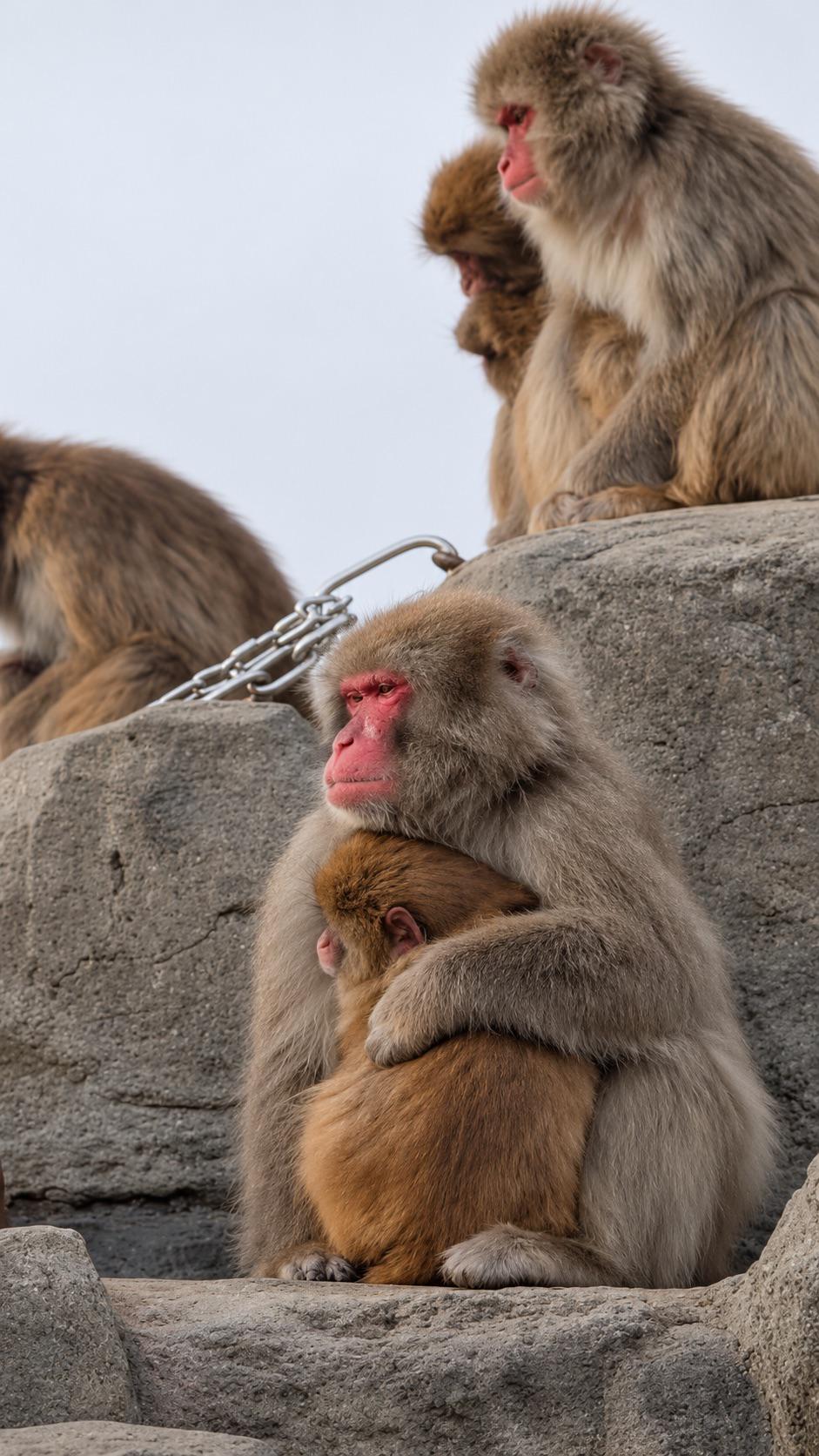
Such a sweet moment with Gorogo hugging Kotora ❤️
r/punchthemonkey • u/toyrapeutic • 4h ago

Link to original Emogram article here. I like how the zoo is being really careful and selective about the projects and offers they accept, rather than trying to milk Punch for all he's worth while he's still popular. Really looking forward to receiving my copy of the book. Translated using browser's built-in function.
November 28, 2026
By emogram editorial team, Yunchi
Punch, a Japanese macaque who is popular at Ichikawa City Zoological and Botanical Garden in Chiba Prefecture, had his first official book, "Go, Punch! The Growth Story of a Baby Monkey" (Gakken), released on November 26th. However, it turns out that the zoo had actually received numerous offers for publications and merchandise until now. The zoo's section chief, Takashi Yasunaga, had turned down almost all of them. So why did he accept Gakken's offer this time? He explained his reasons at a book launch talk event held on November 28th at "Nikke Colton Plaza" in Ichikawa City, Chiba Prefecture.
Since around February of this year, when Punch-kun began to attract nationwide attention, Ichikawa City Zoological and Botanical Garden has been receiving various offers from companies and other organizations.
"Would you like to create some merchandise?" "Would you let me publish a book?"
According to Section Chief Yasunaga, the number of offers was so large that it filled his mailbox. However, Section Chief Yasunaga says he has turned down almost all of these offers.

The reason behind this was that Punch was still in the process of being integrated into the group.
Section Chief Yasunaga apparently wanted to avoid hyping up Punch-kun even more just because he had become popular, or excessively personifying or characterizing him.

Punch-kun is learning the rules of the group, even though he sometimes gets scolded by his fellow monkeys. Section Chief Yasunaga explained that his hope was that people would "watch over Punch-kun as quietly as possible."
Amidst all of this, there were three reasons why Section Chief Yasunaga found the publishing proposals from Gakken and Ichishin Holdings appealing.
First, our goal was to create books that would be useful for children's education.
This official book not only features photographs and illustrations showcasing Punch's growth, but also includes an ecological guide where you can learn about the physical characteristics of Japanese macaques and how they live in groups.

The second reason is my connection to my hometown, Ichikawa City.
Ichishin Holdings, which cooperated in this publication, is a company founded in Ichikawa City and signed a comprehensive cooperation agreement with Ichikawa City in 2020. Section Chief Yasunaga said he thought that cooperation with such companies would also lead to the revitalization of the region.
And the third reason was the enthusiasm of Nozomi Inoue, who was in charge of editing.
According to Section Chief Yasunaga, Ms. Inoue visited the city hall many times to convey her desire to create a book that would benefit Punch-kun and the Ichikawa City Zoological and Botanical Garden.

Meanwhile, Ms. Inoue herself had apparently been following Punch-kun's growth through social media for some time.
Inoue, who loves animals, explained that she wanted to create a book about Japanese macaques that would be accessible and informative for the general public, and that she had prepared a proposal and visited Ichikawa City and the zoo.
This is how "Go, Punch! The Growth Story of a Baby Monkey" came to be. It's a book that combines three elements: a photo collection, a growth story, and an ecological guide.
Section Chief Yasunaga reflected that the book had become something that could also be useful for children's learning.

r/punchthemonkey • u/toyrapeutic • 5h ago

Link to original Emogram article here. Translated with browser's built-in function.
mkgypsygirl from Threads had attended the event and shared the following information:
November 28, 2026
By - emogram editorial team, Yunchi
Punch, the Japanese macaque who is a popular attraction at Ichikawa City Zoological and Botanical Garden in Chiba Prefecture, had a talk event on November 28th at the Nikke Colton Plaza shopping complex in the city to commemorate the publication of his first official book, "Go, Punch! The Growth Story of a Baby Monkey" (Gakken). Tickets for the event sold out in just two minutes after going on sale. At the event, those involved in the book's production spoke about the process leading up to its publication and Punch's growth.
The speakers were Takashi Yasunaga, section chief at Ichikawa City Zoological and Botanical Garden, and Nozomi Inoue, who was in charge of editing the book. The moderator was Yoshiyuki Matsubara, editor-in-chief of "Gakken's Illustrated Encyclopedia LIVE".
During the event, participants were asked if they had an annual pass to Ichikawa City Zoological and Botanical Garden. When many people raised their hands, Editor-in-Chief Matsubara exclaimed, "What an amazing group!"
Furthermore, it was mentioned that tickets for the event sold out in just two minutes, demonstrating the enthusiasm of Punch-kun's fans.

"Go, Punch! The Growth Story of a Baby Monkey," released on November 26th, is a 48-page book containing a growth story illustrated with photographs and drawings taken by zookeepers, as well as an illustrated guide to the ecology of Japanese macaques. The first printing reached 100,000 copies.
During the event, behind-the-scenes stories about the book's creation were shared while pages from the book were projected onto a screen.
Section Chief Yasunaga expressed his delight at the completed book as follows:
"It's amazing that a book has been written about just one animal at the zoo. The book is filled with photos taken by the two zookeepers, and they were both very happy about it."
Meanwhile, Inoue, who was in charge of editing, shared the following comments about the photos taken by the zookeepers.
"In the photos taken by the zookeepers, Punch is looking right at the camera. I thought it was amazing that only the zookeepers could take photos where Punch is staring at the camera the whole time."
In addition, various topics were discussed, including the meticulous attention to detail in the illustrations of Punch-kun and the daily work of the zookeepers. Finally, the talk event concluded with questions from the audience.
r/punchthemonkey • u/Long-shot128 • 1d ago
Credit: @yuki_sakura_pome_papi
r/punchthemonkey • u/Long-shot128 • 1d ago

Photo credit: @Yuta Tanno
r/punchthemonkey • u/Long-shot128 • 1d ago
November 26
Credit: @chabiyoc
r/punchthemonkey • u/Stef_Anye • 21h ago

r/punchthemonkey • u/gfcvghtdxctt • 1d ago

Awww Punch and the babies ❤️🥹
r/punchthemonkey • u/toyrapeutic • 1d ago

Announcement of a new book on Punch by Emogram. It is not an officially authorized publication of Ichikawa City Zoological and Botanical Gardens though. The book, Punch's Great Adventure! ~The story of the world's most famous baby monkey and Ichikawa City Zoological and Botanical Garden~, will be released on January 19, 2027. Translated using browser's built-in function.
November 28, 2026
By - emogram editorial team, Yunchi
Punch, a Japanese macaque at Ichikawa City Zoological and Botanical Garden in Chiba Prefecture, became a global sensation for his efforts to join the monkey group while carrying an orangutan plush toy. A book depicting Punch's growth and the people surrounding him, titled "Punch's Great Adventure! ~The Story of the World's Most Famous Baby Monkey and Ichikawa City Zoological and Botanical Garden~," will be released on January 19, 2027, by Sankei Shimbun Publishing. Pre-orders are already being accepted on Amazon .
Sankei Shimbun's trend information media "emogram" has been following Punch-kun since February 2026, covering his growth and events at the zoo.
We have published over 500 related articles to date. This book is based on those articles, with significant additions and revisions.

Born in July 2025, Punch was raised by hand by zookeepers. This article, accompanied by photographs, introduces Punch's days with his stuffed toy "Oran Mama" and his challenge of joining the monkey troop at the monkey mountain.
Furthermore, the book covers the struggles of the zoo staff in responding to the sudden global boom, the people who support Punch-kun, and the changes in Ichikawa City that have been brought into the spotlight because of Punch-kun.

The book is 208 pages long, in a standard B6 size format, and priced at 1,600 yen (excluding tax). It is not an officially authorized publication of Ichikawa City Zoological and Botanical Garden, but was created based on materials interviewed and photographed by Sankei Shimbun.

r/punchthemonkey • u/toyrapeutic • 1d ago

Follow-up article from Emogram on the other reason behind the new viewing method. Translated using browser's built-in function.
November 28, 2026
By - emogram editorial team, Yunchi
At Ichikawa City Zoological and Botanical Garden's monkey enclosure, a new viewing method has been in operation since late October, following the completion of construction work to install sunshades and other measures. This new system, designed while addressing the issues with the previous viewing method, had another reason behind it, beyond simply "being considerate to both those who want to take photos and those who want to enjoy watching the monkeys." We spoke to Mr. Takashi Yasunaga, the section chief at the zoo.
The new viewing system divides the monkey enclosure into two main areas. One is a general viewing zone that anyone can freely enter and exit. The other is a photography zone set up next to the fountain for those who want to take pictures.
Section Chief Yasunaga: "The general viewing area will have the same viewing style as before, except that photography will not be allowed. On the other hand, those who wish to take photos will be allowed to enter and exit from the area next to the fountain, and we will be carefully managing that area. We wanted to avoid overlapping the movement of people taking photos with that of people who are not taking photos as much as possible."
The photo zone will operate on a rotation system, with each visit limited to 20 minutes. This measure is intended to control the situation to some extent, as in the past, some people would become so engrossed in taking photos that they would linger in the front row.

The new system includes "breaks" from filming in the filming zone during certain time slots throughout the day. One reason for this is that these breaks coincided with the monkeys' feeding times.
Section Chief Yasunaga: "During mealtime, the monkeys become restless, and it's easy for them to fight over food. It's also a time when the monkeys are more agitated than usual, so we wanted to avoid concentrating too many eyes and cameras on them at that time."
Another reason is consideration for the zookeepers. During feeding times, the zookeepers inevitably come out to the monkey enclosure, and each time, their faces were being photographed and posted on the internet.
Section Chief Yasunaga: "Originally, the zookeepers rarely wore armbands (editor's note: red armbands indicating no photography) However, it's one thing if the zookeepers are just in the background, but there are photos and videos circulating online where the focus is clearly on the zookeepers, not the monkeys . They are not celebrities, and they don't want to be treated like celebrities . We wanted to prioritize protecting the zookeepers' work and livelihoods as much as protecting the monkeys in this new system."

They also put a lot of thought into the ratio and arrangement of the general viewing zone and the photography zone.
Section Chief Yasunaga: "We are truly grateful for the people who share information about Punch online. Thanks to their efforts, Punch's popularity has spread all over the world. We want both those who have been supporting him and those who will be visiting the zoo for the first time to be able to enjoy seeing Punch. We prioritized finding the right balance when deciding on the current layout."
The current operation seems to embody a desire to respect both the feelings of those who want to take their time and enjoy photography, and the wish that first-time visitors can fully enjoy the charm of Punch.
One month has passed since the new rules went into operation, and they seem . However, Section Chief Yasunaga says, "We will continue to make minor adjustments." It seems they will continue to explore ways to ensure that everyone—those who want to take photos, those who want to enjoy watching the monkeys, and the monkeys themselves and the zookeepers who care for them— can have a pleasant experience.

r/punchthemonkey • u/Long-shot128 • 1d ago
September 26
Credit: @sasanon0103 (trimmed)
r/punchthemonkey • u/Long-shot128 • 1d ago
November 27
Credit: @Animal Days
r/punchthemonkey • u/toyrapeutic • 1d ago
All the better to hoard all the apples! 🍎🍎🍎
Source: https://www.instagram.com/yuki_sakura_pome_papi/reel/DgPFHDkTwBH/
r/punchthemonkey • u/Stef_Anye • 1d ago

r/punchthemonkey • u/toyrapeutic • 1d ago
Jay, a zookeeper from Taipei Zoo, debunking myth and misconception that zookeepers merely carry out orders from their superiors without having a say in animal care decisions. Translated with ChatGPT.
November 25, 2026
Many people might assume that animal care decisions in zoos are simply made by managers and then handed over to frontline animal keepers to carry out.
In reality, however, a care measure may go through repeated discussions, evaluations, and revisions between its initial planning and its actual implementation in daily animal care. Even after implementation begins, that does not mean the decision is necessarily final.
Today, I would like to share some of my understanding and observations regarding animal care decision-making in zoos.
First, some managers themselves have extensive experience in animal care. Even if they are not directly involved in frontline animal care, they may refer to scientific research, animal care guidelines published by international zoo organizations, or practical cases from other zoos before proposing possible improvements.
However, the fact that a particular measure is supported by scientific literature or has been successfully implemented at another zoo does not mean it can be directly applied to every zoo or every individual animal.
This is because different zoos have different environments, facilities, staffing levels, and management conditions. Individual animals also have their own differences.
Meanwhile, animal keepers who interact with the animals every day are generally more familiar with their behavioral characteristics, training progress, social interactions, daily routines, and the practical difficulties that certain procedures may encounter in the field.
Therefore, when a manager proposes a particular measure, keepers may offer different opinions based on their practical experience. Sometimes, it is not that they believe the manager's approach is wrong, but rather that the approach may need to be adjusted to be feasible under the current circumstances.
Conversely, new research evidence or perspectives from other professionals may also help keepers identify aspects of existing care practices that could be improved.
Therefore, I believe that it is not necessarily a matter of one side being more professional than the other. Rather, managers and keepers have access to different information, have different perspectives on their work, and carry different areas of responsibility.
Next, to make this easier for everyone to understand, I will give a fictional example. This story was created to illustrate the animal care decision-making process and does not describe an actual incident at any particular zoo.
After conducting an evaluation, a certain zoo discovers that the orangutans available for breeding within its population are relatively closely related. In order to maintain the population's long-term genetic diversity, the zoo decides to negotiate an animal transfer program with a zoo in the United States.
After discussions between both parties and an assessment of population data, the manager hopes to send a male orangutan named "Mabao" from the zoo to the United States six months later.
However, the orangutan keepers have a different opinion.
Based on their long-term observations, Mabao has a relatively timid personality and is particularly sensitive to unfamiliar environments and changes in his daily routine. He tends to exhibit noticeable stress responses.
Therefore, the keepers are concerned that long-distance transportation may cause Mabao excessive stress. They suggest transferring another male orangutan named "Daye," who has a more stable temperament, instead.
However, the manager also has professional considerations of their own.
Although Daye has a relatively stable temperament, after comprehensively evaluating his age, health condition, genetic background, and breeding potential, he does not meet the requirements of this particular transfer program.
In comparison, Mabao's genetic background and breeding potential are more aligned with the long-term population management goals of both zoos.
The keepers understand the manager's considerations, but they still believe that Mabao's stress-related issues cannot be overlooked.
The manager then proposes whether positive reinforcement training and gradual desensitization could be used to help Mabao gradually become accustomed to the transport crate and related procedures, thereby reducing the stress that long-distance transportation might cause.
The keepers believe this is worth trying. However, considering Mabao's previous behavioral responses and training experience, they feel that the originally planned six-month preparation period may not be sufficient.
The manager then asks, "How much time do you think would be needed?"
The keeper replies, "Based on Mabao's current condition, I estimate that it might take around one year, but it will still depend on his actual training progress."
After discussion, the manager agrees to extend the original six-month preparation period to one year and renegotiate with the receiving zoo in the United States to confirm that they can also accommodate the adjusted transportation schedule.
However, the manager also asks the keepers to submit a complete training proposal, including the training methods, proposed timeline, objectives for each stage, criteria for evaluating effectiveness, and regular progress reports.
The keepers also agree to this arrangement.
As a result, both parties establish a shared understanding for the time being: one year will serve as the provisional training period, but this does not mean Mabao will necessarily complete his training within that timeframe.
If training progress does not meet expectations, or if he continues to exhibit significant stress responses, the transportation schedule will need to be reassessed. If necessary, the transfer program may even need to be suspended.
In this example, the manager is not disregarding animal welfare, and the keepers are not unwilling to cooperate with population management.
The manager does not fully accept the keepers' suggestion to send Daye instead, but neither do they insist on maintaining the original six-month transportation schedule. Meanwhile, after understanding the population management requirements, the keepers propose a training plan that they believe is feasible.
Neither side follows their original position completely. Instead, they work together to develop a plan that can be attempted, monitored, and adjusted when necessary.
Of course, this is merely a fictional, simplified, and relatively idealized example. In reality, animal care decision-making may be far more complicated than this story suggests.
A manager's management style, a keeper's personality, and their communication styles can all influence the discussion process. If an international animal transfer is involved, the receiving zoo's position, the management needs of both parties, as well as the relevant administrative and quarantine procedures, must also be considered.
Furthermore, these matters are often not resolved through a single meeting.
Sometimes, a manager may be overly insistent on their own decisions without adequately considering practical limitations in the field. Conversely, keepers may also resist new measures because they have become accustomed to existing ways of working.
Even when both parties are willing to communicate, they may still fail to reach an agreement because they have different objectives and considerations.
In addition, I believe we should not overlook power dynamics within an organization.
After all, managers and keepers do not hold equal positions of authority. Some keepers may not be good at expressing their opinions, or they may be unwilling to directly voice disagreement because of work-related pressure.
I also understand that unequal power dynamics within an organization can sometimes place frontline staff under considerable pressure, or even make it difficult for them to refuse decisions they do not agree with.
However, the fact that unequal power dynamics may exist does not mean that every controversial animal care decision has the same story behind it.
Without sufficient evidence, we should not immediately assume that a particular measure was forcibly imposed by a manager or that keepers were forced to compromise. Even more importantly, we should not invent motives on behalf of the people involved in the decision-making process.
Likewise, even if managers and keepers eventually reach an agreement, that does not necessarily mean the decision is correct or that its implementation will inevitably achieve the intended goals.
Sometimes, one party may simply have a more easygoing personality and be willing to accommodate the other. It is also possible that both parties seriously discuss and evaluate the matter, yet still overlook a crucial detail that is not easy to notice.
This does not necessarily mean that the original decision was unprofessional. Rather, it reflects the fact that we cannot predict every possible circumstance in advance.
Therefore, I believe that when evaluating an animal care decision, we should consider not only its original professional basis but also the actual implementation process and the outcomes it produces.
If the results do not meet expectations, what matters is whether the problem can be identified, reassessed, and whether there is a willingness to revise the original approach.
I have noticed that in some controversies involving zoos, people sometimes really want to know:
Who exactly proposed this decision?
Was it the manager who instructed the keepers to do this?
Were the keepers forced to accept it?
I can understand these questions. However, without sufficient internal information, we often have no way of knowing what discussions a particular decision actually went through or who may have expressed different opinions.
Rather than rushing to assign roles such as who was in control and who was the one making compromises, I think it would be better to first return to the measure itself.
What problem was it originally intended to solve?
What was the basis for the decision?
After it was implemented, did the animals' behavior, health, or welfare conditions change?
If problems arose, what subsequent adjustments were made?
Of course, if there is concrete evidence of inappropriate pressure, the disregard of professional opinions, or other management-related problems, these are equally worth examining and addressing.
However, I believe that without sufficient evidence, we should not automatically assume that there must have been an abuse of power behind a particular animal care measure simply because we disagree with it. Nor should we conclude that one particular individual must be responsible for all the outcomes.
Animal care has never been a simple matter.
The professional knowledge of managers, the frontline experience of keepers, the assessments of veterinarians and other professionals, as well as the resources available on-site, can all influence the final decision.
The value of an animal care measure is not determined by who proposed it or who agreed to it. Rather, it can only be gradually established through thorough evaluation, actual implementation, and continuous revision.
r/punchthemonkey
•
u/Long-shot128
•
2d ago
Credit: @Hina Leyi

