r/punchthemonkey • u/DutyWeird6426 • 2h ago
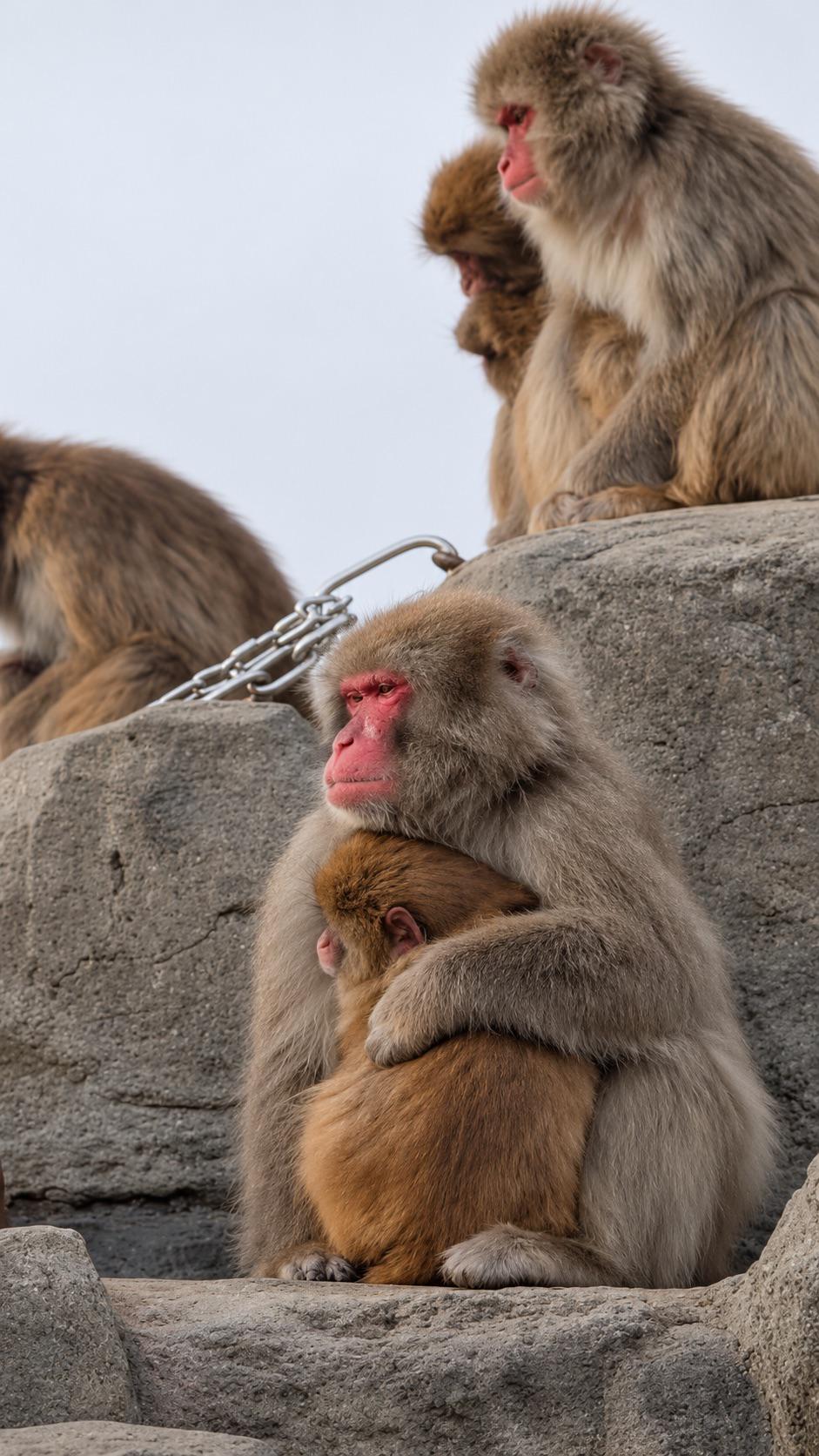
Pictures Gorogo (Golgo) Hugging Kotora
29
Upvotes
Such a sweet moment with Gorogo hugging Kotora ❤️
r/punchthemonkey • u/DutyWeird6426 • 2h ago
Such a sweet moment with Gorogo hugging Kotora ❤️
r/punchthemonkey • u/toyrapeutic • 3h ago

Link to original Emogram article here. I like how the zoo is being really careful and selective about the projects and offers they accept, rather than trying to milk Punch for all he's worth while he's still popular. Really looking forward to receiving my copy of the book. Translated using browser's built-in function.
November 28, 2026
By emogram editorial team, Yunchi
Punch, a Japanese macaque who is popular at Ichikawa City Zoological and Botanical Garden in Chiba Prefecture, had his first official book, "Go, Punch! The Growth Story of a Baby Monkey" (Gakken), released on November 26th. However, it turns out that the zoo had actually received numerous offers for publications and merchandise until now. The zoo's section chief, Takashi Yasunaga, had turned down almost all of them. So why did he accept Gakken's offer this time? He explained his reasons at a book launch talk event held on November 28th at "Nikke Colton Plaza" in Ichikawa City, Chiba Prefecture.
Since around February of this year, when Punch-kun began to attract nationwide attention, Ichikawa City Zoological and Botanical Garden has been receiving various offers from companies and other organizations.
"Would you like to create some merchandise?" "Would you let me publish a book?"
According to Section Chief Yasunaga, the number of offers was so large that it filled his mailbox. However, Section Chief Yasunaga says he has turned down almost all of these offers.

The reason behind this was that Punch was still in the process of being integrated into the group.
Section Chief Yasunaga apparently wanted to avoid hyping up Punch-kun even more just because he had become popular, or excessively personifying or characterizing him.

Punch-kun is learning the rules of the group, even though he sometimes gets scolded by his fellow monkeys. Section Chief Yasunaga explained that his hope was that people would "watch over Punch-kun as quietly as possible."
Amidst all of this, there were three reasons why Section Chief Yasunaga found the publishing proposals from Gakken and Ichishin Holdings appealing.
First, our goal was to create books that would be useful for children's education.
This official book not only features photographs and illustrations showcasing Punch's growth, but also includes an ecological guide where you can learn about the physical characteristics of Japanese macaques and how they live in groups.

The second reason is my connection to my hometown, Ichikawa City.
Ichishin Holdings, which cooperated in this publication, is a company founded in Ichikawa City and signed a comprehensive cooperation agreement with Ichikawa City in 2020. Section Chief Yasunaga said he thought that cooperation with such companies would also lead to the revitalization of the region.
And the third reason was the enthusiasm of Nozomi Inoue, who was in charge of editing.
According to Section Chief Yasunaga, Ms. Inoue visited the city hall many times to convey her desire to create a book that would benefit Punch-kun and the Ichikawa City Zoological and Botanical Garden.

Meanwhile, Ms. Inoue herself had apparently been following Punch-kun's growth through social media for some time.
Inoue, who loves animals, explained that she wanted to create a book about Japanese macaques that would be accessible and informative for the general public, and that she had prepared a proposal and visited Ichikawa City and the zoo.
This is how "Go, Punch! The Growth Story of a Baby Monkey" came to be. It's a book that combines three elements: a photo collection, a growth story, and an ecological guide.
Section Chief Yasunaga reflected that the book had become something that could also be useful for children's learning.

r/punchthemonkey • u/toyrapeutic • 4h ago

Link to original Emogram article here. Translated with browser's built-in function.
mkgypsygirl from Threads had attended the event and shared the following information:
November 28, 2026
By - emogram editorial team, Yunchi
Punch, the Japanese macaque who is a popular attraction at Ichikawa City Zoological and Botanical Garden in Chiba Prefecture, had a talk event on November 28th at the Nikke Colton Plaza shopping complex in the city to commemorate the publication of his first official book, "Go, Punch! The Growth Story of a Baby Monkey" (Gakken). Tickets for the event sold out in just two minutes after going on sale. At the event, those involved in the book's production spoke about the process leading up to its publication and Punch's growth.
The speakers were Takashi Yasunaga, section chief at Ichikawa City Zoological and Botanical Garden, and Nozomi Inoue, who was in charge of editing the book. The moderator was Yoshiyuki Matsubara, editor-in-chief of "Gakken's Illustrated Encyclopedia LIVE".
During the event, participants were asked if they had an annual pass to Ichikawa City Zoological and Botanical Garden. When many people raised their hands, Editor-in-Chief Matsubara exclaimed, "What an amazing group!"
Furthermore, it was mentioned that tickets for the event sold out in just two minutes, demonstrating the enthusiasm of Punch-kun's fans.

"Go, Punch! The Growth Story of a Baby Monkey," released on November 26th, is a 48-page book containing a growth story illustrated with photographs and drawings taken by zookeepers, as well as an illustrated guide to the ecology of Japanese macaques. The first printing reached 100,000 copies.
During the event, behind-the-scenes stories about the book's creation were shared while pages from the book were projected onto a screen.
Section Chief Yasunaga expressed his delight at the completed book as follows:
"It's amazing that a book has been written about just one animal at the zoo. The book is filled with photos taken by the two zookeepers, and they were both very happy about it."
Meanwhile, Inoue, who was in charge of editing, shared the following comments about the photos taken by the zookeepers.
"In the photos taken by the zookeepers, Punch is looking right at the camera. I thought it was amazing that only the zookeepers could take photos where Punch is staring at the camera the whole time."
In addition, various topics were discussed, including the meticulous attention to detail in the illustrations of Punch-kun and the daily work of the zookeepers. Finally, the talk event concluded with questions from the audience.
r/punchthemonkey
•
u/Long-shot128
•
6h ago
Credit: @Animal Days
r/punchthemonkey
•
u/Better_Hair_9673
•
6h ago
Video credited to YT- HinaLeyi.
r/punchthemonkey • u/Long-shot128 • 9h ago
November 28
Credit: @Animal Days
r/punchthemonkey • u/Long-shot128 • 14h ago
November 28
Credit: @Animal Days
r/punchthemonkey • u/Stef_Anye • 20h ago

r/punchthemonkey • u/toyrapeutic • 23h ago

Announcement of a new book on Punch by Emogram. It is not an officially authorized publication of Ichikawa City Zoological and Botanical Gardens though. The book, Punch's Great Adventure! ~The story of the world's most famous baby monkey and Ichikawa City Zoological and Botanical Garden~, will be released on January 19, 2027. Translated using browser's built-in function.
November 28, 2026
By - emogram editorial team, Yunchi
Punch, a Japanese macaque at Ichikawa City Zoological and Botanical Garden in Chiba Prefecture, became a global sensation for his efforts to join the monkey group while carrying an orangutan plush toy. A book depicting Punch's growth and the people surrounding him, titled "Punch's Great Adventure! ~The Story of the World's Most Famous Baby Monkey and Ichikawa City Zoological and Botanical Garden~," will be released on January 19, 2027, by Sankei Shimbun Publishing. Pre-orders are already being accepted on Amazon .
Sankei Shimbun's trend information media "emogram" has been following Punch-kun since February 2026, covering his growth and events at the zoo.
We have published over 500 related articles to date. This book is based on those articles, with significant additions and revisions.

Born in July 2025, Punch was raised by hand by zookeepers. This article, accompanied by photographs, introduces Punch's days with his stuffed toy "Oran Mama" and his challenge of joining the monkey troop at the monkey mountain.
Furthermore, the book covers the struggles of the zoo staff in responding to the sudden global boom, the people who support Punch-kun, and the changes in Ichikawa City that have been brought into the spotlight because of Punch-kun.

The book is 208 pages long, in a standard B6 size format, and priced at 1,600 yen (excluding tax). It is not an officially authorized publication of Ichikawa City Zoological and Botanical Garden, but was created based on materials interviewed and photographed by Sankei Shimbun.

r/punchthemonkey • u/toyrapeutic • 23h ago

Follow-up article from Emogram on the other reason behind the new viewing method. Translated using browser's built-in function.
November 28, 2026
By - emogram editorial team, Yunchi
At Ichikawa City Zoological and Botanical Garden's monkey enclosure, a new viewing method has been in operation since late October, following the completion of construction work to install sunshades and other measures. This new system, designed while addressing the issues with the previous viewing method, had another reason behind it, beyond simply "being considerate to both those who want to take photos and those who want to enjoy watching the monkeys." We spoke to Mr. Takashi Yasunaga, the section chief at the zoo.
The new viewing system divides the monkey enclosure into two main areas. One is a general viewing zone that anyone can freely enter and exit. The other is a photography zone set up next to the fountain for those who want to take pictures.
Section Chief Yasunaga: "The general viewing area will have the same viewing style as before, except that photography will not be allowed. On the other hand, those who wish to take photos will be allowed to enter and exit from the area next to the fountain, and we will be carefully managing that area. We wanted to avoid overlapping the movement of people taking photos with that of people who are not taking photos as much as possible."
The photo zone will operate on a rotation system, with each visit limited to 20 minutes. This measure is intended to control the situation to some extent, as in the past, some people would become so engrossed in taking photos that they would linger in the front row.

The new system includes "breaks" from filming in the filming zone during certain time slots throughout the day. One reason for this is that these breaks coincided with the monkeys' feeding times.
Section Chief Yasunaga: "During mealtime, the monkeys become restless, and it's easy for them to fight over food. It's also a time when the monkeys are more agitated than usual, so we wanted to avoid concentrating too many eyes and cameras on them at that time."
Another reason is consideration for the zookeepers. During feeding times, the zookeepers inevitably come out to the monkey enclosure, and each time, their faces were being photographed and posted on the internet.
Section Chief Yasunaga: "Originally, the zookeepers rarely wore armbands (editor's note: red armbands indicating no photography) However, it's one thing if the zookeepers are just in the background, but there are photos and videos circulating online where the focus is clearly on the zookeepers, not the monkeys . They are not celebrities, and they don't want to be treated like celebrities . We wanted to prioritize protecting the zookeepers' work and livelihoods as much as protecting the monkeys in this new system."

They also put a lot of thought into the ratio and arrangement of the general viewing zone and the photography zone.
Section Chief Yasunaga: "We are truly grateful for the people who share information about Punch online. Thanks to their efforts, Punch's popularity has spread all over the world. We want both those who have been supporting him and those who will be visiting the zoo for the first time to be able to enjoy seeing Punch. We prioritized finding the right balance when deciding on the current layout."
The current operation seems to embody a desire to respect both the feelings of those who want to take their time and enjoy photography, and the wish that first-time visitors can fully enjoy the charm of Punch.
One month has passed since the new rules went into operation, and they seem . However, Section Chief Yasunaga says, "We will continue to make minor adjustments." It seems they will continue to explore ways to ensure that everyone—those who want to take photos, those who want to enjoy watching the monkeys, and the monkeys themselves and the zookeepers who care for them— can have a pleasant experience.

r/punchthemonkey • u/Long-shot128 • 1d ago
Credit: @yuki_sakura_pome_papi
r/punchthemonkey • u/toyrapeutic • 1d ago
Jay, a zookeeper from Taipei Zoo, debunking myth and misconception that zookeepers merely carry out orders from their superiors without having a say in animal care decisions. Translated with ChatGPT.
November 25, 2026
Many people might assume that animal care decisions in zoos are simply made by managers and then handed over to frontline animal keepers to carry out.
In reality, however, a care measure may go through repeated discussions, evaluations, and revisions between its initial planning and its actual implementation in daily animal care. Even after implementation begins, that does not mean the decision is necessarily final.
Today, I would like to share some of my understanding and observations regarding animal care decision-making in zoos.
First, some managers themselves have extensive experience in animal care. Even if they are not directly involved in frontline animal care, they may refer to scientific research, animal care guidelines published by international zoo organizations, or practical cases from other zoos before proposing possible improvements.
However, the fact that a particular measure is supported by scientific literature or has been successfully implemented at another zoo does not mean it can be directly applied to every zoo or every individual animal.
This is because different zoos have different environments, facilities, staffing levels, and management conditions. Individual animals also have their own differences.
Meanwhile, animal keepers who interact with the animals every day are generally more familiar with their behavioral characteristics, training progress, social interactions, daily routines, and the practical difficulties that certain procedures may encounter in the field.
Therefore, when a manager proposes a particular measure, keepers may offer different opinions based on their practical experience. Sometimes, it is not that they believe the manager's approach is wrong, but rather that the approach may need to be adjusted to be feasible under the current circumstances.
Conversely, new research evidence or perspectives from other professionals may also help keepers identify aspects of existing care practices that could be improved.
Therefore, I believe that it is not necessarily a matter of one side being more professional than the other. Rather, managers and keepers have access to different information, have different perspectives on their work, and carry different areas of responsibility.
Next, to make this easier for everyone to understand, I will give a fictional example. This story was created to illustrate the animal care decision-making process and does not describe an actual incident at any particular zoo.
After conducting an evaluation, a certain zoo discovers that the orangutans available for breeding within its population are relatively closely related. In order to maintain the population's long-term genetic diversity, the zoo decides to negotiate an animal transfer program with a zoo in the United States.
After discussions between both parties and an assessment of population data, the manager hopes to send a male orangutan named "Mabao" from the zoo to the United States six months later.
However, the orangutan keepers have a different opinion.
Based on their long-term observations, Mabao has a relatively timid personality and is particularly sensitive to unfamiliar environments and changes in his daily routine. He tends to exhibit noticeable stress responses.
Therefore, the keepers are concerned that long-distance transportation may cause Mabao excessive stress. They suggest transferring another male orangutan named "Daye," who has a more stable temperament, instead.
However, the manager also has professional considerations of their own.
Although Daye has a relatively stable temperament, after comprehensively evaluating his age, health condition, genetic background, and breeding potential, he does not meet the requirements of this particular transfer program.
In comparison, Mabao's genetic background and breeding potential are more aligned with the long-term population management goals of both zoos.
The keepers understand the manager's considerations, but they still believe that Mabao's stress-related issues cannot be overlooked.
The manager then proposes whether positive reinforcement training and gradual desensitization could be used to help Mabao gradually become accustomed to the transport crate and related procedures, thereby reducing the stress that long-distance transportation might cause.
The keepers believe this is worth trying. However, considering Mabao's previous behavioral responses and training experience, they feel that the originally planned six-month preparation period may not be sufficient.
The manager then asks, "How much time do you think would be needed?"
The keeper replies, "Based on Mabao's current condition, I estimate that it might take around one year, but it will still depend on his actual training progress."
After discussion, the manager agrees to extend the original six-month preparation period to one year and renegotiate with the receiving zoo in the United States to confirm that they can also accommodate the adjusted transportation schedule.
However, the manager also asks the keepers to submit a complete training proposal, including the training methods, proposed timeline, objectives for each stage, criteria for evaluating effectiveness, and regular progress reports.
The keepers also agree to this arrangement.
As a result, both parties establish a shared understanding for the time being: one year will serve as the provisional training period, but this does not mean Mabao will necessarily complete his training within that timeframe.
If training progress does not meet expectations, or if he continues to exhibit significant stress responses, the transportation schedule will need to be reassessed. If necessary, the transfer program may even need to be suspended.
In this example, the manager is not disregarding animal welfare, and the keepers are not unwilling to cooperate with population management.
The manager does not fully accept the keepers' suggestion to send Daye instead, but neither do they insist on maintaining the original six-month transportation schedule. Meanwhile, after understanding the population management requirements, the keepers propose a training plan that they believe is feasible.
Neither side follows their original position completely. Instead, they work together to develop a plan that can be attempted, monitored, and adjusted when necessary.
Of course, this is merely a fictional, simplified, and relatively idealized example. In reality, animal care decision-making may be far more complicated than this story suggests.
A manager's management style, a keeper's personality, and their communication styles can all influence the discussion process. If an international animal transfer is involved, the receiving zoo's position, the management needs of both parties, as well as the relevant administrative and quarantine procedures, must also be considered.
Furthermore, these matters are often not resolved through a single meeting.
Sometimes, a manager may be overly insistent on their own decisions without adequately considering practical limitations in the field. Conversely, keepers may also resist new measures because they have become accustomed to existing ways of working.
Even when both parties are willing to communicate, they may still fail to reach an agreement because they have different objectives and considerations.
In addition, I believe we should not overlook power dynamics within an organization.
After all, managers and keepers do not hold equal positions of authority. Some keepers may not be good at expressing their opinions, or they may be unwilling to directly voice disagreement because of work-related pressure.
I also understand that unequal power dynamics within an organization can sometimes place frontline staff under considerable pressure, or even make it difficult for them to refuse decisions they do not agree with.
However, the fact that unequal power dynamics may exist does not mean that every controversial animal care decision has the same story behind it.
Without sufficient evidence, we should not immediately assume that a particular measure was forcibly imposed by a manager or that keepers were forced to compromise. Even more importantly, we should not invent motives on behalf of the people involved in the decision-making process.
Likewise, even if managers and keepers eventually reach an agreement, that does not necessarily mean the decision is correct or that its implementation will inevitably achieve the intended goals.
Sometimes, one party may simply have a more easygoing personality and be willing to accommodate the other. It is also possible that both parties seriously discuss and evaluate the matter, yet still overlook a crucial detail that is not easy to notice.
This does not necessarily mean that the original decision was unprofessional. Rather, it reflects the fact that we cannot predict every possible circumstance in advance.
Therefore, I believe that when evaluating an animal care decision, we should consider not only its original professional basis but also the actual implementation process and the outcomes it produces.
If the results do not meet expectations, what matters is whether the problem can be identified, reassessed, and whether there is a willingness to revise the original approach.
I have noticed that in some controversies involving zoos, people sometimes really want to know:
Who exactly proposed this decision?
Was it the manager who instructed the keepers to do this?
Were the keepers forced to accept it?
I can understand these questions. However, without sufficient internal information, we often have no way of knowing what discussions a particular decision actually went through or who may have expressed different opinions.
Rather than rushing to assign roles such as who was in control and who was the one making compromises, I think it would be better to first return to the measure itself.
What problem was it originally intended to solve?
What was the basis for the decision?
After it was implemented, did the animals' behavior, health, or welfare conditions change?
If problems arose, what subsequent adjustments were made?
Of course, if there is concrete evidence of inappropriate pressure, the disregard of professional opinions, or other management-related problems, these are equally worth examining and addressing.
However, I believe that without sufficient evidence, we should not automatically assume that there must have been an abuse of power behind a particular animal care measure simply because we disagree with it. Nor should we conclude that one particular individual must be responsible for all the outcomes.
Animal care has never been a simple matter.
The professional knowledge of managers, the frontline experience of keepers, the assessments of veterinarians and other professionals, as well as the resources available on-site, can all influence the final decision.
The value of an animal care measure is not determined by who proposed it or who agreed to it. Rather, it can only be gradually established through thorough evaluation, actual implementation, and continuous revision.
r/punchthemonkey • u/Long-shot128 • 1d ago

Photo credit: @Yuta Tanno
r/punchthemonkey • u/Long-shot128 • 1d ago
November 26
Credit: @chabiyoc
r/punchthemonkey • u/gfcvghtdxctt • 1d ago

Awww Punch and the babies ❤️🥹
r/punchthemonkey • u/Long-shot128 • 1d ago
September 26
Credit: @sasanon0103 (trimmed)
r/punchthemonkey • u/Stef_Anye • 1d ago

r/punchthemonkey • u/Stef_Anye • 1d ago

r/punchthemonkey • u/Stef_Anye • 1d ago

r/punchthemonkey • u/Long-shot128 • 1d ago
November 27
Credit: @Animal Days
r/punchthemonkey • u/toyrapeutic • 1d ago

Original article from Emogram here. Announcement of the 2026 SNS Buzzword Awards here. Translated using browser's built-in translation function
November 27, 2026
By - emogram editorial team, Yunchi
Punch-kun, a Japanese macaque at Ichikawa City Zoological and Botanical Garden in Chiba Prefecture, is striving to join a group of other macaques. In the "SNS Buzzword Awards 2026" announced on November 26th, "Punch-kun" ranked 5th. Punch-kun has also been nominated for the "New Words and Buzzwords Awards" in 2026, and it seems he has become one of the most talked-about topics on social media this year.
The "SNS Buzzword of the Year Award" is presented by E-Guardian, a company that monitors SNS posts, based on their own research into words that have become popular on X (a Japanese social networking service).
This survey covers the period from January 1st to October 31st, 2026. The rankings for this year were determined based on the number of posts, including reposts.
The grand prize winner was "〇〇sugite Metsu," a song by the five-member dance-vocal group "M!LK." Second place went to "Spiki," a song derived from a game character, third place to "#MamaSensoTometeKuruWa," and fourth place to "Mejirushi Charm."

And coming in at number 5 is "Punch-kun".

The company introduced Punch-kun as someone who became a big topic of conversation when he hugged an orangutan plush toy given to him by his zookeepers as if it were his mother.
Punch-kun became famous when photos of him hugging his surrogate mother, the stuffed orangutan "Oran Mama," went viral on social media, attracting attention from overseas. Subsequently, his attempts to integrate into a group of orangutans were featured on the zoo's official X account and other platforms, and the number of fans watching his growth continued to grow.
On November 5th, "Punch-kun" was also selected as one of the 30 nominees for the annual "2026 T&D Insurance Group New Words and Buzzwords Award."
This is unrelated to the "SNS Buzzword of the Year" awards, but it means that the name was mentioned in the selection process for two different buzzwords.

Furthermore, on November 26th, the first official book, "Ganbare Punch: The Growth Story of a Baby Monkey" (Gakken), was released, with an initial print run of 100,000 copies announced.
Punch-kun, who used to treat his stuffed animal as a mother, saw his name become known throughout Japan and the world in 2026.

r/punchthemonkey • u/toyrapeutic • 1d ago

Original article about the changes here. Translated with ChatGPT.
November 27, 2026
By: emogram Editorial Team · Yunchi
At the Monkey Mountain at Ichikawa City Zoo and Botanical Gardens (Chiba Prefecture), a new viewing system was introduced in late October, following the completion of construction work to install sunshades and other facilities.
Many people have probably already visited Monkey Mountain to see the new arrangement. However, the zoo had actually been repeatedly experimenting with and revising its viewing arrangements even before this latest change.
Why did the zoo decide to review its viewing system once again? We spoke with Section Chief Takashi Yasunaga of the zoo about the problems associated with the viewing arrangements before the construction work.
Under the viewing arrangement used before the construction work, many visitors would stand in the front row searching for Punch-kun or become completely absorbed in taking photographs. As a result, it was difficult to get visitors to take turns.
Even though people understood in principle that they should give others a turn, once they actually stood in the front row, they would become engrossed in taking photographs and lose track of time.
Section Chief Yasunaga:
“I don't think the people standing in the front row were deliberately trying to monopolize the viewing space. However, once they are actually standing there, they don't want to miss a photo opportunity, so they naturally become absorbed in taking pictures.
“As a result, I have heard comments from people who had made the effort to travel a long distance to visit us, saying that they ‘wanted to see the monkeys, but ended up going home after only seeing the backs of people's heads.’”
I myself have visited Monkey Mountain several times, and when Punch-kun was right in front of me, I also found myself becoming absorbed in taking photographs and waiting for the perfect moment.
Section Chief Yasunaga:
“Some people visit the zoo almost every day, enthusiastically trying to photograph Punch. Others carefully plan their visits and travel all the way from far away. We also have many local residents who come saying they simply want to catch a glimpse of their local star.
“I have constantly been thinking about how we can ensure that everyone who visits Monkey Mountain, each with their own reasons and expectations, gets a fair opportunity to see the monkeys.”

In response to these issues, the zoo experimentally introduced a new viewing arrangement during the Silver Week holiday period.
Under this system, visitors were required to follow a one-way route around the viewing area, completing one circuit within 10 minutes.
Taking photographs while walking around the route was prohibited, but visitors were allowed to take photographs from outside the circuit. The idea was to prioritize the viewing experience itself.
Section Chief Yasunaga:
“I believe that the best approach is to try things out first and then make improvements. The circuit-style viewing arrangement was certainly fair, but I felt that people found it difficult to calmly enjoy watching the monkeys while walking.
“Japanese macaques don't just sit in one place like giant pandas; they move around.
“I felt that there was a problem in that, when we pursued fairness, the opportunity for each individual visitor to actually enjoy the experience inevitably diminished.”
Even with the 10-minute limit per circuit, another problem emerged. Some visitors would reach the exit after completing their circuit but would not leave immediately. Instead, they would remain there, resulting in crowds gathering near the exit.
The zoo also established a designated photography area outside the circuit. However, this created another issue: visitors walking around inside the viewing area would end up appearing in other people's photographs.
Section Chief Yasunaga:
“When people photograph Monkey Mountain from the outside, it seems that the faces of visitors walking around inside the viewing area are quite likely to appear in their photographs.
“Another concern was that visitors walking around inside might find it difficult to relax and enjoy watching the monkeys if they knew there were cameras pointed at them from behind.”

On the other hand, regarding concerns about the effects of people constantly moving around on the monkeys, the trial of the one-way viewing system reportedly did not have any significant impact.
However, during the Silver Week holiday period, a large number of visitors returned to Monkey Mountain after quite some time, and there were instances of minor conflicts between the monkeys.
Section Chief Yasunaga:
“Rather than the act of walking around the circuit itself being the cause, I think the fact that large numbers of visitors had returned to Monkey Mountain after quite some time may have been one of the reasons the monkeys were unsettled.
“We don't know whether there was a clear causal relationship, but my honest impression is that we cannot say it was completely unrelated either.”
Through these repeated attempts and adjustments, the zoo gradually came to recognize how difficult it was to achieve all three objectives simultaneously:
Taking all these experiences into consideration, the zoo designed the new viewing system, which began on October 21.
The latest arrangement separates the photography zone from the general viewing zone. Interestingly, there was also another reason behind the decision to introduce this system.
I would like to introduce that reason in a separate article at a later date.


